
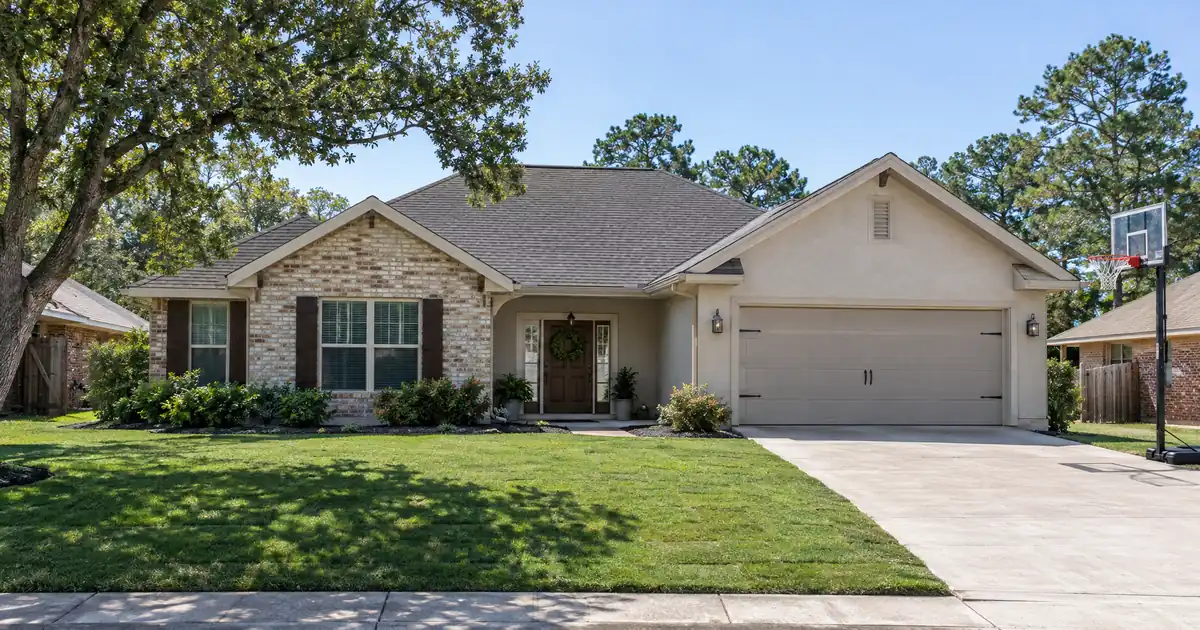
The Quick Read: A Texas second home follows the standard conventional cash-out rules, not the Texas home-equity rules. Those state rules attach to a Texas homestead, which is the home you live in. On a second home, the agencies cap cash-out at 75% loan-to-value on a one-unit property. You also need six months on title and a first mortgage that is at least 12 months old, subject to lender guidelines and full file review.
What Is a Cash-Out Refinance on a Second Home?
A cash-out refinance replaces your current first mortgage with a larger one and hands you the difference in cash. On a second home, the same idea applies, but the leverage is lower than on the home you live in. Cash-out on a one-unit principal residence reaches 80% LTV. On a second home it stops at 75%. Leverage, reserves, and pricing vary by lender and program; the final terms follow the full file review.
That 5-point gap is the main cost of the second-home label. It shrinks the equity you can reach before any other rule comes into play. Lendmire’s cash-out refinance programs are arranged through wholesale lenders, and the figures here come from the programs those lenders run.
The Texas question is the one that confuses people. Search results often say Texas “forbids” cash-out on second homes. That is not quite right. Texas has a special cash-out process, but it is built around the homestead. A second home is outside that process, so it falls under the ordinary agency rules. A conventional cash-out on a non-homestead Texas property is a standard agency cash-out. Borrowers with unusual title or occupancy facts should confirm the homestead point with a Texas real estate attorney.
Key Terms Defined
Second home: A one-unit property you occupy for part of the year, control exclusively, and do not rent out as a business or timeshare.
Homestead: The Texas home you live in as your primary residence, which carries special constitutional protection from creditors.
Cash-out refinance: A new first mortgage that pays off the old one and gives you part of your equity in cash.
LTV (loan-to-value): The new loan balance divided by the appraised value, expressed as a percentage.
Seasoning: The minimum time you have held title, or the minimum age of the loan being paid off, before a cash-out is allowed.
Reserves: Liquid funds left after closing, measured in months of housing payments.
Why Doesn’t the Texas Cash-Out Rule Apply to a Second Home?
The Texas rules follow the homestead, not the property type. Article XVI, Section 50 of the Texas Constitution limits which liens can attach to a homestead. The Texas Attorney General describes homestead protection as resting mainly on that provision and on Property Code chapter 41, in Opinion GA-0279.
Fannie Mae’s version of the Texas home-equity loan, called a Section 50(a)(6) loan, is built for a single-unit primary residence that qualifies as a homestead. Fannie Mae’s Texas section for that loan type sets a first-payment timing rule, an appraisal-based fair market value acknowledgment, and a survey requirement on the homestead collateral. Those requirements describe a loan secured by the home you live in.
So the question is not “is the property in Texas?” It is “is this property my Texas homestead?” If yes, the state process governs. If no, the conventional second-home rules do.
| Question | Homestead | Second home |
|---|---|---|
| Texas 50(a)(6) process applies? | Yes | No |
| Standard agency cash-out rules? | No, the state process applies instead | Yes |
| Cash-out LTV ceiling | State-capped at the agency figure | 75% |
| Occupancy | Primary residence | Part of the year, exclusive control |
How Is a Second-Home Cash-Out Underwritten, Step by Step?
Underwriting runs in a fixed order. Each step can stop a file, so it helps to know them before you apply.
1. Occupancy is classified. The lender confirms the property meets the second-home definition in the Fannie Mae Selling Guide on occupancy types. You occupy it for some part of the year. It is one unit and suitable for year-round use. You have exclusive control. It is not a rental pool or timeshare.
2. The clocks are checked. One borrower must have been on title for six months. The first mortgage being paid off must be at least 12 months old, counted note date to note date. If the home was listed for sale, it must come off the market on or before the disbursement date. These come from Fannie Mae’s cash-out refinance section.
3. The file goes through automated underwriting. Fannie Mae requires second homes to be run through its automated system and receive an Approve/Eligible finding. Across the wholesale programs placed through Lendmire, conventional files start at a 620 decision score, and the automated finding governs most of them, with a total ratio ceiling of 50%.
4. Reserves are set. On Fannie Mae automated loans, a debt-to-income ratio above 45% calls for six months of reserves, per the same cash-out section. A second-home borrower is carrying two housing payments, so reserves get real attention.
5. The appraisal sets the LTV test. The appraised value is the denominator. Freddie Mac requires a new appraisal and inspection report for a cash-out refinance, per its cash-out refinance product page.
6. Payoff and proceeds are set. The new loan pays off the existing first mortgage, finances closing costs and prepaid items, pays off subordinate liens, and releases the remaining equity for any purpose.
7. Pricing is applied. Fannie Mae’s loan-level price adjustments depend on credit score, loan purpose, occupancy and number of units, per its LLPA matrix. Cash-out and second-home status each add cost. The exact adjustments are not quoted here.
What Does 75% LTV Mean for the Equity You Can Reach?
Terms vary by lender guidelines, property type, leverage, credit profile, and full file review.
You can borrow up to 75% of the appraised value, and that has to cover the payoff of your current loan, any subordinate liens and closing costs. What is left is your cash.
The Fannie Mae Eligibility Matrix sets 75% for a one-unit second-home cash-out. It sets 80% for a one-unit primary residence, and 75% for an investment property. Freddie Mac’s Guide, in Section 4203.1, lists the same 75% second-home cash-out maximum.
Freddie Mac rounds ratios up to the next whole number. A 75.01% ratio is treated as 76%, so a file that misses by a hair misses. Ask your loan officer to run the final ratio against the appraisal, not an estimate.
Here is the contrast that trips people up. A purchase of a second home reaches 90%. A limited cash-out refinance (rate-and-term) on a second home also reaches 90% in the matrix. Only the cash-out version drops to 75%. If you do not need cash, a rate-and-term refinance gives you more leverage. If you do, expect the lower cap.
Where Does the General Rule Break?
These are the named edge cases. Each one changes the answer.
Cash purchase within six months. Delayed financing is the exception to the title clock. It requires an arm’s-length original purchase and a settlement statement showing no mortgage financing. Eligible original buyers include an individual, an eligible revocable or land trust, or an LLC or partnership the borrower owns 100%. The loan is still a cash-out refinance, so the second-home leverage cap holds. Fannie Mae’s current wording lives on its cash-out section, so confirm it there.
Inherited or awarded homes. No waiting period applies when the lender documents that you inherited the property or were legally awarded it in a divorce, separation or dissolution of a domestic partnership.
Title held by an LLC or trust. Freddie Mac’s section requires title to be in the individual borrower’s name by closing, per its cash-out refinance guide section. Move title before you apply, not after.
Co-ops. Cash-out refinances on second-home co-op share loans are not permitted, per the Fannie Mae matrix.
Two-unit “second homes.” Second homes are limited to one unit. A two-unit property is not a second home for this purpose.
Rental use. Fannie Mae’s definition excludes rental property. If the lender finds rental income, the loan can still be delivered as a second home only if that income is not used to qualify and every other second-home requirement is met. Renting it out full-time puts you in a different occupancy class.
Manufactured homes. Caps differ for manufactured housing. Primary-residence manufactured housing cash-out carries a lower cap in the matrix. For a second-home manufactured property, have the loan officer confirm the cash-out limit before you apply.
Lender overlays. Agency guidelines set the ceiling. Individual lenders can set stricter floors, such as a higher score or lower leverage. Those are lender choices, not agency rules.
Which Property Secures the Loan?
Two Texas scenarios look alike and play differently.
In the first, you refinance the second home itself. The second home is the collateral, the 75% cap applies, and the conventional second-home rules govern.
In the second, you borrow against the home you live in to fund the second home. Now the homestead is the collateral, and the Texas constitutional process governs. That process has its own lien limits, notice period, and closing requirements.
What if you own two Texas homes? The one you live in as your primary residence is the homestead. If you move out of one and into the other, the roles flip, and a former primary can become a second home. Homestead status can linger in ways that matter for lien rules, so confirm with counsel before you refinance a home you recently lived in.
What Does This Cost You Besides the Lower Leverage?
Higher price. Cash-out and second-home status each carry adjustments. The Urban Institute describes second homes, investment properties and cash-out refinances as “mission-remote” loans that get less public support, in its analysis of loan-level price adjustments. Your Loan Estimate shows the actual terms.
Mortgage insurance is the other piece. It applies above 80% LTV. Since the second-home cash-out cap is 75%, mortgage insurance does not come into play on this loan. Exact terms depend on the lender’s guidelines, property type, leverage, and a full review of the borrower’s file.
The CFPB notes that a cash-out refinance can lengthen the time to pay off the mortgage and raise the monthly payment because a larger loan replaces the current one. Taking out equity also means owning less of the home, and equity takes time to rebuild.
One more tradeoff. If your current first mortgage is a good one, a cash-out refinance replaces it. A home equity loan or HELOC leaves the first lien in place, per the CFPB’s research blog. Compare both before you commit.
Tax treatment can depend on your situation; borrowers should speak with a qualified tax professional before relying on any deduction or credit.
Common Misconceptions
“Texas has a special rule for second-home cash-out.” The special Texas rules apply to homesteads. A second home is outside that product.
“Cash-out and limited cash-out are the same.” Limited cash-out on a second home reaches 90%. Cash-out stops at 75%.
“Six months is the only clock.” The existing first mortgage must also be at least 12 months old.
“I can rent it full-time and still call it a second home.” It is not a second home if it is run as a rental.
“A higher appraisal lets me borrow more right away.” The title clock still applies unless an exception fits.
“A listed home can be refinanced.” A home listed for sale must be taken off the market on or before disbursement.
What Does the Decision Look Like in Practice?
Picture a Texas homeowner who bought a lake house with cash eight months ago. The settlement statement shows no financing, so the borrower is past the six-month title clock and has no first mortgage to season. The lake house is used part of the year, stays off the rental market, and is titled in the borrower’s own name. The lender would run the loan as a second-home cash-out at up to 75% of appraised value, with reserves reviewed because two housing payments are in play.
Now change one fact. The borrower lists the house on a rental platform for most of the year. The file now faces an occupancy problem, not a leverage problem. Fix the occupancy first.
Run these checks in order: occupancy, title clock, loan age, listing status, title name, and reserves. If all six pass, leverage and credit decide the rest.
Frequently Asked Questions
Can I do a cash-out refinance on a second home in Texas?
Yes, under the standard conventional rules. The Texas home-equity process attaches to the homestead, not to a second home. Expect up to 75% LTV on a one-unit property, six months on title, and a first mortgage that is at least 12 months old, subject to lender guidelines.
Is the 50(a)(6) loan available on a second home?
No. Fannie Mae’s Texas 50(a)(6) product is for a single-unit primary residence that qualifies as a homestead. Second homes are not eligible for that product. They use the regular cash-out path.
How much equity can I take out of a Texas second home compared with my primary home?
Less. A one-unit primary residence reaches 80% LTV on a cash-out. A second home reaches 75%. The extra 5 points of equity are available only on the home you live in. Every figure here varies by lender and program — guidelines, property type, leverage, and credit profile all apply.
Do I need to wait six months after buying before I refinance?
Usually, yes. At least one borrower must have been on title for six months. Exceptions exist for delayed financing after a cash purchase, inherited homes, and homes legally awarded in a divorce or separation.
Will mortgage insurance apply?
Not at this leverage. Mortgage insurance is required above 80% LTV, and the second-home cash-out cap is 75%. Final terms depend on lender guidelines, property type, leverage, and the borrower’s complete credit picture.
What if my second home sits in an LLC?
Title must be in your individual name by closing. A delayed-financing purchase can come from a revocable or land trust or an LLC you own 100%, but the new loan is written to you personally.
If you are weighing a cash-out refinance against keeping the loan you have, Lendmire can help you compare the programs and the equity each one reaches.
Texas homestead rules decide which loan you are really applying for, so name the collateral first and the leverage math follows.
For your own numbers, request a scenario review with Lendmire.
About Lendmire
Lendmire, NMLS# 2371349, is a mortgage brokerage with consumer lending licenses in 16 states. FHA, VA, conventional and jumbo purchase and refinance loans are arranged through wholesale lending partners, and each application is reviewed individually by the lender. Scotsman Guide named Lendmire a Top Mortgage Workplace in both 2025 and 2026.
For the program’s current guidelines, see conventional loan programs.
Get Started
Ready to find the right loan for you?
In about 30 seconds you can review financing options available for your home or investment property. No commitment required.
Informational only. Not a Loan Estimate, approval, or commitment to lend. Program availability and eligibility are subject to lender guidelines, credit approval, property review, and underwriting.
References
1. Texas Attorney General Opinion GA-0279
2. Fannie Mae Selling Guide B2-1.1-01, Occupancy Types
3. Fannie Mae Selling Guide B2-1.3-03, Cash-Out Refinance Transactions
4. Freddie Mac cash-out refinance product page
5. LLPA matrix
6. Fannie Mae Eligibility Matrix
7. Freddie Mac Guide Section 4203.1
8. Freddie Mac Guide 4301.5 Cash-out refinance Mortgages
9. Fannie Mae Eligibility Matrix (media copy)
10. Urban Institute LLPA analysis
11. CFPB
This article is part of Lendmire’s Conventional Loans series — every loan program’s qualification details, guidelines, and scenarios live on the loan options page.
Related reading: Conventional Cash-Out Refinance Definition for a Primary Home · The Case for a Conventional Cash-Out Refinance in the Second-Lien Era · Conventional Cash-Out Refinance for the Lock-in Homeowner
Brandon Miller
Founder & CEO, Mortgage Loan Originator, Lendmire LLC
- Mortgage Loan Originator · NMLS# 1129696 · Verify on NMLS Consumer Access
- North Carolina Real Estate Broker · License# 343312 · Verify on NCREC
- North Carolina Insurance Producer · License# 19053198 · Property, Casualty, Life, Health · Verify on NAIC SBS
- Lendmire LLC · Firm NMLS# 2371349 · Verify firm licensure
Required disclosures. Lendmire (NMLS# 2371349) operates as a licensed mortgage broker, not a direct lender or depository. The discussion in this article is general in nature and should not be relied upon as financial, legal, or tax advice — every investment scenario is unique and should be reviewed by a qualified professional. Any loan inquiry is subject to lender underwriting, and this article is not a commitment to lend or a guarantee of approval. Mortgage rates, loan terms, and program guidelines vary by borrower, property, and state, and may change without notice. Equal Housing Opportunity. Verify licensure at NMLS Consumer Access.