
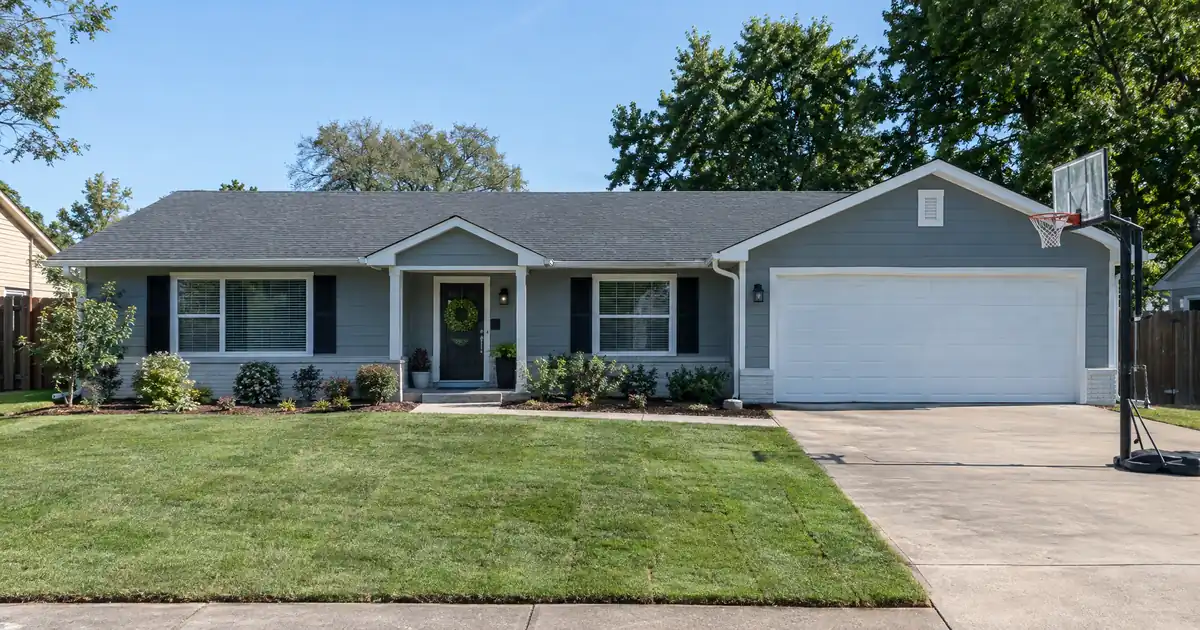
The Quick Read: Usually not the note, but sometimes the lien document. A spouse who is not on the loan does not have to sign the promissory note, which is the paper that creates the debt. The spouse may still have to sign the mortgage or deed of trust if state law requires it to give the lender a valid first lien. A home you owned before marriage often needs no spousal signature, though state homestead and community-property rules can change that.
VA cash-out estimate
Seeded with an example value, a typical balance, and a round cash request at the first-use fee; change any field.
Editable benchmark: 7.40% as of October 15, 2026 · Freddie Mac 30-year average via FRED®. A conventional market reference, not a VA cash-out refinance quote.
Illustrative starting assumptions: a $350,000 home value, a $193,000 current balance, the full-value VA cap with the first-use funding fee financed, a thirty-year term at the current Freddie Mac benchmark, and property taxes and insurance estimated at typical national rates. Every field is editable.
Illustrative estimate only — not a Loan Estimate, approval, quote, or commitment to lend. The rate field carries the weekly Freddie Mac thirty-year conventional benchmark, a market reference and not a VA cash-out refinance quote; a VA loan is priced by the lender at lock. The total loan, funding fee included, is capped at the program leverage on the reasonable value; the fee follows the tier chosen. The cash available is what the cap allows less the balances paid off and the fee, before closing costs, which are not included. The HELOC line is the line program’s combined loan-to-value ceiling applied to the same value and balance. Taxes and insurance are editable estimates. The debt-to-income figure is a guideline; residual income decides a VA file. Licensed in sixteen states for consumer mortgages.
That answer rests on two different documents, so start there.
What Is the Difference Between Signing the Debt and Signing the Lien?
The note is your promise to repay. The mortgage or deed of trust is the lender’s claim against the house if you don’t. A non-borrowing spouse can be asked to sign the second paper without ever touching the first.
Signing the lien document does not make your spouse a borrower. It also does not make them an owner. It usually means the spouse agrees not to assert a marital or homestead right that could sit ahead of the lender’s claim. Think of it as clearing the road, not joining the trip.
A cash-out refinance puts a new lien on the whole home. That is why the question comes up more on a cash-out than on a simple rate-and-term change. You are pulling equity out, and the lender wants a clean first position against all of it.
If you want the broader picture of how Lendmire arranges this loan, the VA cash-out refinance program page covers the basics. The VA cash-out reaches up to 100% of the appraised value, including the financed funding fee, and it can refinance any loan type into a VA loan. Those figures are subject to lender guidelines and full file review.
What Do the VA’s Own Rules Say?
The VA does not require a non-borrowing spouse to be on the note. You can read the VA’s language on this point in the circular on the VA Loan Guaranty site.
Two points follow from the VA’s position on non-borrowing spouses.
- If the spouse is on title, they sign either the note or the deed of trust.
- If the spouse has no ownership or marital interest under state law, no signature is needed.
On a joint VA loan, the rule flips. Every borrower signs every document, including the note.
Can a Lender Demand My Spouse’s Signature Just to Be Safe?
No. If you qualify on your own, a lender generally cannot require your spouse to sign a credit document. Regulation B bars a creditor from requiring the signature of an applicant’s spouse, other than a joint applicant, when the applicant meets the creditor’s standards.
There is one carve-out, and it matters here. On secured credit, a lender may ask for the spouse’s signature on any instrument that state law makes necessary to reach the collateral after a default. Examples include creating a valid lien, passing clear title, or waiving inchoate rights (rights that exist but have not yet matured).
So the rule works in both directions. The lender cannot add a signature as a safety blanket. It can add one when state law genuinely requires it.
Does a Premarital Home Change the Answer?
Often, yes. A home you bought before the wedding and kept in your name alone is commonly treated as separate property. In many cases that means your spouse has no title interest to clear. But “often” is the honest word, because three things decide the outcome.
1. The state’s marital-property and homestead law. Some states protect a spouse’s right to the family home no matter whose name is on the deed.
2. How title is held. Your name alone, both names, or a trust each point to different signature needs.
3. Whether the home is still separate. Separate property can drift toward shared property.
That last point trips up more people than any other. A premarital home can take on a marital character if funds pay down the mortgage, or if you and your spouse agree to change how it is held. A spouse can later argue the house was converted. A title company will not guess at that history. It will look at the record.
Here is how the main situations tend to sort out. Treat every row as a starting point, and confirm with the title company.
| Situation | Typical spouse action |
|---|---|
| Premarital home, your name alone, no homestead rule | Often no signature |
| Premarital home in a homestead-protection state | May need to sign the lien document |
| Community-property state, separate-property home | Title company decides; debts may still count |
| Spouse added to title since marriage | Signs the note or the deed of trust |
| Home paid down with marital funds | Title may treat it as partly shared |
Texas is the best-known homestead example, where a spouse’s signature can be needed to place a lien on the family home even when only one spouse holds title. Texas is one of the 16 states where Lendmire arranges consumer loans, and it is a good place to ask the title company early. Never assume the answer from a neighboring state.
What Does Your Spouse Actually Sign?
Spouses tend to sign more paper than they expect, so it helps to sort the documents by what each one does.
| Document | What it does | Makes spouse a borrower? |
|---|---|---|
| Promissory note | Creates the debt | Yes |
| Mortgage or deed of trust | Gives the lender a lien | No |
| Homestead waiver or spousal consent | Waives a marital right behind the lien | No |
| Quitclaim or disclaimer deed | Gives up a title interest | No, but it can change ownership |
| Right-of-rescission notice | Tells owners of a refinance cancellation right | No |
Watch the quitclaim row closely. A disclaimer is not the same as a quitclaim. A title company sometimes asks a spouse to sign one to clear a gap, and that paper can move an ownership interest. If you are protecting separate property, ask exactly which form is being requested and why.
The rescission notice deserves a mention too. On a refinance of a primary residence, notices of the right to cancel generally go to everyone with an ownership interest. Your spouse may receive one even if they sign nothing else. Ask your loan officer how it applies to your file.
What Signing Does Not Do
Signing a lien document does not put your spouse on the hook for the debt. That liability sits in the note. It also does not, by itself, hand your spouse a share of the home.
It does not use your spouse’s VA entitlement either. Entitlement belongs to the Veteran. The cash-out uses yours, and the funding fee applies. Under the wholesale programs Lendmire places VA loans with, the cash-out funding fee is 2.15% on first use and 3.3% after that. It can be financed into the loan, and it is waived for veterans receiving compensation for a service-connected disability and the other exempt groups.
One caution: the lien signature protects the lender’s position. It does not protect your separate-property status. Deed changes do that damage, and they are a separate act. If your spouse is ever asked to be added to title, treat that as a family-law decision, not a closing-table formality.
Does My Spouse’s Credit or Debt Count in the Approval?
It depends on where you live. In most states, a spouse who is not on the loan is not part of the credit decision. In community-property states, it is different.
The VA Lenders Handbook, Chapter 4 says that in a community-property state the spouse’s debts and obligations must be considered, even when the Veteran takes the loan in his or her name alone. In that case, the lender obtains a credit report on the non-purchasing spouse and weighs that credit history. The handbook lists Arizona, California, Idaho, Louisiana, Nevada, New Mexico, Texas, Washington and Wisconsin as the community-property states in industry usage. The lender still decides how it applies the rule.
Two details make this less scary than it sounds.
- A Veteran with satisfactory credit can still be a satisfactory risk even if the spouse’s credit is poor.
- The monthly payments on the spouse’s debts go onto the VA loan analysis form, which feeds the residual income test.
Residual income is the money left each month after major obligations and living costs. It is the controlling test on VA loans. The 41% debt-to-income figure is a guideline, not a hard cap. A higher ratio needs residual income well above the table.
Federal credit-equality law also limits what a lender may consider about a non-obligated spouse. The handbook notes it generally bars requesting or considering that spouse’s credit history and liabilities, with exceptions for alimony, child support or maintenance, and community-property states. The VA’s KnowVA copy of the pamphlet adds that debts assigned to an ex-spouse in a divorce decree are generally not charged to the borrower.
Here is how this plays out in a typical file. A Veteran in a community-property state owns a home from before the marriage and wants a cash-out at the top of the program’s range. The spouse has a car loan and a credit card balance. The spouse’s score never drives the decision, but the monthly payments on those debts reach the household analysis. If residual income is thin, those payments can shrink the amount the file supports. The spouse’s income generally does not rescue it unless the spouse is obligated on the loan. Confirm that point with your loan officer, because overlays differ.
How Does Your Own Profile Fit?
Whether or not your spouse signs, your file has to stand on its own. The wholesale programs Lendmire places VA loans with start at a 580 decision score for the cash-out, and VA itself sets no minimum score. Some lenders set a higher floor. The certificate of eligibility, the COE, comes from VA and decides whether you qualify for the benefit at all.
A VA cash-out also needs a VA appraisal, a net tangible benefit, and seasoning. Seasoning is the waiting period before you can refinance: the later of 210 days from the first payment and the sixth payment. The Veteran certifies occupancy. Where service keeps the Veteran from living in the home, a spouse’s occupancy may satisfy the requirement in some cases, so raise it early if it fits your situation.
Your spouse’s signature does not change the appraisal, the title work, or the occupancy test. It sits beside them.
What If Your Spouse Can’t Be There, or Won’t Sign?
If state law requires the signature and your spouse refuses, the cash-out cannot close on that property as structured. Regulation B stops a lender from demanding a signature the law does not require. It does not override one that state law does require.
When the spouse simply cannot attend, there are workable paths. These are general points, so let the title company confirm which apply.
- Tell the title company early. Ask what they need and in what form.
- Ask about mobile or remote signing. Availability varies.
- Ask about a special power of attorney. One written for a real estate transaction can sometimes cover an absent spouse. It must meet state and title requirements.
A deployed or traveling spouse is a scheduling problem more often than a legal one. A refusing spouse is a structural problem. In that case the options are to restructure the loan or reconsider the cash-out.
How Do You Protect Separate-Property Status?
Keep your records clean. That is the short version.
- Keep the deed in your name unless you and a family-law attorney decide otherwise.
- Save proof of the home’s premarital value and mortgage balance. Early statements help show where you started.
- Track what pays the mortgage. Marital funds used on a separate home can blur its character.
- Ask about a prenuptial or postnuptial agreement. These can interact with signature requirements and with how the equity is treated.
- Talk to a family-law attorney before any title change.
A cash-out turns equity into cash. Where that cash goes matters too. If you deposit it into a joint account or spend it on a shared project, you may be adding marital character to a home that had none. That is a legal question, not a loan question, but it is worth thinking about before closing.
Key Terms Defined
Non-borrowing spouse: A spouse who is not on the loan and does not sign the note.
Promissory note: The signed promise to repay the loan. It creates personal liability.
Deed of trust or mortgage: The document that gives the lender a lien on the home. Which one applies depends on the state.
Separate property: Property one spouse owned before marriage or received individually, as state law defines it.
Community property: Property treated as owned equally by both spouses under the law of certain states.
Homestead rights: Legal protections that can require a spouse’s signature before a primary home is pledged as collateral.
Residual income: The monthly income left after major obligations and basic living costs.
Pre-Closing Checklist
Ask these before you sign anything.
1. Which state law governs my home, and is it a community-property or homestead state?
2. How is title held, and when did I acquire it?
3. Which exact documents does the title company need from my spouse?
4. Is any of them a quitclaim or deed, rather than a lien consent?
5. Will my spouse’s debts count in my household analysis?
6. Will my spouse receive a right-of-rescission notice?
7. If my spouse cannot attend, what substitute does the title company accept?
If you are weighing a cash-out refinance against keeping the loan you have, Lendmire can help you compare the programs and the equity each one reaches. Every figure here is subject to lender guidelines and full file review, and nothing is a commitment to lend.
Frequently Asked Questions
Does my spouse have to be on my VA cash-out loan?
No. VA rules do not require a non-borrowing spouse to sign the note. A spouse with a title interest signs either the note or the deed of trust, and many spouses sign only the deed of trust. A spouse with no ownership or marital interest under state law may sign nothing.
Does signing the deed of trust make my spouse liable for the debt?
No. Liability comes from the note. Signing the lien document gives up or acknowledges a property right so the lender’s lien is valid. It does not, by itself, make your spouse a borrower or an owner.
Can the lender insist my spouse sign if I qualify alone?
Not unless state law requires it. Federal credit rules bar a lender from requiring a spouse’s signature on a credit document when you qualify on your own. The exception is a signature needed to create a valid lien or clear title.
Will my spouse’s debts hurt my VA cash-out approval?
Only in some places. In community-property states, the spouse’s debts and obligations must be considered even when the spouse is not on the loan. In other states, the non-purchasing spouse’s credit generally is not part of the decision.
What if my spouse refuses to sign a required document?
Then the cash-out cannot close on that home as structured. A lender cannot demand an unnecessary signature, but it cannot waive one that state law requires. The title company can tell you which documents truly fall in that category.
For your own numbers, request a scenario review with Lendmire.
About Lendmire
Lendmire (NMLS# 2371349) is a mortgage brokerage serving homeowners and home buyers in 16 states. FHA, VA, conventional and jumbo purchase and refinance loans are arranged through wholesale lending channels; Lendmire brokers the financing and the lender underwrites each application. Scotsman Guide named Lendmire a Top Mortgage Workplace in both 2025 and 2026.
Get Started
Ready to find the right loan for you?
In about 30 seconds you can review financing options available for your home or investment property. No commitment required.
Informational only. Not a Loan Estimate, approval, or commitment to lend. Program availability and eligibility are subject to lender guidelines, credit approval, property review, and underwriting.
References
1. VA Circular 26-16-1, Non-borrowers on Title Documents
2. CFPB Regulation B, 12 CFR 1002.7
3. VA Lenders Handbook, Chapter 4
4. VA Pamphlet 26-7, Chapter 4, KnowVA copy
This article is part of Lendmire’s VA Loans series — every loan program’s qualification details, guidelines, and scenarios live on the loan options page.
Related reading: How to Get a VA Cash-Out on a Home Still in the Estate · VA Cash-Out Occupancy Rules for a Surviving Spouse · Does a Non-Borrowing Spouse Sign a VA Cash-Out Refinance?
Brandon Miller
Founder & CEO, Mortgage Loan Originator, Lendmire LLC
- Mortgage Loan Originator · NMLS# 1129696 · Verify on NMLS Consumer Access
- North Carolina Real Estate Broker · License# 343312 · Verify on NCREC
- North Carolina Insurance Producer · License# 19053198 · Property, Casualty, Life, Health · Verify on NAIC SBS
- Lendmire LLC · Firm NMLS# 2371349 · Verify firm licensure
Compliance and disclosures. Lendmire (NMLS# 2371349) is a licensed mortgage broker and is not a direct lender, depository institution, financial advisor, or tax professional. Content in this article is general market analysis and educational information — not financial, legal, or tax advice for any specific situation. Lendmire does not guarantee loan approval; every transaction is subject to underwriting by the funding lender. Mortgage pricing and loan program guidelines are subject to change at any time without notice and vary by borrower characteristics, property type, and state regulations. Lendmire complies with Equal Housing Opportunity. Licensure verification: NMLS Consumer Access.