
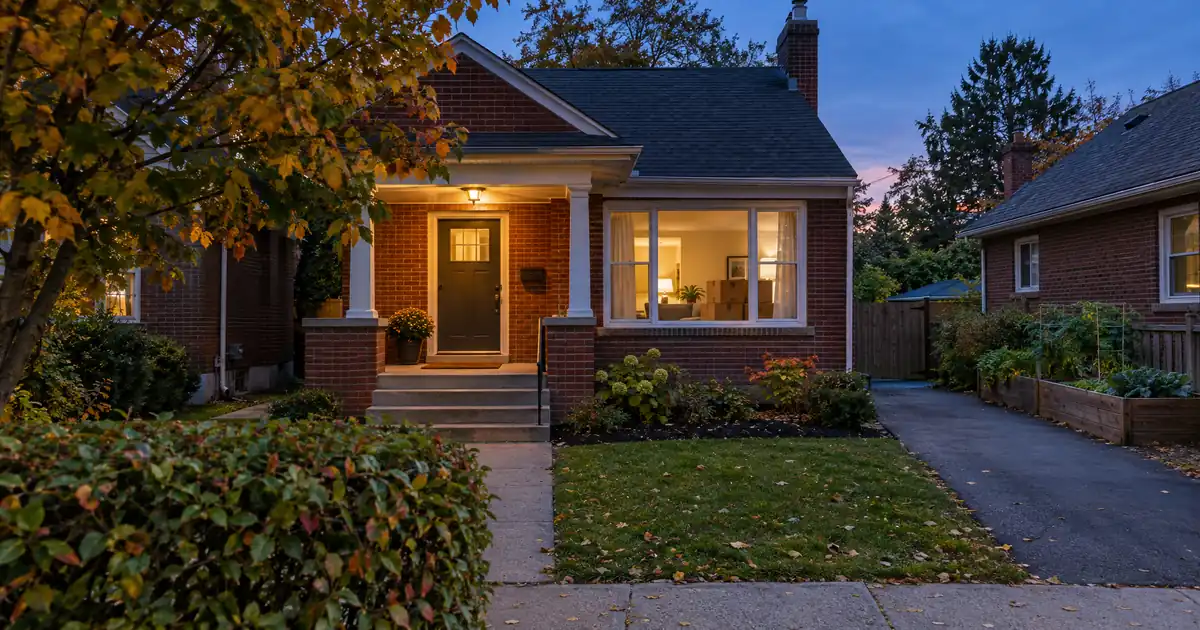
The Quick Read: Small-town vs city appraisals follow the same Fannie Mae and Freddie Mac rules, and the loan program does not change with the zip code. What changes is the appraiser’s workload. When few similar homes have sold nearby, the appraiser reaches farther, adjusts more, and has to explain each choice. A city appraisal leans on the sales data, while a small-town appraisal leans on the appraiser’s reasoning.
The Honest Answer: Who Each Setting Is Really For
Neither setting is better or worse for a conventional loan. A city home usually has plenty of recent sales to compare against, so the value opinion is easier to support. A small-town or rural home can be financed on the same conventional programs, but the appraisal takes more judgment and carries a bit more risk of a surprise.
Conventional payment estimate
The starting figures are an example price at the first-time buyer’s minimum down payment. Replace them with yours.
Editable benchmark: 7.32% as of October 22, 2026 · Freddie Mac 30-year average via FRED®. A conventional market reference, not a conventional loan quote.
Estimate seeded at the low end of Fannie Mae’s published range (0.58%–1.86% a year); the insurer prices the actual premium on the score and the leverage. Applies only above 80% loan-to-value.
Illustrative starting assumptions: a $350,000 price, the first-time buyer’s minimum down payment, a thirty-year term at the current Freddie Mac benchmark, mortgage insurance at the low end of Fannie Mae’s published range, and property taxes and insurance estimated at typical national rates. Every field is editable.
Illustrative estimate only — not a Loan Estimate, approval, quote, or commitment to lend. The rate field carries the weekly Freddie Mac thirty-year conventional benchmark, a market reference and not a conventional loan quote; your rate is set by the lender at lock. The mortgage insurance figure is an editable estimate seeded from Fannie Mae’s published typical range, not a premium quote; the insurer prices the actual premium, and the cancellation month assumes scheduled payments with no extra principal and no change in value. Taxes, insurance and dues are editable estimates; closing costs are not included. Conforming loan limits apply by county. Licensed in sixteen states for consumer mortgages.
If you are buying in a dense market, your main appraisal risk is a fast-moving price or an unusual unit, like a condo or a one-of-a-kind home. If you are buying in a small town, your main risk is thin data. Both can be handled. You just handle them differently.
Across the wholesale programs Lendmire places files with, the loan terms stay the same in both settings. Conventional purchase leverage reaches 97% for a first-time buyer on a one-unit principal residence and 95% otherwise, subject to lender guidelines and full file review. You can see how those programs are structured in Lendmire’s conventional loan programs overview.
Side-by-Side
| Factor | City Home | Small-Town Home |
|---|---|---|
| Leverage | Same program limits | Same program limits |
| Credit floor | Same, 620 wholesale | Same, 620 wholesale |
| Mortgage insurance | Above 80% LTV | Above 80% LTV |
| Occupancy | Principal residence | Principal residence |
| Documentation | Standard file | Standard, often more appraiser notes |
| Comparable sales | Usually plentiful | Often few |
| Search radius | Tight | Often wider |
| Adjustments | Typically smaller | Often larger |
| Main risk | Fast markets, unique units | Thin data, value gap |
The top four rows are identical because the loan rules do not know where the house sits. The bottom five rows are where the appraisal itself differs.
What Every Appraiser Does the Same Way
Every conventional appraisal does three things. The appraiser defines the neighborhood and market area. The appraiser picks comparable sales, which are recently sold homes that appeal to the same buyers. Then the appraiser adjusts those sales for differences like size, condition, and lot.
The appraiser should choose the comparables that are best and most appropriate. They need to be competing homes for the same buyers, not identical twins. Same-neighborhood sales are preferred when available. Sales from competing areas are allowed when they are the best evidence.
Freddie Mac also dropped the old one-mile rule of thumb. Its own neighborhoods and market areas guidance says one mile is not a good proxy for neighborhood boundaries. So the idea that comps must sit within a mile is a myth.
Where Small-Town Appraisals Really Differ
In a thin market, the appraiser may use sales that are older, farther away, or not very similar. Freddie Mac’s sales comparison approach says so directly for rural market areas. It also says large adjustments typically occur in rural markets and with unique properties, because there is limited market activity.
That second point matters. A big adjustment is not automatically a bad appraisal. It is what a thin market often looks like on paper.
Fannie Mae’s Guide describes rural properties as often having large lots and relatively undeveloped locations, so truly comparable nearby sales may be scarce. Distance in the report is stated in miles with a direction, such as “1.75 miles NW.” Neither agency sets a flat maximum distance. What counts is whether the appraiser explains the choice and supports it. Individual lenders can add their own limits, which are called overlays.
Think of it as a sliding scale. The wider the search and the more the comps differ from your home, the more the appraiser must write to justify the number.
How a Thin-Market Search Widens
Appraisers often widen the search along three lines: time, distance, and similarity. A simple way to picture it:
1. Start with sales in your neighborhood or subdivision.
2. Look at competing nearby areas with similar buyers.
3. Accept older sales if they remain the best evidence.
4. Go farther out, and explain why.
5. Adjust for location if the area differs.
At each step the report has to give a reason. The appraiser who documents the steps well produces a number that is easier for the lender to accept.
Is Your Property “Small Town” or “Rural”?
These are not the same. A home on a platted lot in a small town, with city utilities and a few sales a year, is a small-town case. A home on acreage with a well and a long drive is a rural case. The agencies do not use a simple label. They care about how the property is used.
Both Fannie Mae and Freddie Mac require the property to be residential. A property used primarily for farming or ranching is ineligible, while a residential property with typical agricultural-type outbuildings stays eligible. A small roadside produce stand does not change that. Neither does farmland nearby. A large barn or livestock facility raises the question of primary use, so expect more scrutiny there.
The agency rules set no flat acreage cap. Use matters more than acre count, though some lenders add their own limits.
When a City Appraisal Is the Better Fit
A city or dense suburban purchase is the better fit if you want the least appraisal uncertainty. Recent, similar sales are close by. The adjustments are usually modest, and the appraiser can support the value with tight comps. Appraisal waivers, which depend on the loan, the property, and automated underwriting, are also more likely to fit a well-documented market than a thin one. They are never a buyer’s choice.
City purchases can carry risk too. Condos, unique units, and fast-rising markets can produce shaky comps. A condo purchase brings its own project rules, which Lendmire’s piece FHA Loan vs. Conventional Requirements for a Condo Purchase covers.
When a Small-Town Appraisal Is the Better Fit
A small-town purchase is the better fit if the home and the lifestyle matter more to you than appraisal simplicity. The loan is the same. You get the same leverage options, the same 620 wholesale floor, and the same mortgage insurance rules. Mortgage insurance applies above 80% LTV, can be cancelled at your request at 80% of the original value, and ends automatically at 78%.
Go in knowing the appraisal asks more of the appraiser. Look for an agent who knows local sales, because that knowledge can help you set a realistic offer. A well-priced home with a solid sales story tends to appraise more smoothly than a stretch price in a market with few sales.
If the Value Comes in Low
A low appraisal in either setting means the value sets a lower loan-to-value base than you planned. You generally have four paths:
- Renegotiate the price with the seller.
- Bring more cash to cover the gap.
- Ask for a reconsideration of value.
- Use your appraisal contingency to exit, if your contract has one.
A reconsideration of value is a request that the appraiser re-check the number. Good reasons include reporting errors, inappropriate comps, or sales the appraiser did not see. Fannie Mae and Freddie Mac now have borrower-initiated policies, and the lender must disclose its process. Fannie Mae’s reconsideration of value page explains it. Ask your loan officer early what evidence the process accepts. Strong requests usually bring specific, closer, more similar sales.
You also have the right to your appraisal. The lender must notify you in writing of that right shortly after you apply and give you a free copy. You may be asked to waive the timing. Think carefully before you agree, because reading the report early is how you catch a bad comp.
What Can Go Wrong in Each Setting
In a small town: a wide gap between the contract price and a thin comp set, or a large outbuilding that muddies the residential-use question. In a city: a unique unit with no true match, or a fast market where yesterday’s comps lag today’s prices. Either way, the fix starts with a loan officer who knows the file early.
This is a genuine toss-up on risk. Cities carry less data risk. Small towns often carry less price volatility. Neither beats the other on every file.
A Short Pre-Appraisal Checklist
- Tell your loan officer if the home is on acreage or has large outbuildings.
- Ask your agent for recent nearby sales, even if they are older or farther.
- Collect receipts for upgrades the appraiser might not see.
- Keep a list of any sales you think are better comps, in case you need a reconsideration.
- Read the report the moment you receive it.
A rural appraisal may take more of the appraiser’s time because of the extra comp research. Plan for that when you set contract dates, and discuss it with your loan officer.
Key Terms Defined
- Comparable sale (comp): A recently sold home similar enough to your purchase to help show its value.
- Adjustment: A dollar change an appraiser makes to a comp to account for differences from your home.
- Market area: The region where similar demand and competition exist for your property.
- Reconsideration of value: A request that the appraiser re-check the value using better evidence.
- Overlay: A lender’s own rule that is stricter than the agency rule.
- LTV: Loan-to-value, the loan amount as a percentage of the appraised value or price.
The Balanced Verdict
Pick the home you want. The conventional loan works in both settings, and the program limits are the same. A city appraisal is usually more routine. A small-town appraisal asks more of the appraiser and benefits from an informed agent and an early conversation with your loan officer. Neither one is a reason to walk away.
If you are comparing small-down-payment options, Lendmire’s article FHA MIP vs Conventional PMI for a Buyer With a Small Down Payment may help.
If you are buying a home and want to see whether a conventional loan fits your file, Lendmire can help you compare the options and what each one asks of the file.
Frequently Asked Questions
Do small-town homes qualify for conventional loans?
Yes, when the property is residential in use. Both agencies buy loans on rural and small-town homes. A property used mainly for farming or ranching is not eligible, but a home with typical outbuildings generally is. Final eligibility depends on lender guidelines and full file review.
Do comps have to be within one mile?
No. Freddie Mac says the one-mile parameter is not a good proxy for neighborhood boundaries. Neither agency sets a maximum distance for rural comps. The appraiser must state the distance and explain why the sales were chosen.
Can an appraiser use sales older than a year?
Yes, when older sales are the best indicator of value and the appraiser explains the choice. Fannie Mae’s guidance allows this, particularly in thin markets.
Do large adjustments mean the appraisal is wrong?
Not necessarily. Freddie Mac says large adjustments typically occur in rural markets and with unique properties because of limited activity. The question is whether the appraiser supported them.
Can I challenge a low appraisal?
Often yes, through a reconsideration of value requested through your lender. Bring specific comparable sales or point to reporting errors. The lender must disclose its process, and you should ask about it early.
For your own numbers, request a scenario review with Lendmire.
About Lendmire
Lendmire (NMLS# 2371349) is a mortgage broker licensed for consumer lending in 16 states. Lendmire arranges FHA, VA, conventional and jumbo purchase and refinance loans through wholesale lenders; every file is underwritten by the lender under the applicable program guidelines. Scotsman Guide named Lendmire a Top Mortgage Workplace in both 2025 and 2026.
Get Started
Ready to find the right loan for you?
In about two minutes you can review financing options available for your home or investment property. No commitment required.
Informational only. Not a Loan Estimate, approval, or commitment to lend. Program availability and eligibility are subject to lender guidelines, credit approval, property review, and underwriting.
References
1. Fannie Mae Selling Guide B4-1.3-08, Comparable Sales
2. Freddie Mac, neighborhoods, market areas and market conditions
3. Freddie Mac Guide §5605.6, Sales comparison approach
4. Freddie Mac Rural Properties FAQ
5. Fannie Mae, Reconsideration of Value
This article is part of Lendmire’s conventional loan program — full qualification details, guidelines, and scenarios live on the program page.
Related reading: Conventional Loan Requirements for a Primary Home Purchase · Can You Use Stocks as Collateral for a Conventional Loan? · Can You Double Your Payment on a Conventional Loan Without a Penalty?
Brandon Miller
Founder & CEO, Mortgage Loan Originator, Lendmire LLC
- Mortgage Loan Originator · NMLS# 1129696 · Verify on NMLS Consumer Access
- North Carolina Real Estate Broker · License# 343312 · Verify on NCREC
- North Carolina Insurance Producer · License# 19053198 · Property, Casualty, Life, Health · Verify on NAIC SBS
- Lendmire LLC · Firm NMLS# 2371349 · Verify firm licensure
Required disclosures. Lendmire (NMLS# 2371349) operates as a licensed mortgage broker, not a direct lender or depository. The discussion in this article is general in nature and should not be relied upon as financial, legal, or tax advice — every investment scenario is unique and should be reviewed by a qualified professional. Any loan inquiry is subject to lender underwriting, and this article is not a commitment to lend or a guarantee of approval. Mortgage rates, loan terms, and program guidelines vary by borrower, property, and state, and may change without notice. Equal Housing Opportunity. Verify licensure at NMLS Consumer Access.