
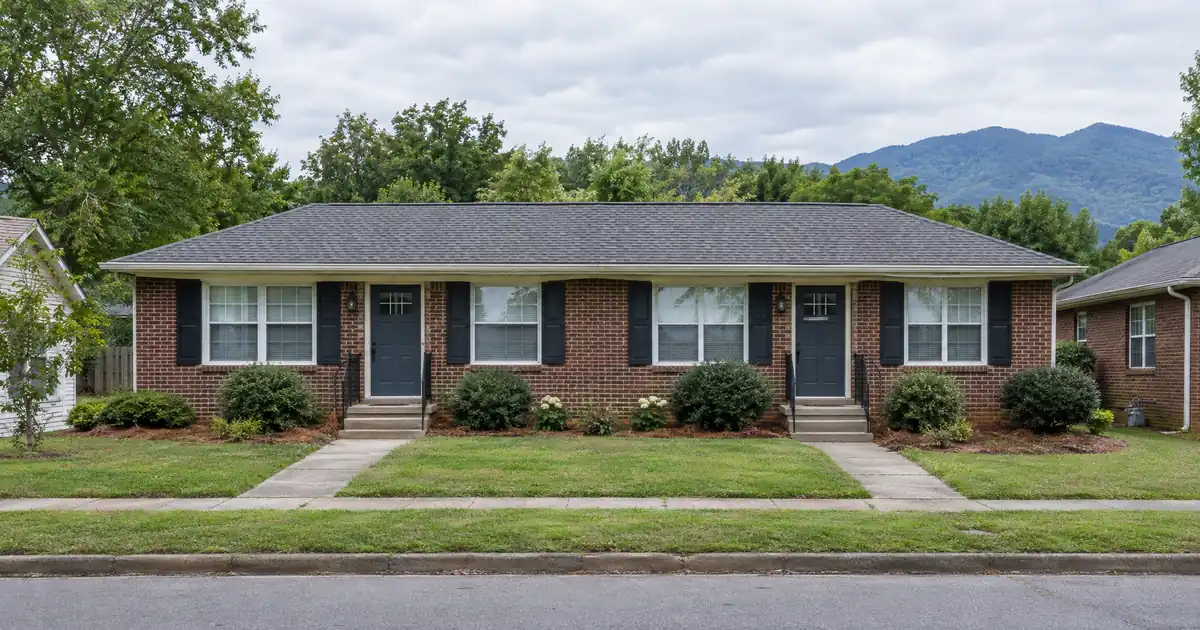
The Quick Read: Yes, you can buy a winter home on savings alone, either by paying all cash or through select asset-based mortgage programs that qualify the loan on your documented balances instead of your paycheck, but not through a DSCR loan, because a home you live in for a season is a second home and DSCR loans are built for rental properties you do not occupy. Here is what matters most:
- All cash needs no lender, but it can drain the savings you still need.
- On the asset qualifier path, eligible balances must cover the entire loan, and no employment or income is documented.
- On the asset depletion path, your balances are converted into a monthly qualifying income.
- DSCR is for rentals. It is not for a house you will winter in.
- Every file is fully underwritten, and the assets are documented with statements.
What Does “Savings Alone” Actually Mean?
The phrase hides three different plans, and each one runs under different rules. Before you call anyone, decide which plan you mean.
Plan one is all cash. You pay the full price from savings. No lender tests your income, because there is no lender.
Plan two is savings as a down payment. You still finance part of the price. A conventional or jumbo second-home loan will then test your income, debts, credit and reserves. For a retiree living on a portfolio, that income test is where the file stalls.
Plan three is savings that qualify the loan. Here the balances do the work that paychecks usually do. This is the lane of asset-based mortgage programs, and it is the one most retirees have never heard of.
Why a Winter Home Is a Second Home, Not an Investment Property
The short answer is occupancy. If you will live in the home for a season each year, lenders treat it as a second home. That classification decides which program you use and how the file is judged.
| Factor | Second home | Investment property |
|---|---|---|
| Who uses it | You, for a season | Tenants |
| What the lender judges | You: income, assets, credit | Rent against the payment |
| Typical loan type | Consumer mortgage | Business-purpose loan |
| Where DSCR fits | Does not | Yes |
DSCR loans are designed for non-owner-occupied investment properties. Because they are business-purpose investor loans, they are reviewed differently from a standard owner-occupied mortgage. The borrower signs a certification that the property is a rental. The federal rule behind that treatment, Regulation Z’s business-purpose exemption, stops applying when the owner expects to occupy the home for more than 14 days in the coming year. A winter season is far past that line.
Nolo makes a related point: second-home and investment-property loans both demand stronger credit and larger down payments than a primary-residence loan. It adds that lenders may require reserves covering payments for up to six months. The two labels share some strictness, but they are not interchangeable.
Paying All Cash: What It Takes and What It Costs
An all-cash purchase is the simplest path on paper. You show proof of funds to the seller and the title company, usually bank or brokerage statements. Then you close.
That simplicity has a price. Kiplinger notes that all-cash offers can be more attractive to sellers. It also warns that draining savings can leave you with no financial cushion.
The cushion is the real issue. A mortgage-free winter home is not a cost-free one. Insurance, HOA dues, utilities, travel and upkeep keep arriving, and you are now carrying two households. Your Tennessee home keeps its own bills while the winter home adds a second set.
Cash also changes your flexibility. Money moved into a house is money you cannot rebalance, spend on healthcare, or use for a down payment on anything else. That matters most if you also want to buy rentals later, since rental purchases need their own down payments and reserves.
Many snowbirds should ask whether cash is the best use of the money, not just whether it is possible. Financing against your balances can keep more of the portfolio invested.
Using Savings as a Down Payment: Where Retirees Get Stuck
A conventional or jumbo second-home loan is judged on the borrower. The lender wants documented income, a debt-to-income ratio that works, credit and reserves. Rental income generally cannot be used to qualify for a second-home loan.
If you are retired, or you sold a business, your balances may be large and your documented income small. On paper, a seven-figure portfolio can look like a modest income. That mismatch is the exact reason asset-based programs exist.
Letting Savings Qualify the Loan: The Two Asset-Based Paths
Across the wholesale network Lendmire works with, the asset-based programs fall into separate paths. A borrower is qualified on one path at a time, and you should never mix the requirements of different paths. Lendmire’s asset-based mortgage programs are placed through select lenders as consumer mortgages, subject to underwriting.
The asset qualifier path: assets cover the whole loan
On this path, your eligible assets must equal or exceed the entire loan amount. No employment or income is documented. You are not asked for traditional personal-income documentation, pay stubs or employment verification, but the file is still fully underwritten and your assets are documented with statements.
Typical ceilings on this path, through select programs and subject to underwriting:
- Up to 80% loan-to-value (LTV, the loan as a share of the home’s value) on a purchase of a principal residence or second home.
- Up to 75% on a refinance of a principal residence or second home.
- Loan amounts up to $4,000,000.
- A 600 minimum credit score. The exact numbers vary by lender and program and follow a full review of property, leverage, and credit.
Not every dollar counts at face value. Brokerage accounts, certificates of deposit, money market and savings count at 100%. A 401(k) or IRA counts at 90% if you are under 59½ and at 100% at 59½ or older. Accounts combine.
Here is how the arithmetic works. Say you want an $800,000 loan. You hold $330,000 in brokerage accounts, which counts at 100%, or $330,000. You hold $300,000 in a 401(k) while under 59½, which counts at 90%, or $270,000. You hold $200,000 in savings, which counts at 100%, or $200,000. Together that is $800,000 of usable assets, which covers the loan on assets alone. The lender’s own calculation governs, and this is an illustration only.
Seasoning matters too. Seasoning is how long the money has been sitting in your account. This path wants 60 days of seasoning and two months of statements for each qualifying account. No reserves are required at or below 75% LTV, and above that the lender sets them. Final terms depend on the lender’s guidelines, the property type, and the borrower’s complete credit picture.
Qualifying on a balance is not the same as paying for the house. You still need the down payment and closing funds, and those come from somewhere. Plan that source before you plan the qualification.
The asset depletion path: assets become income
On this path, usable assets are divided by 60 months to create a monthly qualifying income. That income then runs through the debt-to-income test with your housing payment and other debts. It can also supplement documented income, up to a 45% debt-to-income ratio.
Typical ceilings, through select programs and subject to underwriting:
- Up to 80% LTV on a purchase or rate-and-term refinance of a principal residence or second home.
- Up to 60% on a cash-out refinance of a principal residence or second home.
- Loan amounts from $125,000 to $3,500,000.
- Credit scored against the lender’s matrix. Each figure is subject to lender guidelines and a complete review of property type, leverage, and credit.
The credit percentages differ from the qualifier path. Cash accounts and CDs count at 100%. Securities count at 80%, private stock at 75%, retirement accounts at 70% at any age, and real-estate equity at 60%. Custodial accounts, deferred compensation, escrow accounts, foreign funds, cash on hand, stock options and non-vested restricted stock units are not eligible.
Here is the arithmetic. Suppose you hold $1,500,000 in securities, which counts at 80%, or $1,200,000. You also hold $300,000 in cash, which counts at 100%. That is $1,500,000 usable, and divided by 60 months it produces $25,000 of monthly qualifying income. That income must then carry the housing payment and your other debts through the debt-to-income test.
Minimums apply. Qualified assets must be at least the lesser of $1,000,000 or 1.25 times the loan balance. They must never be below $250,000 liquid when depletion is your only income source. Statements must be at least 120 days old at application, plus the most recent statement within 45 days. Sale-of-business, inheritance and legal-settlement funds are excused from that seasoning.
Cash-out proceeds never count as qualifying assets on this path. Cryptocurrency, precious metals and collectibles are not published as eligible on either path. The documented route is converting them to a seasoned cash balance in a regulated account, with the source reviewed by the lender.
Cash, Financing or a Mix?
The right answer depends on how much of your net worth the house would consume. This table puts the four routes side by side.
| Route | Best suited to | Strength | Trade-off |
|---|---|---|---|
| All cash | Very liquid buyers | No lender underwriting of the purchase | Drains savings |
| Conventional or jumbo second home | Buyers with steady income | Familiar process | Income and debts tested |
| Asset qualifier path | Large balances, little income | Qualification is reviewed on verified assets rather than income documentation, subject to lender guidelines | Assets typically must cover the whole loan |
| Asset depletion path | Portfolio-based households | Assets may be counted as income | Haircuts and DTI test |
A fifth route is a draw on the equity in your Tennessee home, such as a home equity line. That is governed by that lender’s own rules, and it puts a lien on the home you live in year-round. Many retirees find that tradeoff uncomfortable.
A mix is common. A larger down payment can lower the loan balance, and the balances you keep invested can still qualify you. Compare a few structures before you commit to one.
Run the “Enough Savings” Test
Before you shop, stack these five items. If the total leaves you uneasy, the answer is a smaller home, a financed purchase or a rental season first.
| Line item | What to include |
|---|---|
| Purchase | Price, or the down payment if financing |
| Closing | Title, appraisal, lender and recording costs |
| Reserves | Cash that stays untouched after closing |
| Carrying costs | Insurance, HOA, utilities, upkeep, travel |
| Home-base cushion | What your Tennessee home still needs each year |
The last row is the one people skip. You are not moving. You are adding a second household, and your first one keeps running.
Edge Cases That Change the Answer
Occasional personal use of a true rental. The 14-day marker above is the federal line, but individual program rules differ. Do not guess. A winter you spend in the home puts you well beyond it.
A second home that becomes a rental. It cannot carry both labels at once. Occupancy turns on actual use and intent, not on whose name is on title. Moving the property into an LLC does not change the category.
Occasional renting of a true second home. Lenders generally keep the second-home label when rental use is minimal. Regular rental use pushes it toward investment property.
Mixed use. If you will mostly use the home yourself, a DSCR loan is the wrong tool. The bank statement program is a different product, for borrowers who document income with deposits. DSCR financing is business-purpose rental financing.
Signing the wrong certification. Signing a non-owner-occupancy certification for a house you plan to winter in is a misrepresentation. Moving in later can also create default risk. A cheaper loan label is never worth that exposure.
Common Mistakes Snowbirds Make
Some mistakes recur. Most start with a label that sounds right but isn’t.
1. Assuming DSCR means no paperwork. DSCR qualifies primarily on property-level rental income covering the payment, subject to lender guidelines. Credit, reserves, identity and the property are still reviewed, and you still show where the funds came from. BiggerPockets describes DSCR loans as meant specifically for investment properties.
2. Thinking an LLC fixes it. An entity does not change who sleeps in the house.
3. Assuming savings alone cannot qualify. Select asset-based programs exist. They are program-specific and have their own seasoning, statements and credit percentages.
4. Treating cash as automatically safe. Liquidity and carrying costs are the risks.
5. Skipping the rental season. One retirement-forum thread on Early-Retirement.org walks through why a few snowbirds decided renting for a few months was cheaper and simpler than owning. It is anecdote, not data, but it is a useful gut check.
Rent First, or Buy Now?
Rent first if you have never spent a full winter in the destination. Rent first if you are choosing between two or three towns. Rent first if the purchase would take most of your liquid net worth.
Buy now if you know the town, can cover the carrying costs from steady income, and still have a healthy cushion after closing. Qualifying on assets can make the purchase possible, but it cannot tell you whether you will want to be there in February.
If you also want to build rentals, treat the winter home and the rentals as separate transactions. The rentals can use DSCR. The winter home cannot. Pulling a large share of savings into the winter home also shrinks the cash available for rental down payments and reserves. Some DSCR lenders may cap loan amounts or loan counts as an investor scales, so plan that sequence with care.
Tax treatment varies; consult a qualified professional before deciding which accounts to draw from.
Documents to Gather Before You Call
For an all-cash purchase: proof-of-funds statements, the signed contract and your ID.
For the asset qualifier path: two months of statements for each qualifying account, evidence that balances have been seasoned for 60 days, and your credit authorization.
For the asset depletion path: statements at least 120 days old plus one within 45 days, a list of every account and its type, and records for any inheritance, business sale or legal settlement.
For any financed purchase: the contract, ID, a source for the down payment and closing funds, and a clear account of your other debts.
Key Terms Defined
Snowbird: a person who spends the winter months in a warmer state and returns home for the rest of the year.
Second home: a property you use yourself for part of the year, rather than renting it out.
Seasoning: how long money has been in your account before a lender will count it.
Asset depletion: a method that divides usable assets by 60 months to produce a qualifying monthly income.
LTV: loan-to-value, the loan amount as a share of the home’s value.
DSCR: debt service coverage ratio, monthly rent divided by the full monthly housing obligation, used only for rental properties.
Frequently Asked Questions
Can I buy a winter home with only savings?
Yes. You can pay all cash, or you can finance through select asset-based programs where eligible balances qualify the loan. Either way, you still document the assets with statements. On the qualifier path, the usable balances must cover the entire loan.
Do I need income to get a second-home mortgage?
On a conventional or jumbo loan, yes. Those programs test your income and debts. On the asset qualifier path, no employment or income is documented. On the asset depletion path, your assets are converted into a qualifying income, which then runs through a debt-to-income test.
Can my IRA or 401(k) count?
Yes, with limits. On the asset qualifier path, retirement balances count at 90% under age 59½ and at 100% from 59½ on. On the asset depletion path, retirement accounts count at 70% at any age. All of this is subject to underwriting.
Can I rent out my winter home when I am away?
Occasional rental of a true second home generally leaves the second-home label intact. Regular rental use makes it an investment property, which changes the loan type. Ask before you buy, not after.
Will buying a winter home change my Tennessee residency?
Buying a home does not by itself change where you are a resident. Residency questions depend on where you live and how you spend your time, so speak with a qualified tax or legal professional about your situation.
Next Step
If you are qualifying on assets rather than income and want to see how the numbers work, Lendmire can help you compare asset-based mortgage options based on your statements, the property, credit profile, leverage, and your goals. Consumer mortgage lending for this program is licensed in 16 states, including Tennessee. Programs change, and every file is underwritten individually. This is not a commitment to lend.
Lendmire’s asset-based mortgage in Tennessee page presents the program for Tennessee borrowers.
About Lendmire
As a mortgage broker (NMLS# 2371349), Lendmire helps self-employed and high-net-worth borrowers in 16 states qualify on bank statements, a profit-and-loss statement, 1099s or liquid assets instead of tax returns, through wholesale lenders. Lendmire is never the lender; program terms are set by the lender and its guidelines. Scotsman Guide named Lendmire a Top Mortgage Workplace in both 2025 and 2026.
Investors who want the broader program framework can review how DSCR loans work.
Get Started
Ready to find the right loan for you?
In about 30 seconds you can review financing options available for your home or investment property. No commitment required.
Informational only. Not a Loan Estimate, approval, or commitment to lend. Program availability and eligibility are subject to lender guidelines, credit approval, property review, and underwriting.
References
1. CFPB Regulation Z, § 1026.3
2. Nolo: Investment Property vs. Second Home
3. Kiplinger: Paying for a Second Home, Cash or Mortgage
5. Early-Retirement.org: Ways of Financing a Second Home, Snowbirding
This article is part of Lendmire’s asset-based mortgage program — full qualification details, guidelines, and scenarios live on the program page.
Related reading: Can You Relocate to Florida and Buy a Home on Assets Before You Have Local Income? · How to Buy a Home After Selling Your Company Without Tax Returns · Can You Buy a Second Home in Georgia on Assets Instead of Income?
Guides: Asset-Based Mortgage in Tennessee
Brandon Miller
Founder & CEO, Mortgage Loan Originator, Lendmire LLC
- Mortgage Loan Originator · NMLS# 1129696 · Verify on NMLS Consumer Access
- North Carolina Real Estate Broker · License# 343312 · Verify on NCREC
- North Carolina Insurance Producer · License# 19053198 · Property, Casualty, Life, Health · Verify on NAIC SBS
- Lendmire LLC · Firm NMLS# 2371349 · Verify firm licensure
Compliance and disclosures. Lendmire (NMLS# 2371349) is a licensed mortgage broker and is not a direct lender, depository institution, financial advisor, or tax professional. Content in this article is general market analysis and educational information — not financial, legal, or tax advice for any specific situation. Lendmire does not guarantee loan approval; every transaction is subject to underwriting by the funding lender. Mortgage pricing and loan program guidelines are subject to change at any time without notice and vary by borrower characteristics, property type, and state regulations. Lendmire complies with Equal Housing Opportunity. Licensure verification: NMLS Consumer Access.