
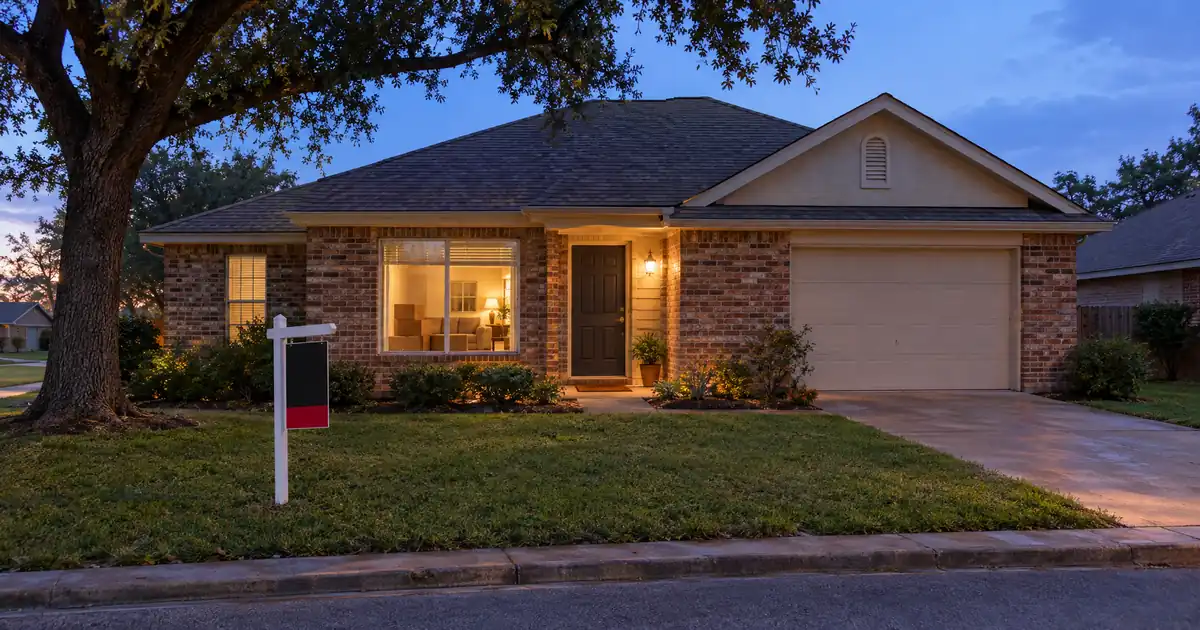
The Quick Read: No, not in practice. Texas treats any cash-out loan on your home as a special home equity loan with its own strict rules, and an FHA-insured loan generally does not fit inside them. You still have real options: a conventional Texas cash-out loan, an FHA refinance with no cash back, or leaving your FHA loan alone. The right one depends on how much equity you have and what the money is for.
How Does FHA Cash-Out Work Outside Texas?
In most states, an FHA cash-out refinance replaces your current mortgage with a bigger one and hands you the difference. Across the wholesale programs Lendmire places files with, the FHA cash-out reaches 80% loan-to-value (LTV, the loan as a share of the home’s appraised value). The home must be owned and lived in for 12 months before the case number is assigned. That case number is the file ID FHA issues when your loan is set up.
The loan also carries FHA mortgage insurance. There is an upfront premium of 1.75% of the base loan, which is financed into the balance. There is also an annual premium that depends on term, loan amount and LTV. Ratios start at 31/43 (housing costs and total debts as a share of income) and can reach 40/50 with documented compensating factors. Your credit score, income, and the appraisal all go through full lender review.
Lendmire’s FHA cash-out refinance program page covers those mechanics for states where the loan is on the table. Texas is not one of those states for a primary home. Lendmire is a mortgage broker licensed for consumer lending in Texas and 15 other states. Even so, the state’s rules, not the broker’s, decide this one.
Why Does Texas Block It?
Texas wrote home equity protections into its state constitution. Texas A&M’s Real Estate Research Center explains that these rules cover three loan types: cash-out refinances, home equity loans, and home equity lines of credit. In Texas, they are all the same kind of loan in the eyes of the law.
The rules exist to protect your homestead, meaning the home you live in. Texas shields a homestead from forced sale for most debts. In exchange, a loan that pulls equity out of it must follow a tight checklist.
One item on that checklist is the problem for FHA. The loan may be secured only by the homestead itself, with no other real or personal property pledged behind it. FHA cash-out is built on federal rules that do not mesh with that structure. Lenders and investors who buy FHA loans widely treat a Texas homestead cash-out as off the menu.
Here is the honest caveat. No HUD or Texas agency page states in plain words that FHA cannot insure a Texas cash-out. The conclusion rests on the state’s collateral rule and on consistent lender practice. A similar question was formally raised for VA loans, and a Texas Attorney General opinion (KP-0183) relayed the state mortgage regulator’s view that VA borrowers cannot do a Texas cash-out. That opinion covers VA only. The FHA answer follows similar logic but is not stated there.
Why Do Some Websites Say Yes?
You may have seen a page claiming FHA cash-out is “available in Texas” with an 80% cap. Treat that with caution. Those pages rarely cite the constitution, HUD, or a regulator. Some blur two different loans: an FHA refinance with no cash back, and a cash-out. The first is allowed. The second, on a Texas homestead, generally is not.
Ask any lender who says yes to show you the program guideline in writing. If the file cannot be placed with a lender, the promise means little.
What Are the Texas Cash-Out Rules at a Glance?
These are the rules any Texas cash-out loan must follow, FHA or not. Any loan that gets past them is a conventional-type Texas equity loan.
- 80% combined cap. The new loan plus every other lien on the home cannot exceed 80% of the home’s fair market value, per the Texas Department of Savings and Mortgage Lending. You and the lender must agree on that value in writing.
- One year between equity loans. You cannot take a new one before the first anniversary of closing on an existing one (365 days).
- One at a time. Only one of these loans can sit on the home. The Texas Office of Consumer Credit Commissioner’s home equity consumer disclosure says so directly.
- Everyone signs. Each owner and each owner’s spouse must consent.
- Primary home only. Second homes and rentals fall outside these loans, and FHA cash-out is also limited to a principal residence.
- No prepayment penalty, no personal recourse. The lender looks to the home, not to you personally, for repayment.
- Extra steps. There is a mandatory waiting period before closing, a cap on certain lender fees, a right to cancel after closing, and a closing held at a lender, attorney or title office. Ask your loan officer for the exact current numbers rather than trusting a web page.
The 80% cap is worth pausing on. It counts every lien, so a second mortgage or HELOC eats into it. Texas rules leave you at least 20% equity after the loan.
What Does That Look Like for a Real Homeowner?
Run the numbers on a homeowner with an FHA loan. Their balance is around 70% of the home’s value. They want cash for a roof and some debt payoff.
Texas allows up to 80% combined. That leaves roughly 10% of the home’s value as the most they could pull out, before closing costs and any financed fees come out of that room. Costs shrink the check further.
Now picture the same homeowner at 78% LTV. Nearly all the room is gone. Cash-out may not be worth it at all, since the new loan would cost fees and reset the term for very little money back. Leverage, reserves, and pricing vary by lender and program; the final terms follow the full file review.
Equity is the first filter. The second is the program. Since FHA cash-out is generally unavailable here, the loan that fits is usually a conventional Texas cash-out.
What Can You Do Instead?
| Option | Cash back? | Fit for an FHA borrower |
|---|---|---|
| FHA Streamline | Almost none | Keeps FHA; must refinance an FHA loan |
| FHA rate-and-term | No | Reset the loan; appraisal needed |
| Conventional Texas cash-out | Yes, capped by Texas | Replaces FHA; has its own insurance rules |
| Home equity loan or HELOC | Yes, capped by Texas | Sits beside your FHA loan |
The FHA Streamline. It refinances an existing FHA loan with no appraisal, a limited credit review and a net tangible benefit, meaning the new loan must actually help you. HUD’s streamline page says the loan being refinanced must already be FHA insured. It also caps cash back at $500. So a streamline is not a backdoor cash-out.
The FHA rate-and-term. With an appraisal, the FHA rate-and-term reaches 97.75% LTV on a principal residence you have lived in for the previous twelve months. No cash comes out beyond what the program allows. A refinance with no cash back is generally not a Texas equity loan, though a prior equity loan can change that. If you want a new term or to remove a co-borrower, this may work.
A conventional Texas cash-out. This replaces your FHA loan with a conventional one built for the Texas equity rules. You give up FHA terms. You also lose the mortgage insurance structure that comes with FHA. The new loan carries its own costs, so weigh them. Lendmire’s piece Can a Homeowner Consolidate Debt With an FHA Cash-Out Refinance? shows how that debt-payoff math works where FHA cash-out is available, and Lendmire can compare these paths with you.
A home equity loan or HELOC. Texas counts these as the same family of loan, so the same limits apply. They sit on top of your FHA loan, so your first mortgage stays put.
What Is the Catch with a Texas Equity Loan?
Once you take a loan under these rules, the label tends to stay. Texas law decides whether a loan is a Texas equity loan, and the rules apply however the loan is classed as cash-out or limited cash-out. Later refinances then stay constrained.
Texas does allow a way out under certain conditions, found in a later amendment to the constitution. It is a narrow door. If you may want to refinance again soon, talk it through with a loan officer before you sign.
What Else Should You Weigh Before Taking Cash Out?
A cash-out refinance may extend how long you take to pay off the mortgage. Your monthly payment may rise because a larger loan replaces the current one. Your terms change too, so you give up what you have now.
Paying non-mortgage debts with mortgage debt can raise the risk of foreclosure. In Texas your home has extra protection, but only if you keep paying the loan.
Tax treatment can depend on your situation; borrowers should speak with a qualified tax professional before relying on any deduction or credit.
Common Mistakes
- Assuming 80% is the lender’s rule. In Texas, the 80% combined cap is in the constitution itself and counts all liens.
- Treating a streamline as a cash-out. It is not. The cash limit is tiny.
- Counting only the new loan. Your existing second lien counts against the cap.
- Skipping the spouse. Each owner and spouse must consent, even if only one name is on the loan.
- Trusting a verbal yes. Ask for the program guideline in writing.
Key Terms Defined
FHA loan: A mortgage insured by the Federal Housing Administration, with lower down payments and flexible credit rules.
Cash-out refinance: A new, larger mortgage that pays off the old one and gives you the extra as cash.
Rate-and-term refinance: A new mortgage that changes your rate or term and does not pay you cash.
LTV (loan-to-value): Your loan balance divided by your home’s appraised value.
Homestead: The home you live in, which Texas protects from forced sale for most debts.
Section 50(a)(6): The part of the Texas Constitution that sets the rules for cash-out and equity loans on a homestead. Lenders call these “A6” loans.
Streamline refinance: An FHA-to-FHA refinance with limited paperwork and a required benefit to you.
Where Do You Go from Here?
If you are weighing a cash-out refinance against keeping the loan you have, Lendmire can help you compare the programs and the equity each one reaches. Everything here is subject to lender guidelines and full file review, and none of it is a commitment to lend. For the federal side of FHA policy, HUD’s Handbook 4000.1 page lists the current handbook and its updates.
Frequently Asked Questions
Can I do an FHA cash-out refinance on a Texas rental or second home?
No. Texas equity rules cover only your primary home, and FHA cash-out is also limited to an owner-occupied principal residence. Occupancy decides the leverage and the program, so a rental follows a different path.
Can I get any cash back from an FHA loan in Texas?
Very little. A streamline allows only a small amount of cash back, capped at $500. For a meaningful amount, you would look at a conventional Texas cash-out, a home equity loan, or a HELOC, each within the 80% combined cap.
How much equity do I need in Texas?
At least 20% remains after the loan, since the new loan plus every other lien cannot exceed 80% of fair market value. Closing costs and any financed fees reduce the usable amount. Your lender’s appraisal sets the value.
Can I refinance an FHA loan in Texas without taking cash out?
Generally yes. An FHA Streamline or an FHA rate-and-term refinance is not a cash-out. Eligibility depends on your loan, your payment history, occupancy, and lender review. If you previously took a Texas equity loan, your options narrow.
Why do some sites say FHA cash-out is available in Texas?
Many mix up a no-cash-out refinance with a cash-out, or repeat claims without citing the constitution or a federal rule. The answer rests on the state collateral rule and on lender practice, so ask any lender to show the written guideline.
For your own numbers, request a scenario review with Lendmire.
About Lendmire
Lendmire, NMLS# 2371349, is a mortgage brokerage with consumer lending licenses in 16 states. FHA, VA, conventional and jumbo purchase and refinance loans are arranged through wholesale lending partners, and each application is reviewed individually by the lender. Scotsman Guide named Lendmire a Top Mortgage Workplace in both 2025 and 2026.
Get Started
Ready to find the right loan for you?
In about 30 seconds you can review financing options available for your home or investment property. No commitment required.
Informational only. Not a Loan Estimate, approval, or commitment to lend. Program availability and eligibility are subject to lender guidelines, credit approval, property review, and underwriting.
References
1. Texas A&M Real Estate Research Center, What to Know About Home Equity Loans in Texas
2. Texas Attorney General, Opinion KP-0183
3. Texas Department of Savings and Mortgage Lending
4. HUD, FHA Streamline Refinance
5. HUD, Housing Handbooks (Handbook 4000.1)
This article is part of Lendmire’s FHA Loan series — every loan program’s qualification details, guidelines, and scenarios live on the loan options page.
Related reading: Does an FHA Cash-Out Refinance Require a Full Appraisal Every Time? · Cash-out Refinance With An Existing FHA Loan: Stay FHA Or Switch To Conventional? · FHA Cash-Out Appraisal Requirements for Value and Repairs
Brandon Miller
Founder & CEO, Mortgage Loan Originator, Lendmire LLC
- Mortgage Loan Originator · NMLS# 1129696 · Verify on NMLS Consumer Access
- North Carolina Real Estate Broker · License# 343312 · Verify on NCREC
- North Carolina Insurance Producer · License# 19053198 · Property, Casualty, Life, Health · Verify on NAIC SBS
- Lendmire LLC · Firm NMLS# 2371349 · Verify firm licensure
Disclosure information. Lendmire is a state-licensed mortgage brokerage under NMLS# 2371349. Lendmire is not a depository institution, direct lender, or financial advisor — all loans referenced are placed through wholesale lender partners and are subject to each lender's underwriting standards. This article is provided for general informational purposes and is not a commitment to lend, nor does it constitute financial, legal, or tax advice. Loan programs, terms, rates, and qualification standards change without notice and depend on borrower profile, property type, and the state in which the subject property is located. Equal Housing Opportunity provider. NMLS Consumer Access: nmlsconsumeraccess.org.