
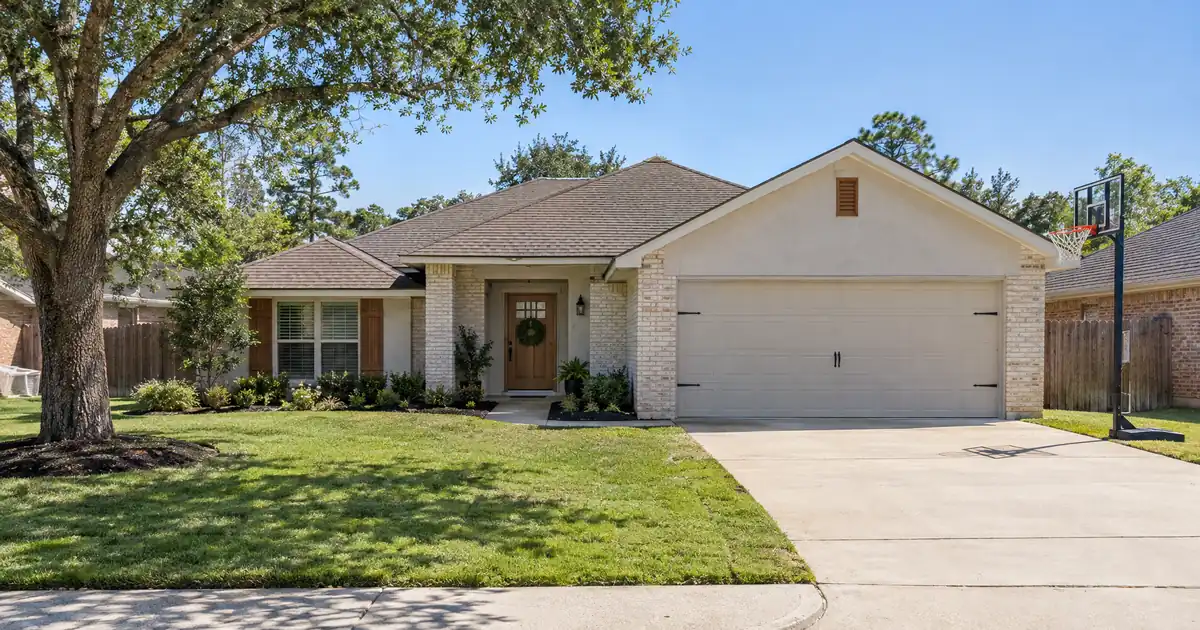
The Quick Read: Yes. You can pay off an FHA loan on your Texas home with a new conventional loan, including one that takes cash out. That new loan is a Texas home equity loan, so the combined debt on the home cannot pass 80% of its value. In practice, conventional is the usual route for cash-out here.
Why Is Conventional the Usual Route for Texas Cash-Out?
Texas treats any loan that pulls cash out of a homestead as a special kind of loan. Lawyers call it a “Section 50(a)(6)” loan, after the part of the state constitution that created it. A homestead is simply the home you live in as your primary residence. A 50(a)(6) loan is a home equity loan with its own rules: an equity cap, a fee limit, a mandatory waiting period, and a required closing location.
Here is where the confusion starts. Two common claims circulate online, and both sound right:
- “You can switch from FHA to conventional.” This is true.
- “FHA cash-out isn’t available in Texas.” Mostly true in practice, but stated too bluntly.
The two claims describe different things. The first is about leaving FHA. The second is about staying in FHA while taking cash out of a Texas homestead.
The picture is mixed. The HUD materials do not spell out how an FHA cash-out would work on a Texas home equity loan. Some Texas lawyers say FHA insurance is likely legal but impractical. Others flatly say it isn’t available. Across the wholesale programs Lendmire places consumer files with, Texas homestead cash-out runs conventional. That is practice, not a statute.
For the national version of the program, the FHA cash-out refinance program reaches 80% LTV on a home you have owned and lived in for 12 months. LTV, or loan-to-value, is the loan balance as a percent of the home’s value. Texas puts the same 80% ceiling on conventional cash-out, so the move costs you no borrowing room. Final terms depend on lender guidelines, property type, leverage, and the borrower’s complete credit picture.
It can even help you in one way. FHA charges mortgage insurance on cash-out loans. At 80% LTV, a conventional Texas cash-out generally does not carry mortgage insurance. More on that below.
What Are Your Three Paths as an FHA Homeowner?
You have three realistic options. Only one of them triggers the Texas equity-loan rules.
| Path | Best fit | Texas equity rules? | Main trade-off |
|---|---|---|---|
| FHA Streamline | Better loan, no cash | Generally no | Premium continues |
| Conventional rate-and-term | Leave FHA, no cash | Generally no | Needs equity and credit |
| Conventional cash-out | You need cash | Yes | 80% cap; stays an equity loan |
Path one: FHA Streamline. It refinances an existing FHA loan with no appraisal and a limited credit review. You must show a net tangible benefit, which means the new loan has to leave you measurably better off. The FHA premium continues. No cash comes out.
Path two: conventional rate-and-term. You swap the FHA loan for a conventional one and take no cash. This is the clean exit from FHA mortgage insurance. It needs enough equity and a full credit and income review.
Path three: conventional cash-out. This is the one in your title. Cash comes to you, and the loan becomes a Texas home equity loan.
What Actually Changes When You Leave FHA?
Plenty changes, and some of it helps you.
| Factor | FHA cash-out | Conventional Texas cash-out |
|---|---|---|
| Borrowing cap | 80% LTV | 80% combined debt, set by Texas law |
| Mortgage insurance | Upfront 1.75% plus annual | Generally none at 80% |
| Home history | Owned and occupied 12 months | Existing first loan 12 months old |
| Appraisal | Required | Required |
| Later refinance | Open to FHA options | Loan stays a Texas equity loan |
On FHA, the upfront premium is 1.75% of the base loan, and lenders typically finance it. The annual premium runs between 0.15% and 0.75% of the balance, depending on term, loan amount and LTV. Here is the part that surprises people. On a thirty-year loan above 90% LTV, the annual premium lasts the whole term. At or below 90%, it ends after eleven years.
Paying off the FHA loan ends the FHA premium. That is the main financial reason Texas homeowners look at this move. Whether it pays off for you depends on how much you owe, what you pay now, and what you need the cash for.
Where Does the 80% Cap Come From?
It comes from the Texas Constitution, not from a lender’s preference. Fannie Mae’s guide says that under Texas law, the maximum LTV and combined LTV for any Section 50(a)(6) loan is 80%, regardless of any automated underwriting recommendation.
“Combined” matters. The new loan plus every other lien on the home must fit under 80% of the appraised value. An existing second lien counts. So does a home equity line of credit. Fannie Mae’s Texas rules also do not permit a HELOC as subordinate financing behind one of these loans.
Practical takeaway: if you hoped to stack a second loan on top for more cash, the Texas math says no.
Worked Example: How Much Cash Can Come Out?
Run the numbers on percentages, not dollars. These inputs are modeled assumptions, not market data.
Say your home appraises at 100% of its value. Your FHA balance is 65% of that value, and you have no other liens.
- Maximum combined debt: 80% of value.
- Your FHA payoff: 65% of value.
- Room for cash and costs: roughly 15% of value.
Closing costs financed into the new loan eat into that 15%. So your actual cash is less than 15% of value.
Now flip it. If your FHA balance is 78% of value, you have almost no room. If it is 82%, a cash-out is off the table, and you are looking at a streamline or a wait. The appraisal decides which of those pictures is yours, and it is the one number you cannot know in advance.
What Does the Process Look Like Step by Step?
Think of it as a sequence with two built-in pauses. Lendmire does not promise a closing timeline here. The law builds in waiting periods, and they shape the calendar.
1. Confirm the basics. The home must be your primary residence. Fannie Mae’s cash-out policy lists paying off an existing first mortgage as eligible only if that mortgage is at least 12 months old.
2. Order the appraisal and check the 80% math. No appraisal waiver exists for this loan.
3. Receive the written notice. Texas requires a separate “Notice Concerning Extensions of Credit.” The loan cannot close before the 12th day after the lender provides it, according to the Texas Finance Commission’s home equity disclosure.
4. Get consent from every owner. The same notice says each owner of the home and each owner’s spouse must consent. A spouse who is not on the title still signs.
5. Pass the credit, income and ratio review. Conventional runs on its own guidelines, not FHA’s.
6. Close in the right place. Texas guidance says these loans close only at the office of the lender, an attorney or a title company. The state’s own notice says no exception exists for emergencies. No kitchen-table closings and no mobile notary at your house.
7. Wait out the right to cancel. Federal law gives you three business days to cancel a refinance on your primary home. The FHA loan is paid off from the proceeds, and any remaining cash goes to you after that period ends.
Why does your original FHA loan not have this cancel right? Purchase loans are exempt. A refinance is not.
Once a Texas Equity Loan, Always a Texas Equity Loan?
Not quite, and the difference is the real trade-off in this decision.
The new loan stays a Texas home equity loan. Only one such loan may sit on your home at a time. If you want cash again later, it has to be another equity loan, and the 80% cap applies again.
Texas did soften the old rule. A home equity loan can now be refinanced into an ordinary loan with no cash out. The conditions are:
- At least one year has passed since the equity loan closed.
- No new money is advanced.
- Combined liens are at or under 80% of value.
- The required notice is delivered on time.
Texas agency rule text puts it this way: the refinance may not close before the first anniversary of the equity loan’s closing. Confirm current wording with your lender, since the posted rule is an older copy.
So before you commit, weigh what you give up. You gain cash and may drop FHA insurance. You lose some flexibility for a year, and you carry the equity-loan label afterward.
Who Qualifies, and What Do Lenders Look For?
A conventional lender runs a full review. Expect the file to cover:
- Equity. You need at least 20% of the home’s value left after closing.
- Credit. Conventional guidelines differ from FHA’s, and some lenders set a higher floor than others.
- Income and debts. FHA’s base ratio pair is 31/43 (housing to total), with documented compensating factors reaching 40/50 at the top tier. Conventional uses its own automated findings and limits.
- Occupancy. The home must be your primary residence. Second homes and rentals are different transactions, and the Texas home equity rules do not cover them.
- Seasoning. Your existing first mortgage must be old enough, per the 12-month standard above.
Experience note: files that stall here usually stall on the 80% math, not on credit. A borrower sees a purchase-price number from years back and forgets the appraisal can come in lower. Run the cap against a realistic value before you pay for anything.
Everything above is subject to lender guidelines and a full file review. None of it is a commitment to lend.
What About Costs?
Texas limits how much lender fees can total as a share of the loan. Certain charges, such as the appraisal, survey and some title items, are generally handled separately. Your Loan Estimate and Closing Disclosure show the actual numbers. Compare them line by line, not headline by headline.
Cash-out adds risk, too. A bigger balance generally raises your monthly payment and can stretch the payoff. Turning credit card or other debt into mortgage debt also puts the home behind that debt. Borrow what the project needs, not what the cap allows.
Tax treatment can depend on your situation; borrowers should speak with a qualified tax professional before relying on any deduction or credit.
When Is Staying With FHA the Smarter Move?
Sometimes the answer is to stay put. Honestly, this is a close call for many homeowners.
Stay FHA if:
- You do not need cash. A streamline needs no appraisal and keeps the process simple.
- Your equity is thin. If less than 20% would remain after a cash-out, the 80% cap shuts that door.
- You want a lower balance structure but not a new equity-loan label. An FHA rate-and-term refinance with an appraisal reaches 97.75% on a principal residence occupied for the previous twelve months.
Move to conventional if you need real cash, your equity clears 20% after costs, and you want the FHA premium gone. The stronger play for many homeowners is to price both paths side by side before choosing.
Key Terms Defined
Homestead: the home you live in as your primary residence, which Texas law protects with special rules.
Seasoning: the waiting period a lender wants before you can refinance, such as an existing loan reaching a minimum age.
Right of rescission: your federal right to cancel certain refinances on your primary home, which comes with a short cancellation window whose timing depends on the specific transaction and lender.
Rate-and-term refinance: a refinance that changes your loan’s rate or term without taking cash out.
Annual mortgage insurance premium: the yearly FHA charge, paid monthly, that continues until it ends under the program’s rules.
Net tangible benefit: the measurable improvement a refinance must give you under FHA’s streamline rules.
Common Mistakes and Timing Traps
- Assuming Texas allows 85% or 90%. The cap is 80%, set by the constitution.
- Counting on a second loan. Every lien counts toward the 80%.
- Forgetting the spouse. Consent is required even when the spouse is not on the loan.
- Scheduling around the wrong date. The notice period and the cancel window are fixed. Build your timeline around them.
- Skipping the appraisal math. A lower appraisal can erase your cash.
- Missing the seasoning clock. A newer existing loan can delay you.
Frequently Asked Questions
Can I switch from FHA to conventional on a Texas homestead?
Yes. You can pay off an FHA loan with a conventional loan. Without cash out, it is a rate-and-term refinance. With cash out, the new loan becomes a Texas home equity loan and the 80% cap applies.
Can I get an FHA cash-out refinance in Texas?
It is rarely how a Texas homestead cash-out is done. Lendmire has not found a HUD rule that addresses FHA cash-out on a Texas home equity loan, and Texas lawyers disagree on the question. In practice, conventional is the usual route.
Does the new loan permanently carry homestead restrictions?
It stays a Texas home equity loan. After at least one year, the loan can be refinanced into a standard no-cash loan if no new money is advanced and combined liens stay at or under 80%.
Do both spouses sign?
Yes. Texas requires the consent of each owner and each owner’s spouse, even if the spouse is not on the title.
What if I don’t have enough equity?
Consider an FHA Streamline if you do not need cash, or wait while your balance falls and the home’s value grows. If your combined debt would exceed 80% of value, a Texas cash-out is not available.
Next Steps
If you are weighing a cash-out refinance against keeping the loan you have, Lendmire can help you compare the programs and the equity each one reaches.
For your own numbers, request a scenario review with Lendmire.
About Lendmire
Lendmire is a mortgage brokerage (NMLS# 2371349) licensed for consumer mortgage lending in 16 states, arranging FHA, VA, conventional and jumbo purchase and refinance loans through a wholesale lending network. Eligibility is determined by the lender on each file. Scotsman Guide named Lendmire a Top Mortgage Workplace in both 2025 and 2026.
Get Started
Ready to find the right loan for you?
In about 30 seconds you can review financing options available for your home or investment property. No commitment required.
Informational only. Not a Loan Estimate, approval, or commitment to lend. Program availability and eligibility are subject to lender guidelines, credit approval, property review, and underwriting.
References
1. HUD
3. Fannie Mae Selling Guide B2-1.3-03: Cash-Out Refinance Transactions
4. Texas OCCC: Home Equity Closing Guidance
5. Texas Credit Union Dept. 7 TAC §153.45
This article is part of Lendmire’s FHA Loan series — every loan program’s qualification details, guidelines, and scenarios live on the loan options page.
Related reading: Can a Conventional or FHA Borrower Do a VA Cash-Out in Year One? · VA Cash-Out Lender Questions for a Conventional or FHA Refinance · How to Plan an FHA Cash-Out Now and a Conventional Move Later
Brandon Miller
Founder & CEO, Mortgage Loan Originator, Lendmire LLC
- Mortgage Loan Originator · NMLS# 1129696 · Verify on NMLS Consumer Access
- North Carolina Real Estate Broker · License# 343312 · Verify on NCREC
- North Carolina Insurance Producer · License# 19053198 · Property, Casualty, Life, Health · Verify on NAIC SBS
- Lendmire LLC · Firm NMLS# 2371349 · Verify firm licensure
Compliance and disclosures. Lendmire (NMLS# 2371349) is a licensed mortgage broker and is not a direct lender, depository institution, financial advisor, or tax professional. Content in this article is general market analysis and educational information — not financial, legal, or tax advice for any specific situation. Lendmire does not guarantee loan approval; every transaction is subject to underwriting by the funding lender. Mortgage pricing and loan program guidelines are subject to change at any time without notice and vary by borrower characteristics, property type, and state regulations. Lendmire complies with Equal Housing Opportunity. Licensure verification: NMLS Consumer Access.