
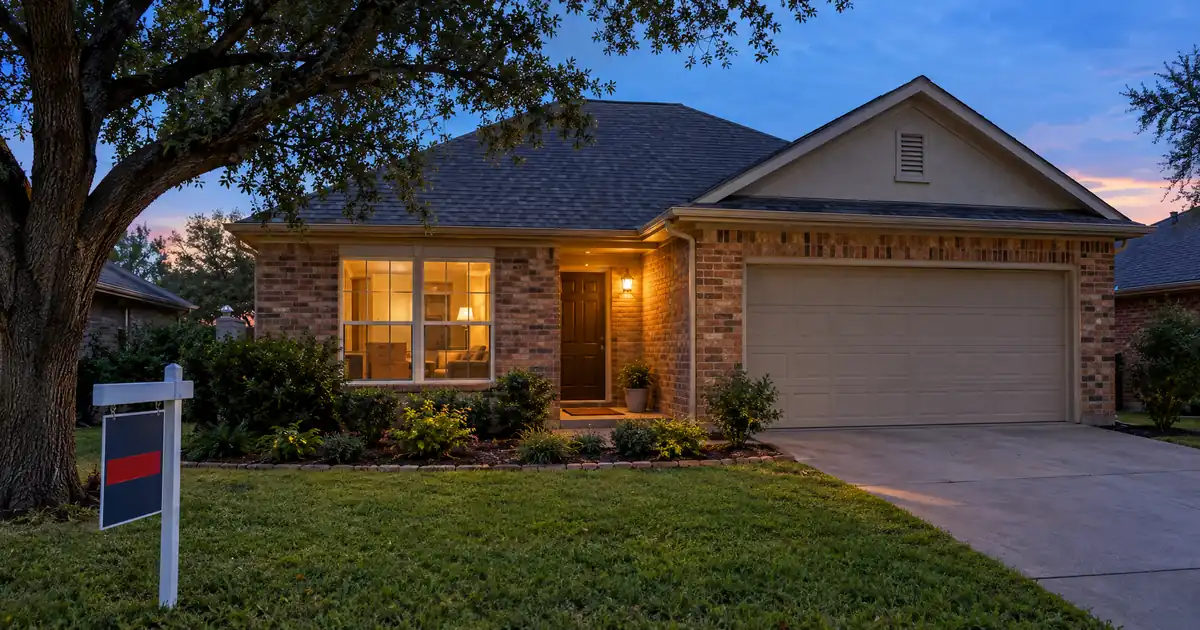
The Quick Read: Two rule sets apply at once. VA allows a cash-out refinance that pays off any type of existing loan, including a conventional or FHA loan. Texas homestead law decides whether a loan carrying the VA guaranty can legally put cash in the borrower’s hand. The state’s published position says it cannot, while a payoff with no cash back is treated differently, with caveats covered below.
What Does VA Mean by “Cash-Out”?
VA uses “cash-out” for any refinance that replaces your current loan with a new one on different terms. Taking cash is optional. VA’s cash-out refinance page says the product can pull cash from equity or “refinance a non-VA loan into a VA-backed loan.”
That second use is the one this article is about. Across the wholesale programs Lendmire works with, a VA cash-out refinance reaches up to 100% of the appraised value, including the financed funding fee, and it can refinance any loan type into VA. Lendmire’s VA cash-out refinance program page covers the product in general. This piece covers the Texas wrinkle.
VA’s eligibility test has three parts, and all three must be true:
- You qualify for a Certificate of Eligibility (COE).
- You meet VA’s and the lender’s credit and income standards.
- You will live in the home you are refinancing.
VA sets no minimum credit score. The wholesale programs Lendmire places VA loans with start at a 580 decision score. That floor is a lender rule, not a VA rule, and it is subject to lender guidelines and full file review.
Type I and Type II: The Split That Matters in Texas
VA divides cash-out refinances into two types under VBA Circular 26-19-05.
- Type I: the new loan, including the VA funding fee, does not exceed the payoff of the loan being replaced. No cash goes to the borrower.
- Type II: the new loan exceeds the payoff, so cash goes to the borrower.
Both are “cash-out refinances” in VA’s vocabulary. Texas does not see them the same way. A Type I loan looks like a refinance of an existing debt. A Type II loan looks like a home equity loan. That difference is the whole story on a Texas homestead.
Why Texas Treats Homestead Equity Differently
Texas Constitution Article XVI, Section 50 limits what can be secured by a homestead. A cash-out loan on a Texas primary residence is a home equity loan under Section 50(a)(6). The Texas A&M Real Estate Research Center notes that Section 50 covers cash-out refinances, home equity loans and HELOCs.
Section 50 of the Texas Constitution sets several conditions on an equity loan:
- The new loan plus all other liens of record may not exceed 80 percent of fair market value.
- The loan must be the only debt secured by the homestead, with limited exceptions.
- A 12-day notice period applies before closing.
Now compare that to VA’s national structure, which allows up to 100 percent of appraised value. Those two numbers cannot both govern the same loan.
The Attorney General’s Position
In Opinion KP-0183, the Texas Attorney General treated a “Texas Cash Out” loan as a home equity loan under Section 50(a)(6). The opinion reasoned that VA’s guaranty acts as collateral other than the homestead. Section 50(a)(6)(H) bars that. The conclusion: a VA cash-out refinance that returns cash is precluded in Texas.
The same opinion says Section 50(a)(6) does not apply to a traditional VA purchase-money mortgage or to a refinance loan. The opinion text draws that line itself.
An Attorney General opinion is advisory, not binding law. The constitution’s text is the law. In practice, the state’s published position is the one lenders follow when they underwrite. As of the published opinion, that is where things stand. Rules can change, so confirm with a licensed lender and a title company before you plan around any of this.
Why Online Answers Disagree
Search a Texas VA refinance question and you will find flat “no” answers and “yes, with limits” answers. They are usually both describing real rules but answering different questions.
- The “no” camp is answering: can a VA loan give me cash from my Texas homestead? That is the Type II question, and the state’s position is no.
- The “yes, with limits” camp is answering: can a VA loan replace my existing mortgage? That is the Type I question, and the answer can be yes when the payoff is clean.
Neither is wrong. The dividing line is whether any cash comes back to you beyond the debt being paid and reasonable refinance costs.
Where the Line Falls: Payoff Versus Cash
Section 50(e) governs refinancing a non-equity debt, such as an ordinary purchase-money mortgage. Under 7 Tex. Admin. Code §153.41, a refinance of that debt, including advances of additional funds, works only if one of two conditions is met. Either the refinance is itself a Section 50(a)(6) loan, or the additional funds cover “reasonable costs necessary to refinance” or certain other listed purposes.
The Texas Department of Insurance has noted in a bulletin that “reasonable costs necessary to refinance” is not defined. That leaves room for judgment, and it is a title and lender legal question, not something to guess at.
The practical reading:
- A VA loan that pays off the old mortgage plus reasonable costs, with no cash back, is a refinance of a non-equity debt.
- A VA loan that returns cash looks like a Section 50(a)(6) transaction. That is where the guaranty problem arises.
What the Old Loan Is Changes the Answer
The loan being paid off drives the analysis. Here is how it sorts out.
| Loan being paid off | Texas treatment | VA payoff, no cash back |
|---|---|---|
| Purchase-money first lien | Non-equity debt, Section 50(e) | Generally the clean path |
| Conventional or FHA purchase loan | Same as above | Generally the clean path |
| Existing Texas home equity loan | Section 50(f) limits apply | Title and lender legal review |
| HELOC or equity second lien | Treated as equity debt | Title and lender legal review |
A purchase-money mortgage, whether conventional or FHA, is the usual starting point. Section 50(e) allows refinancing it without turning the new loan into an equity loan, so long as the extra funds stay within the allowed purposes.
An existing home equity loan is harder. Section 50(f) bars refinancing it with a lien unless the new loan is itself a Section 50(a)(6) or (a)(7) loan, or the Section 50(f)(2) conditions are met. The Texas Legislature’s analysis of the 2017 amendment describes those conditions, including a first-anniversary timing requirement. Whether a particular VA loan can use that route is a question for the title company and the lender’s legal review. Do not assume it works.
How the File Runs, Step by Step
Here is the sequence on a Type I payoff of a non-VA loan.
1. Confirm eligibility. Get the COE and confirm you will occupy the home. VA’s standards sit on top of the lender’s credit and income standards. Residual income is the controlling underwriting test on VA files. The 41% debt-to-income figure is a guideline, not a cap, and a higher ratio needs residual income well above the table.
2. Classify the existing loan. Is it a purchase-money loan or an equity loan? This is the Texas decision point. Your closing documents or payoff statement usually settle it, and the title company confirms it.
3. Order the appraisal. VA’s appraiser sets the reasonable value. The 100% ceiling is measured against it, and the financed funding fee counts inside that ceiling.
4. Document the net tangible benefit. VA’s cash-out quick reference lists at least one net tangible benefit for a non-VA payoff, plus an initial and a final cash-out disclosure uploaded to VA. If VA’s system finds no net tangible benefit, the guaranty does not issue. The guide is dated, so the lender confirms the current rule against the VA Lenders Handbook.
5. Handle seasoning. The wholesale programs carry seasoning and a net tangible benefit test on the VA cash-out. VA’s guide lists seasoning and recoupment certifications for VA-to-VA refinances, not for non-VA payoffs, so ask the lender which one applies to your file.
6. Review disclosures and close. As a consumer mortgage, the file carries a Loan Estimate and a Closing Disclosure. Check that the Closing Disclosure shows no cash to you. Reconcile the payoff figure against the old lender’s statement.
What Counts as a Net Tangible Benefit?
VA’s lender call materials say the loan must show at least one of eight net tangible benefits. Examples include keeping loan-to-value at or below 90%, refinancing an interim construction loan, increasing monthly residual income, and moving from an adjustable-rate loan to a fixed-rate loan. Lenders also provide a comparison disclosure of the old and new loan.
For a borrower replacing a loan with mortgage insurance, the benefit is often easy to show. VA loans carry no mortgage insurance of any kind. The full list of eight sits in federal regulation and the VA Lenders Handbook, and the lender applies it to your file.
Funding Fee Mechanics
The funding fee is a one-time charge, not monthly mortgage insurance. On a cash-out refinance, it is 2.15% on first use and 3.3% after first use, per VA News. Veterans receiving compensation for a service-connected disability, and the other exempt groups, do not pay it.
The fee can be financed. That raises the balance, and it counts inside the 100% ceiling. On a Type I loan, it also counts toward the test that the new loan not exceed the payoff. Ask the loan officer to show the fee and the payoff side by side before you commit.
Edge Cases Where the General Rule Breaks
- The IRRRL cannot do this job. VA’s home loans page describes the IRRRL as a VA-to-VA loan. It only works if you already have a VA-guaranteed loan on the property. It cannot pay off a conventional or FHA loan.
- Occupancy. VA cash-out requires that you live in the home. Texas homestead status protects a family’s or single adult’s residence. The two line up for a primary residence and fail for anything else.
- Cash back by accident. A payoff estimate that runs short, or a closing that credits you money, can turn a Type I file into a Type II file. On a Texas homestead, that is not a paperwork issue.
- Second lien route. Some borrowers who need cash look at a separate Section 50(a)(6) second lien behind an existing VA first mortgage. That is a question for a Texas real estate attorney and the title company, not something to assume.
- Law may change. The constitutional text and the Attorney General opinion are not new. Treat the analysis as current to the published opinion and confirm it before you act.
What the Borrower’s Decision Looks Like
Consider a Texas homeowner with a conventional loan carrying monthly mortgage insurance. The home has appreciated, and the owner is a veteran with a COE. The goal is to drop the insurance and move into a VA loan.
That is a Type I file. The new loan pays off the old one, covers reasonable refinance costs, and returns nothing. VA’s rules allow it. The Texas rule for refinancing a non-equity debt allows it when the extra funds stay within the allowed purposes. The appraisal sets the ceiling, and residual income decides whether the file clears.
Now change one fact. The same owner wants cash for a renovation. That is a Type II file. The state’s published position says a VA loan cannot do it on a homestead. The options move to a conventional Section 50(a)(6) loan or another structure, and the 80% combined limit applies.
Also weigh closing costs. VA warns that refinance closing costs can add up to thousands of dollars. VA limits what lenders can charge and bars prepayment penalties. Texas Section 50(a)(6) loans add their own fee limits and the 12-day wait. Confirm how those apply to your transaction.
Tax treatment can depend on your situation; borrowers should speak with a qualified tax professional before relying on any deduction or credit.
Key Terms Defined
Certificate of Eligibility (COE): the VA document that confirms your service qualifies you for the benefit.
Type I cash-out: a VA refinance where the new loan does not exceed the payoff, so no cash goes to the borrower.
Type II cash-out: a VA refinance where the new loan exceeds the payoff and cash goes to the borrower.
Net tangible benefit: a measurable gain, such as removing mortgage insurance or moving to a fixed rate, that the refinance must show.
Section 50(a)(6): the Texas constitutional provision that governs home equity loans on a homestead.
Funding fee: the one-time VA charge, which can be financed and is waived for exempt veterans.
Residual income: the money left each month after debts and living costs, which is the controlling VA underwriting test.
Frequently Asked Questions
Can a VA loan pay off my conventional mortgage on a Texas homestead?
Generally yes, when no cash comes back to you. VA treats this as a cash-out refinance of a non-VA loan, and the Texas rules for refinancing a non-equity debt allow it when extra funds stay within the allowed purposes. The title company and lender confirm how it applies to your loan.
Can I take cash out with a VA loan on my Texas home?
Not under the state’s published position. The Attorney General reasoned that VA’s guaranty counts as collateral beyond the homestead, which Section 50(a)(6)(H) bars. A Type II loan that returns cash is the structure at issue.
Does the IRRRL work if my current loan is FHA or conventional?
No. The IRRRL requires an existing VA loan on the property. Paying off a non-VA loan runs through the cash-out refinance product instead.
What if my current loan is a Texas home equity loan?
That changes the analysis. Section 50(f) restricts refinancing an equity loan, and the exceptions include a timing requirement. Whether a VA loan can use them is a title and lender legal question, so raise it before you apply.
Do I need a minimum credit score?
VA sets none. The wholesale programs Lendmire places VA loans with start at a 580 decision score, and some lenders set a higher floor. Credit, income and residual income are all reviewed, subject to lender guidelines.
For your own numbers, request a scenario review with Lendmire.
About Lendmire
Lendmire is a mortgage brokerage (NMLS# 2371349) licensed for consumer mortgage lending in 16 states, arranging FHA, VA, conventional and jumbo purchase and refinance loans through a wholesale lending network. Eligibility is determined by the lender on each file. Scotsman Guide named Lendmire a Top Mortgage Workplace in both 2025 and 2026.
Get Started
Ready to find the right loan for you?
In about 30 seconds you can review financing options available for your home or investment property. No commitment required.
Informational only. Not a Loan Estimate, approval, or commitment to lend. Program availability and eligibility are subject to lender guidelines, credit approval, property review, and underwriting.
References
1. VA.gov – Cash-out refinance loan
3. Texas A&M Real Estate Research Center
4. Section 50 of the Texas Constitution
5. Texas Attorney General Opinion KP-0183
8. Texas Dept. of Insurance bulletin B-0008-98
9. Texas Legislature SJR 60 analysis
10. VA Loan Guaranty cash-out quick reference
11. VA: Aq42 Lender Call Jan2019
13. VA Home Loans (benefits.va.gov)
This article is part of Lendmire’s VA Loans series — every loan program’s qualification details, guidelines, and scenarios live on the loan options page.
Related reading: VA Cash-Out Requirements vs IRRRL on an Existing VA Loan · Can a Veteran With a VA Loan Use VA Cash-Out to Buy After a PCS? · Can You Do a VA Cash-Out in Year One of an Existing VA Loan?
Brandon Miller
Founder & CEO, Mortgage Loan Originator, Lendmire LLC
- Mortgage Loan Originator · NMLS# 1129696 · Verify on NMLS Consumer Access
- North Carolina Real Estate Broker · License# 343312 · Verify on NCREC
- North Carolina Insurance Producer · License# 19053198 · Property, Casualty, Life, Health · Verify on NAIC SBS
- Lendmire LLC · Firm NMLS# 2371349 · Verify firm licensure
Disclosures. The information presented in this article is general market commentary, not financial, legal, or tax advice. Lendmire is a mortgage brokerage (NMLS# 2371349) — not a direct lender or depository institution — and loan placement is subject to lender underwriting. Nothing in this content represents a commitment to lend. Loan terms, pricing, and program availability vary based on borrower qualifications, property characteristics, and state of subject property, and are subject to change at any time. Lendmire complies with Equal Housing Opportunity requirements. Consumer access: nmlsconsumeraccess.org.