
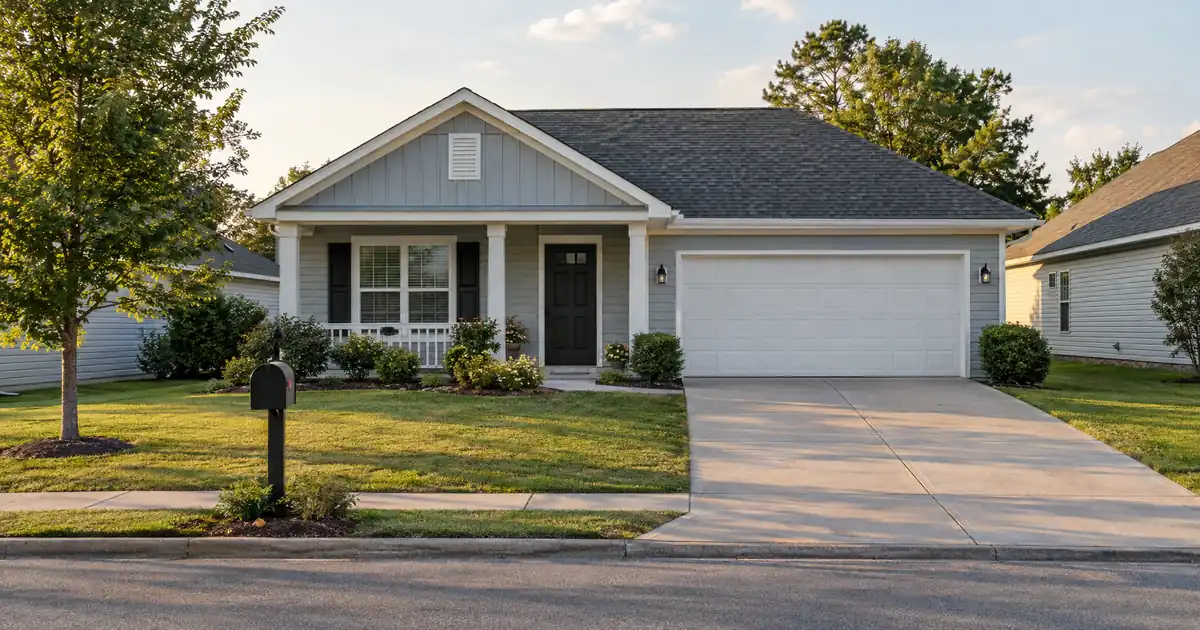
The Quick Read: Yes. A cash-out refinance on the home you live in carries a federal right to cancel. The right comes from the federal truth-in-lending rulebook, which implements the Truth in Lending Act. It applies because the loan puts a new lien on your principal dwelling. Lenders generally hold the cash until the cancellation window closes, and timing varies by file and lender.
Cash-out refinance estimate
The starting figures are an example value with a balance and a cash request in proportion. Replace them with yours.
Editable benchmark: 7.40% as of October 15, 2026 · Freddie Mac 30-year average via FRED®. A conventional market reference, not a cash-out refinance quote.
Illustrative starting assumptions: a $350,000 home value, a $193,000 current balance, the agency cap on a one-unit principal residence, a thirty-year term at the current Freddie Mac benchmark, and property taxes and insurance estimated at typical national rates. Every field is editable.
Illustrative estimate only — not a Loan Estimate, approval, quote, or commitment to lend. The rate field carries the weekly Freddie Mac thirty-year conventional benchmark, a market reference and not a cash-out refinance quote; a cash-out loan is priced by the lender at lock. The cash available is the loan the program cap allows less the balances paid off, before closing costs, which are not included. The HELOC line is the program’s combined loan-to-value ceiling applied to the same value and balance. Taxes and insurance are editable estimates. Licensed in sixteen states for consumer mortgages.
What Does the Right of Cancellation Say?
The rule is short. Under the federal truth-in-lending rulebook, section 1026.23, a credit transaction that puts a lien on your principal dwelling gives each owner a right to rescind. Rescind just means cancel.
You don’t need a reason. Within the window, you can cancel for any reason or none, and the lien becomes void if you do.
Three points shape everything that follows:
- The right covers loans that aren’t used to buy the home. Refinances and home equity loans fall in that group, per the federal consumer-finance regulator’s consumer guidance.
- Business days include Saturdays. They exclude Sundays and legal public holidays.
- The lender can’t deliver the loan money until the window has run, unless you validly waive it.
Why a Cash-Out Refinance Is the Textbook Case
A cash-out refinance adds new money and a new lien to the home you live in. That is the exact situation the rule was written for.
If you’re weighing cash-out refinance programs, plan on the window as a built-in step. It isn’t a sign of a problem with your file. It applies to every qualifying loan of this type.
Purchase loans are different. When you buy a home with a mortgage, you have no right to cancel once you sign the closing documents.
One nuance matters for cash-out. The new lender question is not the deciding variable. The federal truth-in-lending rulebook exempts a refinance only when the same creditor refinances its own existing loan. Even then, the right still applies to any new money. The federal consumer-finance regulator’s official commentary says a new advance is rescindable. A true cash-out has new money by definition, so that portion is covered.
When Does the Clock Start, and How Do You Count It?
The three-day clock starts only after three things have happened. You have signed the loan contract, usually the note. You have received the accurate Truth in Lending disclosure, usually the Closing Disclosure. And you have received two copies of the notice of your right to cancel.
The federal consumer-finance regulator’s right-to-cancel explainer describes the same trigger. You may cancel without cost until midnight of the third business day after the latest of those events.
The deadline is midnight, not business close. Here is the federal consumer-finance regulator’s own worked example, written without dates:
| Day | What happens | Counts? |
|---|---|---|
| Friday | Loan closes, disclosures given | Day of closing, no |
| Monday | Notice delivered (last event) | Starts the clock, no |
| Tuesday | First business day | Yes |
| Wednesday | Second business day | Yes |
| Thursday | Third business day | Yes, ends at midnight |
The window expires at midnight on Thursday. If the notice had come a day later, every date would shift by a day.
Now add a Sunday or a holiday. Neither counts. A signing late in the week, or just before a holiday, stretches the wait. Borrowers planning a purchase or a payoff around the cash should count business days with a calendar in hand.
For more on how this waiting period affects the timing of your funds, see Lendmire’s piece how rescission delays cash-out refinance funds on a primary home.
What Happens to Your Money and Your Old Loan During the Window
Your old mortgage stays in place until the new loan funds. That is the single most useful thing to remember.
The sequence from the borrower’s side runs like this:
1. You sign the new loan documents.
2. The rescission window runs. No money moves.
3. The window closes. The lender is reasonably satisfied you haven’t cancelled.
4. The new loan funds, pays off the old first mortgage, and releases your cash.
If you cancel, the new lien is void. You owe nothing on the new loan. The CFPB says money or property you paid as part of the transaction must be returned within 20 calendar days of the lender receiving your notice.
Cancelling does not cancel your mortgage. You still owe the original loan. Keep making those payments until you’ve confirmed the payoff of the old loan.
How Do You Cancel?
Cancel in writing. The CFPB is clear that calling or visiting the lender is not enough.
The written notice counts if you mail it, file it for telegraphic transmission, or deliver it to the lender’s place of business within the period. That means a notice you mail before midnight on the last day is timely. Practical steps:
- Use the cancellation form attached to your notice, or write your own.
- Sign it, and have every owner on the notice sign if possible.
- Send it in a way that leaves a record, and keep a copy.
- Don’t rely on a phone call to start the process.
Should You Cancel? Real Reasons People Do (and Don’t)
Most borrowers let the window pass. A few cancel for good reasons. Here is how the decision tends to break down.
Reasons to cancel: You read the Closing Disclosure and the cash-out amount, balance, or costs differ from what you expected. A family circumstance changed. You found a better way to reach the same equity. Any of these is a legitimate basis, and you don’t have to explain it.
Reasons not to cancel casually: The old loan remains. Your pricing, terms, and the file as submitted may not hold if you re-apply later. Treat the window as a last review, not a casual option. The best time to question the numbers is before signing.
Lendmire’s brokers see the same pattern across wholesale programs. Borrowers who compare the Loan Estimate to the Closing Disclosure before the signing appointment rarely need the window at all. The cash-out amount, balance, and costs in those two documents should line up with what you expected.
When the Right Does Not Apply
The right is narrow. It covers the home you live in as your principal dwelling. Here is where it does and doesn’t reach.
| Scenario | Right to cancel? | Why |
|---|---|---|
| Cash-out on your primary home | Yes | New lien on principal dwelling |
| Rate-and-term with a new lender | Generally yes | Refinance lien on principal dwelling |
| Same lender, no new money | Exempt | Same-creditor exemption |
| Same lender, new money | Yes, on the new money | New advance is rescindable |
| Purchase of a home | No | Acquisition exemption |
| Second home | No | Not a principal dwelling |
| Business-purpose loan | No | Outside the rule |
| State agency as the lender | No | Exempt |
The FTC’s consumer page confirms the second-home exclusion. It lists a house, condominium, mobile home, or houseboat as covered main residences. For a vacation or second home, occupancy decides the leverage and the rescission question alike: a cash-out on a second home tops out at 75% LTV and carries no cancellation window. The exact numbers vary by lender and program and follow a full review of property, leverage, and credit.
FHA Streamline and VA IRRRL are refinances of existing government loans, and neither allows cash out. Whether and how the window applies to a streamline depends on the transaction and the lender’s disclosures, so confirm it with your loan team.
Special Cases: Co-Owners, Waivers, and Lender Mistakes
Co-owners. The right belongs to each consumer whose ownership interest will be subject to the lien. A spouse on title who isn’t on the loan may still hold it. Each owner is entitled to the notice.
Waivers. You can waive the window only for a “bona fide personal financial emergency.” The statement must be in your own words, dated, and signed by every owner. Pre-printed forms aren’t allowed. A waiver is not routine paperwork, and a cash-out for a planned project rarely qualifies. The CFPB explains the waiver standard in plain terms.
Lender mistakes. If the lender never gave you the Truth in Lending disclosure or two copies of the notice, or made certain important errors, the right can extend for up to three years. Treat that as a remedy for real mistakes, not a plan. The CFPB suggests speaking with a lawyer if you think it applies.
For a second look at the mechanics, Lendmire’s overview of the right of rescission on a primary home covers the borrower’s side.
Cash-Out Rules That Run Alongside Rescission
Rescission is a consumer-protection right. It does not decide whether you get the loan. Eligibility, set by the lender and the loan program, applies to the same file. A few figures matter most for a conventional cash-out on a primary home, subject to lender guidelines and full file review:
- Leverage. The standard conventional ceiling is 80% LTV on a one-unit primary residence. Two- to four-unit principal residences, second homes, and investment property sit at 75%.
- Seasoning. The first mortgage being paid off must generally be at least 12 months old, measured note date to note date. At least one borrower must have been on title for 6 months, with exceptions such as delayed financing, inheritance, and legal awards.
- A higher-leverage wholesale lane. One lane reaches 89.99% LTV with no mortgage insurance. It calls for a 680 score, a 50% ratio, a thirty-year fixed rate, a primary residence, a conforming balance, and its own six months of seasoning.
- Texas homestead. The state constitution caps cash-out on a homestead at a lower leverage limit than that lane allows, so the higher-leverage wholesale lane isn’t written there.
Compare that to a refinance, which reaches 95% LTV on a one-unit primary residence but pays off only the existing first mortgage, closing costs, and a purchase-money second lien, with only incidental cash back. If the goal is cash in hand, the leverage ceiling is lower. If the goal is only a new loan structure, the ceiling is higher. Final terms depend on the lender’s guidelines, the property type, and the borrower’s complete credit picture.
Credit, income, debt-to-income, the appraised value, occupancy, and the use of proceeds decide the outcome. Rescission only adds a waiting period between signing and funding.
Key Terms Defined
Rescission: The legal right to cancel a loan after signing, within a set window, with no reason needed.
Principal dwelling: The home you live in as your main residence. Vacation homes and rentals don’t count.
Consummation: The moment you become contractually obligated on the loan, usually when you sign the note.
New advance: Money the new loan provides beyond the old balance and refinancing costs. This is the part of a same-lender refinance that stays cancellable.
Seasoning: The minimum time a loan or ownership must exist before a new cash-out loan is allowed.
Business day (for rescission): Any calendar day except Sundays and legal public holidays. Saturdays count.
Next Steps
If you’re weighing a cash-out refinance against keeping the loan you have, Lendmire can help you compare the programs and the equity each one reaches. Bring your current loan’s age, your occupancy, and your target cash amount, and the comparison gets concrete fast.
Tax treatment can depend on your situation; borrowers should speak with a qualified tax professional before relying on any deduction or credit.
Frequently Asked Questions
Do I have a right to cancel if I refinance with a new lender and take cash out?
Yes, in general. A cash-out refinance of your primary home creates a new lien and new money, which puts it inside the rule. The exemption is narrow and applies to a same-creditor refinance with no new money. Your Closing Disclosure and the two copies of the notice should show your cancellation deadline.
Does the right apply to a second home or rental I refinance?
No. The FTC states the right to cancel does not apply to a vacation or second home, and business-purpose loans fall outside it as well. Occupancy decides the rule, and it also decides leverage. Conventional cash-out on a second home is capped at 75% LTV rather than the 80% available on a one-unit primary residence. Each figure is subject to lender guidelines and a complete review of property type, leverage, and credit.
Can I cancel by phone?
No. The notice must be in writing. It counts if you mail it, file it for telegraphic transmission, or deliver it to the lender’s place of business within the period. Keep proof of how and when you sent it.
What happens to my current mortgage if I cancel?
It stays in place. Cancelling voids the new lien, and money you paid in the transaction is returned. You still owe the original loan, so keep making payments on it until the new loan has funded and the old one is paid off.
Can the lender fund early if I’m in a hurry?
Only if you waive the right, and a waiver requires a genuine personal financial emergency in your own signed, dated words from every owner. Otherwise, no money moves until the window expires and the lender is reasonably satisfied you haven’t cancelled. Planning around Sundays and holidays is the practical fix.
For your own numbers, request a scenario review with Lendmire.
About Lendmire
Lendmire (NMLS# 2371349) is a mortgage brokerage serving homeowners and home buyers in 16 states. FHA, VA, conventional and jumbo purchase and refinance loans are arranged through wholesale lending channels; Lendmire brokers the financing and the lender underwrites each application. Scotsman Guide named Lendmire a Top Mortgage Workplace in both 2025 and 2026.
Get Started
Ready to find the right loan for you?
In about 30 seconds you can review financing options available for your home or investment property. No commitment required.
Informational only. Not a Loan Estimate, approval, or commitment to lend. Program availability and eligibility are subject to lender guidelines, credit approval, property review, and underwriting.
References
1. CFPB – Regulation Z § 1026.23, Right of Rescission
2. CFPB – Can I change my mind after I sign the closing documents for my second mortgage or refinance?
3. CFPB – Right to Cancel Explainer (PDF)
4. FTC – Home Equity Loans and Home Equity Lines of Credit
5. CFPB – Can I ever waive my right to rescind on my mortgage loan?
This article is part of Lendmire’s cash-out refinance program — full qualification details, guidelines, and scenarios live on the program page.
Related reading: Can You Sell Your Home After a Cash-Out Refinance? · How to Use a Cash-Out Refinance to Fund a Home Renovation · How to Get the Most From a Cash-Out Refinance on Your Home
Brandon Miller
Founder & CEO, Mortgage Loan Originator, Lendmire LLC
- Mortgage Loan Originator · NMLS# 1129696 · Verify on NMLS Consumer Access
- North Carolina Real Estate Broker · License# 343312 · Verify on NCREC
- North Carolina Insurance Producer · License# 19053198 · Property, Casualty, Life, Health · Verify on NAIC SBS
- Lendmire LLC · Firm NMLS# 2371349 · Verify firm licensure
Compliance and disclosures. Lendmire (NMLS# 2371349) is a licensed mortgage broker and is not a direct lender, depository institution, financial advisor, or tax professional. Content in this article is general market analysis and educational information — not financial, legal, or tax advice for any specific situation. Lendmire does not guarantee loan approval; every transaction is subject to underwriting by the funding lender. Mortgage pricing and loan program guidelines are subject to change at any time without notice and vary by borrower characteristics, property type, and state regulations. Lendmire complies with Equal Housing Opportunity. Licensure verification: NMLS Consumer Access.