
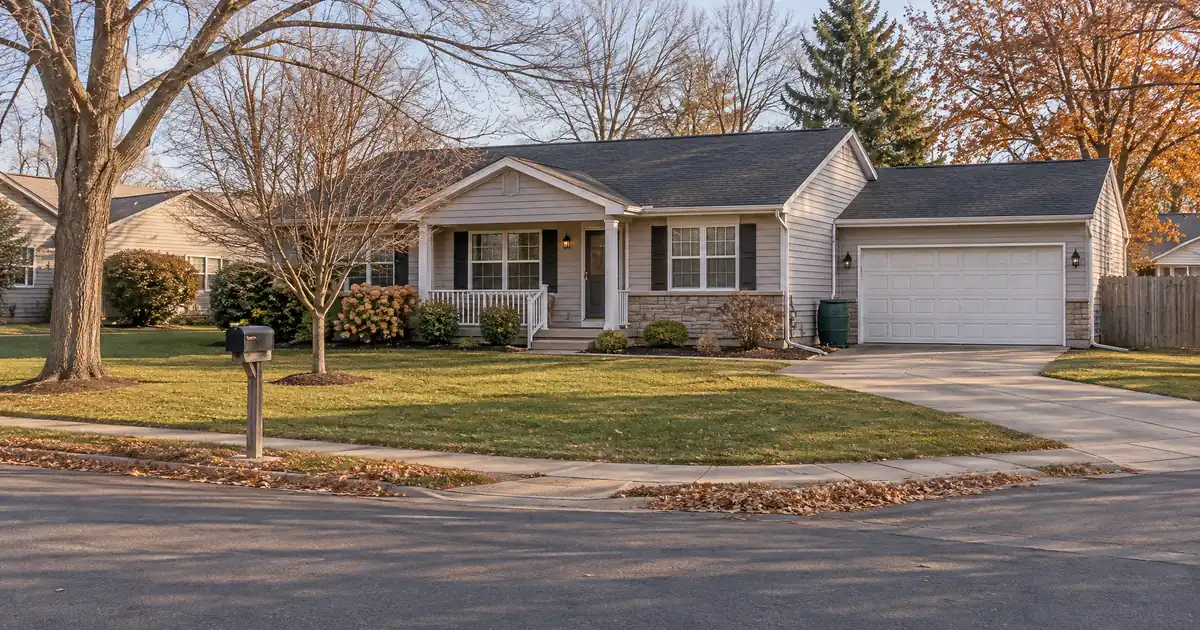
The Quick Read: The right provider is the one whose program fits your ownership history, your equity, and your ability to qualify on one income. No honest ranking of companies exists, because the rules come from the loan program, not the logo. A cash-out refinance pays off the shared loan, pays your spouse their share from the new loan’s proceeds, and leaves only your name on the debt. A broker that shops several wholesale lenders can match your file to the program that fits.
Key Takeaways
- A divorce decree or a deed change does not take anyone off the loan. Only a payoff, a refinance, or a lender-approved release does.
- A buyout is usually treated as a limited cash-out refinance, which carries higher leverage than a standard cash-out.
- You qualify alone, so your own income, credit, and the appraised value decide the outcome.
- An FHA Streamline or VA IRRRL can drop a name but cannot fund a payout to your spouse.
- Assumption with release is a real alternative when the lender allows it.
Why a Divorce Decree Doesn’t Remove Anyone From the Loan
A decree binds the two spouses to each other. It does not bind the lender. The lender signed a note with both names, and that note stays in force until something replaces it.
Cash-out refinance estimate
The starting figures are an example value with a balance and a cash request in proportion. Replace them with yours.
Editable benchmark: 7.18% as of November 5, 2026 · Freddie Mac 30-year average via FRED®. A conventional market reference, not a cash-out refinance quote.
Illustrative starting assumptions: a $350,000 home value, a $193,000 current balance, the agency cap on a one-unit principal residence, a thirty-year term at the current Freddie Mac benchmark, and property taxes and insurance estimated at typical national rates. Every field is editable.
Illustrative estimate only — not a Loan Estimate, approval, quote, or commitment to lend. The rate field carries the weekly Freddie Mac thirty-year conventional benchmark, a market reference and not a cash-out refinance quote; a cash-out loan is priced by the lender at lock. The cash available is the loan the program cap allows less the balances paid off, before closing costs, which are not included. The HELOC line is the program’s combined loan-to-value ceiling applied to the same value and balance. Taxes and insurance are editable estimates. Licensed in sixteen states for consumer mortgages.
Fannie Mae’s homeowner site defines a release of liability as removing an existing borrower from their obligations on the loan. It adds that a servicer generally will not grant one unless the person keeping the home qualifies to take over the payments. That means a full financial and credit review.
A quitclaim deed has the same limit. It moves ownership of the property. It does not move responsibility for the debt. Your ex can be off the title and still owe every payment.
The ways an old loan actually ends are short:
1. A refinance pays it off.
2. A lender approves an assumption with a release.
3. The home is sold.
This article covers the first route, because it is the only one that also puts cash in your spouse’s hands.
How Does a Cash-Out Refinance Remove a Spouse?
A cash-out refinance replaces the shared loan with a new one in your name alone. The new balance covers the old payoff, the closing costs, and your spouse’s share of the equity. At closing, the old lender is paid, your spouse receives their agreed amount, and title is recorded to you.
Here is the sequence, step by step.
1. Choose the exit route. Decide between a refinance, an assumption, or a sale. Servicer paperwork can be slow, so start before any decree deadline gets close.
2. Identify the loan type. A conventional loan, an FHA loan, and a VA loan each have their own path.
3. Check title and ownership history. Most programs want to see how long the property has been owned. Exceptions exist for a spouse who was legally awarded the home.
4. Document the buyout. Lenders ask for the decree or a signed settlement agreement that states the terms of the transfer and who receives the proceeds.
5. Qualify on your own. The lender reviews only your income, debts, and credit.
6. Get the appraisal. The appraised value sets the maximum loan. That loan has to cover the payoff, the buyout, and the costs.
7. Close. The old loan is paid off, your ex is paid per the agreement, and the deed is recorded in your name.
Lendmire’s cash-out refinance programs page lays out the program basics. The sections below show how they apply to a buyout.
Is a Buyout Treated Differently From a Standard Cash-Out?
Yes, and the difference matters for your numbers. Across the wholesale programs Lendmire places files with, a conventional cash-out on a one-unit primary residence generally tops out at 80% of the home’s value. On two- to four-unit primary residences, second homes, and investment properties, it generally tops out at 75%.
A buyout under a written agreement is different. At both major agencies, buying out a co-owner is a limited cash-out transaction. That classification generally allows up to 95% of value on a one-unit primary residence, subject to lender guidelines and full file review. Mortgage insurance applies above 80%, with one exception: the wholesale no-mortgage-insurance cash-out lane described below.
Fannie Mae’s limited cash-out rules say a buyout of one owner’s interest counts when the property was jointly owned for a minimum period before the new loan. Three other requirements apply:
- All parties sign a written agreement covering the transfer and the proceeds.
- At least one borrower on the new loan is on title at application.
- Cash back to the borrower stays incidental, meaning the lesser of 2% of the new loan amount or $2,000 on Fannie Mae loans.
Freddie Mac handles the same situation under a named special purpose cash-out refinance. It lets a borrower use proceeds to buy out a co-owner’s equity. Its incidental cash-back figure is the greater of 1% of the new loan amount or $2,000. Freddie Mac also does not bill its cash-out pricing credit fee on this special-purpose type.
Because the two agencies label and price the same buyout differently, the choice of lender matters. A broker that compares several wholesale lenders can see which treatment fits your file.
What Does a Buyout Look Like in Percentages?
Take a hypothetical home where the departing spouse is owed half the equity. These percentages are illustrative only. Your decree sets the real split.
| Piece of the new loan | Share of home value |
|---|---|
| Payoff of the existing loan | 55% |
| Departing spouse’s share of equity | 22.5% |
| Closing costs (estimated) | 2% |
| New loan total | About 79.5% |
Notice what the table shows. You, the keeper, receive no meaningful cash. The proceeds go to your ex under the agreement. The appraisal caps the loan, so if the home appraises low, the total may not close. Programs allowing higher leverage on a buyout can help in that case.
Which Funding Routes Pay the Ex and Release the Ex?
Only some routes do both jobs. This table is the quickest way to see where each one fits.
| Route | Pays your ex? | Releases your ex? | Best fit |
|---|---|---|---|
| Limited or special-purpose buyout refinance | Yes | Yes | Enough equity, one-income qualifying |
| Standard cash-out refinance | Yes | Yes | Ownership history is simple |
| FHA Streamline | No | Yes | Existing FHA loan, no payout needed |
| VA IRRRL | No | Yes | Existing VA loan, no payout needed |
| Assumption with release | No | Yes, if approved | Existing loan terms worth keeping |
| Sale | Yes | Yes | Equity too thin to buy out |
HUD’s Streamline page explains the FHA side. The existing loan must be FHA-insured and current, and the new loan must show a net tangible benefit, meaning a clear gain for the borrower. Cash back is capped at a small amount. A Streamline can remove a name, but it cannot fund a payout.
The VA IRRRL works the same way for VA loans. It is VA-to-VA only, carries a 0.5% funding fee unless the borrower is exempt, and pays no cash. If you must pay your ex out of equity, a Streamline or IRRRL is the wrong tool. Lendmire’s pieces on FHA cash-out refinance lenders for removing an ex-spouse and VA cash-out refinance options after a divorce cover those loans in depth.
Can You Qualify on One Income?
Across the wholesale conventional programs, the decision score starts at 620, and the automated finding governs most files, with a total debt ratio ceiling of 50%. Manually underwritten loans run tighter, at 36% or 45%, depending on score and reserves. All of it is subject to lender guidelines.
The keeper’s old share of the household income is gone, so the ratio is where most buyouts get tight. Alimony or support can count as income when you have the decree or agreement and a documented history of receiving it. Fannie Mae’s rules on support income also say a lump-sum equalization payment is not treated as steady income.
Expect to gather these documents:
- The decree or signed settlement agreement.
- Pay stubs and tax returns, or other income proof for self-employed borrowers.
- Support payment records, if you are counting that income.
- Current statements for the existing mortgage.
- Proof of homeowners insurance.
Self-employed borrowers qualify on a documented income average, which takes more paperwork but works.
Seasoning and the Rules That Bend
Seasoning is the waiting period a lender wants between events, such as owning the home and refinancing it. For a standard cash-out, the first mortgage being paid off must be at least 12 months old, measured note date to note date. At least one borrower also needs to have been on title for 6 months.
A buyout bends both rules. Under Fannie Mae’s cash-out guidelines, the 12-month loan-age test does not apply when you buy out a co-owner under a legal agreement. There is also no ownership waiting period when you were legally awarded the property in a divorce.
Other edge cases come up in practice:
- Not on title at application. Being legally awarded the home is a named exception, so a spouse who never held title is not automatically shut out.
- Property held in an LLC. That generally does not satisfy the title requirement.
- Veteran leaving the home. A lender’s release of liability can remove a spouse without a refinance. It does not restore the veteran’s VA entitlement while the loan stays open.
- Rental or second home. Occupancy sets the leverage, and the limits drop to 75%.
- Texas homestead. The state constitution caps a cash-out at 80% of the home’s value, and the no-mortgage-insurance wholesale lane is not written there.
- Community property and homestead states. These can change who must sign, so check your state’s rules with your attorney.
One more lane is worth knowing. A wholesale cash-out lane reaches 89.99% LTV with no mortgage insurance. It requires a 680 score, a 50% ratio, a thirty-year fixed rate, a primary residence, a conforming balance, and its own six months of seasoning. It is the one exception to the mortgage-insurance rule above. Exact terms depend on the lender’s guidelines, property type, leverage, and a full review of the borrower’s file.
Mortgage insurance, where it applies, can be requested off at 80% of the original value and must end automatically at 78%.
How Do You Pick the Top Cash-Out Refinance Provider for Your Situation?
The best provider depends on your property type, credit, leverage need, and documents. No single company wins for every borrower. A bank might write your loan comfortably, while a different lender suits a self-employed borrower with a thin ratio. The lenders that write buyouts also differ on how they treat the written agreement and title history.
These are the criteria that separate good fits from poor ones:
| What to check | Why it matters |
|---|---|
| Buyout treatment | Is it limited or standard cash-out? |
| Leverage on your property type | Sets how much equity you can reach |
| One-income qualifying | Handles support and self-employed income |
| Title and decree flexibility | Covers legal-award and agreement cases |
| Appraisal handling | Matters when value is disputed |
| Full cost on the Loan Estimate | Compare terms, not just a headline |
Provider types differ too. A single retail bank or credit union offers its own programs and nothing else. A mortgage broker, such as Lendmire, shops multiple wholesale lenders and matches your scenario to the program. A broker is paid by the lender or the borrower, and that compensation is disclosed on the Loan Estimate. Compare the full terms on every Loan Estimate you receive.
Lendmire is a mortgage broker arranging these loans. It does not lend, and nothing here is a commitment to lend.
Common Mistakes That Stall a Spousal-Removal Refinance
- Assuming the decree did the work. The lender still holds both names.
- Skipping the written agreement. Lenders need it to document the buyout.
- Choosing a Streamline when equity must be paid. It cannot fund a payout.
- Ignoring the appraisal. Thin equity caps the loan before the numbers close.
- Counting a lump sum as income. Equalization payments don’t qualify as steady income.
- Waiting until the decree deadline. Servicers can take a long time to process paperwork.
Weigh one more option before committing. If the existing loan carries terms you value and the lender permits it, assumption with release can beat a refinance. Not every loan is assumable, and an assumption does not release your ex on its own. The servicer has to approve it. Also compare a refinance against a home equity loan or HELOC, which leave the original loan, and your ex’s name on it, in place.
Tax treatment can depend on your situation; borrowers should speak with a qualified tax professional before relying on any deduction or credit.
Next Steps
If you are weighing a cash-out refinance against keeping the loan you have, Lendmire can help you compare the programs and the equity each one reaches. Reach the team at 828-256-2183, or start with your decree, your loan statement, and a rough sense of what the home is worth.
Frequently Asked Questions
Does a divorce decree take my ex off the mortgage?
No. The decree is an agreement between you and your ex, and the lender is not a party to it. The lender releases your ex only after a payoff, a refinance, or an approved assumption with release.
Can I take extra cash out when I buy out my spouse?
Only a small amount. On a limited cash-out buyout, cash back to the borrower is incidental, capped at the lesser of 2% of the new loan or $2,000 on Fannie Mae loans. Freddie Mac uses the greater of 1% or $2,000. A standard cash-out reaches 80% on a one-unit primary residence and allows more cash, but the buyout path usually offers higher leverage.
What if I don’t have enough equity to buy my ex out?
Equity is the usual limit. The appraised value caps the new loan, and the loan must cover the payoff, the buyout, and costs. Options include a program with higher leverage on buyouts, a smaller payout negotiated in the agreement, an assumption with release, or a sale.
Can I qualify alone if I receive alimony?
Often. The lender wants the decree or agreement plus a documented history of receiving the payments. Lump-sum equalization payments don’t count as steady income. Program figures remain subject to lender guidelines and a full file review.
Do I also have to change the deed?
Yes, because the deed and the loan are separate. The refinance removes your ex from the debt, and the deed documents record title to you. Most closings handle both together, but confirm the title step with your attorney.
For your own numbers, request a scenario review with Lendmire.
For current guidelines and terms, see Lendmire’s refinance programs page.
About Lendmire
Lendmire (NMLS# 2371349) is a mortgage brokerage serving homeowners and home buyers in 16 states. FHA, VA, conventional and jumbo purchase and refinance loans are arranged through wholesale lending channels; Lendmire brokers the financing and the lender underwrites each application. Scotsman Guide named Lendmire a Top Mortgage Workplace in both 2025 and 2026.
Get Started
Ready to find the right loan for you?
See your offer in seconds. No credit pull, no obligation.
Informational only. Not a Loan Estimate, approval, or commitment to lend. Program availability and eligibility are subject to lender guidelines, credit approval, property review, and underwriting.
References
1. Fannie Mae, Changing or Transferring Ownership of Your Home
2. Fannie Mae Selling Guide B2-1.3-02, Limited Cash-Out Refinance Transactions
3. Freddie Mac Single-Family, Cash-Out Refinance
4. HUD, Streamline Refinance Your Mortgage
5. Fannie Mae Selling Guide B3-3.4-02, Alimony, Child Support, Equalization Payments
6. Fannie Mae Selling Guide B2-1.3-03, Cash-Out Refinance Transactions
This article is part of Lendmire’s cash-out refinance program — full qualification details, guidelines, and scenarios live on the program page.
Related reading: Cash-Out Refinance vs Home Sale for a Spouse Keeping the House · How to Qualify and Apply for a Cash-Out Refinance When a Non-Borrowing Spouse Is on Title · How to Qualify and Apply for a Cash-Out Refinance to Remove an Ex-Spouse After Divorce
Brandon Miller
Founder & CEO, Mortgage Loan Originator, Lendmire LLC
- Mortgage Loan Originator · NMLS# 1129696 · Verify on NMLS Consumer Access
- North Carolina Real Estate Broker · License# 343312 · Verify on NCREC
- North Carolina Insurance Producer · License# 19053198 · Property, Casualty, Life, Health · Verify on NAIC SBS
- Lendmire LLC · Firm NMLS# 2371349 · Verify firm licensure
Legal disclosures. Lendmire (NMLS# 2371349) is a state-licensed mortgage brokerage that arranges financing through wholesale lender relationships. Lendmire is not a direct lender, depository institution, or registered financial advisor. The discussion above is general informational content about real estate financing — it is not financial, legal, or tax advice, and readers should consult licensed professionals for guidance on their individual circumstances. Loan inquiries are subject to lender underwriting; this article does not represent a commitment to lend. Loan terms, rates, and qualification standards vary by borrower, property, and state, and are subject to change at any time. Equal Housing Opportunity. NMLS Consumer Access: nmlsconsumeraccess.org.