
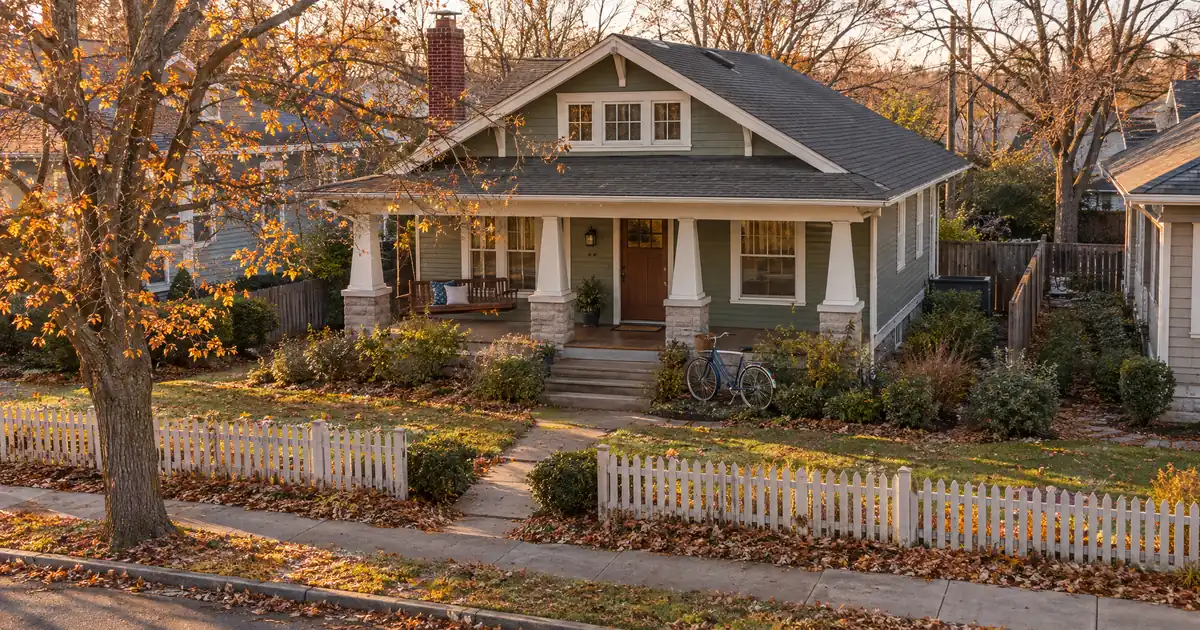
The Quick Read: Yes, when the property qualifies as a second home and you will use it as one. Fannie Mae and Freddie Mac both buy conventional loans on second homes. The property has to be a one-unit home you occupy for part of the year, suitable for year-round living, and under your exclusive control. Leverage tops out at 90% on a second home, versus 95% to 97% on a primary residence. Everything below is subject to lender guidelines and full file review.
What Counts as a Vacation Home to a Lender?
Lenders do not care what you call the property. They classify it by how you use it. “Vacation home” is a marketing phrase. The underwriting term is “second home.”
Conventional payment estimate
The starting figures are an example price at the first-time buyer’s minimum down payment. Replace them with yours.
Editable benchmark: 7.32% as of October 22, 2026 · Freddie Mac 30-year average via FRED®. A conventional market reference, not a conventional loan quote.
Estimate seeded at the low end of Fannie Mae’s published range (0.58%–1.86% a year); the insurer prices the actual premium on the score and the leverage. Applies only above 80% loan-to-value.
Illustrative starting assumptions: a $350,000 price, the first-time buyer’s minimum down payment, a thirty-year term at the current Freddie Mac benchmark, mortgage insurance at the low end of Fannie Mae’s published range, and property taxes and insurance estimated at typical national rates. Every field is editable.
Illustrative estimate only — not a Loan Estimate, approval, quote, or commitment to lend. The rate field carries the weekly Freddie Mac thirty-year conventional benchmark, a market reference and not a conventional loan quote; your rate is set by the lender at lock. The mortgage insurance figure is an editable estimate seeded from Fannie Mae’s published typical range, not a premium quote; the insurer prices the actual premium, and the cancellation month assumes scheduled payments with no extra principal and no change in value. Taxes, insurance and dues are editable estimates; closing costs are not included. Conforming loan limits apply by county. Licensed in sixteen states for consumer mortgages.
Fannie Mae’s Selling Guide sets the second-home tests. The property must be:
- One unit.
- Occupied by the borrower for some portion of the year.
- Suitable for year-round occupancy.
- Under the borrower’s exclusive control.
- Not a rental property or timeshare.
- Free of any agreement that gives a management firm control over occupancy.
Freddie Mac’s Guide adds two points. The home must be available primarily for your personal use, meaning more than half the calendar year. And it must sit in a location where it reasonably functions as a second home.
Here is how common property types sort out.
| Property or use | Typical read |
|---|---|
| Single-family cabin or beach house, winterized | Fits the second-home definition |
| Condo you use yourself | Can fit, if the project allows it |
| Condo-hotel or rental-pool unit | Fails the control and management tests |
| Timeshare or fractional share | Does not qualify |
| Duplex used as a second home | Treated as an investment property at Freddie Mac |
| Home you plan to rent most of the year | Investment property, not a second home |
Files that go sideways here usually involve a property the buyer thinks of as a vacation home but that the rules read as a rental. A resort condo with a mandatory rental program is the classic case. The HOA documents decide it, not the listing description.
Why Conventional Is the Usual Route
Conventional is the usual route because the government-backed programs are built for primary residences. FHA and VA loans are meant for the home you live in. A second home generally falls outside them. That leaves conventional financing as the main mortgage path for a vacation home, aside from equity-based options on a home you already own.
Across the wholesale programs Lendmire places files with, second-home purchases run through the same Fannie Mae and Freddie Mac framework as primary purchases. The difference is in the limits and the scrutiny, covered next. Buyers comparing options can start with Lendmire’s conventional loan programs to see how the agency framework applies to their file.
How a Second-Home Loan Differs From a Primary-Home Loan
The biggest difference is leverage. A second home needs a larger down payment than a primary residence because the agencies treat it as higher risk. Fannie Mae’s Eligibility Matrix caps a one-unit second home at 90% LTV on a purchase. The same matrix allows principal residences up to 97%. Every figure here varies by lender and program — guidelines, property type, leverage, and credit profile all apply.
Side by side, using the program figures Lendmire works with:
| Factor | Primary residence | Second home |
|---|---|---|
| Max LTV, purchase | 95% standard; 97% first-time buyer | 90% |
| Units allowed | 1 to 4 | 1 |
| Rental income to qualify | Depends on property type | Not used |
| Low-down-payment programs | HomeReady / Home Possible available | Not available |
| Cash-out refinance max LTV | 80% (one unit) | 75% |
Three more differences matter in practice.
- Pricing. Fannie Mae’s pricing grid carries a separate second-home line. The effect is higher pricing than a comparable primary residence, especially at higher LTVs. Exact pricing comes from the lender at the time of your file, not from this article.
- Affordable programs. The matrix says Community Seconds are not permitted on second homes. HomeReady is for principal residences only. A buyer counting on a 3% down program for a lake house will not find one.
- Reserves. Fannie Mae’s matrix points to added reserve requirements for borrowers with multiple financed properties. For a single second home, the automated underwriting finding sets the reserve requirement, so ask the loan officer what your file shows rather than assuming a month count. Final terms depend on lender guidelines, property type, leverage, and the borrower’s complete credit picture.
Mortgage insurance still applies above 80% LTV. The mechanics are the same as on a primary home. You can ask to cancel at 80% of the original value, and the servicer must end it automatically at 78%. The CFPB explains the cancellation conditions: good payment history, a written request, no junior liens, and no decline in value. Published typical annual premiums run 0.58% to 1.86% of the balance. That is a range, not a quote. These specifics are subject to lender guidelines and a full review of property, leverage, and credit.
Can You Rent Out a Vacation Home You Finance Conventionally?
You can rent it occasionally, but you cannot count the rent to qualify. This is where buyers most often misread the rules.
Fannie Mae says a loan can still be a second home when rental income exists, as long as the income is not used to qualify and every other second-home rule is met. So the Airbnb projection in your head does nothing for the loan. The second-home payment goes into your debt-to-income ratio in full, next to your primary housing payment.
Freddie Mac’s Guide allows short-term renting only when the property is not tied to a rental pool, a rental agreement that requires renting, manager control of occupancy, or revenue sharing. And the personal-use test still holds: available primarily for you, more than half the year.
Fannie Mae has restructured its rental-income policy recently, including new rules on short-term rental income. That policy applies to rental-income underwriting. It does not turn a second home into a property you qualify on its projected rent. A home bought mainly to generate rent is an investment property, underwritten under different rules and different leverage limits. Across the program figures in Lendmire’s network, investment property tops out at 85% on one unit.
One practical point. Occupancy is a signed representation on your application. At closing, the security instrument and its Second Home Rider carry a one-year personal-use expectation, per Freddie Mac’s servicing guide. Fannie Mae has noted that cost differences between occupancy types can tempt borrowers to misstate an investment property as a second home, and lenders run quality control to catch it. Misstating occupancy is a serious problem. Do not do it.
How Underwriting Works, Step by Step
Second-home files go through automated underwriting, and manual underwriting is generally not an option. Here is the sequence.
1. Declare the occupancy. You state second-home use on the application. The loan is delivered to the agency under that classification.
2. Run the automated finding. Fannie Mae requires an Approve/Eligible recommendation from Desktop Underwriter for second homes. Freddie Mac requires an Accept finding. The automated finding governs most files.
3. Count both housing payments. Your primary residence payment stays in the ratio. The vacation home payment is added. The total ratio ceiling on the wholesale conventional programs is 50% on an automated approval. This is the main pressure point on second-home files.
4. Check credit. The wholesale conventional programs start at a 620 decision score. Fannie Mae’s automated system no longer applies a fixed minimum third-party score on newer casefiles and uses its own credit-risk assessment instead. In practice, scores still drive pricing and lender requirements, so a file near the floor will price and underwrite differently than one well above it.
5. Appraise the property. A standard appraisal is expected. The appraiser has to show the property is marketable as a second home. For a seasonal property with limited year-round access, Freddie Mac requires at least one comparable sale with similar seasonal limits. Cabins on unplowed roads are where this bites.
6. Document assets. The down payment, closing costs and reserves all need a paper trail. Large deposits need explanations. Money for a second property often comes from a sale, a bonus or a gift, and each has its own documentation.
7. Sign the closing documents. These include the Second Home Rider. Because this is a consumer mortgage, you get a Loan Estimate and a Closing Disclosure like any other home purchase.
Here is a worked comparison in percentages only. Take a buyer with the same price, income and credit on two purchases. On the primary home, 5% down is available (3% for a first-time buyer). On the vacation home, 10% down is the minimum for the same price. The second purchase also adds a full second housing payment to the ratio, and no rent offsets it. The buyer who qualifies comfortably for one home can land near the 50% ceiling with two. Terms depend on the lender’s guidelines, the property type, the leverage, and a full review of the credit profile.
Edge Cases That Trip Files
A few property and borrower situations deserve a flag before you write an offer.
- Condos. Project eligibility matters as much as your own file. The HOA questionnaire and the project’s rental rules decide whether the unit can be financed as a second home. Pull the HOA documents early.
- 2-4 unit properties. Fannie Mae limits second homes to one unit. At Freddie Mac, a two-unit property used as a second home is classified as an investment property.
- Manufactured homes. Fannie Mae’s manufactured housing matrix allows some second-home purchases at lower LTV caps, with eligibility depending on the home type. Treat it as a case-by-case check.
- Co-ops. Cash-out refinances on second-home co-ops are not permitted under Fannie Mae’s matrix.
- Several financed properties. Borrowers who already carry multiple mortgages face added reserve requirements, and some lenders set higher score floors as the count rises. Disclose every financed property up front.
- Loan size. Loans above the conforming limit fall outside the standard agency framework. Jumbo programs take over, with their own score and leverage rules. Lendmire also covers that route in its piece Can a W-2 Earner Use a Jumbo Cash-Out to Buy a Vacation Home?.
Distance is a question buyers ask often. There is no simple mileage rule in the agency language. Freddie Mac’s test is whether the location makes sense as a second home. A property a short drive from your primary residence draws more questions than one in a recognized vacation area, and the lender may ask why you need it.
Costs Beyond the Down Payment
Plan for more than the down payment and mortgage insurance. A vacation home carries closing costs in the same categories as a primary purchase, plus ongoing costs that never show up on the Loan Estimate: property taxes, homeowners insurance, HOA dues, utilities, maintenance, and travel to get there. Properties in coastal, mountain or flood-prone areas can carry insurance requirements that change the monthly picture.
Lender and county costs vary, so get the Loan Estimate early and compare line by line.
Conventional Loan or Another Route?
Conventional is the default, but it is not the only path. The right choice depends on cash on hand and equity in your current home.
| Option | Best for | Main catch |
|---|---|---|
| Conventional second-home purchase | Buyers with 10%+ down and room in the ratio | Both payments count in the ratio |
| Cash-out refinance on your primary home | Owners with equity and a loan seasoned 12+ months | Resets your primary mortgage |
| Home equity loan or HELOC | Owners wanting a separate lien | Adds a second payment |
| Cash purchase | Buyers with liquid funds | Ties up capital |
A cash-out refinance on a primary residence is available up to 80% LTV on a one-unit home. It requires the first mortgage being paid off to be at least 12 months old, and a borrower on title for at least 6 months. Veterans can look at VA cash-out to buy the next home for a different structure, though that fits a primary-residence move more than a vacation property. The exact numbers vary by lender and program and follow a full review of property, leverage, and credit.
A simple decision rule. If your ratio works with both payments and you have the down payment saved, buy with a second-home loan. If cash is short but your current home carries equity, price a cash-out against a second-home mortgage and compare total cost. If neither works, wait.
Key Terms Defined
Second home: A one-unit property you occupy for part of the year, suitable for year-round living, and kept under your exclusive control.
LTV (loan-to-value): The loan amount as a percentage of the property’s value or price.
Debt-to-income ratio: Your total monthly debts, including both housing payments, divided by gross monthly income.
Mortgage insurance: Coverage on loans above 80% LTV that protects the lender and can be cancelled as the balance falls.
Occupancy: How you declare you will use the property. It sets the leverage cap and pricing.
Rental pool: An arrangement that puts your unit into a managed rental program. It disqualifies a property as a second home.
Before You Talk to a Lender
Settle these first.
- Decide the real use: personal first, or income first. That decides second home versus investment.
- Pull your current housing payment and all debts, since both homes go in the ratio.
- Gather asset statements for the down payment and reserves.
- Check the property type, and for condos, request the HOA questionnaire and rental rules.
- List every financed property you own.
If you are buying a home and want to see whether a conventional loan fits your file, Lendmire can help you compare the options and what each one asks of the file.
Frequently Asked Questions
Do I need 20% down to buy a vacation home with a conventional loan?
No. Second homes can go up to 90% LTV on a purchase, which means 10% down. Mortgage insurance applies above 80% LTV, so a down payment under 20% brings that cost. Program details are subject to lender guidelines and file review.
Can I use projected rental income to qualify?
No. If the property is financed as a second home, rental income is not used to qualify. Your income has to carry both housing payments. A property bought mainly for rent is an investment property and follows different rules.
Can I use an FHA or VA loan for a vacation home?
Generally not. Those programs are built around primary residences. Conventional financing is the usual second-home route.
Can I buy a duplex or fourplex as a second home?
Not under the agency second-home rules. Fannie Mae limits second homes to one unit, and Freddie Mac treats a two-unit second home as an investment property.
What happens if I rent it out sometimes?
Occasional rental is not automatically a problem, but the home must be available primarily for your personal use, more than half the year under Freddie Mac’s test. It cannot sit in a rental pool or be managed under an agreement that controls occupancy. If rent becomes the main purpose, it is an investment property.
About Lendmire
Lendmire, NMLS# 2371349, is a mortgage brokerage with consumer lending licenses in 16 states. FHA, VA, conventional and jumbo purchase and refinance loans are arranged through wholesale lending partners, and each application is reviewed individually by the lender. Scotsman Guide named Lendmire a Top Mortgage Workplace in both 2025 and 2026.
For your own numbers, request a scenario review with Lendmire.
Get Started
Ready to find the right loan for you?
In about two minutes you can review financing options available for your home or investment property. No commitment required.
Informational only. Not a Loan Estimate, approval, or commitment to lend. Program availability and eligibility are subject to lender guidelines, credit approval, property review, and underwriting.
References
1. Fannie Mae Selling Guide, Occupancy Types
2. Freddie Mac Guide, Second Home Mortgages
3. Fannie Mae Eligibility Matrix
4. CFPB: When Can I Remove Private Mortgage Insurance PMI from My Loan
5. Freddie Mac Guide, Occupancy Waivers and Second Home Rider
This article is part of Lendmire’s conventional loan program — full qualification details, guidelines, and scenarios live on the program page.
Related reading: Conventional Loan Requirements for a Primary Home Purchase · Conventional Loan Rules for Buying a Home Before Selling Your Current One · How Much Down Payment a Conventional Loan Needs by Buyer and Home Type
Brandon Miller
Founder & CEO, Mortgage Loan Originator, Lendmire LLC
- Mortgage Loan Originator · NMLS# 1129696 · Verify on NMLS Consumer Access
- North Carolina Real Estate Broker · License# 343312 · Verify on NCREC
- North Carolina Insurance Producer · License# 19053198 · Property, Casualty, Life, Health · Verify on NAIC SBS
- Lendmire LLC · Firm NMLS# 2371349 · Verify firm licensure
Disclosure information. Lendmire is a state-licensed mortgage brokerage under NMLS# 2371349. Lendmire is not a depository institution, direct lender, or financial advisor — all loans referenced are placed through wholesale lender partners and are subject to each lender's underwriting standards. This article is provided for general informational purposes and is not a commitment to lend, nor does it constitute financial, legal, or tax advice. Loan programs, terms, rates, and qualification standards change without notice and depend on borrower profile, property type, and the state in which the subject property is located. Equal Housing Opportunity provider. NMLS Consumer Access: nmlsconsumeraccess.org.