
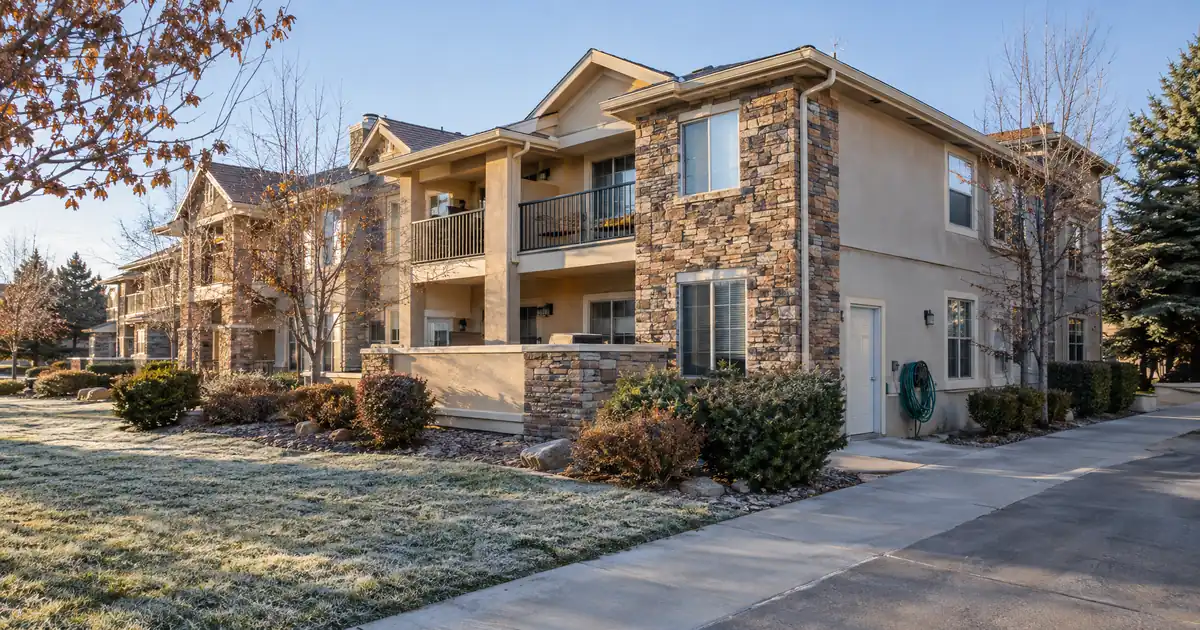
The Quick Read: Usually yes. The property’s legal classification and the first mortgage program decide it, not the assistance itself. The assistance rides on top of an FHA, USDA or HUD-184 first lien, so the building has to pass that program’s property rules first. A townhome in a PUD or fee-simple subdivision is treated much like a detached home. A condo, or a townhome whose legal documents say “condominium,” faces a project-level review.
What Decides Whether It Works?
Four things decide the outcome: the legal classification of the property, the project-level approval of the building, whether the assistance option allows that property type, and whether the buyer meets the assistance option’s own tests.
Assistance is layered on a first mortgage. The first mortgage’s property rules control. Then the assistance option’s rules must also be met. The building is judged twice, once for the first lien and once for the assistance.
Across the wholesale programs Lendmire places files with, the assistance options are written for condominiums, PUDs and attached or detached single-family homes. The grant option covers one- to four-unit primary residences, including FHA-approved condominiums and PUDs. The forgivable and repayable second liens cover single-family detached or attached homes, condos and PUDs. Unique property types are excluded. Subject to program guidelines and full underwriting.
The assistance does not approve the building. A unit in an unapproved building can fail no matter how much assistance the buyer has lined up.
Is a Townhome a Condo? (It Depends on the Paperwork)
“Townhome” describes how a building looks. It is not a legal category. The declaration or plat decides what the property is.
A townhome in a PUD or fee-simple subdivision usually gets treated like a detached home. You own the lot and the structure, and an HOA handles shared areas. A townhome whose documents say “condominium” is a condo. It gets condo treatment, including the project review.
The review burden is lighter for PUDs than for condos, though the lender confirms how a given PUD is handled. HUD’s FHA Connection page on PUDs describes a PUD as a development that mixes land uses such as single-family, condominium and townhouse properties. Lenders and the handbook itself decide the specifics. Don’t assume. Ask the loan officer to confirm the classification against the title or appraisal documents before you write an offer.
| Property type | Typical treatment | Main extra hurdle |
|---|---|---|
| Detached single-family | Eligible | None beyond standard rules |
| Townhome in PUD or fee simple | Eligible, treated like a house | Lender confirms PUD status |
| Condo-form townhome | Condo rules apply | Project approval needed |
| Condo unit | Eligible in approved projects | Project-level test |
| 2-4 unit home | Grant option only, up to four units | Owner must live in one unit |
| Second home or rental | Not eligible | Primary residence only |
How Does Each First Mortgage Treat Condos?
All three government first mortgages allow condo units. Each one has its own gate.
FHA
FHA insures condo loans for units in FHA-approved projects. It also insures units in non-approved projects that meet Single-Unit Approval requirements. For Single-Unit Approval, the project must be complete and ready for occupancy, have at least five dwelling units, and not be a manufactured home.
The lender submits a questionnaire, Form HUD-9991, for those cases. Concentration limits apply too. FHA caps how much of a building can carry FHA loans, with a much tighter limit for small projects. HUD can change those caps by notice, so the lender verifies the current number. A building already near its cap may not accept another FHA loan, even with assistance in hand.
You can check a building yourself. HUD publishes a searchable condo list. “Approved” means FHA insurance applications can be processed for units in that project. Expired and withdrawn statuses mean they cannot.
USDA
USDA’s guaranteed loan program page lists condos and PUDs among eligible structures.
USDA only guarantees loans on properties in designated rural areas, and that location requirement is a gate before any other eligibility question. A condo outside those areas fails no matter how strong the building is. HOA dues count in the debt-to-income calculation.
HUD-184
For Native American buyers, HUD’s Section 184 handbook allows townhouses and row houses, plus units in FHA-approved condominium projects. The program guarantees loans. It does not provide assistance itself. Assistance comes from other sources, and the lender confirms current HUD guidance on junior liens.
Which Assistance Shape Fits a Condo Buyer?
There are four shapes. Lendmire, a mortgage broker, arranges all of them through wholesale lenders alongside a government first lien. None requires a first-time buyer. Repeat and move-up buyers qualify.
| Shape | Size (% of price) | Repay? | First liens | Credit floor |
|---|---|---|---|---|
| Grant | 2% or 3.5% | Nothing to repay | FHA only | 620 |
| Forgivable second | 3.5% of lesser of price or value | Forgiven after 36 or 60 on-time payments | FHA, USDA, HUD-184 | 640 |
| Repayable second | 3.5% or 5% | Yes, a real loan | FHA, USDA, HUD-184 | 660 |
| Refinance-cost second | 1% to 3.5% of balance | Yes, a real loan | FHA 203(b) refinance | 660 |
The first three are the purchase options. The fourth is for refinancing and does not apply to a condo purchase.
The grant. The grant goes toward the FHA minimum required investment. It is released at closing with no lien, no payment and no interest. An HUD-approved homebuyer education course is required. The income test is 140% of area median income, unless a qualifying category applies. Those categories include first responders, educators, medical workers, civil servants, military personnel, first-time buyers, and buyers in underserved census tracts. It is not offered in Washington.
The forgivable second. This is a lien with no interest and no monthly payment. It is forgiven after the first 36 or 60 on-time first-lien payments, depending on the version. It carries no income limit beyond USDA’s own on a USDA first lien.
The repayable second. This is a true second loan. It is interest-bearing, with a monthly payment, a 30-year amortization and a balloon due in year 10. At 5%, it also covers closing costs and prepaids. It carries its own disclosures. Treat it as a loan, because it is one.
Nothing stacks. You cannot combine one assistance option with another assistance program. A mortgage credit certificate is not permitted with the second-lien options. All of this is for a primary residence only. No second homes, no rentals.
What Does a Condo Do to the Monthly Budget?
It adds HOA dues, and the lender counts them. USDA says so explicitly, and FHA underwriting treats dues the same way in practice. Dues raise your debt-to-income ratio and reduce how much you can borrow. Assistance does not change that.
A repayable second adds its own monthly payment on top of the first lien and the dues. A grant or forgivable second does not add a payment. Run all three pieces together before you fall in love with a unit. A condo with high dues and a repayable second can stretch a budget that a townhome in a PUD would handle easily.
FHA sits underneath most of these files. Its minimum investment is 3.5% of the lesser of price or appraised value, with a 1.75% upfront mortgage insurance premium that can be financed into the loan. Annual mortgage insurance applies by tier. FHA’s 2026 one-unit loan limits run from $541,287 to $1,249,125 depending on the county. Costs like special assessments and post-closing HOA increases are not covered by assistance.
Before You Write the Offer
Screen the building first. A failed project review late in the process can end the deal.
1. Ask your loan officer which first mortgage fits and whether the building is eligible for it.
2. Look up the condo on HUD’s list, or ask the lender whether Single-Unit Approval is an option.
3. Read the declaration to see whether the property is a condo or a PUD.
4. Ask the listing agent how much of the building is owner-occupied and whether the HOA is in litigation.
5. Request HOA documents early. A slow HOA or seller can hold up the file.
6. Confirm any assistance funding lines up with your contract dates.
If you are looking at USDA, check the rural-area designation before anything else.
A Tale of Two Buildings
Picture a buyer using an FHA first lien with a forgivable second, looking at two condo units on the same street.
Building A is on HUD’s approved list, is mostly owner-occupied, and has no pending litigation. The lender runs the file, the assistance sits behind the first lien, and the project review is routine.
Building B is not on the list. It is complete with more than five units, so Single-Unit Approval is possible. But FHA loans already make up a large share of the building. The lender checks the current concentration cap and finds no room. The file stalls late, after the buyer has paid for an appraisal.
Same buyer, same assistance, same price range. The building made the difference. That is why you screen before you offer.
If the Building Fails Review
You have options, and none of them involves forcing the file through.
- Try another unit or building. This is the cleanest fix.
- Look at Single-Unit Approval. It works only if the project is complete, has at least five units and sits under the concentration cap.
- Walk away before the contract hardens. Contingencies exist for this reason.
Edge cases deserve a flag. Manufactured-home condo projects face extra limits. A project with a withdrawn approval can’t process new FHA applications. A “rejected” status on HUD’s list can sometimes just mean a single-unit approval project, which is a lender detail, not a buyer red flag.
Key Terms Defined
PUD (planned unit development): A community where you own your lot and home, and an HOA manages shared areas.
Single-Unit Approval: An FHA path that lets a lender approve one unit in a building that is not on the approved list.
Concentration cap: A limit on how much of a building can carry FHA-insured loans.
Minimum required investment: The share of the price FHA requires you to put in, which grants and assistance can help fund.
Forgivable second: A second lien that is wiped out after enough on-time payments on the first mortgage.
Balloon: A lump-sum balance due at a set point, which is year 10 on the repayable second.
Common Misconceptions
“Assistance can’t be used on condos” is wrong as a rule. The building’s approval is the bottleneck. “A townhome is a condo” depends on the legal documents. “Assistance means nothing to repay” is wrong too. The grant has nothing to repay, but a second lien is a loan, and a forgivable second is forgiven only after the required number of on-time first-lien payments.
Many state and local programs offer assistance usable with FHA or conventional loans. Many focus on low- and moderate-income families buying a first home, though some are open to families who previously owned. Public programs vary on property types, caps and recapture terms. Some city and county programs list townhomes and condos as eligible, while others exclude certain property types. Read each program’s rules.
Frequently Asked Questions
Can I use assistance on a condo that is not on the FHA approved list?
Sometimes. FHA’s Single-Unit Approval lets a lender approve one unit if the project is complete, has at least five units and is not a manufactured home. The building also has to fall under the FHA concentration cap. The lender runs the questionnaire and verifies the current cap.
Is a townhome easier to finance with assistance than a condo?
Often, but not always. A townhome in a PUD or fee-simple subdivision usually avoids the full condo review. A townhome legally titled as a condominium does not. Ask your loan officer to confirm the classification from the declaration, title or appraisal before you make an offer.
Do I have to be a first-time buyer?
No. None of the options Lendmire arranges requires it. Repeat and move-up buyers qualify. For the grant, first-time status is only one of several qualifying categories, alongside the 140% of area median income test. The second-lien options carry no income limit beyond USDA’s own on a USDA first lien.
Does assistance pay for HOA dues or special assessments?
No. Assistance goes toward the down payment and, in some options, closing costs. HOA dues count against your debt-to-income ratio, and special assessments are an ownership cost you carry after closing.
Can I use it on a second home or a rental condo?
No. Assistance is for an owner-occupied primary residence only.
Next Step
If you are buying a primary home and want to see whether a down payment assistance option fits your file, Lendmire can help you compare the grant, forgivable and repayable structures alongside an FHA, USDA or HUD-184 first mortgage. Qualification is subject to lender guidelines and full underwriting. This is not a commitment to lend.
Investors who want the broader program framework can review how DSCR loans work.
About Lendmire
Lendmire, NMLS# 2371349, is a mortgage brokerage with consumer lending licenses in 16 states. Down payment assistance options are arranged alongside FHA, USDA and HUD-184 first liens through wholesale lending partners, and each application is reviewed individually by the lender. Scotsman Guide named Lendmire a Top Mortgage Workplace in both 2025 and 2026.
Get Started
Ready to find the right loan for you?
In about 30 seconds you can review financing options available for your home or investment property. No commitment required.
Informational only. Not a Loan Estimate, approval, or commitment to lend. Program availability and eligibility are subject to lender guidelines, credit approval, property review, and underwriting.
References
1. USDA
2. HUD FHA Connection – PUD background
This article is part of Lendmire’s down payment assistance program — full qualification details, guidelines, and scenarios live on the program page.
Related reading: Can A Repeat Buyer Get Down Payment Assistance On A Primary Home? · How Much Down Payment Assistance Can You Get? · How to Qualify for Down Payment Assistance When You’re Self-Employed
Brandon Miller
Founder & CEO, Mortgage Loan Originator, Lendmire LLC
- Mortgage Loan Originator · NMLS# 1129696 · Verify on NMLS Consumer Access
- North Carolina Real Estate Broker · License# 343312 · Verify on NCREC
- North Carolina Insurance Producer · License# 19053198 · Property, Casualty, Life, Health · Verify on NAIC SBS
- Lendmire LLC · Firm NMLS# 2371349 · Verify firm licensure
Required disclosures. Lendmire (NMLS# 2371349) operates as a licensed mortgage broker, not a direct lender or depository. The discussion in this article is general in nature and should not be relied upon as financial, legal, or tax advice — every investment scenario is unique and should be reviewed by a qualified professional. Any loan inquiry is subject to lender underwriting, and this article is not a commitment to lend or a guarantee of approval. Mortgage rates, loan terms, and program guidelines vary by borrower, property, and state, and may change without notice. Equal Housing Opportunity. Verify licensure at NMLS Consumer Access.