
The Quick Read: Yes, if you live in one of the three units. A past cash-out is not a requirement and not a limit, so “never cashed out” is no barrier. Four things decide the file: where you live, your VA Certificate of Eligibility, your credit and income, and the appraisal. The rule is about occupancy, not unit count.
Can VA Cash-Out Apply to a Triplex at All?
It can. VA financing covers a home of up to four family units, so a triplex fits. Five or more units do not.
The catch is that the home has to be yours to live in. VA’s own cash-out refinance page lists three conditions, and all three must be true:
- You qualify for a Certificate of Eligibility (COE).
- You meet VA and lender credit and income standards.
- You live in the home you are refinancing.
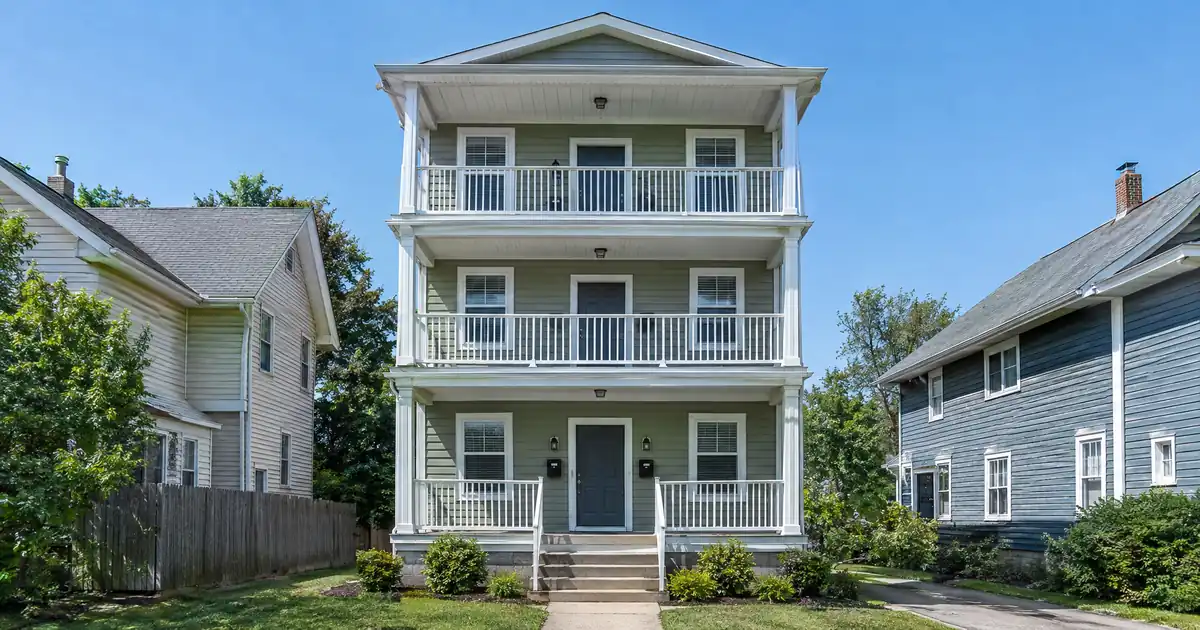
Picture a veteran who owns a triplex and lives in the ground-floor unit. Two other units are rented to tenants. That veteran can apply for a cash-out. Now picture a veteran who owns the same triplex but lives elsewhere and rents all three units. That building does not qualify for VA cash-out.
The structure of the loan is the same one used on a single-family home. Across the wholesale programs Lendmire places VA files with, the VA cash-out reaches up to 100% of the appraised value, with the financed funding fee included. It can refinance any type of existing loan into a VA loan. Subject to lender guidelines and full file review, that includes a conventional or FHA loan you hold today. The VA cash-out refinance program page on Lendmire’s site covers the basics if you want the general version first.
What Does “Never Cashed Out” Actually Mean?
“Never cashed out” is not an official VA status. Nobody at VA checks a box for it. People usually mean one of three things, and each one plays out differently.
You have never used the VA benefit at all. This is the cleanest case. You get your COE, you have full entitlement (the amount of loan VA backs for you), and the lower funding-fee tier applies.
You have used VA before but never pulled cash out. Maybe you bought with a VA loan years ago and kept it. Here the word “first” matters. Your funding fee tier depends on whether it is your first use of the VA benefit, not your first cash-out. A veteran with a prior VA loan may land in the later-use tier even with no prior cash-out.
You have never refinanced. That is simply your loan history. It carries no penalty and no bonus.
Here is the short rule: your past cash-out history does not change eligibility. Your benefit use, your entitlement, and the home you live in do.
If you are weighing this against a home equity line, Lendmire’s piece Should a Veteran Who Has Never Had a HELOC Choose a VA Cash-Out? walks through that choice.
How Does the Occupancy Rule Work in a Triplex?
You certify that you live in one unit as your primary residence. For a cash-out, that means you currently live there or intend to. A streamline refinance is looser: it generally needs only a certification of prior occupancy. That difference is one reason a streamline cannot pull equity out.
Here is what to expect on the file:
- You sign an occupancy certification.
- The lender confirms your address on documents like your ID and billing statements.
- Tenants in the other two units show up on leases and rent records.
Be straight on this form. VA’s handbook gives no universal minimum stay and no one-year safe harbor. Signing that you intend to live in the home when you don’t can be treated as fraud. If your plans might change soon, say so to your loan officer before you apply, not after.
What if you move out later? The handbook gives no universal safe harbor there either. Turning the home into a full rental later depends on the facts, so ask before you act.
How Does the Lender Treat the Rent From the Other Two Units?
Only part of that rent counts, and only under conditions. The unit you live in produces no countable rent. The two tenant-occupied units can help you qualify, but a discounted share of the lease amount is what the lender uses. The discount exists to cover vacancy and repairs.
VA’s Lenders Handbook sets the occupancy and rental-income rules. Per that handbook, counting rent from the building generally comes with conditions:
- Documented landlord experience, or a property manager.
- Reserves in your own funds. Equity, gifts, and the cash-out proceeds themselves do not count as reserves.
Check the exact percentage and reserve length with your loan officer against the current handbook text. Lender practice can differ from the bare rule.
Many veterans stop reading too early on this point. They hear “rent counts” and assume the building pays its own way on paper. It does not work that way. Your qualifying budget still has to carry the loan on its own merits.
Is There a “Self-Sufficiency” Test on a Triplex?
VA does not mandate one. Some lenders do. A self-sufficiency test asks whether the rent alone, after the discount, covers the full housing payment on a three- or four-unit building. It is a lender overlay, meaning a rule the lender adds on top of VA’s.
Overlays differ by lender. A veteran declined by one lender may fit another. That is a reason to ask about overlays at the start, not at the end.
What Credit and Income Standards Apply?
VA sets no minimum credit score. The wholesale programs Lendmire places VA loans with start at a 580 decision score. Some lenders set a higher floor, and any approval is subject to lender guidelines and full file review.
Residual income is the controlling test. That is the money left each month after your taxes, debts, and a set allowance for the home’s size and your region. The 41% debt-to-income figure is a guideline, not a cap. A higher ratio needs residual income well above the table.
On a triplex, the lender also looks at the building’s operating picture. That means leases, how long the tenants have been in place, and the property manager or your own landlord track record. The file is part household budget, part small-property review.
Subject to program terms, loan amounts on full entitlement go up to $4,000,000 with these wholesale programs, and there is no VA loan limit on full entitlement.
How Do Entitlement and the Funding Fee Work?
Entitlement is the amount of your loan VA stands behind. Cash-out needs new or additional entitlement. If you are refinancing an existing VA loan on the same home, the new guaranty builds from the entitlement already used on the old loan, plus whatever you have left.
The funding fee is a one-time charge on VA loans. It can be financed into the loan. It is waived for veterans receiving compensation for a service-connected disability and for the other exempt groups. VA News explains who pays the funding fee and who is exempt.
On a cash-out refinance, the funding fee is 2.15% for first use and 3.3% after. A streamline carries 0.5%. Because the fee can be financed, the total loan, fee included, still has to fit within 100% of the appraised value.
| Your history | Cash-out fee tier | Exempt? |
|---|---|---|
| First use of the VA benefit | 2.15% | Waived if exempt |
| Used VA before, no past cash-out | 3.3% | Waived if exempt |
| Used VA before, with past cash-out | 3.3% | Waived if exempt |
Read that table again. The middle row is the one that surprises people. “Never cashed out” does not lower your fee. Prior use of the benefit sets it.
For a veteran who already holds a VA loan, Lendmire’s piece How Much a VA Cash-Out Nets a Veteran Who Already Has a VA Loan shows how the fee and entitlement interact.
What Does the Appraisal Do on a Triplex?
A VA appraiser sets the reasonable value, and that value caps your loan. On a triplex, the appraiser also gives an opinion of market rent. The lender uses that opinion in the rental-income review.
Expect every unit to be looked at, including a vacant one. Each unit generally has to meet VA’s minimum property requirements. If the roof leaks over unit three, the repair issue belongs to the whole file, not just that unit.
The appraisal is also where your equity is decided. Cash-out reaches up to 100% of the appraised value under these programs. If the appraisal comes in lower than you expected, the cash available shrinks with it.
Must the Cash-Out Pass a Net Tangible Benefit Test?
Yes. VA requires that a cash-out refinance give you a net tangible benefit, and the lender has to deliver that test to you. The idea is simple: the new loan must leave you better off in a measurable way.
The test can be met in several ways, such as a lower payment, a shorter term, removing mortgage insurance, or moving from an adjustable loan to a fixed one. Years ago the law capped these loans at 90% of reasonable value. VA’s rulemaking on cash-out refinance loans folded that 90% idea into the benefit test. It is now one way to pass, not a ceiling.
The wholesale programs Lendmire works with also apply seasoning. That is the waiting period after your current loan starts. It means the later of 210 days from your first payment and your sixth payment. A recently closed loan on the triplex may not be ready yet.
Step by Step: How a Triplex Cash-Out Gets Underwritten
Here is the flow, in order:
1. Get your COE. Your lender can pull it, or you can get it through VA.gov or by mail.
2. Certify occupancy. You confirm you live in, or will live in, one unit.
3. Share documents. That means income, leases for the tenant units, and proof of reserves if rent is used.
4. Order the appraisal. VA sets the value and reviews each unit.
5. Run the benefit test. The lender confirms the new loan helps you.
6. Check credit, income, and residual income. The lender applies VA’s standards plus its own.
7. Close. Fees can generally be paid from loan proceeds, which lowers or removes cash due at closing.
Loan Estimate and Closing Disclosure rules apply to this consumer mortgage. Read both documents line by line. VA does not set interest rates, and pricing varies from lender to lender, so compare more than one offer. VA’s own guidance on home loan costs says the same.
What Can You Do With the Cash?
You can use it for repairs, to pay off debt, or for other goals on the home you live in. A triplex is a natural fit for repairs, since three units mean three sets of systems.
The trap is a plan to use the cash toward a second property. Cash-out proceeds cannot count as your reserves for rent-based qualifying. And if the plan involves moving out of the triplex, your occupancy certification matters. Raise this early.
A shorter answer for the “second home” angle: occupancy decides the leverage. A VA loan is built for the home you live in.
Which Situations Work, Which Don’t?
| Your situation | What applies | What to do |
|---|---|---|
| Live in one unit, rent two | Eligible if COE, credit, appraisal pass | Gather leases and reserves |
| Own the triplex, live elsewhere | Not eligible for VA cash-out | Ask about other loan types |
| Plan to move out soon | Occupancy certification is at risk | Talk to your loan officer first |
| Want cash to buy a rental | Cash is not reserves; occupancy still rules | Plan around your own funds |
| Building has five or more units | Over the four-unit limit | VA does not fit |
| Declined by one lender | Overlays differ | Ask another lender about overlays |
Common Mistakes
- Assuming all the rent counts toward qualifying.
- Treating the self-sufficiency test as a VA rule when it is a lender overlay.
- Expecting a lower funding fee because you never cashed out.
- Using a streamline to take equity out. It cannot do that.
- Overlooking the vacant unit’s condition at appraisal.
- Skipping the overlay question until after the application.
The CFPB’s review of VA refinance complaints is an older post, but its qualitative point holds. Refinance solicitations can mislead, and borrowers sometimes miss details like the new escrow account. You do not have to respond to marketing.
Tax treatment can depend on your situation; borrowers should speak with a qualified tax professional before relying on any deduction or credit.
Key Terms Defined
Certificate of Eligibility (COE): The VA document that confirms you qualify for a VA loan.
Entitlement: The amount of a loan VA backs for you, which affects how much you can borrow without a down payment.
Net tangible benefit: A test that the new loan leaves you better off in a measurable way.
Residual income: The money left each month after taxes, debts, and a set living allowance.
Seasoning: The waiting period after your current loan starts before you can refinance.
Self-sufficiency test: A lender rule on three- and four-unit homes, asking whether the discounted rent alone covers the full housing payment.
Frequently Asked Questions
Does a first-time cash-out change my funding fee?
No. The fee depends on whether it is your first use of the VA benefit. A veteran with a prior VA loan and no past cash-out may pay the later-use tier. Exempt veterans pay no funding fee.
Do I have to live in the triplex to use VA cash-out?
Yes. You certify that you live in one unit as your primary residence, or intend to. A triplex you rent out in full does not qualify for VA cash-out.
Can I count the rent from the unit I live in?
No. Only the other units can produce rental income. Even then, only a discounted share counts, usually with reserve and landlord-experience conditions.
Can a streamline refinance take cash out of a triplex?
No. A streamline refinances an existing VA loan to a lower rate or from adjustable to fixed. Pulling equity out is a cash-out, and a cash-out has its own occupancy and benefit rules.
Does VA require triplex rents to cover the whole payment?
VA does not mandate that. Some lenders add it as their own overlay, and overlays differ. Ask about it before you apply.
Next Step
If you are weighing a cash-out refinance against keeping the loan you have, Lendmire can help you compare the programs and the equity each one reaches. Every program figure here is subject to lender guidelines and full file review, and nothing here is a commitment to lend.
For your own numbers, request a scenario review with Lendmire.
About Lendmire
Lendmire — NMLS# 2371349 — is a mortgage broker that arranges FHA, VA, conventional and jumbo home purchase and refinance financing in 16 states through wholesale lenders. Every option is subject to the lender’s guidelines and full underwriting. Scotsman Guide named Lendmire a Top Mortgage Workplace in both 2025 and 2026.
Get Started
Ready to find the right loan for you?
In about 30 seconds you can review financing options available for your home or investment property. No commitment required.
Informational only. Not a Loan Estimate, approval, or commitment to lend. Program availability and eligibility are subject to lender guidelines, credit approval, property review, and underwriting.
References
1. VA.gov: Cash-out refinance loan
2. VA Lenders Handbook (Pamphlet 26-7)
3. VA News: Funding fee, who pays and who is exempt
4. Federal Register: Revisions to VA-guaranteed or insured cash-out home refinance loans
5. VA News: You could be losing thousands on your home loan
6. CFPB: Veterans Day complaint review, VA refinancing
This article is part of Lendmire’s VA Loans series — every loan program’s qualification details, guidelines, and scenarios live on the loan options page.
Related reading: How Much More a Fee-Exempt Veteran Gets From a VA Cash-Out · VA Cash-Out Funding Fee Rules for a Fee-Exempt Veteran · Can a Veteran Get a VA Cash-Out in an Irrevocable Trust?
Brandon Miller
Founder & CEO, Mortgage Loan Originator, Lendmire LLC
- Mortgage Loan Originator · NMLS# 1129696 · Verify on NMLS Consumer Access
- North Carolina Real Estate Broker · License# 343312 · Verify on NCREC
- North Carolina Insurance Producer · License# 19053198 · Property, Casualty, Life, Health · Verify on NAIC SBS
- Lendmire LLC · Firm NMLS# 2371349 · Verify firm licensure
Legal disclosures. Lendmire (NMLS# 2371349) is a state-licensed mortgage brokerage that arranges financing through wholesale lender relationships. Lendmire is not a direct lender, depository institution, or registered financial advisor. The discussion above is general informational content about real estate financing — it is not financial, legal, or tax advice, and readers should consult licensed professionals for guidance on their individual circumstances. Loan inquiries are subject to lender underwriting; this article does not represent a commitment to lend. Loan terms, rates, and qualification standards vary by borrower, property, and state, and are subject to change at any time. Equal Housing Opportunity. NMLS Consumer Access: nmlsconsumeraccess.org.