
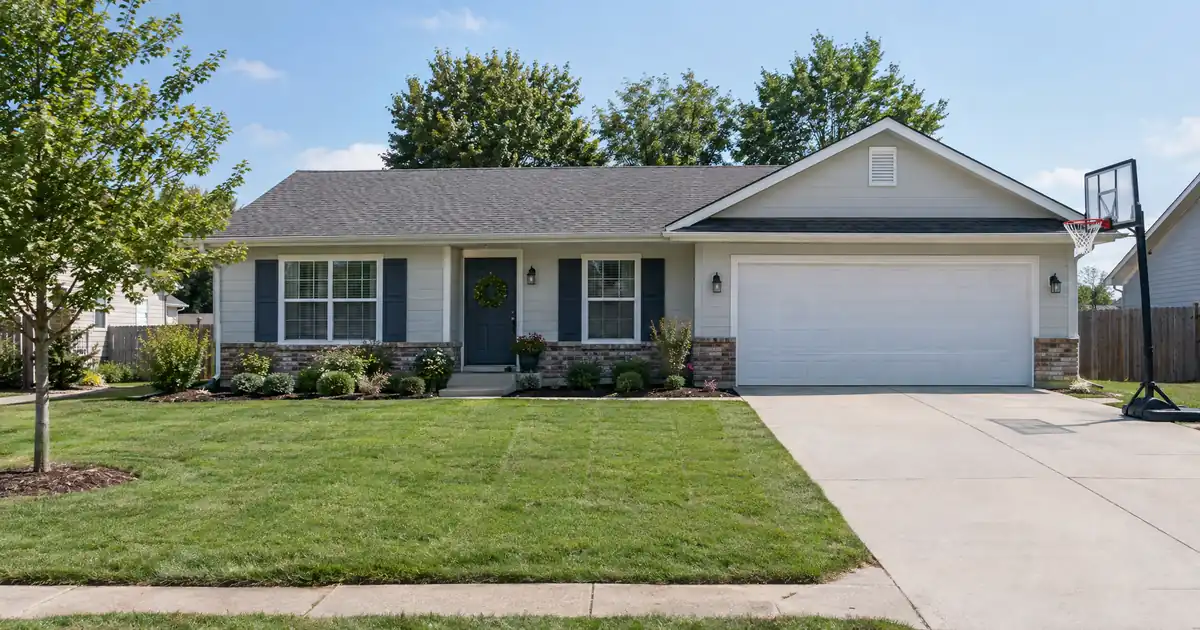
The Quick Read: Every VA cash-out refinance needs a full VA appraisal, and the appraised value sets the ceiling on your new loan. The appraiser also checks that the home meets VA’s minimum property standards. Tidewater is VA’s early-warning step when a value looks low, but it was built around purchase contracts, so do not count on it for a refinance.
The streamlined VA refinance usually skips the appraisal. The cash-out never does. That one fact drives most of what follows.
Why Does a VA Cash-Out Need an Appraisal?
A cash-out needs an appraisal because VA limits the new loan to the home’s reasonable value. Reasonable value is VA’s term for the market value an appraiser determines. The loan, including any financed funding fee, cannot exceed 100% of it.
VA’s own cash-out lender call slides set out the formula. Divide the new loan amount, funding fee included, by the appraised value. The result must be 100% or less.
Your online estimate does not count. Neither does the tax assessment or what the neighbor says the house is worth. Only the VA appraisal sets the maximum.
Eligibility comes first, though. Per VA’s cash-out refinance page, you need a Certificate of Eligibility, you must meet VA and lender credit and income standards, and you must live in the home. VA sets no minimum credit score. Pricing and available terms vary by lender, borrower profile, property type, and full underwriting review. Residual income, the money left each month after major obligations, is the controlling test.
For the full program picture, see Lendmire’s VA cash-out refinance program page.
Key Terms Defined
Reasonable value: the market value VA’s appraiser determines, which caps the new loan.
Notice of Value (NOV): the VA document that reports the appraised value and lists any repairs VA requires.
Minimum Property Requirements: VA’s basic condition standards for safety, sanitation and structure.
Tidewater: VA’s procedure that warns the requester before the appraisal is final when value looks likely to fall short of the sales price.
Reconsideration of Value (ROV): a written request, made after the NOV, asking VA to take another look at the value.
Net tangible benefit (NTB): a test showing the refinance actually helps the borrower.
How Does the Appraisal Process Run, Step by Step?
The lender orders the appraisal, VA assigns the appraiser, and a VA reviewer issues the Notice of Value. You cannot pick the appraiser. Here is the sequence on a typical file.
1. Eligibility and COE. Your lender confirms your Certificate of Eligibility and reviews credit and income.
2. Order. The lender requests the appraisal through VA’s WebLGY system. VA assigns a fee appraiser.
3. Inspection. The appraiser visits, estimates market value from comparable sales and notes any MPR repairs.
4. Notice of Value. A VA Staff Appraisal Reviewer issues the NOV with the value and any required repairs.
5. Loan math. The lender tests the loan, funding fee included, against the value.
6. Disclosures and NTB. VA’s cash-out quick reference guide says WebLGY requires initial and final cash-out disclosures. VA-to-VA refinances also need seasoning and recoupment certifications.
7. Underwriting and closing. The full file gets reviewed, and nothing here is a commitment to lend.
Cash-outs need full underwriting and an appraisal, so they take more steps than a VA streamline refinance. Appraiser scheduling can also vary by area.
What Does the Appraiser Actually Check?
The appraiser checks two things: what the home is worth and whether it meets VA’s minimum standards. The two jobs are separate, and a home can pass one and fail the other.
| Check | What it covers | What goes wrong |
|---|---|---|
| Value | Comparable sales, condition, location | Weak comps or a thin market |
| MPRs | Roof, utilities, water and sanitation, access, hazards | A leaking roof or a dead heating system |
Required repairs show up on the NOV. They must be finished and reinspected before closing. If your home has an obvious problem, fix it early or plan for it.
An appraisal is not a home inspection. VA recommends a separate inspection if you want a deeper look at the house. The appraiser is estimating value, not checking every system.
How Does the Appraised Value Limit Your Cash?
Value sets the maximum loan, and the maximum loan sets your cash. Cash comes from the room between your payoff and the 100% ceiling, after the financed funding fee takes its share.
On a cash-out, the funding fee is 2.15% for first use and 3.3% after that. Exempt veterans, such as those receiving compensation for a service-connected disability, owe none. But per the Federal Register rulemaking, any part of the fee that would push the loan above 100% of reasonable value must be paid in cash at closing.
Picture a home where you owe a modest share of the value and the appraisal lands right where you expected. You have room. Now picture the same home appraising several percent lower. The ceiling drops, the cash shrinks, and the fee eats into what is left. Same house, same payoff, very different outcome.
Many lenders also set their own cap below 100%. VA’s ceiling is the outer limit, not a promise. Some lenders hold the line at 90%, which is why the 90% figure floats around. It is a lender choice, not a VA rule.
A lower value can also hurt the net tangible benefit test. One of the ways to pass NTB is staying at or below 90% LTV (loan-to-value, the loan as a share of value). Other routes exist: removing monthly mortgage insurance, shortening the term, lowering the principal-and-interest payment, converting an adjustable rate to fixed, refinancing a construction loan, or raising monthly residual income. Check the exact list with your loan officer against VA’s Circular 26-19-05. Terms depend on the lender’s guidelines, the property type, the leverage, and a full review of the credit profile.
What Is the Tidewater Process?
Tidewater is a heads-up, not a guarantee. When an appraiser sees that value is likely to come in below the sales price, they notify the requester before finishing. Then they allow 2 business days for the requester, or anyone the requester names, to send more sales data.
VA named the process for the Tidewater area of Virginia, where it first piloted the idea. It has existed since 2003, according to VA Circular 26-17-18. If the request lists a point of contact, such as a Realtor or loan officer, the appraiser notifies that person. If nobody is listed, the appraiser calls the requester and logs the call.
If no data arrives, the appraiser notes that Tidewater was followed and finishes the report. So Tidewater does not let you force a higher number. It lets you hand over better comps before the number is locked.
Does Tidewater Apply to a Cash-Out Refinance?
Not cleanly. Tidewater’s trigger is value falling below the sales price, and a cash-out has no sales price. An older VA training deck stated that refinance transactions are not covered by the procedure.
Practitioner read: do not plan around Tidewater on a refinance. Ask your loan officer up front how VA handles a low value on your file. The dependable fallback is the Reconsideration of Value, which comes after the NOV.
| Feature | Tidewater | Reconsideration of Value |
|---|---|---|
| When | Before the appraisal is final | After the NOV is issued |
| Built around | Purchase contract price | Any file |
| Evidence | Additional sales data | Written request; market data encouraged, not required |
| Fits a refinance? | Unclear | Yes |
What If the Appraisal Comes in Low?
You have four real options: challenge the value, borrow less, fix what is fixable, or wait. Each changes your cash differently.
- Request a Reconsideration of Value. Send it in writing after the NOV. Good comps help: recent, nearby, similar size and condition. Handbook guidance says market data is encouraged but not required.
- Take a smaller cash-out. If the value stands, the ceiling stands. A smaller loan may still do the job.
- Cure the repairs. If the NOV lists MPR items, completing them keeps the loan moving.
- Wait or skip it. If the numbers no longer work, keeping your current loan is a legitimate answer. Home equity turned into debt is still debt. The NTB test and the residual income test exist to check exactly that.
A Reconsideration of Value is worth requesting only when you have comps that clearly beat the appraiser’s. Otherwise you are asking VA to repeat itself.
Where the General Rule Breaks
A few edge cases trip people up.
- Type I versus Type II. In a Type I refinance, the new loan including the fee does not exceed the payoff of the old one. In a Type II, it does. Type II gets heavier treatment under VA’s rules.
- Non-VA to VA. An FHA or conventional loan can be refinanced into a VA loan. You do not need to take cash out to do it.
- Seasoning. For this program, seasoning is the later of 210 days from the first payment due date and the sixth payment. Wholesale programs apply it alongside the NTB test.
- Occupancy. You must live in the home. If the property is a rental or second home, occupancy decides the leverage, and VA cash-out is built for the home you live in.
- IRRRL contrast. The IRRRL cannot put cash in your pocket and usually has no appraisal. Cash-out always has one.
- Lender overlays. Some lenders add stricter credit floors or lower LTV caps than VA does. A single lender’s restriction, such as not offering VA cash-out in one state, is not a VA rule.
For help choosing between the two refinance paths, see Lendmire’s piece VA IRRRL vs VA Cash-Out: Choosing the Right VA Refinance. For how the 100% ceiling plays out with fees, see how the VA cash-out 100 percent ceiling works.
How Should You Prepare for Appraisal Day?
Prepare the house and the paperwork. Small steps help the appraiser see everything.
- Give clear access to the attic, crawlspace, utilities and every room.
- Fix visible MPR issues: peeling paint on older homes, leaking roofs, broken heating, unsafe steps.
- List improvements you have made, with approximate dates.
- Jot down recent nearby sales you know about, and share them with your loan officer.
- Ask the loan officer who is listed as the point of contact and how a low value would be handled.
Frequently Asked Questions
Can I choose my own appraiser for a VA cash-out?
No. The lender requests the appraisal through VA’s system, and VA assigns a fee appraiser. You can supply information about the home and nearby sales through your loan officer.
Does the IRRRL skip the appraisal?
Usually, yes. The IRRRL has no cash to the borrower and typically needs no VA appraisal. Every cash-out requires one.
Can I dispute a low value?
Yes, through a Reconsideration of Value. Request it in writing after the Notice of Value. Market data is encouraged, though not required. The outcome is up to VA.
What happens if my home fails the minimum property requirements?
The NOV lists the required repairs. They must be completed and reinspected before closing. Your lender can explain how that works on your file.
Is the funding fee part of the 100% limit?
Yes. The financed fee counts toward the ceiling, and any part that would push the loan above 100% of reasonable value must be paid in cash at closing.
Tax treatment can depend on your situation; borrowers should speak with a qualified tax professional before relying on any deduction or credit.
If you are weighing a cash-out refinance against keeping the loan you have, Lendmire can help you compare the programs and the equity each one reaches. Program figures are subject to lender guidelines and full file review, and nothing here is a commitment to lend.
For your own numbers, request a scenario review with Lendmire.
About Lendmire
Lendmire (NMLS# 2371349) is a mortgage brokerage serving homeowners and home buyers in 16 states. FHA, VA, conventional and jumbo purchase and refinance loans are arranged through wholesale lending channels; Lendmire brokers the financing and the lender underwrites each application. Scotsman Guide named Lendmire a Top Mortgage Workplace in both 2025 and 2026.
For the program’s current guidelines, see VA loan programs.
Get Started
Ready to find the right loan for you?
In about 30 seconds you can review financing options available for your home or investment property. No commitment required.
Informational only. Not a Loan Estimate, approval, or commitment to lend. Program availability and eligibility are subject to lender guidelines, credit approval, property review, and underwriting.
References
1. VA: Aq42 Lender Call Jan2019
2. VA.gov: Cash-out refinance loan
3. VA Cash-Out Refinance Quick Reference
4. Federal Register VA cash-out rulemaking
This article is part of Lendmire’s VA Loans series — every loan program’s qualification details, guidelines, and scenarios live on the loan options page.
Related reading: VA IRRRL Vs VA Cash-out: Choosing The Right VA Refinance · VA Cash-out Refinance To Pay Off A Non-va Loan: Type I Vs Type II Explained · VA Cash-out Refinance: How The 100 Percent Ceiling Really Works
Brandon Miller
Founder & CEO, Mortgage Loan Originator, Lendmire LLC
- Mortgage Loan Originator · NMLS# 1129696 · Verify on NMLS Consumer Access
- North Carolina Real Estate Broker · License# 343312 · Verify on NCREC
- North Carolina Insurance Producer · License# 19053198 · Property, Casualty, Life, Health · Verify on NAIC SBS
- Lendmire LLC · Firm NMLS# 2371349 · Verify firm licensure
Legal disclosures. Lendmire (NMLS# 2371349) is a state-licensed mortgage brokerage that arranges financing through wholesale lender relationships. Lendmire is not a direct lender, depository institution, or registered financial advisor. The discussion above is general informational content about real estate financing — it is not financial, legal, or tax advice, and readers should consult licensed professionals for guidance on their individual circumstances. Loan inquiries are subject to lender underwriting; this article does not represent a commitment to lend. Loan terms, rates, and qualification standards vary by borrower, property, and state, and are subject to change at any time. Equal Housing Opportunity. NMLS Consumer Access: nmlsconsumeraccess.org.