
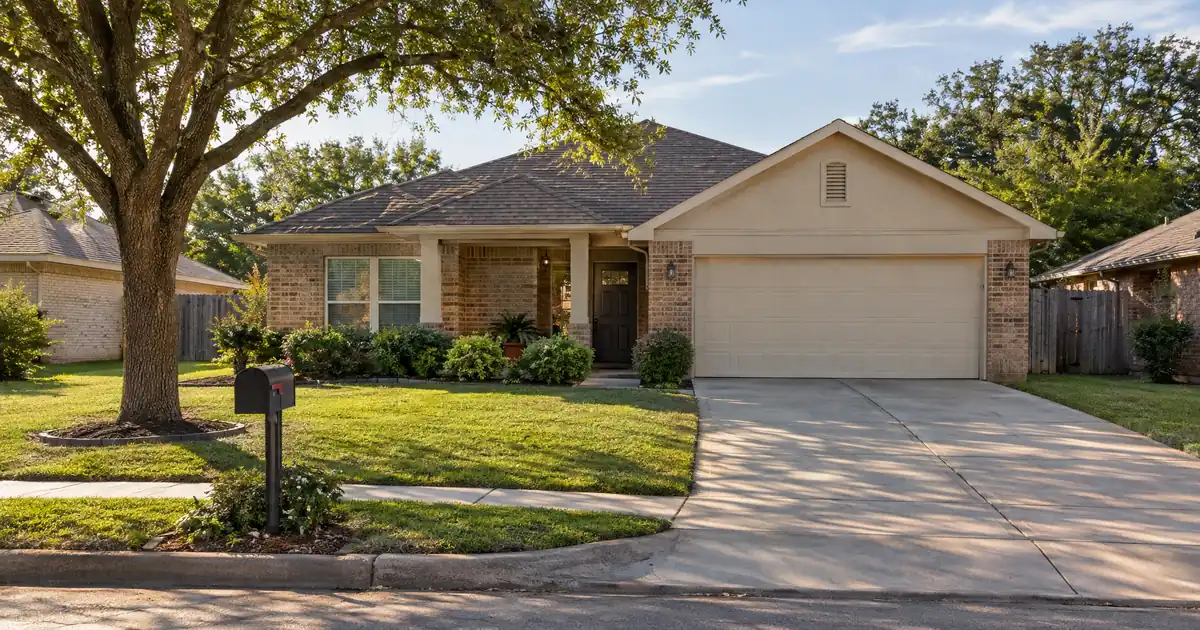
The Quick Read: Not directly, because on a Texas homestead the question mostly answers itself. Texas’ home equity rules treat the VA guaranty as extra collateral on the home, so a true VA cash-out is generally not available there. Conventional cash-out is the route that exists for pulling equity out of a Texas primary residence, and it comes with strict state rules and a lower borrowing ceiling. VA still matters in Texas for purchases and for refinances that take no cash.
Here is who each option is really for. A veteran who wants cash from a Texas homestead is looking at conventional. A veteran who wants a better loan on the same balance, with no cash out, may still have VA options. Veterans outside Texas, or buying a home, play by different rules, and VA’s strengths are real in those cases. This article keeps the two situations separate so you don’t mix them up.
Texas homeowners are the readers who get burned by the mix-up. VA cash-out is commonly described as reaching 100% of value with no mortgage insurance, and that is true in many states. It does not carry over to a Texas homestead. Some online pages say otherwise and describe a VA cash-out capped at a lower percentage. The Texas Attorney General’s formal opinion, covered below, points the other way, and that is the source this article follows.
Side-by-Side
The table compares the two programs on a Texas primary residence. The VA column shows how the program works in general, along with the Texas limit on it. Everything is subject to lender guidelines and full file review.
| Factor | VA cash-out | Conventional Texas cash-out |
|---|---|---|
| Texas homestead availability | Generally barred | Available under state rules |
| Leverage | Up to 100% of value elsewhere | Capped at 80% by Texas |
| Credit floor | 580 decision score on wholesale VA files | Set by each lender and program |
| Mortgage insurance | None on VA loans | Usually not needed at 80% or less |
| Upfront fee | VA funding fee, waived if exempt | No VA funding fee |
| Occupancy | Must live in the home | Primary-residence homestead only |
| Documentation | Residual income test, COE required | Income and debt ratios per lender |
| Texas process | Not applicable to homestead | Waiting period, rescission right, value acknowledgment |
Three notes on reading the table. The 100% leverage figure includes the financed funding fee, and it describes VA cash-out outside Texas homestead rules. The 580 figure is the floor on the wholesale VA programs Lendmire places files with. VA itself sets no minimum score, and some lenders set a higher one. Conventional credit floors vary widely by lender, so the table gives no number for them. Terms vary by lender guidelines, property type, leverage, credit profile, and full file review.
Why the Title’s Premise Breaks in Texas
Texas wrote its home equity rules into the state constitution. A cash-out loan on a homestead has to meet them or the lien is not valid. One of those rules bars additional collateral beyond the home itself. The Texas Attorney General took up the VA question in Opinion KP-0183. It concluded that a VA loan guaranty counts as additional collateral, so the constitution prohibits a VA cash-out refinance on a homestead. The opinion also refers to the 80% limit that applies to Texas cash-out loans.
Why would a government guarantee count as collateral? The state’s agency commentary treats a guaranty or surety on an equity loan as extra property securing the debt. A VA loan is guaranteed by the federal government, so it falls on the wrong side of that line. A law-firm analysis reached the same result and added that FHA insurance runs into a separate fee limit. Treat that as one firm’s view, not settled fact.
What about the pages that say VA cash-out is allowed in Texas at a lower cap? They are mostly marketing or blog content. They do not cite a primary source that overrides the Attorney General’s opinion. The opinion is also not the last word forever. The law is interpreted, and interpretations can change. Confirm current treatment with a licensed Texas lender before you build a plan around it.
Why does a loan officer’s guidance matter here? Because the ban is not a lender preference. No lender can waive it, and no automated approval can fix it. Fannie Mae’s Selling Guide says its automated underwriting system does not contain the specific Texas equity rules. Lenders have to check eligibility themselves, even when the system returns an “Eligible” result. So a clean automated finding tells you little about whether a Texas cash-out is legal.
When VA Cash-Out Is the Better Fit
VA cash-out wins on the numbers in many states. On a Texas homestead it mostly doesn’t apply. Here is where VA still earns its place.
You want no cash out at all. A VA streamline, called an IRRLL in some guides and an IRRRL officially, refinances an existing VA loan to a lower rate or from adjustable to fixed. It takes no cash, so the Texas equity rules are not in play. Across the VA files Lendmire arranges, this refinance runs with no VA appraisal, a 0.5% funding fee unless you are exempt, and a net tangible benefit test. The seasoning rule also applies: you must have made enough payments on the current loan first. VA’s home loans page notes a new certificate of eligibility is not required for this refinance.
You are moving a non-VA loan into VA with no cash to you. Some lenders structure this, and it can bring a VA loan’s no-mortgage-insurance feature to a loan that had insurance. Whether it works depends on the lender and the way the loan is structured. Be wary of anyone who calls it a VA cash-out without asking what the money is for.
You are buying, not refinancing. Texas homestead restrictions apply to equity loans, not to purchase loans. A VA purchase loan offers 100% financing with no down payment, as long as the price is not above the appraised value. It carries no mortgage insurance of any kind, and there is no VA loan limit with full entitlement. A veteran buying a home in Texas has the full program available.
You are leaving Texas homestead territory. Outside the state, or on a home that is not covered by the Texas rules, the VA cash-out can reach 100% of the appraised value including the financed fee. It can also refinance any loan type into VA. The VA cash-out refinance program page lays out how that works in the states where it is allowed. The funding fee on a cash-out is 2.15% for first use and 3.3% after first use, per VA’s funding fee page. Veterans who receive disability compensation, and some others, are exempt.
Occupancy decides it for a second home or rental. A VA loan requires you to live in the home, and a Texas homestead is a primary residence by definition. So the one sentence on this point: VA is for the home you live in, and so are the Texas homestead rules.
When Conventional Is the Better Fit
Conventional cash-out is the better fit on a Texas homestead for one practical reason. It is the one that exists. If you need cash from the equity in the home you live in, this is where the options are. Here is how to tell whether it is a good fit for you.
You need cash for a real purpose. Texas homestead cash-out loans fall into three groups, according to the Texas A&M Real Estate Research Center: a cash-out refinance, a home equity loan, and a home equity line of credit. A cash-out refinance replaces your first loan. The other two sit on top of it. Which structure fits depends on whether your current loan is worth keeping.
You have enough equity to live with the 80% ceiling. The 80% limit is set by the constitution, not by the lender. It means you must keep at least 20% equity after the loan. For most borrowers, that also means no mortgage insurance is needed at that level, though that is subject to lender guidelines. If your equity is thin, cash-out may not be possible at all.
You are comfortable with the state’s slower process. Texas protects homeowners with several safeguards. There is a mandatory waiting period before closing and a short right to rescind afterward. The lender and owner also sign a written acknowledgment of the home’s fair market value, based on an appraisal. These rules are protective, and they add steps. Plan around them rather than being surprised by them.
Your current loan is not worth keeping. A conventional cash-out replaces the whole first lien, not just the new money. For a borrower whose existing loan has a balance and term they like, that reset is the main trade-off. If the current loan is a VA loan with a favorable structure, think hard before replacing it. A homeowner who keeps the VA loan and skips the cash-out also skips the Texas equity rules entirely.
You want to leave your VA loan alone. A conventional cash-out does not use VA entitlement the way a new VA loan does. That is a mechanical point, not a promise. Ask a loan officer how your remaining entitlement would be treated before you decide.
One limit to know about. A conventional Texas cash-out has restrictions beyond the 80% cap. The fee limit, the rule against holding more than one such loan at a time, and the spacing between them are all worth checking against the constitutional text or with a Texas attorney.
What Changes If You Already Have a Texas Equity Loan
Say you took out a Texas homestead cash-out loan some time ago and now want a different loan. You may be able to refinance out of it into a regular mortgage, under conditions set by a 2017 constitutional amendment. The Texas Legislature’s bill analysis says a lien securing a refinance under those conditions is treated as an ordinary lien, not a home equity lien. The conditions are detailed, and they depend on your original loan. A Texas attorney or licensed lender should confirm which apply to you.
This matters for veterans because it can open the door to VA refinancing that a Texas equity loan otherwise blocks. It does not create a VA cash-out. It only lets you move into a loan that takes no cash.
Worked Scenarios Without Dollar Figures
Three short pictures show how the options split.
Picture a veteran in Texas with a VA loan who wants a better term and no extra cash. The streamline is the natural fit. The Texas equity rules don’t touch it, and the veteran keeps the VA features.
Now picture a veteran in Texas with a conventional loan who needs cash for a major repair. Texas cash-out is the available path. It stays within the 80% ceiling and follows the state’s waiting period and acknowledgment steps. Whether it pencils out depends on how much equity is there and how the new loan compares with the old one.
Last, picture a veteran buying a first home in Texas. This is a purchase, so the VA loan’s 100% financing and no mortgage insurance apply. The cash-out comparison never comes up.
Key Terms Defined
Homestead: Your primary residence, which Texas protects with special rules against forced sale and extra collateral.
Cash-out refinance: A new loan that pays off your current one and gives you some of your equity as cash.
VA guaranty: The federal backing on a VA loan that lets lenders offer it with no down payment and no mortgage insurance.
Entitlement: The amount of VA guaranty you have available. The certificate of eligibility, issued by VA, confirms it.
Funding fee: A one-time VA charge that can be financed into the loan and is waived for exempt veterans.
Residual income: What is left of your monthly income after major expenses, which VA treats as the controlling test.
Net tangible benefit: A real, measurable gain from the refinance that VA requires, such as a better term or a move to a fixed loan.
The Balanced Verdict
On a Texas homestead, VA cash-out is not better than conventional, because it is generally not on the table. That is not a knock on the VA program. It reflects a state rule that predates your application and no lender can set aside.
The fair way to compare is by goal. If you want cash from your home in Texas, conventional is the route, and it comes with an 80% ceiling and a protective, slower process. If you want a better loan without cash, VA’s streamline may beat it, and the Texas rules stay out of the way. If you are buying, VA’s no-down-payment, no-mortgage-insurance structure stands on its own.
Check your own facts before you decide. Your current loan type, the equity you hold, and how long you’ve been in the home all change the answer. Program figures here are subject to lender guidelines and full file review, and none of this is a commitment to lend. If you are weighing a cash-out refinance against keeping the loan you have, Lendmire can help you compare the programs and the equity each one reaches.
Frequently Asked Questions
Can I do a VA cash-out refinance on a Texas homestead?
Generally no. The Texas Attorney General concluded the VA guaranty is additional collateral that Texas home equity rules prohibit. Some web pages claim a lower-cap version exists, but they do not cite a primary source. Confirm current treatment with a licensed Texas lender, since interpretations can change.
Is the 80% limit on Texas cash-out something a lender sets?
No. It comes from the state’s constitutional home equity rules, so no lender can waive it. Fannie Mae’s guidance reflects the same limit. Your lender may add its own conditions on top, such as credit or income standards.
Can I still refinance my VA loan in Texas without taking cash?
Often yes. The streamline refinance takes no cash, so the Texas equity rules do not apply to it. It requires a net tangible benefit and seasoning on the current loan. Some lenders loosely call a no-cash refinance from a non-VA loan into VA a “VA cash-out,” so ask what the money is for.
I already have a Texas home equity loan. Can I get out of it?
Possibly. A 2017 amendment lets certain refinances of a Texas equity loan be treated as ordinary liens, if specific conditions are met. The conditions depend on your original loan. Talk to a Texas attorney or licensed lender before assuming you qualify.
Does a conventional cash-out in Texas use my VA entitlement?
A conventional loan is not a VA loan, so it does not draw on entitlement the way a new VA loan does. How your remaining entitlement is treated if you replace a VA loan is a question for your loan officer. Ask before you pay off a VA loan you may want to keep.
For your own numbers, request a scenario review with Lendmire.
About Lendmire
Lendmire is a mortgage brokerage (NMLS# 2371349) licensed for consumer mortgage lending in 16 states, arranging FHA, VA, conventional and jumbo purchase and refinance loans through a wholesale lending network. Eligibility is determined by the lender on each file. Scotsman Guide named Lendmire a Top Mortgage Workplace in both 2025 and 2026.
Get Started
Ready to find the right loan for you?
In about 30 seconds you can review financing options available for your home or investment property. No commitment required.
Informational only. Not a Loan Estimate, approval, or commitment to lend. Program availability and eligibility are subject to lender guidelines, credit approval, property review, and underwriting.
References
1. Texas Attorney General Opinion KP-0183
2. Fannie Mae Selling Guide: Texas Section 50(a)(6) Loans
4. VA – Funding fee and closing costs
5. Texas A&M Real Estate Research Center: What to Know About Home Equity Loans in Texas
6. Texas Legislature SJR 60 bill analysis (85R)
This article is part of Lendmire’s VA Loans series — every loan program’s qualification details, guidelines, and scenarios live on the loan options page.
Related reading: How Much More the Largest VA Cash-Out Releases Than Conventional · VA Cash-Out Requirements in Texas When the Fee Is Included in the Cap · How to Use a VA Cash-Out With Partial or Restored Entitlement
Brandon Miller
Founder & CEO, Mortgage Loan Originator, Lendmire LLC
- Mortgage Loan Originator · NMLS# 1129696 · Verify on NMLS Consumer Access
- North Carolina Real Estate Broker · License# 343312 · Verify on NCREC
- North Carolina Insurance Producer · License# 19053198 · Property, Casualty, Life, Health · Verify on NAIC SBS
- Lendmire LLC · Firm NMLS# 2371349 · Verify firm licensure
Required disclosures. Lendmire (NMLS# 2371349) operates as a licensed mortgage broker, not a direct lender or depository. The discussion in this article is general in nature and should not be relied upon as financial, legal, or tax advice — every investment scenario is unique and should be reviewed by a qualified professional. Any loan inquiry is subject to lender underwriting, and this article is not a commitment to lend or a guarantee of approval. Mortgage rates, loan terms, and program guidelines vary by borrower, property, and state, and may change without notice. Equal Housing Opportunity. Verify licensure at NMLS Consumer Access.