
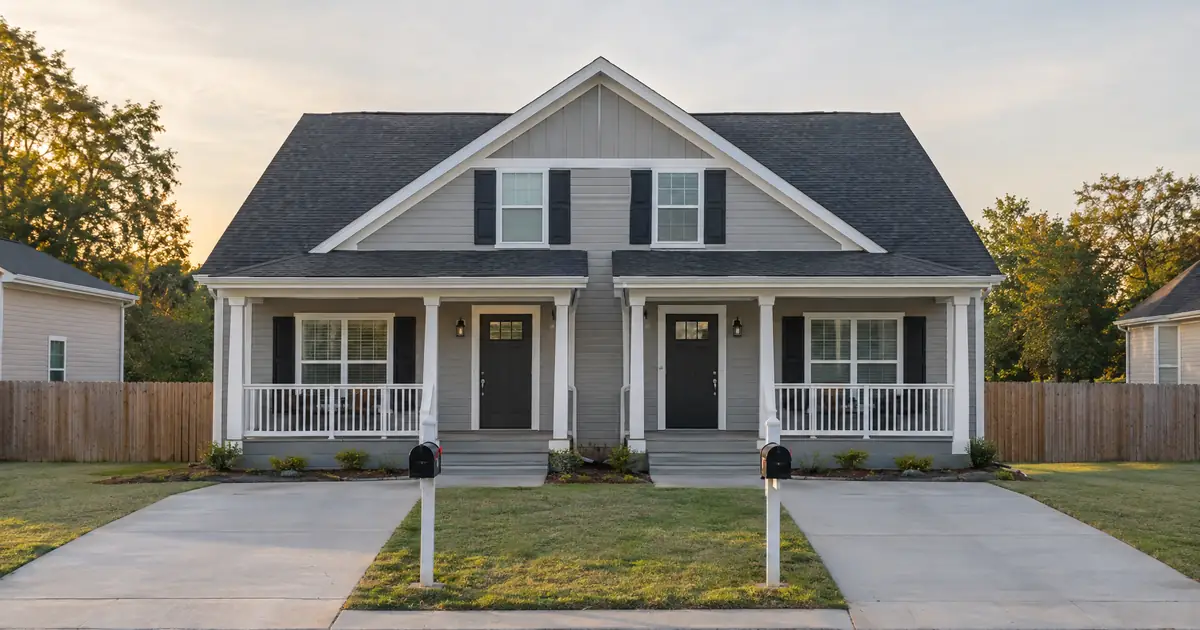
The Quick Read: On a duplex, triplex, or fourplex you live in, the VA allows a cash-out loan up to 100% of the appraised value, with the financed funding fee counted inside that limit. The cap does not shrink because the building has more units. What changes is the paperwork: you must live in one unit, every unit must pass the property standards, and only part of the other units’ rent counts toward qualifying. Many lenders add their own lower limits, and those are not VA rules.
Key Takeaways
- The VA’s ceiling is 100% of appraised value. The funding fee, if you finance it, has to fit under that ceiling.
- The “90%” figure many people remember is one test for proving the refinance helps you. It is not the cap.
- Occupancy decides eligibility on a 2-4 unit cash-out. You live there now, or you intend to.
- Rent from the other units helps you qualify, but not dollar for dollar.
- A lender can set a lower limit than the VA does. Ask which limit you are looking at.
What the VA Cash-Out Cap Actually Is
The cap is the most the new loan can be, measured against the value the VA appraisal sets. That value is called “reasonable value.” For a cash-out refinance, the ceiling is 100% of it. Nothing in the VA’s own rules requires you to leave equity in the house.
Why does the 90% number keep circulating? Years ago the VA did cap refinances at 90%. That limit was removed, but old articles and many lender websites kept repeating it. Some lenders still apply 90% as their own rule, which keeps the myth alive.
The VA cash-out refinance program lets you refinance any type of existing loan into a VA loan and take cash out of your equity. Across the wholesale programs Lendmire places VA files with, the structure is the same. Full-entitlement borrowers get up to 100% of appraised value, including the financed funding fee, with no mortgage insurance. The program has no VA loan limit for borrowers with full entitlement. Everything stays subject to lender guidelines and a full file review.
Two ideas get tangled here, so keep them apart:
1. The cap is a ceiling on the loan amount.
2. The net tangible benefit test is a check that the refinance leaves you better off.
Key Terms Defined
Reasonable value: The value the VA appraisal sets for the property. The loan limit is measured against it.
Net tangible benefit (NTB): A test showing the refinance helps the borrower. The VA gives lenders a list of qualifying benefits.
Funding fee: A one-time VA charge. You can pay it in cash or roll it into the loan. Veterans receiving compensation for a service-connected disability, and a few other groups, are exempt.
Type I and Type 2 cash-out: Two categories of cash-out refinance. They are separated by whether the new loan is larger than the payoff of the old one.
Seasoning: The waiting period before you can refinance a VA loan into another VA loan.
Residual income: The money left each month after your debts, taxes, and basic living costs. It is the VA’s controlling income test.
Occupancy certification: Your written statement that you live in the home or intend to.
How the Cap Math Works
Start with the appraised value. Take 100% of it. That is the most the loan can be. If you finance the funding fee, the fee has to fit inside that number. It cannot push the total above 100%.
The fee is a percentage of the base loan. So a financed fee shrinks the base loan you can take. Here is a worked picture in percentages of value, with no dollar figures:
| Scenario | Fee on cash-out | Base loan (about) | Fee fits under cap? |
|---|---|---|---|
| Exempt veteran | None | 100% of value | Not applicable |
| First use | 2.15% | Roughly 97.9% of value | Yes, fee financed inside 100% |
| After first use | 3.3% | Roughly 96.8% of value | Yes, fee financed inside 100% |
The fee percentages come from the VA’s own funding fee page. The base-loan figures are modeled math, not a quote. They show why a financed fee takes a bite out of your cash.
Your net cash is what remains after the new loan pays off the old loan, the financed fee, and closing costs. The new loan must be a first lien. It can pay off other liens too, including tax or judgment liens, which reduces cash to you.
Here is the catch for a 2-4 unit home. The cap math is identical to a single-family cash-out. It is the appraisal behind the math that gets more complicated, which we cover below.
The 90% Confusion, Sorted Out
A VA circular on cash-out refinances is the document that matters here. It does three things:
- It says the VA will not back a refinance when the loan-to-value ratio exceeds 100%.
- It requires lenders to run a net tangible benefit test on cash-out loans.
- It lists the qualifying benefits. One of them is a new loan at or below 90% of reasonable value. Another is refinancing an adjustable-rate loan into a fixed rate.
So 90% is one door into the benefit test. It is not a requirement, and it is not a ceiling. A borrower can take a loan above 90% when another benefit applies, subject to the lender’s own rules.
The circular also requires lenders to give you a comparison disclosure after your application, and again at closing. Read it. It shows the old loan next to the new one.
Then there is the overlay layer. Many lenders choose to cap their own cash-out loans below the VA’s maximum. That is a business decision on their side. It is not a VA rule. Across wholesale programs, the leverage on offer depends on who is placing the loan, so the same house can get different answers from different lenders.
Does the Cap Change for 2-4 Units?
No. The ceiling does not drop because you own a triplex. The VA guarantees loans on one to four units when you occupy the property. What changes is eligibility detail and lender practice. This table separates the two:
| Topic | VA rule | Common lender overlay |
|---|---|---|
| Loan ceiling | 100% of reasonable value | A lower limit on multi-unit |
| Occupancy | Live there, or intend to | Same, with closer review |
| Other units’ rent | Counted only in part, with reserves | Smaller share counted |
| 3-4 units | Allowed | Extra tests or reserves |
| Credit floor | None set by the VA | Higher floors on some multi-unit files |
A common example of an overlay is a self-sufficiency test on three- and four-unit homes. It checks whether the property’s rent alone can carry the payment. The VA does not impose that test. A lender chooses to. If one lender asks for it, a different lender may not.
The wholesale programs Lendmire works with start at a 580 decision score. That is a program floor, not a VA minimum. The VA itself sets no minimum score. Some lenders set a higher floor on multi-unit loans. Your score is only one input. Residual income remains the controlling test.
Occupancy on a Multi-Unit Cash-Out
A cash-out requires you to certify that you live in the home now or intend to. For a 2-4 unit property, that means living in one unit. The other units can be rented.
Three common situations come up:
- You live in one unit today. You meet the occupancy rule. Certify it and move on.
- You are buying and refinancing around a move. Intent counts for a cash-out, but the lender will want the plan to be credible.
- You moved out. A cash-out is generally not available. The streamline refinance, called the IRRRL, only asks that you once lived there. But it cannot take cash out.
That last case catches people. A veteran buys a fourplex, lives there for a few years, moves, and then looks for cash. The occupancy requirement blocks the cash-out. The streamline can lower the cost or switch the loan type, but it carries no cash.
Appraisal and Property Standards for Multi-Unit Homes
The VA appraisal sets reasonable value, and that value sets your cap. On a 2-4 unit home, the appraiser also gives an opinion of fair market rent for the rental units. Every unit has to meet the VA’s minimum property requirements. That includes the units you rent out and any that sit vacant.
Three questions to settle early:
- Is the unit count legal? Zoning, permits, and tax records should agree. A fourplex that is really a triplex with an illegal conversion causes trouble.
- Does every unit pass? One unit with a failed heating system or missing safety item can hold up the file.
- What if value comes in short? Then the 100% ceiling is smaller than you planned, and cash shrinks with it. The lender uses the VA’s value, not your estimate.
A property with five or more residential units does not fit the program. Some lenders also look at how much of the property is residential when part of it is used for business. Ask about that early if it applies.
Rental Income and Qualifying
A cash-out is full credit underwriting. The VA’s controlling test is residual income. The 41% debt-to-income figure is a guideline, not a cap. A ratio above it needs residual income well above the table.
Rent from the other units can help you qualify. But the VA does not let you count all of it. Only a portion of the projected rent counts, which leaves room for vacancies and upkeep. The rule also asks that you show a reasonable likelihood of success as a landlord. In addition, you need verified reserves that could carry the full housing payment for several months without any rent.
Two details matter here:
- Reserves must be your own funds. Cash-out proceeds and gifted money generally do not count.
- A lender may ask for a history of managing rentals before counting existing rent.
Confirm the exact percentages and months with the lender. They come from VA regulation, but lenders apply them with their own documentation rules. Reading the regulation yourself is worth the time.
Type I vs. Type 2, and Seasoning
The VA sorts cash-out loans by the size of the new loan against the payoff:
| Feature | Type I | Type 2 |
|---|---|---|
| Loan vs. payoff | New loan not above payoff | New loan above payoff |
| Cash to you | None, or minimal | Yes |
| Net tangible benefit | Required | Required |
| Extra benefit tests | More apply | Fewer apply |
Put plainly, if you are taking real cash, you are in the Type 2 category. The VA’s cash-out quick-reference guide defines the Type 2 category as a loan greater than the payoff. The guide also notes that a refinance of a non-VA loan into VA must show at least one net tangible benefit.
Seasoning applies when you are refinancing an existing VA loan. The rule is the later of 210 days from the first payment and the sixth payment. If your current loan is conventional or FHA, the VA seasoning rule does not apply the same way. Your lender may still set its own waiting period.
Where the General Rule Breaks
Five edge cases come up on 2-4 unit files:
1. State law. Some states limit cash-out against a primary home by their own rules. Texas homestead law is one example, and it is tighter than the VA’s. Check your state.
2. Fixed-to-adjustable swaps. A few special rules limit leverage on certain Type I refinances when loan costs are rolled into the new balance.
3. Moved-out veterans. Covered above. The streamline is the route, with no cash.
4. Entitlement. If you have used part of your entitlement, the math on a second use changes. With remaining entitlement, a down payment may be required. Speak with a loan officer rather than guess.
5. Mixed use. A business unit in the building can be allowed, but lenders vary on how much commercial space they accept.
What the Decision Looks Like in Practice
Picture a veteran who lives in one unit of a duplex and rents the other. She wants cash for a roof and a kitchen. The loan sits at a modest share of value today. Her path looks like this:
- Decide on the ceiling. She asks whether the lender uses the VA’s 100% or a lower overlay.
- Count the fee. Unless she is exempt, she plans for the funding fee, and for a smaller base loan if it is financed.
- Run the benefit test. Her lender shows how the new loan passes at least one net tangible benefit.
- Prove the rent. She documents the lease and her reserves.
- Check the appraisal. She expects the value, not her guess, to drive the cap.
Money from a cash-out can go to many uses. Tax treatment can depend on your situation; borrowers should speak with a qualified tax professional before relying on any deduction or credit.
A short pre-application checklist:
- Certificate of Eligibility
- Current mortgage statement and payoff details
- Leases for the rented units
- Proof of reserves in your own accounts
- Income documents for residual income
- A list of questions about overlays on 2-4 unit files
One more point on cost. A VA loan carries no monthly mortgage insurance. The funding fee and closing costs still apply, and a bigger cash-out means a bigger balance. Weigh the new balance against what the cash is for.
Where to Go From Here
If you are weighing a cash-out refinance against keeping the loan you have, Lendmire can help you compare the programs and the equity each one reaches. Lendmire is a mortgage broker, so it arranges the loan through wholesale lenders rather than lending directly. Every figure above is subject to lender guidelines and full file review, and nothing here is a commitment to lend.
Frequently Asked Questions
Is the VA cash-out cap 90% or 100%?
It is 100% of appraised value under VA rules. The 90% figure is either an old limit or a lender overlay. It also shows up as one of the net tangible benefit tests. Ask your lender which limit it applies.
Does the funding fee count toward the cap?
Yes, if you finance it. The fee and the base loan together must stay at or under 100% of value.
Can I cash out a duplex I no longer live in?
Generally no. A cash-out requires you to live there now or intend to. If you have moved out, the streamline refinance may still be open, but it carries no cash.
How much of the rent from my other units counts?
Only a portion. The VA also expects verified reserves and some showing that you can manage a rental. Lenders may count less than the VA allows. Get the lender’s exact method in writing.
Does a 3-4 unit home face tougher rules than a duplex?
Often, yes, but mostly through lender overlays. Examples include self-sufficiency tests and higher reserves. The VA guarantees one to four units, so the stricter treatment depends on the lender.
For your own numbers, request a scenario review with Lendmire.
About Lendmire
Lendmire — NMLS# 2371349 — is a mortgage broker that arranges FHA, VA, conventional and jumbo home purchase and refinance financing in 16 states through wholesale lenders. Every option is subject to the lender’s guidelines and full underwriting. Scotsman Guide named Lendmire a Top Mortgage Workplace in both 2025 and 2026.
Get Started
Ready to find the right loan for you?
In about 30 seconds you can review financing options available for your home or investment property. No commitment required.
Informational only. Not a Loan Estimate, approval, or commitment to lend. Program availability and eligibility are subject to lender guidelines, credit approval, property review, and underwriting.
References
1. VA News: Funding fee, who pays and who is exempt
2. VA Circular 26-18-30 on cash-out refinances
3. VA Cash-Out Refinance Quick Reference Guide
This article is part of Lendmire’s VA Loans series — every loan program’s qualification details, guidelines, and scenarios live on the loan options page.
Related reading: VA Cash-Out Cap Requirements on an Existing VA Loan Payoff · VA Cash-Out vs Conventional Cash-Out When the Home Is Worth Far More · How to Use a VA Cash-Out on an Existing VA Loan for the Next Home
Brandon Miller
Founder & CEO, Mortgage Loan Originator, Lendmire LLC
- Mortgage Loan Originator · NMLS# 1129696 · Verify on NMLS Consumer Access
- North Carolina Real Estate Broker · License# 343312 · Verify on NCREC
- North Carolina Insurance Producer · License# 19053198 · Property, Casualty, Life, Health · Verify on NAIC SBS
- Lendmire LLC · Firm NMLS# 2371349 · Verify firm licensure
Required disclosures. Lendmire (NMLS# 2371349) operates as a licensed mortgage broker, not a direct lender or depository. The discussion in this article is general in nature and should not be relied upon as financial, legal, or tax advice — every investment scenario is unique and should be reviewed by a qualified professional. Any loan inquiry is subject to lender underwriting, and this article is not a commitment to lend or a guarantee of approval. Mortgage rates, loan terms, and program guidelines vary by borrower, property, and state, and may change without notice. Equal Housing Opportunity. Verify licensure at NMLS Consumer Access.