
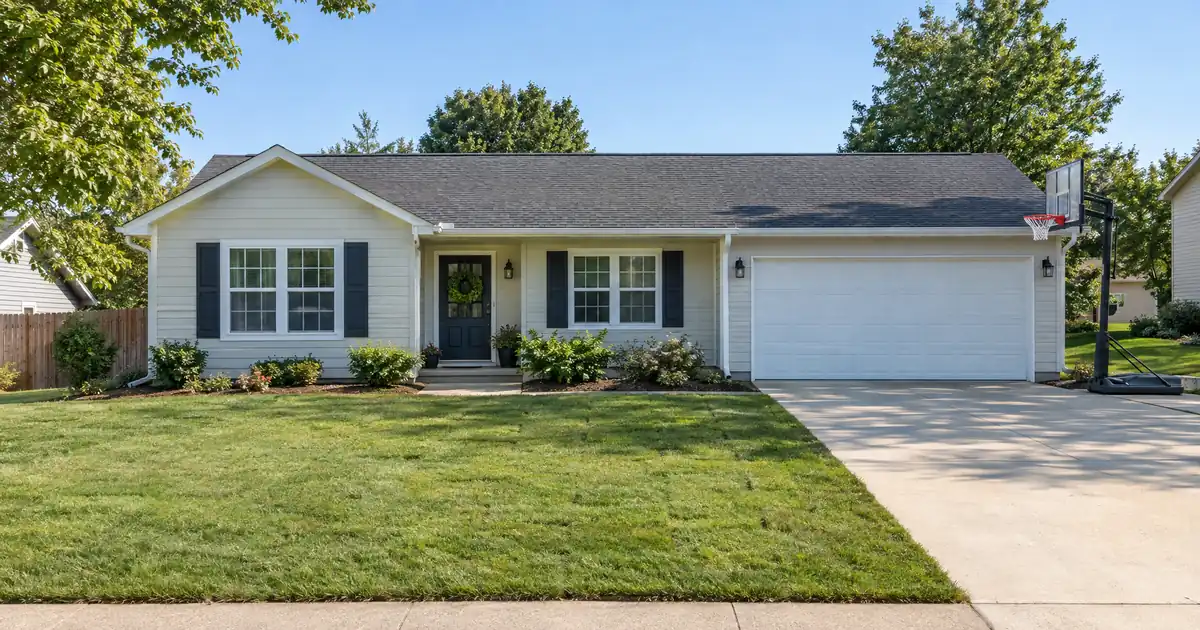
The Quick Read: A veteran with an existing VA loan can refinance into a new VA loan, usually a larger one, and take the difference in cash. The lender you pick shapes the result. VA sets the outer limits. Each lender then adds its own rules on top. The questions below help you tell the two apart, and spot a vague or pushy answer before you sign anything.
Cash-out here means one thing: a new loan replaces your old one, and the rules treat it as a cash-out product even when little or no cash reaches you. This is not a streamline. If you want no cash and are only changing the terms of your existing loan, that is a different product, covered below. The questions here are the ones a good loan officer answers plainly. Lendmire’s VA cash-out refinance program page covers the program side.
VA cash-out estimate
Seeded with an example value, a typical balance, and a round cash request at the first-use fee; change any field.
Editable benchmark: 7.40% as of October 15, 2026 · Freddie Mac 30-year average via FRED®. A conventional market reference, not a VA cash-out refinance quote.
Illustrative starting assumptions: a $350,000 home value, a $193,000 current balance, the full-value VA cap with the first-use funding fee financed, a thirty-year term at the current Freddie Mac benchmark, and property taxes and insurance estimated at typical national rates. Every field is editable.
Illustrative estimate only — not a Loan Estimate, approval, quote, or commitment to lend. The rate field carries the weekly Freddie Mac thirty-year conventional benchmark, a market reference and not a VA cash-out refinance quote; a VA loan is priced by the lender at lock. The total loan, funding fee included, is capped at the program leverage on the reasonable value; the fee follows the tier chosen. The cash available is what the cap allows less the balances paid off and the fee, before closing costs, which are not included. The HELOC line is the line program’s combined loan-to-value ceiling applied to the same value and balance. Taxes and insurance are editable estimates. The debt-to-income figure is a guideline; residual income decides a VA file. Licensed in sixteen states for consumer mortgages.
Key Terms Defined
Cash-out refinance: a new loan that pays off your current mortgage and can give you the leftover equity as cash.
Entitlement: the amount of your VA benefit that backs a loan. A cash-out that pays off your VA loan can restore the entitlement tied to it.
Seasoning: the waiting period VA wants before you refinance a VA loan. It is counted in payments as well as time.
Net tangible benefit: a test showing the new loan helps you, such as a lower payment, a shorter term, or a move from an adjustable to a fixed rate.
Residual income: what is left of your monthly income after your major bills and living costs. It is the controlling test in VA underwriting.
Funding fee: a VA program fee, charged as a percentage of the loan. It is not a lender fee.
Which VA Refinance Are You Asking About?
VA sorts refinances into three groups, per VA Circular 26-19-05. The first is the interest rate reduction refinance loan (IRRRL), the VA streamline for an existing VA loan. The other two are cash-out types.
A Type I cash-out has a new loan, funding fee included, that does not exceed the old payoff. A Type II cash-out exceeds the payoff, so cash reaches your hands. Ask any lender which type it thinks your file is. A good answer names the type and explains why.
Here is the catch. A “no cash back” refinance can still be a cash-out product, with its own tests. A lender who calls it a streamline when it is not has either misread your file or is selling you something.
Questions About Entitlement
“How will my existing entitlement be treated?”
Strong answer: when the new loan pays off your old VA loan, the entitlement tied to it can be restored for the refinance. Your certificate of eligibility from VA decides what you have. The lender should pull it and walk you through it.
Hedged answer: “We’ll see what the system says.” Fine, as long as they pull the certificate before you pay for an appraisal.
Red flag: any promise about how much you can borrow before they have seen your certificate.
“Do I need more entitlement than I have now?”
Full entitlement carries no VA loan limit. Across the wholesale programs we place files with, amounts reach $4,000,000 with full entitlement. With only partial entitlement, a down payment may be needed. Ask a loan officer to run your exact case. Never accept a guess.
Questions About the Appraisal and Loan Size
“How much of the home’s value can I borrow?”
VA allows a cash-out up to 100% of the appraised value, financed funding fee included. A financed fee cannot push the loan above that value. Across the wholesale programs we place files with, the VA cash-out reaches 100%, subject to lender guidelines and full file review.
Many lenders choose a lower cap. That is an overlay, not a VA rule. Ask directly: “Is that limit VA’s, or yours?” A sound lender can answer in one sentence.
“Who orders the appraisal, and what happens if it comes in low?”
The appraisal sets the “reasonable value” that the 100% cap is measured against. A low value shrinks your cash. It can also shrink the loan to the point where the payoff and costs no longer fit. A good lender explains this before you order, not after.
Questions About Fees and the Funding Fee
“What is my funding fee, and am I exempt?”
Per VA’s funding fee page, the cash-out fee is 2.15% on first use and 3.3% after first use. A veteran who already has a VA loan is generally in the second group. Refinance fees do not change with a down payment.
The fee is waived for veterans receiving compensation for a service-connected disability, and for the other exempt groups VA lists. Ask whether the lender has checked your exemption status. A missed exemption is a real cost.
“Can the fee be financed?”
Yes, it can be paid in cash or rolled into the loan, inside the 100% ceiling. Anything above the ceiling comes out of your pocket.
Questions About Seasoning, Benefit and Break-Even
“Am I past the waiting period?”
When a cash-out pays off a VA loan, seasoning applies. Across our programs it is the later of 210 days from your first payment and your sixth payment. A lender who says “we can do it next week” without checking your payment history is guessing.
“What is my net tangible benefit?”
Every VA cash-out needs one. The lender should name it: a lower payment, a shorter term, or a move from adjustable to fixed. On a Type I loan, VA also wants proof that the savings repay the refinance costs within a set period. Ask to see that break-even in months, in writing.
Here is a plain example. Say your rate drops but the new balance is bigger and the term restarts. Your payment could still rise. That is why the break-even matters more than the headline.
How to Tell a VA Rule From a Lender Overlay
This is the question that separates good lenders from vague ones. Use this table.
| Item | VA’s rule | A lender may add |
|---|---|---|
| Max loan to value | Up to 100% of value | A lower cap |
| Credit score | VA sets no minimum | Its own floor |
| Debt-to-income | Residual income controls | A hard ratio cap |
| Entitlement | Set by your certificate | Extra conditions |
| Occupancy | You must live there | Nothing looser |
Pricing and available terms vary by lender, borrower profile, property type, and full underwriting review. Across the wholesale programs we place files with, the 41% debt-to-income figure is a guideline, not a cap. A ratio above it needs residual income well above VA’s standard for your household. Some lenders set a higher score floor or a firm ratio ceiling. Ask for each limit and whether it is VA’s or theirs.
Questions About Disclosures and Comparing Offers
“When do I get the cost comparison?”
For a cash-out, lenders must give you a comparison statement and an equity statement after you apply, per VA’s report on document disclosure. Net tangible benefit information also comes early in the process and again at closing. Exact timing varies by file and lender, and your Loan Estimate arrives under the usual consumer mortgage rules.
Make the numbers match. Compare the old payment and the new payment on the same basis, with taxes and insurance counted on both sides. The CFPB ordered one lender to pay a $2.25 million penalty over a comparison that showed principal and interest on the new loan next to a full payment on the old one, per the CFPB order.
Get Loan Estimates from more than one lender. You do not have to use your original lender. Lendmire’s questions to ask a VA cash-out lender piece goes deeper on this step.
Red-Flag Pitches
The CFPB and VA issued a joint warning about refinance solicitations, per the CFPB and VA warning. It flags promises like skipped payments, thousands in cash back, no out-of-pocket costs and no waiting period. Skip any lender that leads with those lines. If you run into one, you can file a complaint with the CFPB through the contact details on that same page.
Watch also for repeat refinancing. Each one brings another funding fee and closing costs. The CFPB calls the lender-driven version “churning.”
Where the General Rules Break
- Paying off a non-VA loan. The VA seasoning rule applies to VA-to-VA payoffs. A conventional, FHA or USDA payoff can move into VA, and a lender may add its own conditions.
- Construction-to-permanent. Under VA’s 2019 rule, it is treated as a cash-out, whether or not the principal changes.
- Manufactured-home history. If your only prior VA use was a manufactured home purchase, first-use fee rates still apply.
- Prior approval. Some files need VA’s approval first, such as joint loans with a non-veteran.
- State law. State law can add its own limits.
- Second homes and rentals. The home must be one you live in. Occupancy decides the leverage.
What a Decision Looks Like in Practice
Picture a veteran with a VA loan well past the waiting period and a certificate showing restored entitlement. The home appraises well. The first lender names a cap below VA’s 100%. The second says VA allows up to 100%, subject to guidelines, and explains the funding fee exemption the first missed. Same veteran, different outcome.
The honest weighing is this. Cash-out turns equity into debt, and a bigger balance means less cushion. It is worth doing for a clear purpose and a clear benefit. It is not worth doing because someone called with an offer.
Tax treatment can depend on your situation; borrowers should speak with a qualified tax professional before relying on any deduction or credit.
Frequently Asked Questions
Do I have to use my original lender?
No. You can shop any lender that offers VA cash-out. Compare Loan Estimates and the cost comparison from each.
Does the lender decide the interest rate?
Yes. VA guarantees the loan but does not set the rate. Lenders price it themselves, so quotes differ.
Can I use a VA cash-out on a rental property?
No. The home must be your residence. Occupancy decides the leverage.
Is a cash-out the same as a streamline?
No. The IRRRL refinances an existing VA loan, including a switch from adjustable to fixed, with no VA appraisal and a 0.5% fee unless exempt. A cash-out is fully underwritten with an appraisal.
Does the funding fee count toward my maximum loan?
Yes. A financed fee counts inside the 100% ceiling. It cannot push the loan above the home’s reasonable value.
If you are weighing a cash-out refinance against keeping the loan you have, Lendmire can help you compare the programs and the equity each one reaches. Every figure here is subject to lender guidelines and full file review, and nothing is a commitment to lend.
To see how a VA cash-out could work for the home you live in, request a scenario review with Lendmire.
About Lendmire
Lendmire (NMLS# 2371349) is a mortgage broker licensed for consumer lending in 16 states. Lendmire arranges FHA, VA, conventional and jumbo purchase and refinance loans through wholesale lenders; every file is underwritten by the lender under the applicable program guidelines. Scotsman Guide named Lendmire a Top Mortgage Workplace in both 2025 and 2026.
Get Started
Ready to find the right loan for you?
In about 30 seconds you can review financing options available for your home or investment property. No commitment required.
Informational only. Not a Loan Estimate, approval, or commitment to lend. Program availability and eligibility are subject to lender guidelines, credit approval, property review, and underwriting.
References
2. VA – Funding fee and closing costs
3. VA: Cmr on Consumer Education and Document Disclosure
4. CFPB order against NewDay USA
5. CFPB and VA refinancing warning
This article is part of Lendmire’s VA cash-out refinance program — full qualification details, guidelines, and scenarios live on the program page.
Related reading: Can a Veteran With a VA Loan Spend VA Cash-Out on Anything? · Can You Remodel With a VA Cash-Out on an Existing VA Loan? · How Much a VA Cash-Out Releases After Costs on an Existing VA Loan
Brandon Miller
Founder & CEO, Mortgage Loan Originator, Lendmire LLC
- Mortgage Loan Originator · NMLS# 1129696 · Verify on NMLS Consumer Access
- North Carolina Real Estate Broker · License# 343312 · Verify on NCREC
- North Carolina Insurance Producer · License# 19053198 · Property, Casualty, Life, Health · Verify on NAIC SBS
- Lendmire LLC · Firm NMLS# 2371349 · Verify firm licensure
Required disclosures. Lendmire (NMLS# 2371349) operates as a licensed mortgage broker, not a direct lender or depository. The discussion in this article is general in nature and should not be relied upon as financial, legal, or tax advice — every investment scenario is unique and should be reviewed by a qualified professional. Any loan inquiry is subject to lender underwriting, and this article is not a commitment to lend or a guarantee of approval. Mortgage rates, loan terms, and program guidelines vary by borrower, property, and state, and may change without notice. Equal Housing Opportunity. Verify licensure at NMLS Consumer Access.