
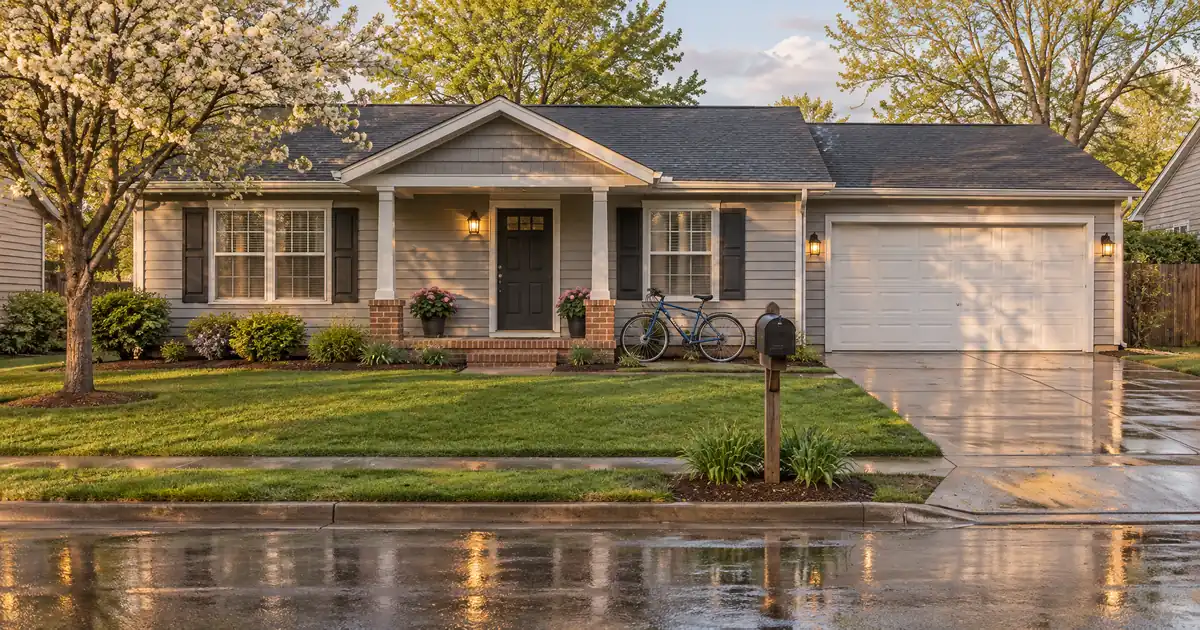
The Quick Read: A VA cash-out on your primary home funds a second home down payment in two separate steps. First, you refinance the home you live in into a new VA loan and take equity out as cash. Second, you use that cash toward a purchase loan on the second home, which is usually conventional. VA backs only the first loan, and every piece is subject to lender guidelines and full file review.
Key Takeaways
- VA backs the refinance on the home you live in. It does not finance the vacation or second home.
- A VA cash-out where the new loan exceeds your old loan payoff, funding fee included, is what VA calls a Type II cash-out, and cash for a down payment falls here.
- The new VA loan can reach 100% of the appraised value, including the financed funding fee. Some lenders set a lower cap.
- The second-home lender runs its own underwriting, and both mortgage payments count against you.
What Is Happening Under the Hood?
Two loans, two sets of rules. That is the whole structure.
VA cash-out estimate
Seeded with an example value, a typical balance, and a round cash request at the first-use fee; change any field.
Editable benchmark: 7.18% as of November 5, 2026 · Freddie Mac 30-year average via FRED®. A conventional market reference, not a VA cash-out refinance quote.
Illustrative starting assumptions: a $350,000 home value, a $193,000 current balance, the full-value VA cap with the first-use funding fee financed, a thirty-year term at the current Freddie Mac benchmark, and property taxes and insurance estimated at typical national rates. Every field is editable.
Illustrative estimate only — not a Loan Estimate, approval, quote, or commitment to lend. The rate field carries the weekly Freddie Mac thirty-year conventional benchmark, a market reference and not a VA cash-out refinance quote; a VA loan is priced by the lender at lock. The total loan, funding fee included, is capped at the program leverage on the reasonable value; the fee follows the tier chosen. The cash available is what the cap allows less the balances paid off and the fee, before closing costs, which are not included. The HELOC line is the line program’s combined loan-to-value ceiling applied to the same value and balance. Taxes and insurance are editable estimates. The debt-to-income figure is a guideline; residual income decides a VA file. Licensed in sixteen states for consumer mortgages.
Loan 1 is the VA cash-out refinance on your primary home. VA explains that a cash-out replaces your current loan with a new one under different terms. It can pull cash from your equity, or it can turn a non-VA loan into a VA-backed one. VA does not lend directly. You work with a private lender.
Loan 2 is the purchase mortgage on the second home. Because a VA loan is meant for a home you will live in, a pure vacation home generally cannot use one. So Loan 2 is typically conventional. Loan 1’s cash becomes Loan 2’s down payment.
One honest note. VA’s page lists uses like paying off debt, school, and home improvements, “or take care of other needs.” It does not name a second-home down payment. Whether that use works is an underwriting question, not a VA-endorsed purpose. Lendmire’s VA cash-out refinance program page covers the program side in more detail.
How Is the VA Cash-Out Underwritten, Step by Step?
The lender treats this as a full-underwriting loan. It is not a streamline. Here is the sequence across the wholesale programs Lendmire places VA files with.
1. Eligibility. You need a Certificate of Eligibility (COE). VA decides it, and service requirements are VA’s rules.
2. Occupancy. The home being refinanced must be your primary residence. Lenders confirm this with you at application.
3. Appraisal. The lender orders it. The appraiser’s reasonable value becomes the denominator in the loan-to-value (LTV) ratio, which compares your loan to the home’s value.
4. Sizing the loan. The new loan covers your old mortgage payoff and any liens, plus costs, the financed funding fee, and your cash. The VA Lenders Handbook says the maximum loan may not exceed 100 percent of reasonable value. A financed funding fee cannot push you past that line.
5. Net tangible benefit. Every VA cash-out must show a net tangible benefit, meaning the new loan has to help you in a way VA recognizes. Whether a down payment cash-out meets it depends on how the lender structures the loan. Nobody should promise it.
6. Credit, income and residual income. Residual income is the controlling test. That is the money left each month after your major obligations and living costs. The 41% debt-to-income figure is a guideline, not a cap. A higher ratio needs residual income well above the table.
The wholesale programs Lendmire works with start at a 580 decision score. VA itself sets no minimum, so lenders set their own, and some set higher floors.
What Does the Cash-Out Cost?
The VA funding fee is the main program cost. It is financeable, and it is waived for veterans receiving compensation for a service-connected disability and the other exempt groups. For a cash-out refinance, the fee is 2.15% on first use and 3.3% after that. The reduced down-payment tiers do not apply to refinances.
Because the fee counts toward the 100% ceiling, it shrinks the cash you can take. If it would push the loan past reasonable value, you pay that part in cash.
There are other costs. The CFPB’s cash-out research notes that origination, appraisal, and title fees can be substantial. Loan 2 then adds its own closing costs. Your Loan Estimate and Closing Disclosure show every line, so compare them side by side.
What Does the Second-Home Lender Check?
The second lender cares about the loan it is making, not the one you just did. A few things decide the outcome:
- Property type. Fannie Mae’s Selling Guide defines principal residence, second home, and investment property as separate occupancy types.
- Second-home conditions. An earlier published version of that guide lists them: you occupy it for part of the year, it is a one-unit dwelling, it suits year-round use, you control it exclusively, and it is not a rental or timeshare arrangement. Rental income cannot be used to qualify. Those conditions come from an older version, so confirm them against the current guide.
- Debt-to-income. Your new, larger Loan 1 payment and the Loan 2 payment both count, plus taxes and insurance on both homes.
- Down payment minimum. Each second-home loan has its own, and lenders often add stricter rules.
- Source of funds. The lender documents where your down payment came from. Expect to show the cash-out proceeds clearly in your bank records.
Practitioner pattern: the common stumbling block is not the cash-out itself. It is the combined payment load. A borrower can have plenty of equity and still run into a debt-to-income wall once both mortgages are counted. Run that check before ordering the first appraisal.
Which Property Types Work With Which Loan?
| Second property | Can VA finance it? | Typical path |
|---|---|---|
| Pure vacation home | Generally no | Conventional second-home loan |
| New primary residence | Yes, if you will live there | Second VA loan, if entitlement remains |
| Rental property | No | Outside this article’s scope |
| Multi-unit property | Depends on occupancy | Different occupancy category |
If your “second home” is really a new place you will live in, that is a different path. A second VA loan with remaining entitlement is the mechanism there, not a cash-out down payment. Occupancy decides the leverage, and that single fact sorts most of these questions.
Where Does the General Rule Break?
Refinancing a non-VA loan into VA. VA counts this as a cash-out. If you hold a conventional loan, the refinance still moves you into the VA program.
Refinancing an existing VA loan. Here, seasoning applies. That is a required waiting period before the new loan, and for VA-to-VA cash-outs the later of 210 days from your first payment and your sixth payment is the test. VA Circular 26-19-05 confirms seasoning applies to all cash-outs that refinance a VA loan. The half-percent rate-reduction test and fee recoupment are streamline (IRRRL) rules, so they do not apply to the VA cash-out.
Lender caps. VA’s ceiling is 100%. A lender can set its own lower one. That is common, so your cash may be less than the maximum suggests.
State law. Some states restrict cash-out on a homestead below VA’s ceiling. State law can override the federal limit.
Low appraisals. The appraisal sets your cash. If it comes in low on either property, the whole plan shifts. Loan 2 may need more money down, and Loan 1 may produce less.
What Does the Decision Look Like in Practice?
Picture a veteran with a paid-down primary home and steady income. She wants a lake house for weekends. She asks a lender to size a cash-out at the full 100% ceiling. The lender subtracts her old payoff, the financed funding fee, and closing costs. What is left is her cash.
She then has three jobs. She keeps part for Loan 2 closing costs, because those are separate. She keeps reserves in the bank, because cash she spent on the down payment does not count as reserves. And she checks that the combined payments fit her debt-to-income picture before she commits.
The order of operations:
1. Talk to both lenders before anything closes.
2. Close the refinance on your primary home and receive the cash.
3. Document the funds in your account.
4. Apply for and close the second-home loan.
Mistakes to avoid:
- Misstating how you will occupy either home.
- Assuming 100% LTV means all your equity.
- Counting spent cash as reserves.
- Forgetting that borrowing near 100% leaves little or no equity cushion on your primary home.
- Counting rental income on a second home toward qualifying. Terms depend on the lender’s guidelines, the property type, the leverage, and a full review of the credit profile.
VA also warns borrowers to be careful with refinance offers and publishes guidance on the signs of misleading ones. Read every disclosure, including the VA-required comparison of your old and new loan.
How Does This Compare With Other Ways to Get the Cash?
| Option | What it does | Main tradeoff |
|---|---|---|
| VA cash-out | Replaces the first mortgage | Larger balance, funding fee |
| HELOC | Adds a line on top | Your current loan stays |
| Home equity loan | Adds a second lien | Two payments on one home |
| Selling | Frees all your equity | You give up the home |
A cash-out replaces your first mortgage rather than adding a lien. A HELOC or home equity loan leaves your current terms in place. Which fits depends on your existing loan and how much cash you need.
Key Terms Defined
Cash-out refinance: A new loan that pays off your old mortgage and gives you the difference in cash.
Type II cash-out: A VA cash-out where the new loan exceeds the old loan’s payoff, funding fee included.
Reasonable value: The appraised value VA uses to set the most you can borrow.
Net tangible benefit: A measurable advantage the new loan must give you.
Residual income: The money left each month after major obligations and living costs.
Seasoning: The waiting period required before refinancing an existing VA loan.
Who Does This Fit, and Who Should Skip It?
It fits you if you have real equity, strong residual income, and room in your budget for two mortgages. It is a poor fit if the new payment would stretch your budget or if you would borrow your equity down to almost nothing.
If you are weighing a cash-out refinance against keeping the loan you have, Lendmire can help you compare the programs and the equity each one reaches.
Frequently Asked Questions
Can I buy a vacation home directly with a VA loan?
Generally no. VA loans are for homes you will live in. A pure vacation home usually needs conventional financing, which is why the cash-out on your primary home serves as the down payment source.
Can I use all my cash-out proceeds as the down payment?
Not necessarily. The cash-out has to cover Loan 2 closing costs, and you will want reserves. The second-home lender also documents the source of the funds. Plan for a split, not a single use.
Does the cash-out use up my VA entitlement?
It can affect it, though the details depend on your file. The impact on a later VA purchase is a question for your loan officer, who can review your COE and remaining entitlement.
Will a larger primary mortgage hurt my second-home approval?
It can, because the second lender counts the new Loan 1 payment plus the Loan 2 payment, along with taxes and insurance on both homes. Higher combined debt can make approval harder.
Does the funding fee ever go away?
It is waived for veterans receiving compensation for a service-connected disability and the other exempt groups. Otherwise a cash-out refinance carries 2.15% on first use and 3.3% after that, and it can be financed within the 100% ceiling.
For your own numbers, request a scenario review with Lendmire.
About Lendmire
Lendmire, NMLS# 2371349, is a mortgage brokerage with consumer lending licenses in 16 states. FHA, VA, conventional and jumbo purchase and refinance loans are arranged through wholesale lending partners, and each application is reviewed individually by the lender. Scotsman Guide named Lendmire a Top Mortgage Workplace in both 2025 and 2026.
Get Started
Ready to find the right loan for you?
See your offer in seconds. No credit pull, no obligation.
Informational only. Not a Loan Estimate, approval, or commitment to lend. Program availability and eligibility are subject to lender guidelines, credit approval, property review, and underwriting.
References
1. VA.gov: Cash-out refinance loan
2. VA Lenders Handbook (Pamphlet 26-7), Chapter 6
3. CFPB: Cash-out refinances and paydown behavior
4. Fannie Mae Selling Guide: Occupancy Types
5. Fannie Mae Selling Guide B2-1.1-01 (2022 version)
This article is part of Lendmire’s VA cash-out refinance program — full qualification details, guidelines, and scenarios live on the program page.
Related reading: Best VA Cash-Out Refinance Program Within a Year of Buying the Home · How Much a VA Cash-Out Releases to Active-Duty for the Next Home · Banks That Offer a VA Cash-Out Refinance on a Free-and-Clear Home
Brandon Miller
Founder & CEO, Mortgage Loan Originator, Lendmire LLC
- Mortgage Loan Originator · NMLS# 1129696 · Verify on NMLS Consumer Access
- North Carolina Real Estate Broker · License# 343312 · Verify on NCREC
- North Carolina Insurance Producer · License# 19053198 · Property, Casualty, Life, Health · Verify on NAIC SBS
- Lendmire LLC · Firm NMLS# 2371349 · Verify firm licensure
Required disclosures. Lendmire (NMLS# 2371349) operates as a licensed mortgage broker, not a direct lender or depository. The discussion in this article is general in nature and should not be relied upon as financial, legal, or tax advice — every investment scenario is unique and should be reviewed by a qualified professional. Any loan inquiry is subject to lender underwriting, and this article is not a commitment to lend or a guarantee of approval. Mortgage rates, loan terms, and program guidelines vary by borrower, property, and state, and may change without notice. Equal Housing Opportunity. Verify licensure at NMLS Consumer Access.