
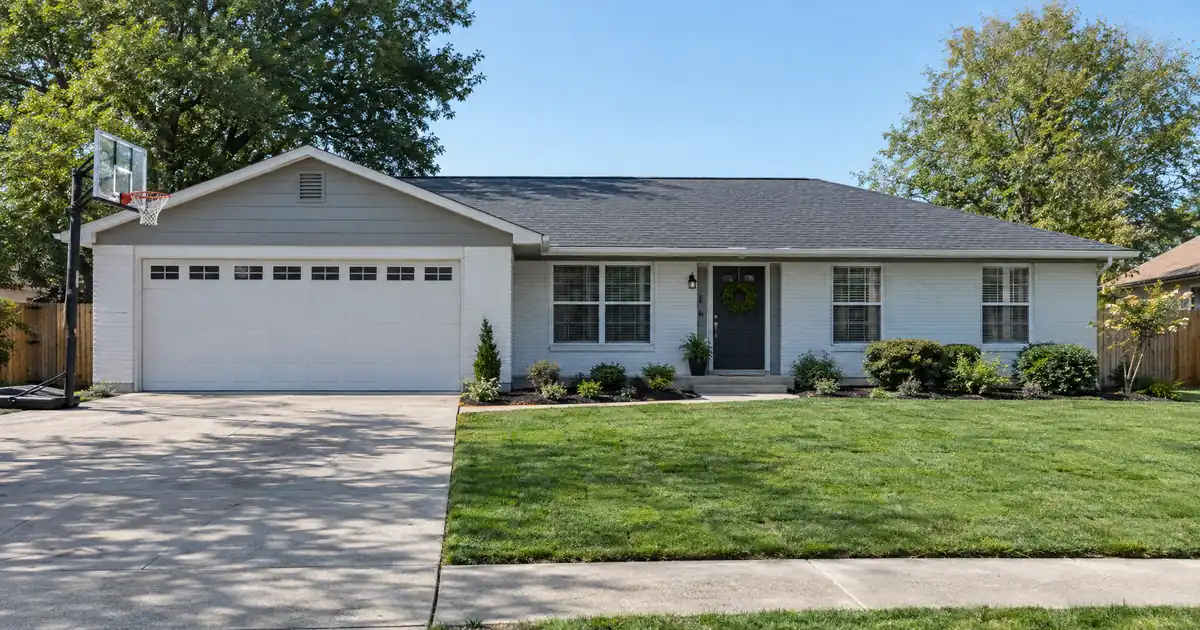
The Quick Read: A VA cash-out refinance on a home with no lien at all is lender-dependent, and most lenders will not do it. The reason is the statute: it authorizes a VA-guaranteed loan to refinance existing mortgages or liens “secured of record,” so a home with nothing of record to pay off usually falls outside the loan. A home that still carries some lien of record is a different file. Below is how the loan is built, where the paid-off question breaks, and what the options look like.
What Counts as “Paid Off”?
Paid off can mean five different things on a file, and each one changes the answer. A title search sorts them out. The loan officer needs to know what is recorded against the property, not what the borrower remembers.
| Situation | What it means for a VA cash-out | Next step |
|---|---|---|
| Paid-off VA loan, lien released | No lien of record; most lenders decline | Compare equity products |
| Paid-off non-VA loan, lien released | Same: nothing to refinance | Compare equity products |
| Bought with cash | Never had a lien | Check title for any other lien |
| Inherited, no mortgage | No lien unless one was left behind | Title search first |
| Small lien still of record (old HELOC, tax or judgment lien) | Something exists to pay off; file may work | Ask the lender to review title |
The last row matters most. A forgotten HELOC that was never formally released sometimes shows up on title. Paying it off through the new loan can make the file a real refinance. Whether a lender accepts that depends on the lender, the lien, and the file.
Why Lenders Say No (and Why You’ll See Conflicting Answers)
The VA’s published page on the cash-out refinance loan lists three requirements: a Certificate of Eligibility, meeting VA and lender standards for credit and income, and living in the home. It does not say anything about paid-off homes either way.
The lien rule comes from the statute. 38 U.S.C. § 3710 authorizes a guaranteed loan to refinance existing mortgage loans or other liens secured of record on a home the veteran owns and occupies. Read literally, the loan refinances something. With no lien, there is nothing to refinance.
That is why you will find some pages saying a free-and-clear home qualifies and others saying it does not. The honest read: VA does not publish a flat rule on this, and the statute’s wording is why most lenders treat a lien-free home as ineligible. Across the wholesale programs Lendmire places VA files with, the same caution applies. A true no-lien home is a hard file, and a borrower should hear that before paying for an appraisal.
How the Loan Works, Step by Step
Here is the mechanical path for a home that does have a lien of record to refinance.
1. Get the Certificate of Eligibility. The COE comes through the lender, VA.gov, or by mail, per VA Home Loans. A cash-out refinance needs a new COE. Only the IRRRL does not.
2. Settle the lien question. Title shows what is recorded. Any mortgage, HELOC, or other lien of record is what the new loan would pay off.
3. Underwriting. Residual income is the controlling test. It measures what is left each month after the major obligations and living costs. The 41% debt-to-income figure is a guideline, not a cap. A ratio above it needs residual income well above the table.
4. Appraisal. The VA appraisal sets the reasonable value. The loan can reach 100% of the appraised value, including the financed funding fee. Some lenders set a lower ceiling than VA does.
5. Occupancy. The borrower must live in the home. This is a primary-residence loan. A rental or second home does not qualify.
6. Closing. The new loan pays off the old lien and the funding fee if financed. What is left is the cash to the borrower. On a Loan Estimate and Closing Disclosure, the cash-to-borrower line is where the fee drag shows up.
The Funding Fee and Cost Side
The VA funding fee is a one-time charge, and it can be financed into the loan. On a cash-out refinance, it is 2.15% on first use and 3.3% on subsequent use. It does not drop with a down payment on this loan type. Veterans receiving compensation for a service-connected disability, and the other exempt groups, do not pay it.
There is no monthly mortgage insurance on a VA loan. The funding fee is not mortgage insurance. It is a single charge.
Here is where a paid-off home differs. On a normal cash-out, part of the new loan goes to the old payoff, so the fee is absorbed inside a larger balance. With no payoff, a financed fee comes straight out of the cash. VA’s own page warns that closing costs can add up to thousands of dollars. A borrower should look at the cash-to-borrower line on the Loan Estimate before going further.
Key Terms Defined
Lien: a recorded legal claim against a property, such as a mortgage, HELOC, or tax lien.
Free and clear: a home with no lien of record against it.
Certificate of Eligibility (COE): the VA document that confirms a borrower’s service-based eligibility.
Residual income: the money left each month after taxes, debts, and a set living allowance, which VA treats as the controlling test.
Entitlement: the amount of guaranty the VA gives to the lender on your loan.
Seasoning: the waiting period before a loan can be refinanced.
Where the Rule Breaks: Edge Cases
Seasoning applies only to VA-to-VA refinances. Under 38 U.S.C. § 3709, a refinance cannot be guaranteed until the later of two dates: six consecutive monthly payments on the loan being refinanced, or 210 days after that loan’s first payment due date. A borrower paying off a non-VA loan is generally not tied to this clock. Lenders add their own overlays, so expect questions about it anyway.
Net tangible benefit. The refinance has to leave the borrower better off in a measurable way. On a cash-out, the cash and the new terms are part of that review. Lenders document it in the file.
Entitlement from an earlier VA loan. A veteran who paid off a VA loan and kept the home may have entitlement available again. A new VA loan uses entitlement, so the COE and the entitlement picture need a look before anything else. With full entitlement, there is no VA loan limit. With remaining entitlement, a down payment may be required. Speak with a loan officer about your own numbers.
Credit. VA sets no minimum credit score. The wholesale programs Lendmire places VA loans with start at a 580 decision score. Some lenders set a higher floor.
State law. Some states restrict cash-out against a homestead. This varies by state, so ask early.
IRRRL. The streamline refinance is for an existing VA loan only. It gives no cash. It is the wrong tool for a paid-off home.
What to Do if the Answer Is No
A home with equity and no lien still has options. They are different loans with different tradeoffs.
| Option | Fits a paid-off home? | Main tradeoff |
|---|---|---|
| VA cash-out refinance | Lender-dependent; needs a lien of record | Most lenders decline a true no-lien home |
| Conventional cash-out | Yes, under documentation rules | No VA benefits; mortgage insurance rules differ |
| Home equity loan | Yes | Second lien; fixed amount |
| HELOC | Yes | Variable access; second lien |
Conventional guidelines are the closest alternative. Fannie Mae’s Selling Guide allows cash-out on a property with no lien, using a documented exception. That is a different program with different rules, but it shows the route exists.
Who Should Skip This
Putting a mortgage on a debt-free home changes the monthly budget from no payment to a new payment. For a borrower on fixed income, that change matters. Equity also shrinks by the amount borrowed, and the home becomes security for a loan again.
Skip it if the cash is for something the borrower can wait on. Skip it if the funding fee and closing costs would eat a large share of the proceeds. Think harder if the home is the borrower’s only major asset.
Tax treatment can depend on your situation; borrowers should speak with a qualified tax professional before relying on any deduction or credit.
Documents to Gather and Questions to Ask
A borrower with a lien-free home should have these ready:
- Certificate of Eligibility, or authorization for the lender to pull it
- Title or deed records showing how the property was acquired
- Homeowners insurance declarations
- Property tax records
- Income and asset documents for residual income
- Proof of occupancy
Then ask the loan officer:
- Does this lender treat a lien-free home as eligible, and why?
- Is there any lien of record I forgot about?
- What is this lender’s ceiling on loan-to-value, compared with VA’s limit?
- What does the cash-to-borrower line look like after the funding fee?
- What is the credit floor on this program?
The Lendmire page on the VA cash-out refinance program lists the basics. Program figures are subject to lender guidelines and full file review, and nothing here is a commitment to lend.
Frequently Asked Questions
Can I get a VA cash-out refinance if I own my home outright?
Usually not. The statute speaks of refinancing liens secured of record, so most lenders treat a home with no lien as ineligible. VA’s own page does not state a paid-off rule either way. A lender that accepts the file is the exception.
Does a small remaining lien change the answer?
It can, because a lien of record, such as an unreleased HELOC or a judgment lien, gives the loan something to pay off. Lenders differ on whether they accept that, so a title search and a conversation with the loan officer come first.
Does the funding fee apply to a cash-out refinance?
Yes, unless the borrower is exempt. It is 2.15% on first use and 3.3% after. It can be financed, and veterans receiving compensation for a service-connected disability are exempt.
Can I borrow up to 100% of my home’s value?
VA allows the loan to reach 100% of the appraised value, including the financed fee. Some lenders set a lower limit, and credit and residual income still decide the actual amount.
Does seasoning apply to my paid-off home?
Seasoning applies when the loan being refinanced is a VA loan: six consecutive payments and 210 days after the first payment due date, whichever is later. It generally does not apply to a non-VA payoff. A paid-off home has no payoff, so it rarely becomes the issue.
If you are weighing a cash-out refinance on a home you own outright, Lendmire can help you compare the programs and the equity each one reaches.
For your own numbers, request a scenario review with Lendmire.
About Lendmire
As a mortgage broker (NMLS# 2371349), Lendmire helps homeowners and home buyers in 16 states with FHA, VA, conventional and jumbo purchase and refinance loans arranged through wholesale lenders. Lendmire is never the lender; program terms are set by the lender and the agency guidelines. Scotsman Guide named Lendmire a Top Mortgage Workplace in both 2025 and 2026.
Get Started
Ready to find the right loan for you?
In about 30 seconds you can review financing options available for your home or investment property. No commitment required.
Informational only. Not a Loan Estimate, approval, or commitment to lend. Program availability and eligibility are subject to lender guidelines, credit approval, property review, and underwriting.
References
1. VA.gov – Cash-out refinance loan
5. Fannie Mae Selling Guide B2-1.3-03
This article is part of Lendmire’s VA Loans series — every loan program’s qualification details, guidelines, and scenarios live on the loan options page.
Related reading: VA Cash-Out vs Conventional Cash-Out When the Home Is Worth Far More · Can a VA Cash-Out Skip the Appraisal When Your Home Is Worth Far More? · VA Cash-Out Refinance Checklist for a Veteran With a Low First Mortgage
Brandon Miller
Founder & CEO, Mortgage Loan Originator, Lendmire LLC
- Mortgage Loan Originator · NMLS# 1129696 · Verify on NMLS Consumer Access
- North Carolina Real Estate Broker · License# 343312 · Verify on NCREC
- North Carolina Insurance Producer · License# 19053198 · Property, Casualty, Life, Health · Verify on NAIC SBS
- Lendmire LLC · Firm NMLS# 2371349 · Verify firm licensure
Disclosures. The information presented in this article is general market commentary, not financial, legal, or tax advice. Lendmire is a mortgage brokerage (NMLS# 2371349) — not a direct lender or depository institution — and loan placement is subject to lender underwriting. Nothing in this content represents a commitment to lend. Loan terms, pricing, and program availability vary based on borrower qualifications, property characteristics, and state of subject property, and are subject to change at any time. Lendmire complies with Equal Housing Opportunity requirements. Consumer access: nmlsconsumeraccess.org.