
The Quick Read: A VA cash-out on a fourplex works only if you live in one of the four units. Underwriting is full, not streamlined. Residual income is the controlling test, and the 41% debt-to-income figure is a guideline rather than a hard cap. A high DTI can still be approved when residual income is well above the table and the file shows strong compensating factors, subject to lender guidelines and full file review.
What Does a VA Cash-Out on a Fourplex Actually Mean?
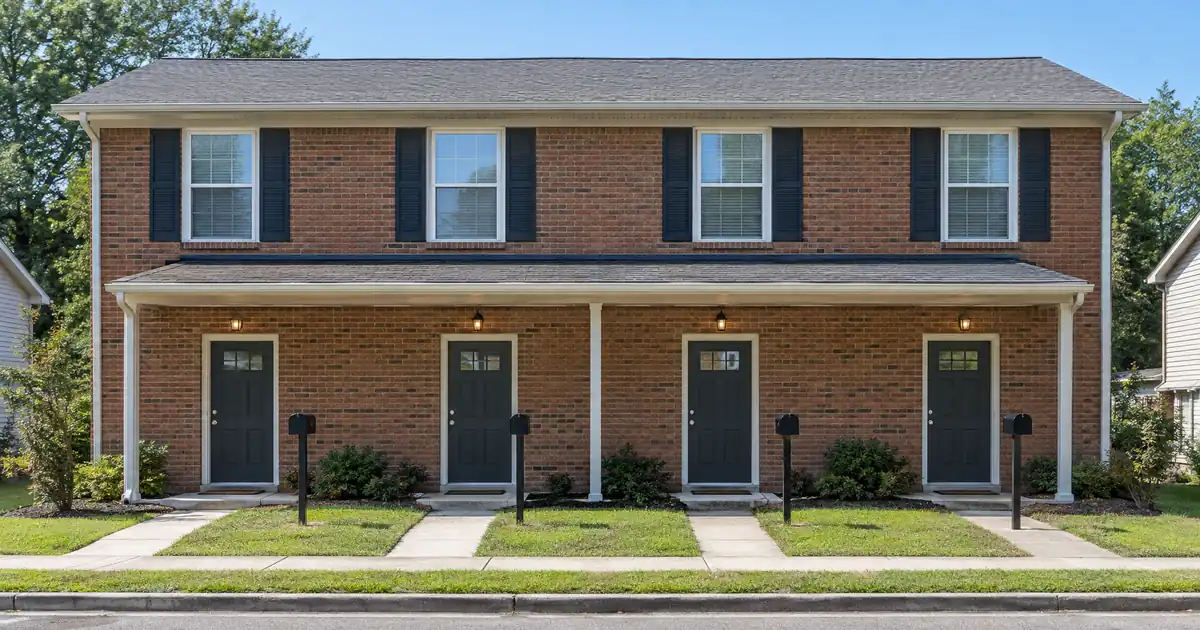
It means replacing your current mortgage with a new VA-backed loan that is larger than the payoff, and taking the difference as cash. The property is a four-unit building. You occupy one unit. The other three are rentals.
Per the VA cash-out refinance page, you qualify by meeting three conditions: a valid Certificate of Eligibility, VA and lender credit and income standards, and living in the home you are refinancing. The loan can pay off debt, fund school or improvements, or move a non-VA loan (FHA, conventional, USDA) into a VA-backed loan.
A fourplex with no owner-occupant unit is not eligible. A building held purely as an investment is not eligible either. Across the wholesale programs Lendmire places files with, the occupancy certification is the first gate, and it is not negotiable.
Lendmire’s VA cash-out refinance program page covers the general product. This piece covers what changes with four units and a high DTI.
Key Terms Defined
Certificate of Eligibility (COE): The VA document that confirms your service-based entitlement. VA decides it, not the lender.
Residual income: What is left of your monthly income after taxes, the new housing payment, other debts and set living expenses for your household size and region.
Debt-to-income (DTI): Your monthly debts divided by your gross monthly income. VA’s standard figure is 41%.
Type II cash-out: A refinance where the new loan, including the funding fee, exceeds the payoff. This is the equity-extraction case.
Reserves: Verified liquid funds you hold after closing, kept in your own account, to cover payments if rent stops.
Compensating factors: Strengths in the file, like long clean credit or high residual income, that offset a weak ratio.
How Is the Loan Underwritten, Step by Step?
Full underwriting applies. There is no streamlined review on a cash-out.
1. Entitlement. The lender confirms your COE. A cash-out uses entitlement, which can affect later VA purchases.
2. Occupancy. You certify that you live in one of the four units.
3. Credit. VA sets no minimum score. The wholesale programs Lendmire works with start at a 580 decision score. Some lenders set a higher floor.
4. Appraisal. VA’s reasonable value sets the ceiling. The cash-out reaches up to 100% of appraised value including the financed funding fee. Per VA Circular 26-19-05, VA will not guarantee a refinance above 100% LTV, and a financed fee cannot push the loan over reasonable value. On a fourplex, the appraiser also gives an opinion of fair rent for units with no lease. Each figure is subject to lender guidelines and a complete review of property type, leverage, and credit.
5. Income and rent. This is where fourplexes differ. See the next section.
6. Net tangible benefit and disclosures. The refinance must show a real benefit to you. The same seasoning rule applies as on other VA refinances: the later of 210 days from the first payment and the 6th payment, when refinancing an existing VA loan.
7. Residual income and DTI. The lender runs both on the new, larger payment.
How Does the Rent From the Other Three Units Count?
Not at face value. The rule is generally applied as follows. On a multi-unit property, prospective rent is not used unless you show a reasonable likelihood of success as a landlord and verified reserves covering principal, interest, taxes and insurance for at least six months without rental help. When rent is used, it counts at 75% of the lease or rental agreement amount, unless a higher share can be documented.
The wording of the rule refers to the loan on a multi-unit structure, so it reaches refinances. Lenders may read it more strictly.
Here is how the units usually sort out:
| Unit status | Typical treatment |
|---|---|
| Your own unit | No rent counted |
| Leased unit | Lease amount, counted at 75% |
| Month-to-month | Lender-dependent, thinner documentation |
| Vacant unit | Appraiser’s fair-rent opinion, if used at all |
Reserves are the quiet failure point. In common practice, equity, cash-out proceeds and gift funds do not count toward reserves, and the money must sit in your own account before closing. A file that assumes the refinance will fund its own reserves gets sent back.
What Happens When the DTI Is High?
A high DTI is not an automatic denial. Under 38 CFR 36.4340, the two primary standards are DTI and residual income, and ordinarily you meet both. The regulation also says failing one does not automatically disqualify you.
The 41% figure is a guideline. Above it, the file needs residual income well above the table. VA’s rule says that when residual income exceeds the guideline by at least 20%, the second-level review and statement of justification are not required. Below that cushion, the lender documents the compensating factors in a written justification signed by the underwriter’s supervisor. The official print of the regulation also carves out a case where the ratio is high solely because of tax-free income.
Meeting both standards still is not approval. The lender must weigh everything and find you a satisfactory credit risk.
Compensating factors named in the regulation include:
- Excellent long-term credit
- Minimal consumer debt
- Little or no increase in shelter expense
- Military benefits
- High residual income
- Satisfactory homeownership experience
Residual income counts every household member, and it is measured after shelter costs and other obligations. The dollar tables vary by region, household size and loan amount, so a lender has to run yours.
Where Does the General Rule Break?
Lender overlays. VA rules are not the whole story. Lenders can add stricter DTI caps, credit floors or reserve requirements. Those are private limits, not VA rules, and they are a common reason a high-DTI fourplex file gets declined at one lender and placed at another. Through a broker, the same file can be shopped across several wholesale lenders with different overlays.
Type I versus Type II. If the new loan does not exceed the payoff, it is a Type I and carries extra VA tests, including fee recoupment and a rate-reduction test. A cash-out that delivers money is a Type II.
The 100% ceiling. 100% is VA’s maximum. Many lenders set it lower, so the cash you can actually reach may be less than the appraisal suggests.
Loan size. With full entitlement, the wholesale programs Lendmire places loans with serve amounts up to $4,000,000. With remaining entitlement, a down payment may be required, and borrowers should speak with a loan officer.
State rules. Some states restrict cash-out on a homestead, and those limits can differ for multi-unit homes. Check state-specific limits with a licensed professional before assuming the national rules are the whole picture.
Tax-free income. Covered above. It is the one explicit exception to the 41% standard.
What Does the Funding Fee Look Like?
The VA funding fee schedule lists the cash-out fee at 2.15% for first use and 3.3% after first use. These do not change with down payment. Borrowers receiving compensation for a service-connected disability, and other exempt groups, do not pay it.
The fee can be financed, but a financed fee counts toward the 100% ceiling. On a tight-equity fourplex, that can shave the cash you walk away with.
Can Paying Off Debt Fix a High DTI?
Often, yes. A cash-out can pay off installment and revolving debts directly at closing. Removing those payments lowers DTI and lifts residual income, since residual income is measured after other obligations.
The catch is the new payment. A larger mortgage balance raises the housing payment, and residual income is calculated on that new figure. A file that looked fine on the old payment can fail on the new one. Run both before applying. Lendmire’s piece VA Cash-Out Requirements for Debt Consolidation With a High DTI walks through that tradeoff.
If your existing loan is already VA, compare options first. Lendmire’s piece VA IRRRL vs VA Cash-Out Requirements for a High-DTI Veteran explains where the streamlined path ends and full underwriting begins.
What Should You Assemble Before Applying?
- Certificate of Eligibility
- Current leases for the three rental units, plus proof of deposits
- Six months of verified reserves in your own account, separate from any cash-out
- Proof of landlord experience or a clear case for it
- Recent payment history on the current mortgage
- A list of debts you would pay off at closing
- Pay records for all household income, including military or VA benefits
Gaps in lease evidence and reserves documentation are among the preventable reasons these files stall. Vacant units and thin landlord history are others.
When Is a VA Cash-Out the Wrong Tool?
When residual income is short even with debts paid off. When your reserves cannot reach six months of the housing payment. When you plan to move out and keep the building as a pure rental, because the occupancy requirement is the point of the program. And when the cash you need exceeds what 100% of value, less the financed fee, can deliver.
Tax treatment can depend on your situation; borrowers should speak with a qualified tax professional before relying on any deduction or credit.
If you are weighing a cash-out refinance against keeping the loan you have, Lendmire can help you compare the programs and the equity each one reaches.
Frequently Asked Questions
Does VA put a hard 41% cap on DTI?
No. The 41% figure is VA’s standard, not a ceiling. Above it, the file needs residual income well above the table, and when residual income clears the guideline by at least 20%, the extra supervisory justification is not required. Lenders can still apply their own stricter limits.
Can I do a VA cash-out if I no longer live in the fourplex?
Generally no. The program requires that you live in the home you are refinancing. A building with no owner-occupant unit, or one held purely as an investment, is not eligible.
Does all the rent from the other units count?
No. When rent is used on a multi-unit property, it counts at 75% of the lease amount unless a higher share is documented. It also requires verified reserves and a showing that you can manage rentals. Rent from a vacant unit is thinner still.
Can the cash-out money count as my reserves?
Not in common lender practice. Equity, cash-out proceeds and gift funds generally cannot count toward reserves, and the funds need to be in your account before closing.
Is a cash-out the same as an IRRRL?
No. An IRRRL refinances an existing VA loan to a lower rate or from adjustable to fixed, with no cash out and no VA appraisal. A cash-out needs a new appraisal and full credit and income underwriting, and it can refinance any loan type into VA.
For your own numbers, request a scenario review with Lendmire.
About Lendmire
Lendmire (NMLS# 2371349) is a mortgage broker licensed for consumer lending in 16 states. Lendmire arranges FHA, VA, conventional and jumbo purchase and refinance loans through wholesale lenders; every file is underwritten by the lender under the applicable program guidelines. Scotsman Guide named Lendmire a Top Mortgage Workplace in both 2025 and 2026.
For the program’s current guidelines, see VA loan programs.
Get Started
Ready to find the right loan for you?
In about 30 seconds you can review financing options available for your home or investment property. No commitment required.
Informational only. Not a Loan Estimate, approval, or commitment to lend. Program availability and eligibility are subject to lender guidelines, credit approval, property review, and underwriting.
References
1. VA.gov: Cash-out refinance loan
4. GovInfo: 38 CFR 36.4340 official print
5. VA.gov: Funding fee and closing costs
This article is part of Lendmire’s VA Loans series — every loan program’s qualification details, guidelines, and scenarios live on the loan options page.
Related reading: VA Cash-Out Refinance Timeline From COE to Rescission · VA Cash-Out Occupancy Requirements for a VA Jumbo Loan · How to Apply for a VA Cash-Out Refinance Step by Step
Brandon Miller
Founder & CEO, Mortgage Loan Originator, Lendmire LLC
- Mortgage Loan Originator · NMLS# 1129696 · Verify on NMLS Consumer Access
- North Carolina Real Estate Broker · License# 343312 · Verify on NCREC
- North Carolina Insurance Producer · License# 19053198 · Property, Casualty, Life, Health · Verify on NAIC SBS
- Lendmire LLC · Firm NMLS# 2371349 · Verify firm licensure
Important disclosures. Lendmire (NMLS# 2371349) is a licensed mortgage brokerage. Lendmire is not a direct lender, depository institution, or financial advisor. All loan inquiries are subject to lender underwriting; this article does not constitute a commitment to lend. Rates, terms, and program guidelines are subject to change without notice and vary by borrower profile, property type, and state. Information in this article is general in nature and is not financial, legal, or tax advice. Equal Housing Opportunity. NMLS Consumer Access: nmlsconsumeraccess.org.