
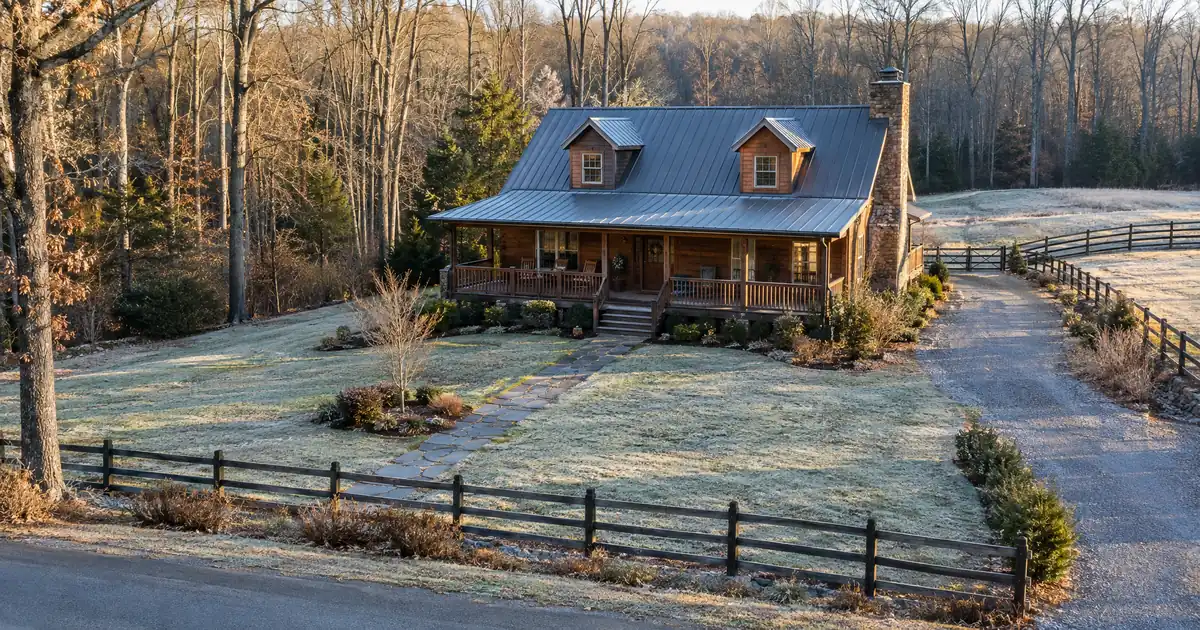
The Quick Read: VA does not set an acreage cap, so a rural home can qualify when it meets the same rules as any other VA-financed home. The real tests are whether the appraiser can find comparable sales, whether the property reads as a residence rather than a working farm, and whether the lender adds its own limits. The loan can reach up to 100% of the appraised value, including the financed funding fee, subject to lender guidelines and full file review.
What Is a VA Cash-Out Refinance, and Why Does Acreage Change the Picture?
A VA cash-out refinance replaces your current mortgage with a new VA-backed loan that is larger than what you owe. You keep the difference as cash. Lendmire’s VA cash-out refinance program page covers the basics. This article covers what changes when your home sits on land.
VA cash-out estimate
Seeded with an example value, a typical balance, and a round cash request at the first-use fee; change any field.
Editable benchmark: 7.18% as of November 5, 2026 · Freddie Mac 30-year average via FRED®. A conventional market reference, not a VA cash-out refinance quote.
Illustrative starting assumptions: a $350,000 home value, a $193,000 current balance, the full-value VA cap with the first-use funding fee financed, a thirty-year term at the current Freddie Mac benchmark, and property taxes and insurance estimated at typical national rates. Every field is editable.
Illustrative estimate only — not a Loan Estimate, approval, quote, or commitment to lend. The rate field carries the weekly Freddie Mac thirty-year conventional benchmark, a market reference and not a VA cash-out refinance quote; a VA loan is priced by the lender at lock. The total loan, funding fee included, is capped at the program leverage on the reasonable value; the fee follows the tier chosen. The cash available is what the cap allows less the balances paid off and the fee, before closing costs, which are not included. The HELOC line is the line program’s combined loan-to-value ceiling applied to the same value and balance. Taxes and insurance are editable estimates. The debt-to-income figure is a guideline; residual income decides a VA file. Licensed in sixteen states for consumer mortgages.
Acreage matters because of the appraisal. The appraised value caps the loan. Rural land is harder to value than a house in a subdivision, because fewer similar properties sell nearby. Thin comparable sales can shrink the number, and a smaller number means less cash.
How Is a VA Cash-Out Underwritten, Step by Step?
Every VA cash-out gets a full underwriting file. It is not a streamline. The VA Lenders Handbook chapter on refinancing says full credit underwriting is required for all cash-out loan types. Here is how the steps run.
1. Eligibility. You need a certificate of eligibility (COE) from VA. It shows your entitlement, which is the amount of VA backing you have available. VA decides eligibility and the service requirements.
2. Full file review. Expect income, employment, asset and credit documentation. Residual income is the money left each month after major obligations and living costs, and it is the controlling test in the review. The 41% debt-to-income figure is a guideline rather than a hard cap. A higher ratio needs residual income well above the table. VA sets no minimum credit score, and the wholesale programs Lendmire places VA loans with start at a 580 decision score.
3. VA appraisal. The appraiser reports reasonable value. That figure caps the loan.
4. Property review. The home must meet VA’s minimum property requirements, covered below.
5. Loan sizing. The new loan pays off every existing lien. You can finance the funding fee, but it counts inside the 100% ceiling.
6. Closing. You receive a Loan Estimate and a Closing Disclosure showing the closing costs, as the CFPB’s closing-cost material describes.
Two more rules apply. The new loan must be a first lien, and you must own the property. VA also expects you to certify that you will live in the home, so this is a primary-residence benefit.
Does VA Limit How Many Acres You Can Have?
No. VA’s own handbook says it does not set a limit on the number of acres. The appraisal chapter of the VA Lenders Handbook (Pamphlet 26-7, Chapter 11) adds that appraising acreage should not be difficult if similar properties nearby recently sold mainly for residential use.
That sentence tells you where the risk sits. Three separate gatekeepers can say no, and each works differently.
| Gatekeeper | What it controls | How you find out |
|---|---|---|
| VA rules | No acre cap; must be one marketable property | Handbook language |
| Appraiser | Value, using similar-acreage sales | The appraisal report |
| Lender overlay | Any added limits on land or dwelling share | Ask before ordering |
A lender overlay is a rule a lender adds on top of VA’s. Some lenders limit acreage or want the house to be a minimum share of total value. These come from lenders, not VA, and they differ and change. Ask the loan officer for the lender’s acreage and outbuilding limits before you pay for an appraisal.
What Counts as the Home Site, and What the Loan Cannot Value
VA finances a residence, not a farm business. The home and its site are the core of the value. The appraisal does not give value to livestock, crops or farm equipment, according to VA fee-panel appraiser guidance. That document is older, so treat it as context rather than the current rulebook. Outbuildings count by their residential contribution to the property. A workshop or detached garage a buyer would value at a home can help. A grain bin or livestock barn adds little.
The property must also be a single, readily marketable real estate entity, per VA’s minimum property requirements chapter. If a road or waterway divides it, the appraiser has to judge how that affects usefulness and marketability.
Picture a three-bedroom home on a large wooded lot, with a detached shop and similar homes that sold on comparable acreage. That file reads as residential. Now picture the same house surrounded by tillable fields, with income from crops. That file draws scrutiny, because the value starts to look agricultural. A working farm operation pushes the file further in that direction, while a few hobby animals or a small garden are a different matter from a business.
Which Rural Property Standards Does the Home Have to Meet?
The home must meet VA’s minimum property requirements. These are safety, sanitation and structural standards. VA’s handbook is clear that an appraisal is not a home inspection. The appraiser checks the MPRs and reports value, and does not certify every system.
On rural land, three items draw the most attention:
- Water and septic. VA’s handbook emphasizes safe drinking water, which matters for private wells. Expect testing or inspection steps for a well and septic system.
- Road access. A private road adds questions about legal access and maintenance.
- Structure. The dwelling must be sound, with working systems.
If there is a second dwelling, VA treats the house and an accessory unit together as a single real estate entity. A manufactured home must be classified as real estate and meet VA’s permanent foundation and minimum floor area rules. Rural files may also add well, septic or survey costs. They vary by property, so ask for them early.
How the Appraisal Sets Your Cash
The maximum loan is 100% of VA’s reasonable value, funding fee included. Cash to you is what remains after the payoff, the fee and closing costs. A low appraisal cuts cash directly.
Run a modeled example in percentages. Say the appraiser supports a value and you borrow 100% of it, with the fee financed. The financed fee sits inside that 100%. The payoff of your current loan comes out first. Whatever is left, minus closing costs, is yours.
Now change one input. A thin set of comparable sales pulls the appraised value down. The ceiling drops with it, while your payoff stays the same. The cash shrinks, and a large enough drop can leave nothing for you.
That is why 100% is a ceiling, not a promise of 100% cash. The funding fee also eats into it. The fee is waived for veterans receiving service-connected disability compensation and the other exempt groups. The VA fee table lays out the cash-out tiers. Down-payment-based fee reductions do not apply to a cash-out refinance, since there is no down payment. Confirm the current schedule with VA.
What Rules Apply Only Because It Is a Refinance?
Several rules apply to every VA cash-out, rural or not.
- Any loan type can be refinanced into VA. A conventional, FHA or USDA loan can become a VA loan through a cash-out.
- Seasoning applies. This is the waiting period between loans. It is the same as for the IRRRL, the later of 210 days from the first payment and the sixth payment.
- Net tangible benefit. The loan must give you a real benefit, one of VA’s eight listed benefits.
- No IRRRL tests. The half-percent rate-reduction and fee-recoupment tests belong to the IRRRL. They do not apply to the VA cash-out.
One caution comes from CFPB research on cash-out refinances. Turning other debts into mortgage debt can put the home at risk if payments become unsustainable. On rural land, where a home may be harder to sell, that deserves real thought. A larger balance and a new first lien also change the monthly payment, so look at the Loan Estimate closely.
Where the General Rule Breaks: Edge Cases
Free-and-clear or inherited land. VA cash-out requires a first lien and that you own the property. Owning it outright is fine, because the new loan becomes the first lien.
Working farms. A residence with some business use can qualify when it stays primarily residential, the use is legal and it does not undercut the home’s character. Farms with substantial income draw added lender scrutiny.
Thin comps. Large parcels can be hard to appraise when comparable rural residential sales are scarce. Expect a lower value or a tougher review.
Lender overlays versus VA rules. If one lender declines because of acreage, another may not. That is an overlay, not a VA rule.
USDA comparison. USDA’s single-family guarantee also has no site-size limit, but it requires a property that is predominantly residential, per USDA’s handbook chapter.
Land liens. Any other lienholder must be paid off or subordinate. The new VA loan has to sit in first position.
What Should You Do if the Appraisal Comes in Low?
You have several practical options. The weak point is often the comparable sales, so start there.
1. Read the report for the comparables used. Look for sales on similar acreage that sold as residential.
2. Send the lender better comparables, if you have them, and ask for a reconsideration of value.
3. Check whether the value turned on outbuildings or excess land. Those may not carry weight.
4. Reduce the cash you request, since the new loan must still cover the payoff and the fee.
5. If the payoff alone no longer fits, ask whether another structure makes sense for your goals.
Key Terms Defined
Entitlement: the amount of backing VA gives a lender on your loan. Your COE shows it.
Reasonable value: the value VA’s appraiser assigns, which caps the loan.
Overlay: a rule a lender adds on top of VA’s own requirements.
Minimum property requirements: VA’s safety, sanitation and structural standards for the home.
Residual income: money left each month after major obligations and living costs.
Seasoning: the waiting period required between loans.
Frequently Asked Questions
Is there a maximum acreage for a VA cash-out refinance?
VA sets none. The handbook says VA does not limit the number of acres. Your limit usually comes from comparable sales, residential character and any lender overlay. Ask the lender for its limits first.
Can I use a VA cash-out on a working farm?
Only if the property stays primarily residential. VA finances a home, and the appraisal gives no value to crops, livestock or equipment. Substantial farm operations draw extra scrutiny and may exceed a lender’s comfort.
Does a low rural appraisal reduce my cash?
Yes. The value caps the loan, and your payoff and funding fee come out first. A lower value leaves less cash. Better comparables or a reconsideration request may help.
Can I refinance a USDA or conventional loan into VA cash-out?
Yes, a VA cash-out refinance can pay off any loan type and replace it with a VA loan. The same seasoning and net tangible benefit rules apply, and eligibility is subject to lender guidelines and full file review.
Do I need a VA loan already to do this?
No. You need a COE and available entitlement. If you refinance an existing VA loan on the same property, entitlement can be restored.
If you are weighing a cash-out refinance against keeping the loan you have, Lendmire can help you compare the programs and the equity each one reaches.
About Lendmire
Lendmire (NMLS# 2371349) is a mortgage broker licensed for consumer lending in 16 states. Lendmire arranges FHA, VA, conventional and jumbo purchase and refinance loans through wholesale lenders; every file is underwritten by the lender under the applicable program guidelines. Scotsman Guide named Lendmire a Top Mortgage Workplace in both 2025 and 2026.
For your own numbers, request a scenario review with Lendmire.
Get Started
Ready to find the right loan for you?
See your offer in seconds. No credit pull, no obligation.
Informational only. Not a Loan Estimate, approval, or commitment to lend. Program availability and eligibility are subject to lender guidelines, credit approval, property review, and underwriting.
References
1. VA Lenders Handbook (Pamphlet 26-7), Chapter 6: Refinancing Loans
2. CFPB request for information on closing costs
3. VA: VA Pamphlet Chapter Appraisal Report
4. VA fee-panel appraiser guidance
5. VA Lenders Handbook (Pamphlet 26-7), Chapter 12: Minimum Property Requirements
6. VA Circular 26-23-06, Exhibit B (funding fee table)
7. CFPB research on cash-out refinances
8. USDA Rural Development single-family guarantee handbook, Chapter 12
This article is part of Lendmire’s VA cash-out refinance program — full qualification details, guidelines, and scenarios live on the program page.
Related reading: VA Cash-Out Refinance Requirements When Equity Is Tight · VA Cash-Out Refinance Requirements Right After Buying · VA Cash-Out Refinance Requirements Within the Seasoning Period
Brandon Miller
Founder & CEO, Mortgage Loan Originator, Lendmire LLC
- Mortgage Loan Originator · NMLS# 1129696 · Verify on NMLS Consumer Access
- North Carolina Real Estate Broker · License# 343312 · Verify on NCREC
- North Carolina Insurance Producer · License# 19053198 · Property, Casualty, Life, Health · Verify on NAIC SBS
- Lendmire LLC · Firm NMLS# 2371349 · Verify firm licensure
Disclosures. The information presented in this article is general market commentary, not financial, legal, or tax advice. Lendmire is a mortgage brokerage (NMLS# 2371349) — not a direct lender or depository institution — and loan placement is subject to lender underwriting. Nothing in this content represents a commitment to lend. Loan terms, pricing, and program availability vary based on borrower qualifications, property characteristics, and state of subject property, and are subject to change at any time. Lendmire complies with Equal Housing Opportunity requirements. Consumer access: nmlsconsumeraccess.org.