
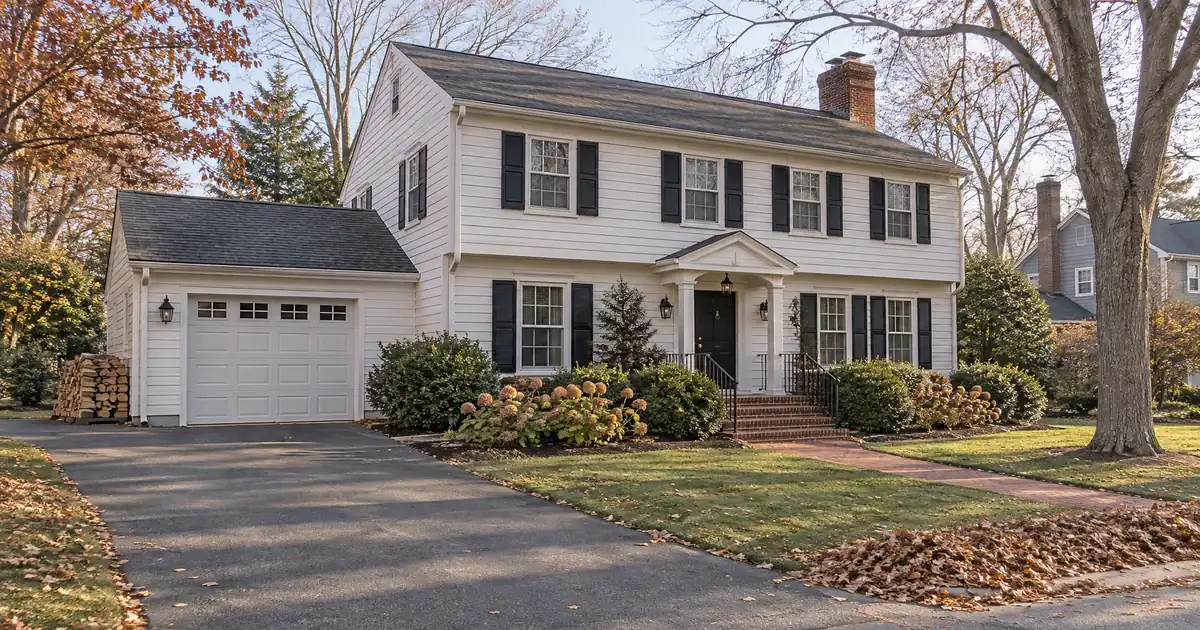
The Quick Read: The better path usually turns on three things: whether you hold VA eligibility, how much equity you have, and what shape the damage is in. A VA cash-out fits an eligible veteran who lives in the home and wants to borrow against close to full value with no mortgage insurance. Conventional fits a borrower with plenty of equity, no VA eligibility, or a reason to protect VA entitlement. Either way, a cash-out refinance replaces your whole mortgage, not just the roof.
Lendmire’s VA cash-out refinance program page covers the basics of the VA side. This article sets the two options next to each other for one specific job: paying for a roof or storm repair.
Key Takeaways
- File and understand your insurance claim first. A refinance is for the gap, not the first move.
- You cannot borrow only for the roof. The new loan covers your entire balance plus the cash.
- The property’s condition matters on both sides. A roof that is actively failing can hold up a file.
- A VA streamline cannot hand you cash. Only a cash-out refinance can.
VA cash-out estimate
Seeded with an example value, a typical balance, and a round cash request at the first-use fee; change any field.
Editable benchmark: 7.18% as of November 5, 2026 · Freddie Mac 30-year average via FRED®. A conventional market reference, not a VA cash-out refinance quote.
Illustrative starting assumptions: a $350,000 home value, a $193,000 current balance, the full-value VA cap with the first-use funding fee financed, a thirty-year term at the current Freddie Mac benchmark, and property taxes and insurance estimated at typical national rates. Every field is editable.
Illustrative estimate only — not a Loan Estimate, approval, quote, or commitment to lend. The rate field carries the weekly Freddie Mac thirty-year conventional benchmark, a market reference and not a VA cash-out refinance quote; a VA loan is priced by the lender at lock. The total loan, funding fee included, is capped at the program leverage on the reasonable value; the fee follows the tier chosen. The cash available is what the cap allows less the balances paid off and the fee, before closing costs, which are not included. The HELOC line is the line program’s combined loan-to-value ceiling applied to the same value and balance. Taxes and insurance are editable estimates. The debt-to-income figure is a guideline; residual income decides a VA file. Licensed in sixteen states for consumer mortgages.
Side-by-Side
Here is how the two compare on the points that matter for a repair loan. Every figure is subject to lender guidelines and full file review. Nothing here is a commitment to lend.
| Factor | VA Cash-Out | Conventional Cash-Out |
|---|---|---|
| Leverage | Up to 100% of appraised value | Lower; set by lender and occupancy |
| Credit floor | 580 decision score (wholesale programs) | Set by lender; often higher |
| Mortgage insurance | None | Depends on leverage |
| Upfront fee | Funding fee, waived if exempt | No VA fee; pricing adjustments |
| Occupancy | You must live in the home | Primary, second or rental; leverage varies |
| Underwriting focus | Residual income, full credit review | Debt-to-income, automated findings |
| Roof standard | Must meet VA property minimums | Condition rating; severe defects block |
| Storm-specific help | Ask your loan officer | Limited disaster allowances exist |
A few rows need unpacking.
The VA credit row reflects the programs Lendmire places files with. VA itself sets no minimum score, but lenders do. Some lenders set a higher floor, so the same borrower can get a different answer in a different place.
The funding fee is the VA’s one-time charge. Across the wholesale programs Lendmire works with, the cash-out fee is 2.15% on first use and 3.3% on later use. It is waived for veterans receiving service-connected disability compensation and other exempt groups. It can be financed. VA explains the funding fee and closing costs and points you to your Loan Estimate for the full cost picture.
When VA Cash-Out Is the Better Fit
VA wins when you are eligible, you live in the home, and the repair is large relative to your cash. The reasons are structural, not magical.
Leverage and mortgage insurance. A VA cash-out can reach 100% of the appraised value, including the financed funding fee. It carries no mortgage insurance of any kind. Conventional cash-out generally keeps leverage lower, so a homeowner with thin equity may find conventional leaves too little room for the roof.
Any loan type can be the starting point. A VA cash-out lets you refinance a conventional, FHA or other non-VA loan into a VA-backed loan. So you do not need an existing VA mortgage to use it.
Residual income, not just a ratio. VA’s controlling test is residual income: what is left each month after your major obligations and an allowance for living costs. The 41% debt-to-income figure is a guideline, not a cap. A borrower above it needs residual income well above the table. That can help a household whose ratio looks tight on paper but whose monthly cash is solid.
No VA loan limit with full entitlement. Entitlement is the portion of the loan VA guarantees. With full entitlement, there is no VA loan limit. With remaining entitlement, a down payment may be required, so speak with a loan officer.
Occupancy. VA requires that you live in the home you refinance. If the storm makes it unlivable, talk to the lender before you assume anything.
Net tangible benefit. VA’s cash-out quick-reference guide says every VA cash-out needs at least one net tangible benefit to the veteran. Home improvement, such as a roof, is the type of use these loans are designed for. The guide also calls for cash-out compliance disclosures and, when you are paying off a VA loan, a seasoning certification.
Seasoning. A recent buyer with an active leak may face a real wait when the loan being paid off is a VA loan, because VA’s seasoning rule must be met first. The details of that rule appear in the mistakes list below.
The property has to pass. The VA appraisal must show the home meets VA’s minimum property requirements. A roof that does not keep moisture out can make the appraisal “subject to completion,” meaning the repair must be finished and proven first. The appraiser is not a roof inspector and is not required to climb up there, but obvious problems get noted.
Entitlement is used. A VA cash-out uses entitlement. If you plan to buy another home with VA later, ask how this affects it. Lendmire’s piece VA Cash-Out Refinance vs. Conventional Cash-Out Under VA Type 1 and Type 2 Refinance Rules goes deeper on the refinance types.
When Conventional Cash-Out Is the Better Fit
Conventional wins when you have deep equity, no VA eligibility, or a reason to leave VA entitlement alone. It also wins when the amount you need is small compared to the equity you hold.
You have plenty of equity. If your balance is low relative to value, the lower leverage cap on conventional is not a barrier. Mortgage insurance also tends to matter less when leverage stays modest. Without the VA funding fee, a borrower with strong equity may find conventional cheaper overall. Compare the full cost of both on your Loan Estimate.
You are not VA-eligible, or you do not live in the home. Conventional financing can accommodate a second home or a rental, so occupancy shapes the leverage you can get. A VA cash-out is built for a home you live in, so it is not an option for those properties.
You want to keep VA entitlement available. Whether a conventional refinance leaves your entitlement intact for a future purchase depends on your situation. Confirm it with a loan officer before you decide.
Storm repairs you have already paid for. Fannie Mae’s Selling Guide has limited cash-out flexibilities for borrowers affected by a declared disaster. They can allow consolidating subordinate financing used for repairs, or reimbursing documented out-of-pocket repair costs, within a cap and a delivery window. Fannie Mae’s disaster-related flexibilities spell out the conditions, and the current version should be confirmed. Whether a VA loan has an equivalent is a question for your loan officer. This is a genuine edge for conventional when you front the repair money yourself.
Know what conventional cash-out means. Fannie Mae’s Selling Guide defines the transaction and lays out its exceptions. In plain words, you borrow more than you owe and keep the difference.
Conventional has its own catches. Credit and documentation standards are set by lender and automated findings. Pricing adjustments often apply to cash-out. And property condition still counts: a roof or storm defect severe enough to affect safety or soundness can hold up the loan until it is repaired.
Where the Insurance Claim Fits
Start with the claim, not the loan. If a covered storm damaged your roof, insurance may pay for most of it. A refinance should fill the gap, such as a deductible, an upgrade or damage the policy excludes.
The CFPB explains that the insurer’s check is usually made out to you and your mortgage servicer. The servicer typically releases part of it before work begins and the rest as work progresses. You must keep making mortgage payments throughout. Ask your servicer for its release process in writing before you sign with a contractor.
Here is how claim status changes the picture.
| Claim status | What it means for the refinance |
|---|---|
| No claim filed | Lender sees an unrepaired defect on appraisal |
| Claim pending | Amount unknown; borrowing may be premature |
| Claim approved | Borrow only for the remaining gap |
| Claim denied | Refinance may be the main funding path |
Borrowing before you know the payout is how households end up with too much loan or too little cash. Insurance proceeds and refinance proceeds are separate money. And standard policies usually exclude flood damage, so confirm what your policy covers.
Can You Refinance With a Damaged Roof?
On the VA side, a roof that fails the property minimums makes the appraisal subject to completion. The repair must be done and proven before the loan can finish. That creates a timing puzzle: you need the loan to pay for the repair, yet the repair is a condition of the loan. Lenders sort it out differently, so describe the damage upfront.
Conventional works the same way in spirit. Normal wear on an aging roof is one thing. An active leak or structural damage is another, and it can make the appraisal subject to completion or inspection.
Picture a homeowner with a roof estimate equal to a modest slice of the home’s value and a pending claim. If the leak is active and the claim is slow, repairing the roof first with bridge cash, then refinancing, may be simpler than refinancing a failing roof. If the claim is paid and the gap is small, a cash-out may be overkill. That one is honestly a toss-up, and the answer depends on the numbers in front of you.
Mistakes That Stall These Files
- Assuming VA pays for the roof. VA guarantees loans made by private lenders. It does not lend or fund repairs.
- Using a streamline for cash. The IRRRL is VA’s rate-and-term product for refinancing an existing VA loan. It carries a 0.5% fee unless you are exempt, and it does not deliver cash.
- Treating the insurance check as yours alone. The servicer controls its release.
- Borrowing before the claim decision. The claim outcome changes how much of the repair a refinance has to cover, so a cash-out sized too early can leave you with more debt than you need.
- Ignoring seasoning on a recent VA loan. The later of 210 days from the first payment or the sixth payment governs when you can refinance, so check the date on your current VA loan before you plan the repair around a cash-out.
- Assuming a roof age rule. VA has no fixed minimum roof age in what Lendmire sees. Lender overlays are what usually create one.
- Forgetting the term resets. The new loan carries a new term across your whole balance.
Tax treatment can depend on your situation; borrowers should speak with a qualified tax professional before relying on any deduction or credit.
Key Terms Defined
Cash-out refinance: A new, larger mortgage that pays off your old one and gives you the difference in cash.
Entitlement: The amount of the loan VA guarantees to the lender, which is what allows no-down-payment financing.
Funding fee: VA’s one-time charge on its loans, replacing monthly mortgage insurance. It is waived for exempt veterans.
Residual income: The money left each month after major obligations and a living-cost allowance. VA treats it as the controlling test.
Net tangible benefit: A concrete gain to the borrower that VA requires from a cash-out refinance, such as funding home improvements.
Seasoning: A required waiting period after your first payment before you can refinance a VA loan.
The Verdict
Neither option is better in the abstract. Here is the referee’s call.
Choose VA cash-out if you are eligible, live in the home, have limited equity, and want no mortgage insurance. Accept that you will pay the funding fee unless exempt, wait out seasoning on a recent VA loan, and pass VA’s property standards.
Choose conventional cash-out if you have deep equity, lack VA eligibility, want to protect entitlement, or paid for storm repairs yourself and qualify for disaster flexibilities. Accept lower leverage, lender-set credit and documentation standards, and possible pricing adjustments.
Choose neither, for now, if your claim is unresolved or the amount you need is small. A refinance resets your whole loan, which is a heavy tool for a light job.
If you are weighing a cash-out refinance against keeping the loan you have, Lendmire can help you compare the programs and the equity each one reaches. Reach the team at 828-256-2183.
Frequently Asked Questions
Does VA pay for my roof repair?
No. VA guarantees a loan made by a private lender, and it does not fund repairs. The cash comes from the new loan, which you repay.
Should I file an insurance claim before refinancing?
Usually, yes. Insurance may cover much of the damage, and the claim decision tells you how large any gap really is. Borrowing before then can leave you with too much loan or too little cash.
Can a VA streamline refinance fund a roof?
No. The IRRRL is built to lower the cost of an existing VA loan or move it from adjustable to fixed. It generally cannot deliver cash proceeds. A roof project needs a cash-out refinance.
Can I borrow only the amount the roof costs?
No. A cash-out refinance replaces your entire mortgage with a new one. The roof money is added to your current balance, and the whole amount gets a new term.
What if the roof fails the appraisal?
The appraisal may be written subject to repair, on both VA and conventional files. The repair must be completed and documented before the loan finishes. Tell your loan officer about the damage early so the file is structured around it.
Roof and storm repairs rarely wait for paperwork, so the order of steps matters as much as the loan type you pick.
For your own numbers, request a scenario review with Lendmire.
About Lendmire
Lendmire, NMLS# 2371349, is a mortgage brokerage with consumer lending licenses in 16 states. FHA, VA, conventional and jumbo purchase and refinance loans are arranged through wholesale lending partners, and each application is reviewed individually by the lender. Scotsman Guide named Lendmire a Top Mortgage Workplace in both 2025 and 2026.
Get Started
Ready to find the right loan for you?
See your offer in seconds. No credit pull, no obligation.
Informational only. Not a Loan Estimate, approval, or commitment to lend. Program availability and eligibility are subject to lender guidelines, credit approval, property review, and underwriting.
References
1. VA – Funding fee and closing costs
2. VA Loan Guaranty – Cash-Out Refinance Quick Reference
3. Fannie Mae Selling Guide B5-4.2-02, Disaster-Related Limited Cash-Out Refinance Flexibilities
4. Fannie Mae Selling Guide B2-1.3-03, Cash-Out Refinance Transactions
5. CFPB: How Do Home Insurance Companies Pay Out Claims
This article is part of Lendmire’s VA cash-out refinance program — full qualification details, guidelines, and scenarios live on the program page.
Related reading: How to Choose Between a VA Streamline Refinance and a VA Cash-Out Refinance · VA Cash-Out vs Conventional Cash-Out on a Premarital Home · How to Restore Entitlement Before a VA Cash-Out Refinance
Brandon Miller
Founder & CEO, Mortgage Loan Originator, Lendmire LLC
- Mortgage Loan Originator · NMLS# 1129696 · Verify on NMLS Consumer Access
- North Carolina Real Estate Broker · License# 343312 · Verify on NCREC
- North Carolina Insurance Producer · License# 19053198 · Property, Casualty, Life, Health · Verify on NAIC SBS
- Lendmire LLC · Firm NMLS# 2371349 · Verify firm licensure
Legal disclosures. Lendmire (NMLS# 2371349) is a state-licensed mortgage brokerage that arranges financing through wholesale lender relationships. Lendmire is not a direct lender, depository institution, or registered financial advisor. The discussion above is general informational content about real estate financing — it is not financial, legal, or tax advice, and readers should consult licensed professionals for guidance on their individual circumstances. Loan inquiries are subject to lender underwriting; this article does not represent a commitment to lend. Loan terms, rates, and qualification standards vary by borrower, property, and state, and are subject to change at any time. Equal Housing Opportunity. NMLS Consumer Access: nmlsconsumeraccess.org.