
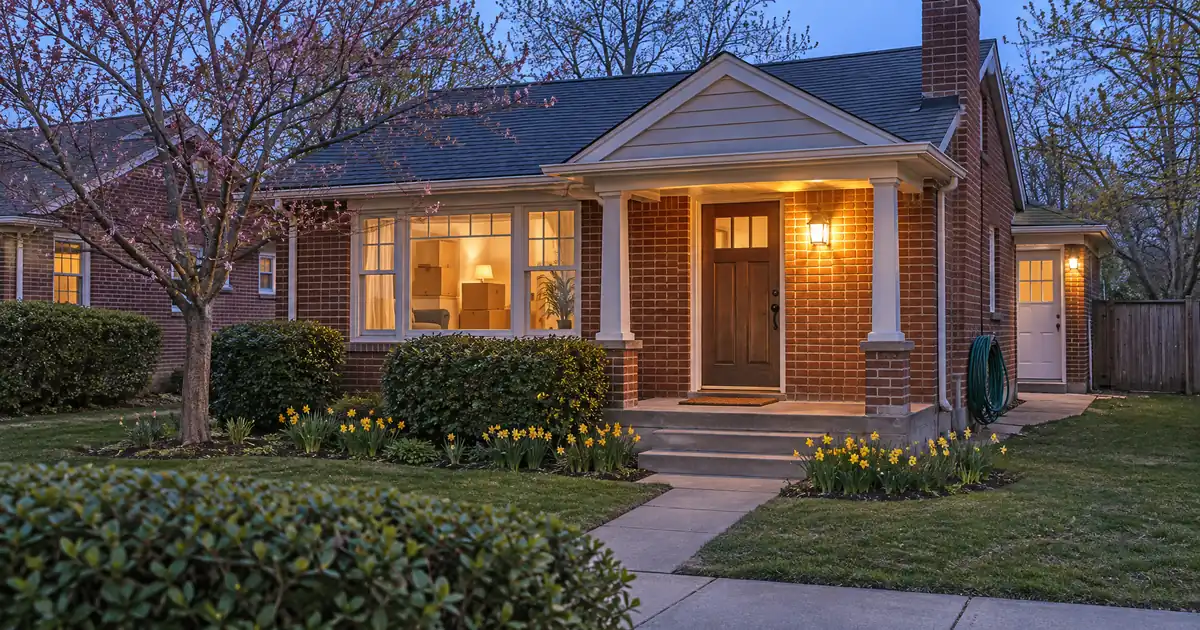
The Quick Read: A VA cash-out refinance fits a veteran, service member, or eligible surviving spouse who will live in the inherited home and wants the most equity access. A conventional cash-out fits everyone else, including heirs with no VA eligibility of their own. VA eligibility comes from your own service, not from the parent who left you the house. That distinction is the first thing to settle on any of these files.
The Honest Answer by Heir Type
If you hold a Certificate of Eligibility (COE) and plan to live in the home, VA is usually the stronger tool. A COE is the document from VA that confirms your service-based eligibility. It lets you borrow up to 100% of the appraised value, with no monthly mortgage insurance.
VA cash-out estimate
Seeded with an example value, a typical balance, and a round cash request at the first-use fee; change any field.
Editable benchmark: 7.18% as of November 5, 2026 · Freddie Mac 30-year average via FRED®. A conventional market reference, not a VA cash-out refinance quote.
Illustrative starting assumptions: a $350,000 home value, a $193,000 current balance, the full-value VA cap with the first-use funding fee financed, a thirty-year term at the current Freddie Mac benchmark, and property taxes and insurance estimated at typical national rates. Every field is editable.
Illustrative estimate only — not a Loan Estimate, approval, quote, or commitment to lend. The rate field carries the weekly Freddie Mac thirty-year conventional benchmark, a market reference and not a VA cash-out refinance quote; a VA loan is priced by the lender at lock. The total loan, funding fee included, is capped at the program leverage on the reasonable value; the fee follows the tier chosen. The cash available is what the cap allows less the balances paid off and the fee, before closing costs, which are not included. The HELOC line is the line program’s combined loan-to-value ceiling applied to the same value and balance. Taxes and insurance are editable estimates. The debt-to-income figure is a guideline; residual income decides a VA file. Licensed in sixteen states for consumer mortgages.
If you never served, VA is off the table. Your parent’s benefit does not pass to you as an heir. VA eligibility rests on the borrower’s own service, and va.gov is the place to confirm yours.
A conventional cash-out works for veterans too. Some veterans choose it when the home won’t be their residence, or when they want to keep their VA entitlement untouched. Conventional loans are not tied to military service at all.
Inheritance adds a twist both loans share. Say you inherit a house with no mortgage on it. You might assume a new loan is a “purchase” or a plain refinance. It isn’t. Freddie Mac’s Guide treats a new first mortgage on a property owned free and clear as a cash-out refinance. Plan for cash-out rules either way.
Side-by-Side
| Factor | VA Cash-Out | Conventional Cash-Out |
|---|---|---|
| Who can use it | Veterans, service members, eligible surviving spouses | Any qualified borrower |
| Leverage | Up to 100% of appraised value, fee included | Lower than VA’s cap |
| Mortgage insurance | None | Often required above an equity threshold |
| Occupancy | You certify it will be your home | Primary residence: all borrowers must occupy |
| Credit floor | 580 decision score on wholesale programs we use | Varies by investor and lender |
| Documentation | COE, income, residual income review | Income, credit, debts, reserves |
| Upfront fee | VA funding fee, waived for exempt veterans | Pricing adjustments built into the loan |
| Inherited-title wait | None applies to the inheritance itself | No seasoning for inherited property |
Two notes on that table. Program figures reflect the wholesale programs Lendmire works with and are subject to lender guidelines and full file review. Lenders may set a higher credit floor, so ask before assuming.
How Inheritance Changes the Rules
The title wait is the first myth to retire. Conventional cash-outs normally require you to have owned the home for six months. Freddie Mac’s product page lists no seasoning requirement for inherited properties. Fannie Mae has a comparable exception, and its current Selling Guide is the place to confirm the details.
Seasoning is the waiting period a lender wants before a loan or ownership event counts. For an inherited home, the ownership wait is waived on the conventional side. The lender still documents the inheritance.
Seasoning on the loan being paid off is a separate question. If the home still carries a first mortgage, that old loan may need some age on it before a conventional cash-out can pay it off. On the VA side, seasoning applies when the loan being refinanced is itself a VA loan. Across the wholesale programs we place VA files with, that test is the later of 210 days from the first payment and the sixth payment.
Probate is the practical snag. Title companies generally want the estate settled and title cleanly in your name before insuring a new loan. Expect to gather a death certificate, the will, court letters or an affidavit, the recorded deed, and a title commitment. That is common practice rather than a rule from one agency. Your title company will tell you what it needs.
When VA Cash-Out Is the Better Fit
You’re an eligible veteran who will live in the home. This is the sweet spot. The occupancy certification is simple when the house really is your home.
You want maximum access to equity. VA reaches 100% of the appraised value, including the financed funding fee. Conventional cash-outs stop well short of that. On a paid-off inherited home, the gap matters, because the equity is often most of the house’s value.
You’d otherwise pay mortgage insurance. VA carries no mortgage insurance of any kind. A conventional loan at higher leverage usually does. Over a long hold, that difference adds up to real money.
You have a lower credit score. VA sets no minimum score itself. The wholesale programs Lendmire places VA loans with start at a 580 decision score. Conventional programs often ask for more.
Your budget is tight but steady. VA underwriting leans on residual income, meaning what’s left each month after your debts and living costs. The 41% debt-to-income figure is a guideline, not a cap. A higher ratio can work when residual income sits well above VA’s table. Conventional underwriting leans harder on the debt-to-income ratio.
There is a catch, and it’s the net tangible benefit test. Under 38 CFR 36.4306, the lender must show the new loan is in your financial interest. The rule lists eight ways to pass. They include removing monthly mortgage insurance, shortening the term, and a new loan at or under 90% of reasonable value. The Federal Register rulemaking treats that 90% figure as one benefit among many, not a cap. The cap is the appraised value.
Then there’s the cost. The VA funding fee is 2.15% on a first use and 3.3% on later use for a cash-out refinance, and it can be financed into the loan. Veterans who receive compensation for a service-connected disability, and a few other groups, are exempt. Mechanically, the fee is a percentage added to your balance, which matters when you’re borrowing near 100%.
Lendmire’s VA cash-out refinance program page lays out how the program works. Also see how VA cash-out refinance vs. conventional cash-out under VA type 1 and type 2 refinance rules if you want the technical split.
When Conventional Cash-Out Is the Better Fit
You’re not a veteran. This ends the debate. A non-veteran heir can’t use VA at all. Some heirs look into assuming an existing VA loan instead. Confirm the rules on va.gov before counting on that.
The home won’t be your residence. VA requires you to certify you’ll occupy the home. Say you inherited a house in another town and plan to keep it as a rental. VA is the wrong tool. A conventional cash-out on a non-owner-occupied property carries different, more restrictive terms, so treat it as a separate conversation.
You want to preserve your VA entitlement. Some veterans have used their benefit before, or want it free for a future purchase. A conventional loan leaves it alone.
You’re buying out siblings. Freddie Mac has a special-purpose cash-out refinance for buying out a co-owner. It follows its own rules. Heirs splitting a house often find this route cleaner than a standard cash-out.
You can live with less leverage. If you only need a modest amount, or you hold plenty of equity, the lower conventional cap may not bind. Mortgage insurance usually kicks in only above an equity threshold. Borrow lightly and you may avoid it.
You have strong credit and a conventional-friendly profile. Then the pricing adjustments built into a conventional loan may come out lower than a VA funding fee on a large balance. Compare both on the Loan Estimate, the standardized form lenders generally provide for these loans. Don’t guess.
The Broker’s Read From the File Room
Heirs often assume that a “paid off” home means “no cash-out rules.” It doesn’t. A lender will generally treat a loan on a free-and-clear inherited home as a cash-out refinance, so plan on that basis and you’ll rarely be surprised.
Which Route for Which Heir
| Your situation | Likely better fit |
|---|---|
| Veteran, will live in the home | VA cash-out |
| Veteran, will rent the home out | Conventional (VA needs occupancy) |
| Non-veteran heir | Conventional |
| Eligible surviving spouse, will live in the home | VA cash-out, once the COE is confirmed |
| Buying out co-heirs | Conventional special-purpose option, or VA if eligible |
Surviving-spouse eligibility depends on the COE and on whether you were on the original loan. Don’t assume. Have the COE in hand before you plan anything.
What the Money Actually Costs You
Borrowing against inherited equity isn’t free money. The CFPB’s guide on using home equity warns that a cash-out refinance can lengthen your payoff time and raise your payment. It also resets the terms on the whole balance. And the home is collateral, so falling behind puts it at risk.
That last point deserves weight when the house came to you debt-free. You’re taking a clean asset and placing a lien on it. Maybe that buys a renovation, a debt payoff, or a sibling’s share, and that can be a reasonable use. But size the loan to the purpose, not to the maximum the program allows.
Key Terms Defined
Certificate of Eligibility (COE): The document from VA confirming you qualify for a VA-backed loan based on your own service.
Net tangible benefit: VA’s requirement that a cash-out refinance leave you financially better off in at least one specific, listed way.
Seasoning: The waiting period a lender requires on ownership or on the loan being paid off.
Residual income: The money left each month after major debts and living costs, which is VA’s controlling underwriting test.
Funding fee: The one-time VA fee, financeable into the loan and waived for exempt veterans.
Probate: The court process that settles an estate and transfers title to heirs.
A Balanced Verdict
Neither loan wins on every file. VA wins when you’re eligible and the home will be yours to live in, because it reaches more equity and skips mortgage insurance. Conventional wins when VA isn’t available, when you won’t occupy the home, or when you’d rather keep your entitlement intact.
For most heirs, the deciding questions come in this order: Do you hold a COE? Will you live there? Is title clean? Answer those and the choice usually makes itself. Every figure here is subject to lender guidelines and full file review, and none of it is a commitment to lend.
If you are weighing a cash-out refinance against keeping the loan you have, Lendmire can help you compare the programs and the equity each one reaches.
Frequently Asked Questions
Do I have to wait six months after inheriting before a conventional cash-out?
No. Freddie Mac lists no seasoning requirement for inherited properties. The lender will still document the inheritance. Any first mortgage being paid off may carry its own age requirement, so check that separately.
Can a non-veteran heir use a VA cash-out refinance?
No. VA eligibility is based on the borrower’s own service. A parent’s entitlement doesn’t transfer by inheritance. Start at va.gov, and look at conventional instead.
Is a paid-off inherited home treated as a cash-out?
Yes. A new first mortgage on a home owned free and clear is classed as a cash-out refinance. Plan for cash-out rules and documentation.
Can I refinance before probate closes?
Usually not in practice. Title insurers generally want title settled before insuring a new loan. Ask your title company what it needs before you apply.
Does VA lend the money directly?
No. VA backs the loan, and you borrow through a private lender. Lendmire is a mortgage broker and arranges these loans through wholesale lenders.
For your own numbers, request a scenario review with Lendmire.
About Lendmire
Lendmire, NMLS# 2371349, is a mortgage brokerage with consumer lending licenses in 16 states. FHA, VA, conventional and jumbo purchase and refinance loans are arranged through wholesale lending partners, and each application is reviewed individually by the lender. Scotsman Guide named Lendmire a Top Mortgage Workplace in both 2025 and 2026.
Get Started
Ready to find the right loan for you?
See your offer in seconds. No credit pull, no obligation.
Informational only. Not a Loan Estimate, approval, or commitment to lend. Program availability and eligibility are subject to lender guidelines, credit approval, property review, and underwriting.
References
1. Freddie Mac Guide, Section 4301.5
4. Federal Register, Revisions to VA Guaranteed or Insured Cash-Out Home Refinance Loans
5. CFPB, Using your home equity guide
This article is part of Lendmire’s VA cash-out refinance program — full qualification details, guidelines, and scenarios live on the program page.
Related reading: How to Qualify and Apply for a VA Cash-Out Refinance Without an Escrow Account · How to Restore Entitlement Before a VA Cash-Out Refinance
Brandon Miller
Founder & CEO, Mortgage Loan Originator, Lendmire LLC
- Mortgage Loan Originator · NMLS# 1129696 · Verify on NMLS Consumer Access
- North Carolina Real Estate Broker · License# 343312 · Verify on NCREC
- North Carolina Insurance Producer · License# 19053198 · Property, Casualty, Life, Health · Verify on NAIC SBS
- Lendmire LLC · Firm NMLS# 2371349 · Verify firm licensure
Legal disclosures. Lendmire (NMLS# 2371349) is a state-licensed mortgage brokerage that arranges financing through wholesale lender relationships. Lendmire is not a direct lender, depository institution, or registered financial advisor. The discussion above is general informational content about real estate financing — it is not financial, legal, or tax advice, and readers should consult licensed professionals for guidance on their individual circumstances. Loan inquiries are subject to lender underwriting; this article does not represent a commitment to lend. Loan terms, rates, and qualification standards vary by borrower, property, and state, and are subject to change at any time. Equal Housing Opportunity. NMLS Consumer Access: nmlsconsumeraccess.org.