
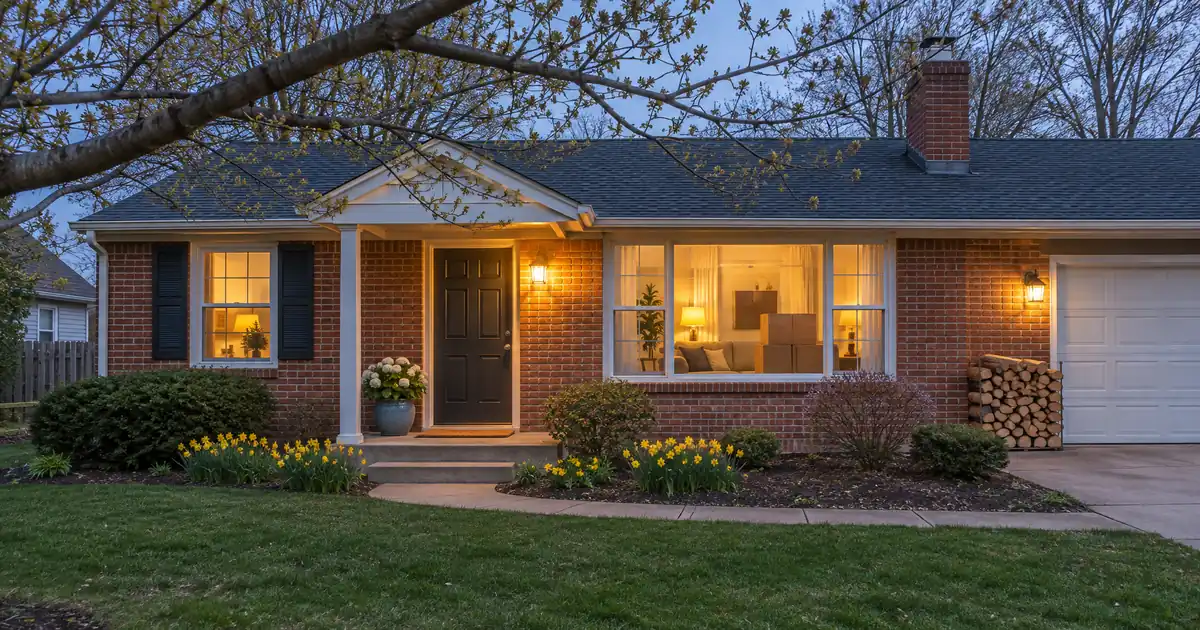
The Quick Read: It depends on whether the survivor wants to stay in the home and needs cash or a loan change. A VA cash-out fits a surviving spouse who qualifies for VA eligibility, will live in the house, and has the credit and income to carry a new loan alone. Selling fits the survivor who wants to move, can’t carry the loan, or would rather turn the equity into cash than into a new mortgage. Neither choice is a trap, and the first step is the same for both: confirm what you actually own and owe.
Who Each Option Is Really For
The honest split is simple. Keeping the home with a VA cash-out is a financing decision. Selling is a housing decision. They get compared because both involve equity, but they answer different questions.
VA cash-out estimate
Seeded with an example value, a typical balance, and a round cash request at the first-use fee; change any field.
Editable benchmark: 7.18% as of November 5, 2026 · Freddie Mac 30-year average via FRED®. A conventional market reference, not a VA cash-out refinance quote.
Illustrative starting assumptions: a $350,000 home value, a $193,000 current balance, the full-value VA cap with the first-use funding fee financed, a thirty-year term at the current Freddie Mac benchmark, and property taxes and insurance estimated at typical national rates. Every field is editable.
Illustrative estimate only — not a Loan Estimate, approval, quote, or commitment to lend. The rate field carries the weekly Freddie Mac thirty-year conventional benchmark, a market reference and not a VA cash-out refinance quote; a VA loan is priced by the lender at lock. The total loan, funding fee included, is capped at the program leverage on the reasonable value; the fee follows the tier chosen. The cash available is what the cap allows less the balances paid off and the fee, before closing costs, which are not included. The HELOC line is the line program’s combined loan-to-value ceiling applied to the same value and balance. Taxes and insurance are editable estimates. The debt-to-income figure is a guideline; residual income decides a VA file. Licensed in sixteen states for consumer mortgages.
A cash-out suits someone who wants to remain in the home, has a reason to borrow against equity (paying off debts, repairs, moving a non-VA loan into VA), and can qualify on their own credit and income. Selling suits someone for whom the house no longer fits, whether because of cost, size, memories, or location.
There’s also a third path many survivors overlook: doing nothing right away. Federal servicing rules give successors some protection, so a spouse is often not forced into an immediate refinance or sale. That’s a general protection, not a guarantee, and it varies by loan.
One more point on terms. A VA loan comes from a private lender, and VA guarantees a portion of it. VA’s home loan overview says so plainly. Lendmire is a mortgage broker, so it arranges these loans through wholesale lenders. It does not lend the money itself.
Side-by-Side
| Factor | VA Cash-Out Refinance | Selling the Home |
|---|---|---|
| Purpose | Keep home, borrow against equity | Convert equity to cash, move on |
| Leverage | Up to 100% of appraised value, fee included | Not applicable |
| Credit floor | 580 decision score on wholesale programs | None |
| Mortgage insurance | None | Not applicable |
| Occupancy | Survivor must live there | None required |
| Documentation | Full underwriting, COE, appraisal | Payoff statement, listing, title |
| Housing after | Same home, new loan | New housing needed |
The credit floor is the one many survivors ask about. VA itself sets no minimum score, but the wholesale programs Lendmire places VA loans with start at a 580 decision score, and individual lenders may set a higher bar. Everything here is subject to lender guidelines and full file review, and none of it is a commitment to lend.
What a VA Cash-Out Actually Does for a Survivor
A VA cash-out replaces your current loan with a new one. Per VA’s cash-out page, it can take cash from your equity or refinance a non-VA loan into a VA-backed one. VA lists two conditions: you qualify for a Certificate of Eligibility (COE), and you will live in the home.
Lendmire’s VA cash-out refinance program page covers the mechanics in detail. In short, across the wholesale programs we place files with, a VA cash-out reaches up to 100% of the appraised value including the financed funding fee. It refinances any loan type into VA and carries no mortgage insurance. It also needs a net tangible benefit, which is one of VA’s eight listed benefits. The half-percent rate-reduction test and the fee-recoupment test are streamline rules. They don’t apply to the cash-out.
The Spouse-on-the-Loan Question
This is the pivot point for many surviving spouses. VA’s Buyer’s Guide says a surviving spouse who was on the loan with the Veteran can use the streamline (IRRRL) without a new COE application. A spouse who was not on the loan can only do a cash-out, once qualified as a surviving spouse. The guide is an older edition, so confirm the current text with VA.
In the refinancing chapter, a “Veteran and spouse” loan refinancing to “Spouse alone (veteran died)” is marked as allowed for an IRRRL. An unmarried Veteran’s loan going to a spouse alone is not.
Here’s the catch. The streamline doesn’t allow cash to the borrower. So a spouse who was on the loan and wants cash still needs the cash-out. A spouse who was on the loan and wants only a lower payment or a more stable loan type may be better served by the streamline. And a spouse who wasn’t on the loan has the cash-out as the only VA refinance path.
Eligibility Isn’t Automatic
Not every widow or widower qualifies. Eligibility turns on VA’s survivor categories, and the COE decides. For a spouse receiving Dependency and Indemnity Compensation (DIC), Military OneSource explains the path: VA Form 26-1817, submitted with discharge or separation papers. Children, parents and other heirs are not surviving-spouse categories.
Remarriage matters too. VA’s Buyer’s Guide lists a surviving spouse who remarries after age 57, on or after December 16, 2003, among those who may keep eligibility.
When the VA Cash-Out Is the Better Fit
The cash-out wins when staying is the point and borrowing is genuinely useful. Consider these situations:
- The survivor wants to stay and needs cash for a real purpose. Repairs, accessibility changes, or paying off higher-cost debt are common uses. The lender decides which purposes it will accept, and a loan officer can confirm that up front.
- The existing loan isn’t a VA loan. A cash-out can move a conventional or other loan into VA, with no cash taken at all. That can mean leaving mortgage insurance behind, since VA loans carry none.
- The spouse wasn’t on the original loan. The cash-out is the VA refinance route, as covered above.
- Equity is meaningful. Because the cash-out reaches up to 100% of appraised value, a survivor with modest equity still has room to work with. That’s useful, but it also means a smaller cushion if values drop.
- The funding fee may be waived. The cash-out fee is 2.15% for first use and 3.3% after, per VA’s funding fee page. Qualifying surviving spouses are among the exempt groups, though whether the waiver applies depends on the survivor’s category, so confirm the exact exemption with VA before relying on it.
Underwriting is the part people underestimate. Full credit underwriting applies to every cash-out. VA eligibility doesn’t replace that review. Residual income is the controlling test, and the 41% debt-to-income figure is a guideline rather than a cap. A ratio above it needs residual income well above the table.
For a survivor whose household income dropped after the loss, that test deserves an honest look before anyone orders an appraisal. A spouse carrying the loan alone is being reviewed on one income, often a changed one. If the numbers are tight, it’s a signal worth heeding.
Equally important, the cash-out replaces the existing loan with a new one on new terms. The balance, payment and term all change, and cash taken out adds to the balance. That’s the real cost of the option, and it’s a reasonable price only when the cash does something useful.
When Selling Is the Better Fit
Selling wins when the home itself has become the problem. Think about these cases:
- The survivor doesn’t plan to live there. VA requires occupancy for a cash-out. A survivor planning to move out and rent the home isn’t a fit for this program.
- The household can’t qualify alone. If credit, income or residual income fall short, selling avoids the strain of carrying a loan that doesn’t fit.
- The home no longer suits the life. Size, upkeep, stairs, neighborhood, distance from family. These are legitimate reasons, and no loan program should override them.
- Equity is better used elsewhere. A sale converts equity into cash that can buy a smaller home, fund living expenses, or simply provide security. The decision isn’t purely financial, and shouldn’t be treated that way.
- The cash-out isn’t open. If the survivor isn’t in an eligible category, the VA path doesn’t exist, though other financing might.
A sale has its own costs, including agent commissions and transfer costs, and a survivor with thin equity should price those out before listing. There’s also the matter of new housing. Selling ends the old mortgage obligation, but the household needs somewhere to live, and that has its own cost.
For taxes, tax treatment can depend on your situation; borrowers should speak with a qualified tax professional before relying on any deduction or credit. IRS Publication 523 covers selling a home and is the right starting point for that conversation.
The Option Nobody Mentions: Not Deciding Yet
Pressure is the real enemy here. The CFPB’s report on problems after divorce or death notes that successors sometimes face pressure to refinance an existing mortgage. Federal servicing rules push the other way. Regulation X defines a “confirmed successor in interest,” and servicers must have policies to verify successors’ legal status.
The practical point: a spouse can often keep making payments on the existing loan while deciding. That time can matter. It lets the survivor sort out probate, title, the COE, and what the household income really looks like before committing to either path.
This protection is general rather than guaranteed, and it doesn’t mean every loan can be assumed automatically. Check with the servicer on the specific loan.
Key Terms Defined
Certificate of Eligibility (COE): The VA document that shows a borrower qualifies for a VA home loan, and the one a lender asks to see.
IRRRL: The VA streamline refinance for an existing VA loan, which allows no cash to the borrower.
Funding fee: A one-time VA fee that can be financed into the loan and is waived for exempt groups.
Residual income: The money left each month after major expenses, and VA’s controlling underwriting test.
Successor in interest: A person who inherits or receives an ownership interest in a home and is confirmed by the servicer.
Entitlement: The amount of VA guaranty a borrower has available to use.
A Practical Order of Operations
Most survivors benefit from working through the questions in this order:
1. Confirm the loan type and who is on it. This decides whether the streamline is even available.
2. Request the COE. A survivor will need it for any VA path.
3. Talk to the servicer. Ask about successor status and the current loan terms.
4. Get a view of the household budget alone. Be honest about income and residual income.
5. Get a realistic sense of value. The appraisal sets the cash-out ceiling, and the sale price sets what a sale produces.
6. Bring in an estate attorney and tax professional for title, probate and tax questions that no lender can answer.
If you’re weighing a cash-out refinance against keeping the loan you have, Lendmire can help you compare the programs and the equity each one reaches.
The Balanced Verdict
Choose the cash-out when the home is where you want to be, eligibility is confirmed, and the money has a clear job. Choose to sell when the home has stopped fitting the life, or when carrying a new loan alone would strain the household. If you aren’t sure, that’s a reason to wait, not a reason to rush into either one.
Frequently Asked Questions
Can a surviving spouse get a VA cash-out refinance?
Yes, if VA recognizes the spouse in an eligible category and a COE is issued. The spouse must also plan to live in the home and pass the lender’s full credit and income review. Eligibility alone doesn’t mean approval, and exact terms are subject to lender guidelines.
Is the funding fee waived for a surviving spouse?
Often, since qualifying surviving spouses are among VA’s exempt groups. The standard cash-out fee is 2.15% for first use and 3.3% after first use. Confirm the exact exemption with VA before relying on it, because it depends on the survivor’s category.
Can the spouse use the streamline instead of a cash-out?
Only if the spouse was on the loan being refinanced with the Veteran. The streamline carries a 0.5% fee unless exempt, and it allows no cash to the borrower. A spouse who wasn’t on the loan can only use the cash-out.
Do I have to refinance or sell right away?
Not necessarily. Federal servicing rules help confirmed successors get information and continue dealing with the servicer. The protection is general, so check with the servicer about the specific loan.
Can I use a VA cash-out if I plan to rent the home out?
No, not under VA’s occupancy rule. The home must be the survivor’s residence, so a plan to move out and rent it isn’t a fit for this program.
For your own numbers, request a scenario review with Lendmire.
About Lendmire
Lendmire is a mortgage brokerage (NMLS# 2371349) licensed for consumer mortgage lending in 16 states, arranging FHA, VA, conventional and jumbo purchase and refinance loans through a wholesale lending network. Eligibility is determined by the lender on each file. Scotsman Guide named Lendmire a Top Mortgage Workplace in both 2025 and 2026.
Get Started
Ready to find the right loan for you?
See your offer in seconds. No credit pull, no obligation.
Informational only. Not a Loan Estimate, approval, or commitment to lend. Program availability and eligibility are subject to lender guidelines, credit approval, property review, and underwriting.
References
2. VA.gov – Cash-out refinance loan
3. VA
4. VA Home Loan Guaranty Buyer’s Guide
5. VA Lenders Handbook Pamphlet 26-7, Ch. 6
7. VA.gov – Funding fee and closing costs
9. CFPB – Problems after divorce or death
10. Regulation X
This article is part of Lendmire’s VA cash-out refinance program — full qualification details, guidelines, and scenarios live on the program page.
Related reading: How Lenders Underwrite a VA Cash-Out Refinance on a Home You Inherited · How to Remove a Spouse From the Loan With a VA Cash-Out
Brandon Miller
Founder & CEO, Mortgage Loan Originator, Lendmire LLC
- Mortgage Loan Originator · NMLS# 1129696 · Verify on NMLS Consumer Access
- North Carolina Real Estate Broker · License# 343312 · Verify on NCREC
- North Carolina Insurance Producer · License# 19053198 · Property, Casualty, Life, Health · Verify on NAIC SBS
- Lendmire LLC · Firm NMLS# 2371349 · Verify firm licensure
Legal disclosures. Lendmire (NMLS# 2371349) is a state-licensed mortgage brokerage that arranges financing through wholesale lender relationships. Lendmire is not a direct lender, depository institution, or registered financial advisor. The discussion above is general informational content about real estate financing — it is not financial, legal, or tax advice, and readers should consult licensed professionals for guidance on their individual circumstances. Loan inquiries are subject to lender underwriting; this article does not represent a commitment to lend. Loan terms, rates, and qualification standards vary by borrower, property, and state, and are subject to change at any time. Equal Housing Opportunity. NMLS Consumer Access: nmlsconsumeraccess.org.