
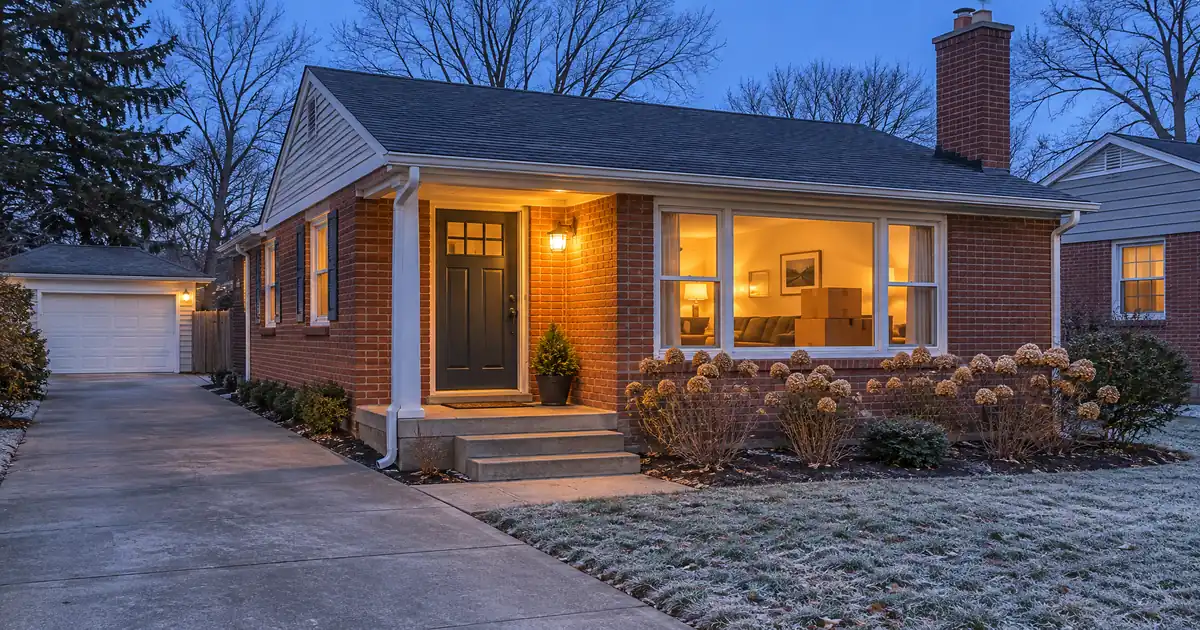
The Quick Read: A VA cash-out refinance is built for a home you live in, so a home with a tenant in it generally cannot take one unless you move back in. Occupancy decides the outcome. Rental income and equity come second. If your goal is a lower payment on the rented home, a different VA product, the streamline, may fit. If your goal is cash, the question is what occupancy you can truthfully certify.
What Is a VA Cash-Out Refinance?
A VA cash-out refinance replaces your current mortgage with a new VA-backed loan and lets you take part of your equity in cash. Equity is the gap between what the home is worth and what you owe. The new loan pays off the old one, and you receive the difference after costs.
VA cash-out estimate
Seeded with an example value, a typical balance, and a round cash request at the first-use fee; change any field.
Editable benchmark: 7.18% as of November 5, 2026 · Freddie Mac 30-year average via FRED®. A conventional market reference, not a VA cash-out refinance quote.
Illustrative starting assumptions: a $350,000 home value, a $193,000 current balance, the full-value VA cap with the first-use funding fee financed, a thirty-year term at the current Freddie Mac benchmark, and property taxes and insurance estimated at typical national rates. Every field is editable.
Illustrative estimate only — not a Loan Estimate, approval, quote, or commitment to lend. The rate field carries the weekly Freddie Mac thirty-year conventional benchmark, a market reference and not a VA cash-out refinance quote; a VA loan is priced by the lender at lock. The total loan, funding fee included, is capped at the program leverage on the reasonable value; the fee follows the tier chosen. The cash available is what the cap allows less the balances paid off and the fee, before closing costs, which are not included. The HELOC line is the line program’s combined loan-to-value ceiling applied to the same value and balance. Taxes and insurance are editable estimates. The debt-to-income figure is a guideline; residual income decides a VA file. Licensed in sixteen states for consumer mortgages.
Two features make it different from most loans. It can refinance any loan type into a VA loan, so a conventional or FHA mortgage can be paid off with it. And with full entitlement, it can reach 100% of the appraised value, including the financed funding fee. Entitlement is the amount of your VA benefit that backs the loan.
Across the wholesale programs Lendmire places VA files with, the starting point is a 580 decision score, and residual income is the controlling test. VA itself sets no minimum score. The program basics are covered on Lendmire’s page for the VA cash-out refinance program. Everything here is subject to lender guidelines and full file review, and none of it is a commitment to lend.
Can You Cash Out on a Home That Is Now a Rental?
Generally, no. VA’s own cash-out page says the eligibility tests are a valid Certificate of Eligibility (COE) and that you will live in the home you are refinancing. A COE is the VA document that proves you qualify for the benefit.
A tenant-occupied home with no plan for you to return fails that test. The occupancy certification is a signed statement, not a formality, and it has to be true when you sign it.
So the practical routes are narrow:
- Move back in and certify that truthfully.
- Use a different product, such as the streamline, if you only need a lower payment.
- Use a non-VA product built for rentals. That is a different category with its own rules, and this page does not cover it.
Misstating occupancy is a serious compliance problem. Don’t shade it.
How the Loan Is Underwritten, Step by Step
Underwriting is the lender’s review of whether you can repay. Here is how a VA cash-out moves from start to finish.
1. Eligibility. You get a COE through a lender, VA.gov, or by mail. Then you choose a lender.
2. Occupancy. You live in the home, or you can truthfully certify that you intend to. For active-duty borrowers, a spouse or dependent living there can count.
3. Full credit underwriting. Every cash-out refinance gets it. The lender reviews credit, income, and residual income. Residual income is what is left of your monthly income after your debts and living costs. It is the controlling test. The 41% debt-to-income figure is a guideline, not a cap, and a ratio above it needs residual income well above the table.
4. Appraisal. The lender orders a home appraisal. The appraised value caps the loan.
5. Benefit and seasoning checks. The loan needs a net tangible benefit, meaning it must help you in one of VA’s eight listed ways. It also carries a seasoning requirement, the waiting period after your existing loan begins. The half-percent rate-reduction and fee-recoupment tests are streamline rules and do not apply to the VA cash-out.
6. Closing. The new loan pays off existing liens. You can finance the funding fee, and it counts inside the loan ceiling.
Your Loan Estimate and Closing Disclosure show the costs in writing. Compare them line by line.
Where Rental Income Fits In
Rental income shows up in underwriting, but it does not make a rented home eligible. The rules mostly cover rent from other properties you own, or from the other units in a multi-unit home you live in.
Per the VA lender handbook’s credit underwriting chapter, debt-to-income is secondary to residual income, and cash proceeds from a VA refinance cannot count as the required reserves on a rental property. An older version of the handbook, VA Pamphlet 26-7 Chapter 4, says rent counts at 75 percent of the lease amount unless a higher percentage is documented. It also says reserves are required when rental income is used to qualify.
Here is what that means in practice. Rent is discounted, not counted in full. If a rental loses money, the loss goes into your obligations. And you cannot use the cash you pull out to prove you have reserves. Lenders check these points against the current handbook.
Pick Your Path: A Decision Table
| Your situation | Best path | What you can’t do |
|---|---|---|
| Living in the home | VA cash-out | Nothing special blocks you |
| Moved out, now rented | Streamline for a lower payment | Take cash out |
| Moved out, will move back | Cash-out once you truthfully intend to live there | Certify intent you don’t have |
| Active duty, spouse at home | Spouse’s occupancy can count | Count a tenant as occupancy |
| Multi-unit, you live in one unit | VA loan, other units’ rent counted at a discount | Live elsewhere and rent every unit |
| Existing non-VA loan | VA cash-out can pay it off | Skip the occupancy test |
Streamline vs. Cash-Out: The Occupancy Difference
The streamline is the interest rate reduction refinance loan, or IRRRL. For a streamline, the VA lenders handbook has the veteran certify prior occupancy. For a cash-out, the certification is to intent to occupy. That one difference is why a veteran who moved out for a PCS move and rented the home can still streamline but cannot take cash.
| Factor | VA cash-out | Streamline (IRRRL) |
|---|---|---|
| Occupancy | Live there or intend to | Prior occupancy |
| Cash to you | Yes | No |
| Appraisal | Yes | None required |
| Underwriting | Full | Lighter |
| What it refinances | Any loan type | Existing VA loan only |
| Funding fee | 2.15% first use, 3.3% after | 0.5% unless exempt |
Veterans receiving service-connected disability compensation, and the other exempt groups, have the funding fee waived. The streamline also needs a net tangible benefit and seasoning of the later of 210 days from the first payment and the sixth payment.
Cash Out Before You Move, or Rent First?
Sequence matters more than most people expect. The cleanest timing is to finish the cash-out while you still live in the home, then move and rent it. You certify intent at the time of the loan, and the facts match.
Renting first closes that door. Once a tenant is in the home and you have no plan to return, the certification no longer fits. The handbook also treats later occupancy as something a lender can accept only when it is reasonable. Confirm the current limit with a loan officer before you rely on a move-back plan.
A tenant’s lease adds a practical wrinkle. If you plan to move back in, the lease end date and your orders or job timeline need to line up before you sign anything.
What Happens to Your Entitlement?
A VA cash-out replaces your current loan, so the old VA loan is paid off. Whether your full entitlement comes back depends on the specifics of your file, and a loan officer can review that with you.
This matters because the no-loan-limit feature applies with full entitlement. With remaining entitlement, a down payment may be required, so speak with a loan officer rather than guessing.
A Worked Example, in Percentages
Say a veteran lives in a home with a VA loan and wants cash for repairs. The appraisal sets the value. The new loan can reach up to 100% of that value, and the financed funding fee counts inside that ceiling. Because the fee sits inside the ceiling, each point of fee financed reduces the cash available by the same amount.
Now change one fact. The same veteran has moved out and rented the home. The cash-out no longer fits, but the streamline may, if the goal is a lower rate or a move from adjustable to fixed. No cash comes out. The new loan pays off the old one.
One more point about leverage. Some lenders cap cash-out below what VA allows. That is a lender overlay, not a VA rule, so lenders differ. Some states also limit cash-out on a primary home, so state law can add its own ceiling.
Mistakes to Avoid
- Certifying occupancy you don’t intend to keep. It can sink the file, and worse.
- Assuming the streamline and cash-out share one rule. They don’t.
- Counting all the rent. Only a discounted share counts, with reserves required.
- Using cash-out proceeds as reserves. The handbook says no.
- Treating the funding fee as separate from the ceiling. When financed, it sits inside it.
- Giving up a low existing loan without comparing. A cash-out replaces the old terms, so run the comparison.
Key Terms Defined
Certificate of Eligibility (COE): The VA document that confirms you qualify for a VA loan.
Entitlement: The part of your VA benefit that backs the loan for the lender.
Residual income: The money left each month after debts and living costs. It is VA’s controlling test.
Seasoning: The waiting period after your current loan starts before you can refinance it.
Net tangible benefit: A concrete way the refinance helps you, drawn from VA’s list.
IRRRL: The streamline refinance for an existing VA loan, with no cash out.
Frequently Asked Questions
Can I do a VA cash-out if I rent out my home?
Not on that home, unless you move back in and can truthfully certify you will live there. VA’s cash-out page ties eligibility to living in the home you are refinancing. A streamline is the usual alternative if you only need a different rate or loan type on an existing VA loan.
Does a PCS move change the answer?
For a streamline, yes, because prior occupancy is enough. For a cash-out, no, because the test is intent to occupy. Active-duty borrowers can have a spouse or dependent occupy the home to meet the requirement.
Can I buy another rental with VA cash-out money?
The cash is yours to use, but the loan still needs a home you occupy. The proceeds also cannot count as the required reserves on a rental you qualify with. Rent from a different property is analyzed under the underwriting rules above.
Does VA stop at 90% of value?
No. With full entitlement the cash-out can reach 100% of the appraised value, including the financed fee. Some lenders set a lower cap, which is their own overlay.
Is there a minimum credit score?
VA sets none. The wholesale programs Lendmire places VA loans with start at a 580 decision score, and lenders may set a higher floor. All of it is subject to full file review.
Next Steps
If you are weighing a cash-out refinance against keeping the loan you have, Lendmire can help you compare the programs and the equity each one reaches. Start by deciding what occupancy you can truthfully certify, because that single answer sorts the options. Qualification is subject to lender guidelines and credit approval.
For your own numbers, request a scenario review with Lendmire.
About Lendmire
Lendmire, NMLS# 2371349, is a mortgage brokerage with consumer lending licenses in 16 states. FHA, VA, conventional and jumbo purchase and refinance loans are arranged through wholesale lending partners, and each application is reviewed individually by the lender. Scotsman Guide named Lendmire a Top Mortgage Workplace in both 2025 and 2026.
Get Started
Ready to find the right loan for you?
See your offer in seconds. No credit pull, no obligation.
Informational only. Not a Loan Estimate, approval, or commitment to lend. Program availability and eligibility are subject to lender guidelines, credit approval, property review, and underwriting.
References
1. VA.gov – Cash-out refinance loan
2. VA Pamphlet 26-7 Ch. 4 Credit Underwriting
3. VA Pamphlet 26-7 Ch. 4 (benefits.va.gov PDF)
This article is part of Lendmire’s VA cash-out refinance program — full qualification details, guidelines, and scenarios live on the program page.
Related reading: How Entitlement Works on a VA Cash-Out Refinance With a New COE · VA Cash-Out Refinance Requirements to Buy Another Home With Your Equity · How a Co-Borrower Buyout Works on a VA Cash-Out Refinance
Brandon Miller
Founder & CEO, Mortgage Loan Originator, Lendmire LLC
- Mortgage Loan Originator · NMLS# 1129696 · Verify on NMLS Consumer Access
- North Carolina Real Estate Broker · License# 343312 · Verify on NCREC
- North Carolina Insurance Producer · License# 19053198 · Property, Casualty, Life, Health · Verify on NAIC SBS
- Lendmire LLC · Firm NMLS# 2371349 · Verify firm licensure
Disclosures. The information presented in this article is general market commentary, not financial, legal, or tax advice. Lendmire is a mortgage brokerage (NMLS# 2371349) — not a direct lender or depository institution — and loan placement is subject to lender underwriting. Nothing in this content represents a commitment to lend. Loan terms, pricing, and program availability vary based on borrower qualifications, property characteristics, and state of subject property, and are subject to change at any time. Lendmire complies with Equal Housing Opportunity requirements. Consumer access: nmlsconsumeraccess.org.