
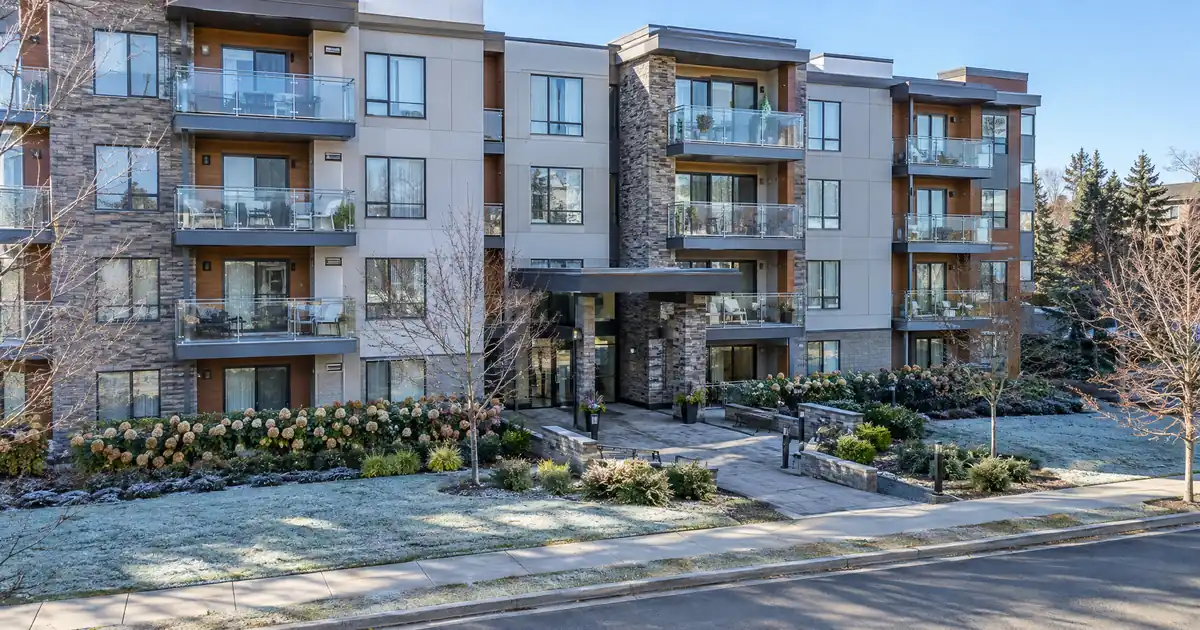
The Quick Read: A VA loan can buy a condo only when VA has approved the project, not just the unit. The lender checks the project’s status, orders a condo appraisal, and counts the monthly association dues in your housing expense. If the building is not on VA’s approved list, the unit cannot receive a VA guaranty, even when you qualify personally. Check the project’s status before you write an offer.
Across the wholesale programs Lendmire places VA files with, the borrower side stays simple. The project side is where files stall. This article walks through both, in the order a file actually moves.
VA payment estimate
Starting assumptions reflect an example price with no down payment and a first-use funding fee. Replace them with your own figures.
Editable benchmark: 7.32% as of October 22, 2026 · Freddie Mac 30-year average via FRED®. A conventional market reference, not a VA loan quote.
Illustrative starting assumptions: a $350,000 price, no down payment with full entitlement, a first-use funding fee financed into the loan, a thirty-year term at the current Freddie Mac benchmark, and property taxes and insurance estimated at typical national rates. Every field is editable.
Illustrative estimate only — not a Loan Estimate, approval, quote, or commitment to lend. The rate field carries the weekly Freddie Mac thirty-year conventional benchmark, a market reference and not a VA loan quote; your rate is set by the lender at lock. The funding fee follows VA’s published table for the use and down payment entered; the residual-income figure is VA’s guideline for the region and family size, and the rough residual shown subtracts only the housing payment and the debts entered, while VA also deducts taxes, maintenance and utilities. Taxes, insurance and dues are editable estimates; closing costs are not included. Licensed in sixteen states for consumer mortgages. Lendmire is not affiliated with or acting on behalf of the Department of Veterans Affairs.
Key Terms Defined
- Project approval: VA’s acceptance of the condo’s legal documents and structure, which must happen before any unit in the building can carry a VA guaranty.
- Notice of Value (NOV): the document VA issues after the appraisal. It can carry conditions the lender must clear before closing.
- Organizational documents: the declaration, bylaws, and related papers that create the condo and set the association’s rules.
- Presale requirement: the share of units in a new or proposed project that must be under contract with real buyers before VA guarantees the first unit loan.
- PUD (planned unit development): a community where you own the lot and the association owns common areas. VA does not require project approval for PUDs.
- Residual income: what is left of monthly income after taxes, debts, and housing costs. On VA loans it is the controlling test.
What Does “VA-Approved Condo” Actually Mean?
It means the whole project passed VA review. Approval is not granted to a single unit. VA’s Lenders Handbook, in its chapter on condominiums and planned unit developments, states that condominiums, but not PUDs, must be approved by VA before any unit is eligible for guaranty. The regulation says the same thing: under 38 CFR 36.4356, VA must approve the legal documents that establish the project before it guarantees a loan on an individual unit.
Two practical points follow.
First, the borrower does not submit the project. The lender or the project sponsor sends VA a written request along with the association’s organizational documents. VA’s office of jurisdiction sends its decision back to them.
Second, the unit still has to pass everything a normal VA purchase passes. Condo loans are eligible on the same terms as other VA loans, per 38 CFR 36.4360. Your certificate of eligibility, credit, income, and residual income all still apply.
How the Loan Is Underwritten, Step by Step
The deal works in a fixed order. Skipping a step is how deals fall apart late.
1. Check the project’s status first. VA publishes a lookup tool, the VA Condo Report, for approved projects. Ask your loan officer to confirm the status before you make an offer. Your agent can ask too. Treat the lookup as a starting point and let the lender confirm it.
2. Confirm your own eligibility. The certificate of eligibility from VA decides whether you have entitlement. Service requirements are VA’s rules, not the lender’s.
3. Order the appraisal. For an existing condo, once the local VA office accepts the project documents, the unit is appraised to confirm it meets Minimum Property Requirements and is safe, sanitary, and structurally sound (38 CFR 36.4365). The handbook calls for the individual condominium unit appraisal form. Any commercial or non-residential interests in the project must be reported, along with their effect on residential value.
4. Clear the conditions. An approved project can still produce a Notice of Value with conditions. The lender is responsible for confirming those conditions are met before closing.
5. Underwrite the monthly cost. VA’s underwriting rule adds the association’s monthly assessment to housing expense. If current dues look too low compared with what the governing documents allow, the maximum the veteran could be charged can be used instead. Dues are not a side item. They move the residual income number.
6. Close with title and lien rules satisfied. The handbook requires any mandatory association assessment to be subordinate to the VA-guaranteed mortgage. Title rules also call for fee simple ownership and no unreasonable restrictions on use and occupancy.
The loan itself works as it does on any VA purchase. Across the wholesale programs Lendmire works with, VA purchase financing runs to 100% of the price with no down payment, as long as the price does not exceed the appraised value. There is no mortgage insurance of any kind. There is no VA loan limit with full entitlement. With remaining entitlement, a down payment may be required, and that is a conversation to have with a loan officer. These figures are subject to lender guidelines and full file review.
What the Borrower Side Looks Like
VA sets no minimum credit score. The wholesale programs Lendmire places VA loans with start at a 580 decision score, and some lenders set a higher floor. Amounts reach $4,000,000 with full entitlement.
Residual income is the controlling test. The 41% debt-to-income figure is a guideline, not a cap. A ratio above it needs residual income well above VA’s table. On a condo file this matters more than on a house, because association dues sit inside the housing expense.
The VA funding fee can be financed into the loan. For first use, it is 2.15% with less than five percent down, 1.5% with five to under ten percent down, and 1.25% with ten percent or more down. For subsequent use with less than five percent down, it is 3.3%, with the same 1.5% and 1.25% tiers above that. It is waived for veterans receiving compensation for a service-connected disability and the other exempt groups. The fee is a mechanical piece of the loan, not a lender charge.
For a second home or rental unit, occupancy decides the leverage, and the VA purchase loan is built for the home you will live in.
Where the Rule Breaks: Named Edge Cases
The general rule is simple. The exceptions are where buyers get surprised.
New or Proposed Projects
New construction carries a presale test. Under 38 CFR Part 36, Subpart B, bona fide sale agreements from buyers other than the declarant must cover 70 percent of the total units. The Secretary may approve a lower figure case by case, for reasons such as strong initial sales or cash or bonds covering common-area assessments. The lender certifies the presale requirement is met before VA guarantees the first unit loan, and each phase of a multiphase project has its own presale requirement (GovInfo, 38 CFR 36.4365).
That test does not apply to every condo. Existing resale condos are governed by the appraisal and Minimum Property Requirements rules instead.
Townhouses and Site Condos
Building style does not decide this. Legal ownership does. A townhouse in a condominium regime, where you hold title to a unit plus an undivided interest in common elements, is a condominium under VA rules and needs project approval. A townhouse in a PUD does not. Ask the lender which one the property is before you fall in love with it.
PUDs
PUDs need no project approval. They still have to meet the title and lien rules, including the subordinate-assessment requirement. A PUD is often the easier path when a buyer has a choice.
Projects Approved Through Other Agencies
The regulation says a condo project acceptable to HUD or USDA may also be acceptable to VA. That does not mean an old FHA approval carries over automatically. Treat any “FHA-approved, so VA works” claim as a question for the lender, and have them confirm VA’s current standing for that specific project. USDA’s own rules, for contrast, require the lender to review the project and the unit to be approved or accepted by HUD/FHA, VA, Fannie Mae, or Freddie Mac, per USDA Rural Development.
Governing-Document Restrictions
Some association rules block approval no matter how healthy the building is. Rights of first refusal, a right to approve a buyer or tenant, and unreasonable leasing limits are the usual problems. These come from the title and use rules and are the kind of item a lender flags on its condo review. If the declaration contains one, the fix is an amendment by the association, not anything the buyer can do.
Single-Unit (“Spot”) Approval
Some lenders say a single-unit path exists, and others say it does not. Do not plan a purchase around it. Ask the lender what is available for the specific building, and get the answer before you sign anything with a firm deadline.
What Lenders Check Beyond VA’s Rules
VA’s rules are the floor. Many lenders add their own condo questionnaire and review the association’s insurance, pending litigation, and reserves. These are lender overlays, not VA requirements, and they vary by lender. Some lenders set stricter standards than others, which is why a condo declined by one can look different to another.
Incomplete questionnaires are a common source of friction. When the association’s management company is slow to return the questionnaire, the file waits. Ask for it early.
When the Project Isn’t Approved
Say the building you want is not on the list. The path is real but slow and outside your control.
The lender or sponsor has to send VA the request and the organizational documents. The package includes the recorded documents, and for conversions and some new projects it adds items like evidence that recreational facilities are finished and final local approval. An attorney’s opinion that the documents comply with VA regulations is part of it. No official timeline exists, and a project that is not already approved may take months.
For a buyer and a seller, that means contract risk. If you are buying into an unapproved project, discuss a financing contingency and its dates with your agent before you commit. Walk-away points should be written down, not assumed. Often the cleaner move is to find a unit in a building VA already accepts, or consider a PUD.
Lendmire’s piece Can a Condo Without VA Project Approval Get a VA Cash-Out? covers the refinance side of the same project-approval question.
A Decision Path for Buyers
| Project status | What it means | Your next move |
|---|---|---|
| On VA’s approved list | Project cleared VA review | Confirm conditions, run the lender’s condo review |
| Not listed, existing building | No VA approval on record | Ask lender what is available; plan for delay |
| New or proposed project | Presale test applies | Lender certifies presales before first unit loan |
| PUD | No project approval needed | Title and lien rules still apply |
| Townhouse | Depends on legal form | Confirm condo regime vs. PUD |
Lendmire’s VA loan programs page lays out the product side of the loan. Pair it with the status check above and you have both halves of the file.
Why Sellers and Agents Hesitate
On a condo, a VA offer carries an extra variable the seller cannot control: the building’s approval status. A seller whose project is already on the list loses nothing. A seller in an unapproved project may worry the deal will die. The strongest offer is one where your lender has already confirmed the project’s status. Your loan officer can do that before you make an offer.
Common Mistakes
- Assuming a PUD and a condo follow the same rules.
- Treating “FHA-approved” as proof of VA approval.
- Using one lender’s checklist as if it were VA’s rule. Lender pages cite different owner-occupancy, reserve, and delinquency percentages, and none of those are fixed VA numbers.
- Ignoring association dues until the underwriter adds them to the housing expense.
- Making an offer before the status check.
Frequently Asked Questions
Can I use a VA loan to buy any condo?
No. The project must have VA approval before any unit qualifies for the guaranty. A unit in a non-approved building cannot receive it, even if you meet every personal requirement.
Who applies to get a condo project approved?
The lender or the project sponsor, not the buyer or the seller. They send VA a written request and the organizational documents, and VA’s office of jurisdiction returns its decision to them.
Does a VA loan on a condo need a down payment?
Generally no, with full entitlement, as long as the price is not above the appraised value. There is no mortgage insurance. With remaining entitlement a down payment may be required, so speak with a loan officer. All of this is subject to lender guidelines and full file review.
Do association dues affect whether I qualify?
Yes. The monthly assessment is added to housing expense in VA underwriting, which affects residual income. If current dues look too low compared with what the governing documents allow, the higher figure can be used.
Is a townhouse treated like a condo?
It depends on how ownership is set up. A townhouse in a condominium regime needs project approval. A townhouse in a PUD does not.
If you are buying a home and want to see whether a VA loan fits your file, Lendmire can help you compare the options and what each one asks of the file. Nothing here is a commitment to lend.
For your own numbers, request a scenario review with Lendmire.
About Lendmire
Lendmire is a mortgage brokerage (NMLS# 2371349) licensed for consumer mortgage lending in 16 states, arranging FHA, VA, conventional and jumbo purchase and refinance loans through a wholesale lending network. Eligibility is determined by the lender on each file. Scotsman Guide named Lendmire a Top Mortgage Workplace in both 2025 and 2026.
Get Started
Ready to find the right loan for you?
In about 30 seconds you can review financing options available for your home or investment property. No commitment required.
Informational only. Not a Loan Estimate, approval, or commitment to lend. Program availability and eligibility are subject to lender guidelines, credit approval, property review, and underwriting.
References
1. VA Lenders Handbook (Pamphlet 26-7), Chapter 16: Condominiums and PUDs
5. 38 CFR 36.4365, Cornell LII
This article is part of Lendmire’s VA loan program — full qualification details, guidelines, and scenarios live on the program page.
Related reading: Can You Remodel With a VA Cash-Out on an Existing VA Loan? · VA Cash-Out Qualifying Requirements for a Surviving Spouse · Can a Condo Without VA Project Approval Get a VA Cash-Out?
Brandon Miller
Founder & CEO, Mortgage Loan Originator, Lendmire LLC
- Mortgage Loan Originator · NMLS# 1129696 · Verify on NMLS Consumer Access
- North Carolina Real Estate Broker · License# 343312 · Verify on NCREC
- North Carolina Insurance Producer · License# 19053198 · Property, Casualty, Life, Health · Verify on NAIC SBS
- Lendmire LLC · Firm NMLS# 2371349 · Verify firm licensure
Legal disclosures. Lendmire (NMLS# 2371349) is a state-licensed mortgage brokerage that arranges financing through wholesale lender relationships. Lendmire is not a direct lender, depository institution, or registered financial advisor. The discussion above is general informational content about real estate financing — it is not financial, legal, or tax advice, and readers should consult licensed professionals for guidance on their individual circumstances. Loan inquiries are subject to lender underwriting; this article does not represent a commitment to lend. Loan terms, rates, and qualification standards vary by borrower, property, and state, and are subject to change at any time. Equal Housing Opportunity. NMLS Consumer Access: nmlsconsumeraccess.org.