
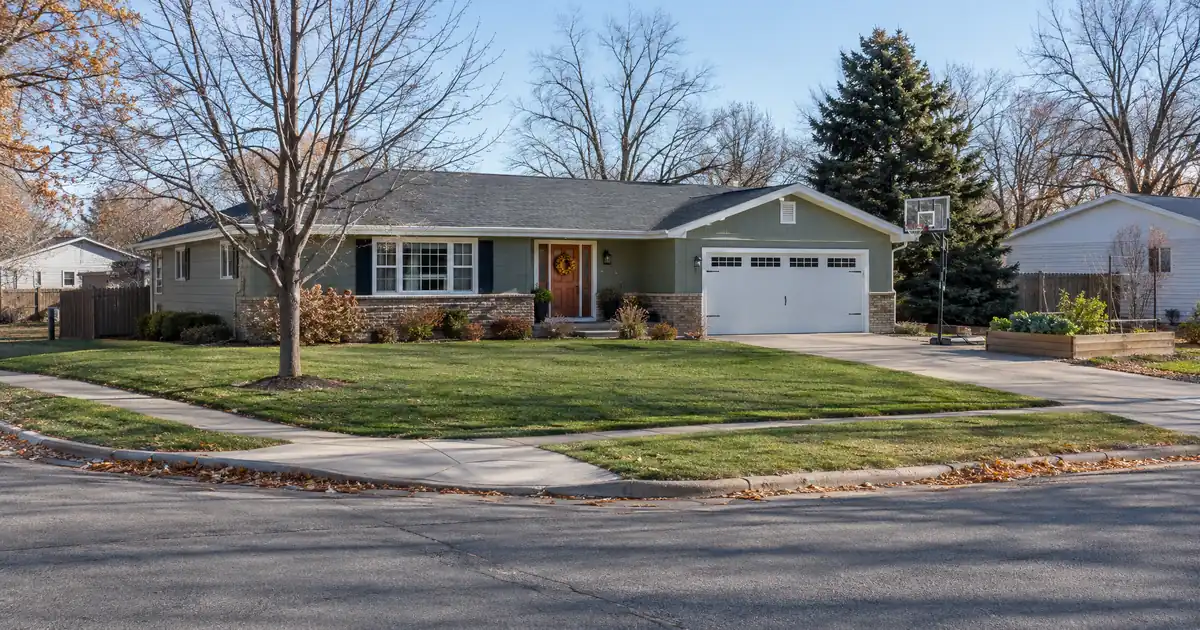
The Quick Read: It depends on how long you will stay and how firm your orders are. A VA loan fits a service member who expects a multi-year stay, has savings after closing, and wants to use the benefit once on a home they will live in. Renting fits a short or uncertain tour, thin reserves, or a service member who wants to learn an area first. Neither choice is wrong. They solve different problems.
The VA benefit removes the two biggest barriers to buying: the down payment and monthly mortgage insurance. It does not remove ownership costs, selling costs, or the occupancy rule. That last item is where active-duty buyers most often misjudge the decision.
VA payment estimate
Starting assumptions reflect an example price with no down payment and a first-use funding fee. Replace them with your own figures.
Editable benchmark: 7.32% as of October 22, 2026 · Freddie Mac 30-year average via FRED®. A conventional market reference, not a VA loan quote.
Illustrative starting assumptions: a $350,000 price, no down payment with full entitlement, a first-use funding fee financed into the loan, a thirty-year term at the current Freddie Mac benchmark, and property taxes and insurance estimated at typical national rates. Every field is editable.
Illustrative estimate only — not a Loan Estimate, approval, quote, or commitment to lend. The rate field carries the weekly Freddie Mac thirty-year conventional benchmark, a market reference and not a VA loan quote; your rate is set by the lender at lock. The funding fee follows VA’s published table for the use and down payment entered; the residual-income figure is VA’s guideline for the region and family size, and the rough residual shown subtracts only the housing payment and the debts entered, while VA also deducts taxes, maintenance and utilities. Taxes, insurance and dues are editable estimates; closing costs are not included. Licensed in sixteen states for consumer mortgages. Lendmire is not affiliated with or acting on behalf of the Department of Veterans Affairs.
Side-by-Side
The table covers how the two paths differ on the points that decide most files. Program figures reflect the wholesale programs Lendmire places VA loans with, subject to lender guidelines and full file review.
| Factor | VA Loan | Renting |
|---|---|---|
| Leverage | Up to 100% financing, no down payment if price is not above appraised value | No purchase leverage; deposit only |
| Credit floor | VA sets none; wholesale programs start at a 580 decision score | Set by the landlord |
| Mortgage insurance | None of any kind | Not applicable |
| One-time fee | VA funding fee, reviewable, waived for exempt groups | None |
| Occupancy | You must intend to occupy it as your home | None |
| Documentation | COE, service and income proof, residual income review | Application, income proof, lease |
| Repairs | Yours | Mostly the landlord’s |
| Leaving early | Sell, keep, or rent it out | Lease-break protections may apply |
What Eligibility Looks Like on Active Duty
You do not have to be a veteran. VA states that a service member with at least 90 continuous days of service meets the minimum active-duty requirement. VA also says you must meet credit, income, and occupancy requirements from both VA and the lender. Eligibility is not approval.
The certificate of eligibility (COE) is the document that proves your entitlement to the lender. For an active-duty member, a statement of service is the typical supporting item. VA decides eligibility. The lender decides whether the file works.
How the VA Loan Changes the Buy Side
Across the wholesale programs Lendmire works with, a first-time VA purchase has a short list of defining features. Financing can reach 100% of the price with no down payment, as long as the price is not above the appraised value. There is no mortgage insurance. With full entitlement there is no VA loan limit, and the programs serve amounts up to $4,000,000. With only remaining entitlement, a down payment may be required, and that is a question for a loan officer.
The funding fee is the one-time VA charge. For first use it is 2.15% with less than 5% down, 1.5% with 5% to under 10% down, and 1.25% with 10% or more down. It can be financed into the loan. Veterans receiving compensation for a service-connected disability, and other exempt groups, do not pay it. Check your COE for an exemption before you assume you owe it.
Underwriting leans on residual income, which is what is left of your net income after debts and obligations, tested against VA tables by family size and region. The 41% debt-to-income figure is a guideline, not a cap. A higher ratio needs residual income well above the table. Active-duty income, including Basic Allowance for Housing, is addressed in the VA Lenders Handbook. That same chapter says temporary income, such as Post-9/11 GI Bill education allowances, is not counted as effective income. BAH and the GI Bill are not interchangeable on a file.
When a VA Loan Is the Better Fit
Buying makes sense when these conditions line up.
- A known, longer assignment. You have orders or a realistic expectation of staying long enough to absorb closing costs and selling costs. No official source gives a break-even number, so treat any “years to break even” figure from a calculator as an estimate, not a rule.
- Cash left after closing. Zero down does not mean zero cash. CFPB puts general closing costs at 2% to 5% of the purchase price, not including the down payment. That is a general mortgage figure, not VA-specific. CFPB also suggests keeping three to six months of expenses as a cushion.
- Room for ownership costs. CFPB lists taxes, homeowner’s insurance, HOA fees, maintenance, repairs, and utilities as ongoing costs, and notes that taxes and insurance can rise. If the budget only works at today’s numbers, that is a warning.
- A plan for the benefit. First-time use means you spend part of a one-time benefit. Buying a home you will live in for years is a good use of it. Buying one you may leave in a year is a weaker one.
- A clean occupancy story. You intend to live in the home. The regulation, 38 CFR 36.4303, requires that certification on a purchase. Where active duty prevents the veteran from occupying, the spouse can certify. Orders do not cancel the rule.
Picture a service member with a firm multi-year assignment, a spouse, savings after closing costs, and a budget that covers taxes, insurance, and repairs with margin. That file is a candidate for a VA purchase. Lendmire’s VA loan programs are built around that profile, and the lender reviews the full file before any decision.
When Renting Is the Better Fit
Renting wins in more cases than buyers expect. It is the stronger choice in these situations.
- Orders are short or unknown. Selling after a short stay can erase equity, and the market may not cooperate on your timeline. Renting caps the exposure.
- You do not know the area. Renting first lets you learn neighborhoods, commutes, and school zones before committing. That is a practical use of a first tour.
- Savings are thin. If buying would drain reserves, a repair bill becomes a crisis. Renters, per CFPB’s servicemember worksheet, generally avoid most regular maintenance and repair costs, and some utilities may be bundled into rent.
- You want to build credit or cash first. A 580 decision score is the starting point on the wholesale programs, and many lenders set higher floors. A few months of savings and clean payment history can improve the file.
- You value lease flexibility. The Department of Justice says the Servicemembers Civil Relief Act lets a service member end a residential lease signed before service began. It also applies when a member in service later gets PCS orders or deployment orders of at least 90 days, and upon retirement or separation orders. Notice has to be in writing with a copy of orders, and past-due rent is still owed.
Here is the catch with that last point. Lease protection does not follow you into a purchase. If you buy and then get orders, the SCRA does nothing for the mortgage. The planning belongs before you buy, not after.
The PCS Problem Nobody Prices In
Orders after closing leave three options: sell, keep and rent it out, or keep and live elsewhere on paper. Each has friction.
Selling means paying selling costs and taking whatever the market gives. Keeping it as a rental is a later, separate question from the occupancy certification you signed at purchase. Being a landlord from a distance brings vacancy, repairs, and management. And keeping the home may tie up entitlement you want for the next purchase. This is a general point to raise with the loan officer before you commit, not a rule to assume.
On files with enlisted members near the end of a term, expect questions about reenlistment or continued service. Lenders look at income continuity, and a documented reenlistment or intent to reenlist can matter. Guard and Reserve members have separate service requirements listed on VA’s eligibility page.
On the move-in question, the regulation says occupancy should follow within a reasonable time after closing. Do not rely on a day count from a blog. Ask the loan officer what the lender requires.
Honest Cost Comparison
Do not compare rent to a principal-and-interest number alone. Build both columns from the same list.
For owning: loan payment, taxes, homeowner’s insurance, any supplementary insurance such as flood, HOA dues, maintenance, repairs, utilities, the financed or paid funding fee, and eventual selling costs. For renting: rent, renter’s insurance, any utilities not bundled, and the deposit. CFPB’s “Buying or renting a home?” worksheet for servicemembers walks through this line by line.
Then look at BAH. Lenders treat BAH as active-duty income under the Handbook’s active-military section, and a payment that fits inside BAH looks comfortable on paper. But BAH is an allowance, it changes with duty station and status, and it does not cover repairs. Treat it as income for qualifying, not as a guarantee the home is affordable at the next station.
Mistakes That Come Up on These Files
- Assuming eligibility means approval. It does not.
- Treating zero down as zero cash. Closing costs and reserves still apply.
- Skipping the COE check for a funding-fee exemption.
- Counting GI Bill payments as qualifying income.
- Treating a rental plan as a free exit. It is a second job with its own costs.
- Skipping an independent home inspection. A VA appraisal sets value and checks minimum property standards. It is not a substitute for an inspection.
A Balanced Verdict
Buy with a VA loan if your stay is likely long, your reserves are real, and you want a home to live in. The no-down-payment, no-mortgage-insurance structure is strong, and it is hard to match elsewhere. Rent if your stay is short or uncertain, your savings are thin, or you need time to learn the area. Renting is not a failure to use the benefit. It keeps the benefit available for a purchase that fits.
If you are on the fence, a useful middle path is to rent through the first tour, build reserves, and then buy where you expect to stay.
If you are buying a home and want to see whether a VA loan fits your file, Lendmire can help you compare the options and what each one asks of the file.
Key Terms Defined
Certificate of Eligibility (COE): The VA document that shows your lender you qualify based on service history and duty status.
Entitlement: The amount of VA guaranty available to you. Full entitlement means no VA loan limit.
Funding fee: A one-time VA charge on the loan that can be financed and is waived for exempt groups.
Residual income: Net income left after debts and obligations, tested against VA tables by family size and region.
BAH: Basic Allowance for Housing, an active-duty allowance counted as income on VA files.
SCRA: The Servicemembers Civil Relief Act, which lets qualifying service members end a residential lease.
Frequently Asked Questions
Can I use a VA loan while still on active duty?
Yes. A service member with 90 continuous days of service meets VA’s minimum. You still need to meet credit, income, and occupancy requirements from VA and the lender, and the lender reviews the full file.
Do I need a down payment with a VA loan?
Not on a purchase with full entitlement, as long as the price is not above the appraised value. Closing costs and cash reserves still apply, and a down payment may be required with remaining entitlement. A larger down payment lowers the funding-fee tier.
What happens if I get PCS orders after buying?
Orders do not remove the occupancy certification you made at purchase. Your options are to sell, rent the home out later, or keep it. Each has costs, and keeping it can affect the entitlement available for your next purchase.
Can I break a lease if I get orders?
Often, yes. The SCRA allows lease termination for qualifying PCS or deployment orders and for retirement or separation orders, with written notice and a copy of orders. Timing of the lease relative to your service matters, and past-due rent is still owed.
Is the VA funding fee always charged?
No. It is waived for veterans receiving compensation for a service-connected disability and for other exempt groups. Otherwise it depends on first or subsequent use and on your down payment, and it can be financed.
For your own numbers, request a scenario review with Lendmire.
About Lendmire
Lendmire (NMLS# 2371349) is a mortgage brokerage serving homeowners and home buyers in 16 states. FHA, VA, conventional and jumbo purchase and refinance loans are arranged through wholesale lending channels; Lendmire brokers the financing and the lender underwrites each application. Scotsman Guide named Lendmire a Top Mortgage Workplace in both 2025 and 2026.
Get Started
Ready to find the right loan for you?
In about 30 seconds you can review financing options available for your home or investment property. No commitment required.
Informational only. Not a Loan Estimate, approval, or commitment to lend. Program availability and eligibility are subject to lender guidelines, credit approval, property review, and underwriting.
References
1. VA.gov – Eligibility for VA home loan programs
2. VA Lenders Handbook, Chapter 4 – Credit Underwriting
3. CFPB – Prepare your money situation before you buy a home
4. eCFR – 38 CFR Part 36, Subpart B
5. DOJ – Servicemembers and Veterans Initiative: Financial and Housing Rights
This article is part of Lendmire’s VA loan program — full qualification details, guidelines, and scenarios live on the program page.
Related reading: VA Loan vs Conventional Loan for a First-Time Active-Duty Buyer · Does a VA Loan Fall Through More for a First-Time Active-Duty Buyer? · VA Loan vs Conventional Loan for a First-Time VA User on Active Duty
Brandon Miller
Founder & CEO, Mortgage Loan Originator, Lendmire LLC
- Mortgage Loan Originator · NMLS# 1129696 · Verify on NMLS Consumer Access
- North Carolina Real Estate Broker · License# 343312 · Verify on NCREC
- North Carolina Insurance Producer · License# 19053198 · Property, Casualty, Life, Health · Verify on NAIC SBS
- Lendmire LLC · Firm NMLS# 2371349 · Verify firm licensure
Compliance and disclosures. Lendmire (NMLS# 2371349) is a licensed mortgage broker and is not a direct lender, depository institution, financial advisor, or tax professional. Content in this article is general market analysis and educational information — not financial, legal, or tax advice for any specific situation. Lendmire does not guarantee loan approval; every transaction is subject to underwriting by the funding lender. Mortgage pricing and loan program guidelines are subject to change at any time without notice and vary by borrower characteristics, property type, and state regulations. Lendmire complies with Equal Housing Opportunity. Licensure verification: NMLS Consumer Access.