
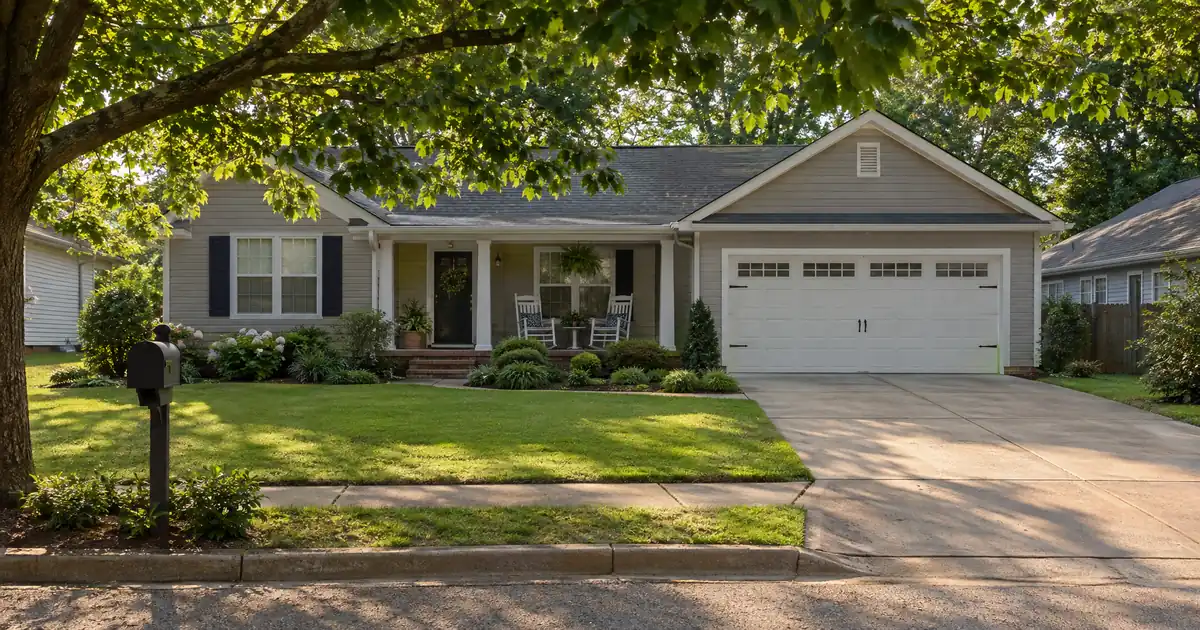
The Quick Read: A VA loan on a newly built home requires a VA appraisal and a builder warranty, and it does not require a private home inspection. The appraisal checks value and the VA’s Minimum Property Requirements. It is not a building inspection. The warranty and the local building inspections carry the protection a resale buyer would normally get from a private inspector, so new construction adds a paperwork layer that resale purchases don’t have.
Key Takeaways
- The VA appraisal confirms value and minimum property standards. It does not inspect the structure.
- A builder warranty is a condition of VA guaranty on a new or proposed home. The standard form is VA Form 26-1859.
- Local building inspections and a certificate of occupancy are part of the file. If the local authority normally inspects and didn’t, the property has a problem.
- A private inspection is optional, paid by the buyer, and worth scheduling before the warranty year ends.
- Some edge cases (builder won’t warrant, no local inspections, borrower as general contractor) change the path.
What Counts as New Construction?
The category decides which rules apply. Per a VA lender newsletter (dated, so read it for the framework rather than fine print), new construction is a home less than one year old that has never been occupied. Proposed construction is a home not yet built. Existing construction is anything previously occupied or older than a year.
VA payment estimate
Starting assumptions reflect an example price with no down payment and a first-use funding fee. Replace them with your own figures.
Editable benchmark: 7.32% as of October 22, 2026 · Freddie Mac 30-year average via FRED®. A conventional market reference, not a VA loan quote.
Illustrative starting assumptions: a $350,000 price, no down payment with full entitlement, a first-use funding fee financed into the loan, a thirty-year term at the current Freddie Mac benchmark, and property taxes and insurance estimated at typical national rates. Every field is editable.
Illustrative estimate only — not a Loan Estimate, approval, quote, or commitment to lend. The rate field carries the weekly Freddie Mac thirty-year conventional benchmark, a market reference and not a VA loan quote; your rate is set by the lender at lock. The funding fee follows VA’s published table for the use and down payment entered; the residual-income figure is VA’s guideline for the region and family size, and the rough residual shown subtracts only the housing payment and the debts entered, while VA also deducts taxes, maintenance and utilities. Taxes, insurance and dues are editable estimates; closing costs are not included. Licensed in sixteen states for consumer mortgages. Lendmire is not affiliated with or acting on behalf of the Department of Veterans Affairs.
Why it matters: a house that sat finished for a year and then sold is treated as existing. A house that is half-framed on contract day is proposed, and it gets extra steps, including a post-construction inspection by the appraiser.
One more rule before the mechanics. The finished home must be your primary residence. The VA program is built for owner-occupants, and that holds for construction too.
What Does the VA Actually Require on a New Build?
The federal rule sets the frame. Under 38 CFR 36.4351, a loan to buy or build a residence isn’t eligible for VA guaranty unless the property meets prescribed planning, construction and general-acceptability standards. The warranty rules in the same subpart make a builder or seller warranty a condition of the Certificate of Reasonable Value. For a proposed or newly built dwelling, the warranty says the home was completed in substantial conformity with the plans.
In practice, four things decide whether a new-build file works:
1. Whether local building inspections exist and were actually done.
2. Whether the builder will sign the warranty.
3. Whether the appraisal confirms the home meets Minimum Property Requirements and is complete.
4. Whether the certificate of occupancy and builder certifications are in the file.
Miss one and the file stalls. A missing certificate of occupancy or an unsigned warranty can hold up a new-build file.
Does the VA Inspect the Home?
This is the biggest misunderstanding. A VA training document used in lender education says plainly that the appraisal must not be considered a building inspection. It also recommends a thorough inspection by the buyer or a reputable firm to help minimize post-closing problems.
The same document describes the “not inspected” acknowledgement. The veteran signs that the new home was not inspected by VA during construction. VA’s help is limited to defects in equipment, material and workmanship reported during the one-year builder’s warranty. VA will not step in on the veteran’s behalf in processing construction complaints.
Read that twice. The VA guaranty makes the loan possible. It doesn’t make VA your quality-control inspector.
| Check | Who does it | What it covers |
|---|---|---|
| Local building inspections | City or county authority | Code compliance at foundation, framing, final |
| VA appraisal | VA-assigned appraiser | Value and Minimum Property Requirements |
| Private inspection | Buyer’s hired inspector | Workmanship and defects, optional |
| Builder warranty | Builder | Defects reported in the warranty period |
Inspection Steps by Construction Stage
Here is the usual sequence, built from the handbook framework and how files move in practice.
Step 1: Local inspections. On new or proposed construction, the lender finds out whether the local authority performs building inspections, typically at the foundation, framing and final stages. The goal is code compliance plus a final inspection or certificate of occupancy. If the local building authority routinely inspects construction and none were done, the property is ineligible for VA guaranty.
Step 2: The appraisal. The appraiser values the home and checks it against the Minimum Property Requirements. For proposed construction, the appraiser also makes a post-construction inspection. The report carries a certification that the home substantially complies with the construction exhibits, plus exterior photos.
Step 3: The warranty. The builder delivers the warranty (more below).
Step 4: The closing file. Lenders typically collect the warranty, the building permit and certificate of occupancy, builder certifications on items like lead content in plumbing materials and energy code, evidence that off-site improvements are done, and the “not inspected” acknowledgement. Exact items vary by lender and underwriter.
Off-site improvements deserve a note. Streets, sidewalks, drains, water and sewer should be completed and accepted by the local authority. A beautiful house on an unfinished street can still hold up the file.
The Builder Warranty Explained
VA Form 26-1859 is the “Warranty of Completion of Construction.” It’s a combined form that also carries the HUD number, since FHA uses it too. Under the handbook, the veteran receives a one-year warranty on that form, or a ten-year insurance-backed warranty as an alternative.
What the one-year warranty means for you:
- It covers defects in equipment, material and workmanship that you report during that year.
- VA’s limited help with construction complaints applies only during that window.
- After it ends, a defect is your cost, unless you hold a ten-year insured plan.
Builder industry sources say the warranty year starts at the earliest of title transfer, completion or occupancy. Treat that as a reason to read your form and calendar the date at closing.
When the General Rule Breaks
Five edge cases come up often enough to know.
No local inspections. Where the local authority doesn’t perform required inspections, the ten-year insured protection plan enters the picture. Older handbook copies describe it as needed in addition to the one-year warranty. Some builder-industry sources say newer rules relaxed that where the builder signs the 26-1859. Because the requirement may differ depending on the current VA wording, ask your loan officer to confirm what applies to your file before you plan around it.
Builder won’t warrant. VA can grant a special exception when a veteran buys from a builder who is not more than occasionally involved with VA financing and refuses to give a warranty. The veteran and builder provide statements, and VA won’t assist with construction complaints. It exists, but it leaves you with the least protection of any path.
Veteran as general contractor. The handbook has a separate category for a completed home built by a veteran acting as general contractor. Expect a different documentation path.
Manufactured homes. Homes classified as real estate may be eligible under separate rules.
Condos. Warranty rules for condo units sit in the same federal subpart, and the project itself generally has to be VA-approved. That’s a project-level question to ask early.
Two more items are worth checking, and neither should be assumed. VA guidance once required the general contractor to be a registered VA builder, and some industry sources report that requirement was later rescinded. Because that status may have changed, ask your loan officer what applies today. And a construction-to-permanent loan is different: the construction phase itself is not a VA loan, though the plan is a VA-guaranteed permanent loan afterward, and the funding fee applies there too.
How the VA Loan Itself Works on a New Build
The warranty and inspection layer sits on top of ordinary VA mechanics. Across the wholesale programs Lendmire places files with, a VA purchase offers 100% financing with no down payment as long as the price isn’t above the appraised value, no mortgage insurance, and no VA loan limit with full entitlement. With remaining entitlement, a down payment may be required, so speak with a loan officer about your situation.
VA sets no minimum credit score, but the wholesale programs Lendmire works with start at a 580 decision score. Residual income is the controlling underwriting test. The 41% debt-to-income figure is a guideline, not a cap, and a higher ratio needs residual income well above the table.
The funding fee is reviewable and is waived for veterans receiving compensation for a service-connected disability and other exempt groups. For first use it is 2.15% with less than five percent down, 1.5% with five to under ten percent down, and 1.25% with ten percent or more down. Your certificate of eligibility from VA decides eligibility. All of this is subject to lender guidelines and full file review.
Lendmire’s VA loan programs page lays out the basics if you’re comparing options.
A Worked Walkthrough
Picture a first-time VA buyer purchasing a tract home that is nearly finished, with the builder offering a one-year warranty.
The buyer signs the contract and the loan file opens. The lender confirms the local authority inspects, and the builder supplies the permit and inspection sign-offs. Because the house is finished, the appraiser inspects it for completion.
At closing, the buyer signs the “not inspected” acknowledgement and receives the signed warranty form. The buyer notes the warranty start date and hires an independent inspector for a walkthrough around month ten, which leaves time to report any defect in writing before the year ends.
Compare that to a custom lot build. More stages, more inspections, a proposed-construction appraisal, and a bigger reason to hire your own inspector at foundation, framing and pre-drywall. Those phase inspections cost the buyer money out of pocket, but they catch problems while walls are still open.
Questions to Ask Your Builder
- Have you built VA-financed homes before, and will you sign the 26-1859?
- Does the local authority inspect here, and will I see the sign-offs?
- When does the warranty year start?
- How do I submit a defect, and who responds?
- Are streets, utilities and other off-site improvements finished and accepted?
Key Terms Defined
Minimum Property Requirements: VA’s standards for safety, structure, sanitation and site that a home must meet to be guaranteed.
Certificate of occupancy: The local authority’s sign-off that a finished home can legally be lived in.
Warranty of Completion of Construction: The builder’s written promise on VA Form 26-1859 that the home was completed in substantial conformity with the plans, with one year of defect coverage.
Insured protection plan: A ten-year, insurance-backed warranty that can be used as an alternative or addition in some cases.
“Not inspected” acknowledgement: The veteran’s signed statement that VA did not inspect the new home during construction.
Certificate of eligibility: The VA document that confirms you are eligible for the benefit.
Common Mistakes
- Treating the appraisal as an inspection.
- Skipping a private inspection because VA doesn’t require one.
- Missing the warranty window for reporting defects.
- Assuming the builder must be VA-approved without confirming the current rule.
- Letting an incomplete street or missing certificate of occupancy surface the week before closing.
If you’re buying a home and want to see whether a VA loan fits your file, Lendmire can help you compare the options and what each one asks of the file.
Frequently Asked Questions
Does a VA loan require a home inspection on new construction?
No. VA requires an appraisal against its Minimum Property Requirements, not a private inspection. The appraisal itself is not a building inspection, so most buyers hire their own inspector anyway, at their own cost.
What if my builder won’t give a warranty?
A special exception may be available for builders who are only occasionally involved with VA financing. The veteran and builder both provide statements, and VA won’t help with construction complaints afterward. If the builder regularly sells to VA buyers and still refuses, treat that as a serious warning.
Is the ten-year warranty always required?
Not always. It depends on whether the local authority performs required inspections. Ask your loan officer to confirm the present VA wording for your file.
Does the VA funding fee apply to construction loans, and can it be financed?
The funding fee applies to construction loans, including two-time-close structures, and can be financed. The tiers here apply to purchases, and exempt veterans owe none.
How long do I have to report defects?
VA’s help is limited to defects in equipment, material and workmanship reported during the one-year warranty period. Report issues in writing before it ends.
For your own numbers, request a scenario review with Lendmire.
About Lendmire
Lendmire (NMLS# 2371349) is a mortgage brokerage serving homeowners and home buyers in 16 states. FHA, VA, conventional and jumbo purchase and refinance loans are arranged through wholesale lending channels; Lendmire brokers the financing and the lender underwrites each application. Scotsman Guide named Lendmire a Top Mortgage Workplace in both 2025 and 2026.
Get Started
Ready to find the right loan for you?
In about 30 seconds you can review financing options available for your home or investment property. No commitment required.
Informational only. Not a Loan Estimate, approval, or commitment to lend. Program availability and eligibility are subject to lender guidelines, credit approval, property review, and underwriting.
References
1. VA lender newsletter on construction classifications
3. 38 CFR Part 36 Subpart B, eCFR
4. VA training document, “not inspected” acknowledgement
This article is part of Lendmire’s VA loan program — full qualification details, guidelines, and scenarios live on the program page.
Related reading: Can a Non-Spouse Co-Borrow on a VA Loan With Zero Down? · Can You Fund a Business With a VA Cash-Out on an Existing VA Loan? · Refinancing a Conventional Loan Into a VA Loan
Brandon Miller
Founder & CEO, Mortgage Loan Originator, Lendmire LLC
- Mortgage Loan Originator · NMLS# 1129696 · Verify on NMLS Consumer Access
- North Carolina Real Estate Broker · License# 343312 · Verify on NCREC
- North Carolina Insurance Producer · License# 19053198 · Property, Casualty, Life, Health · Verify on NAIC SBS
- Lendmire LLC · Firm NMLS# 2371349 · Verify firm licensure
Compliance and disclosures. Lendmire (NMLS# 2371349) is a licensed mortgage broker and is not a direct lender, depository institution, financial advisor, or tax professional. Content in this article is general market analysis and educational information — not financial, legal, or tax advice for any specific situation. Lendmire does not guarantee loan approval; every transaction is subject to underwriting by the funding lender. Mortgage pricing and loan program guidelines are subject to change at any time without notice and vary by borrower characteristics, property type, and state regulations. Lendmire complies with Equal Housing Opportunity. Licensure verification: NMLS Consumer Access.