
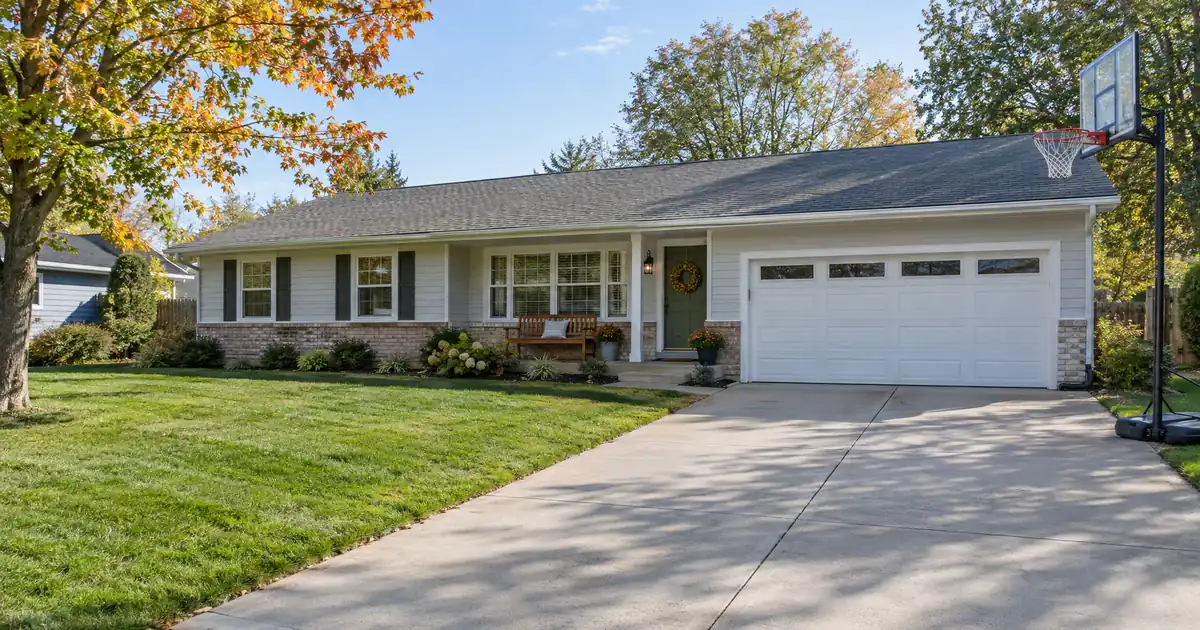
The Quick Read: A currently serving member can use a VA loan to buy a home before retiring, as long as VA’s Certificate of Eligibility (COE) shows eligibility and the home will be the buyer’s primary residence. The file is built on documented, continuing income and on residual income, not just a debt ratio. A retirement date inside the next year changes what the lender asks to see, so it belongs in the first conversation, not the last.
Key Takeaways
- Active-duty, Guard and Reserve members can use the benefit while still serving. The COE decides eligibility.
- Purchase financing runs to 100% with no mortgage insurance, subject to appraised value and lender guidelines.
- Residual income is the controlling test. The 41% debt-to-income figure is a guideline.
- Income that ends before closing cannot be counted. Retirement and separation dates are flagged early.
- The buyer certifies occupancy. Misstating intent is a fraud risk, not a paperwork slip.
What Is a VA Loan Before Retirement, Mechanically?
A VA loan is a mortgage made by a private lender with part of the risk guaranteed by the Department of Veterans Affairs. VA’s Home Loan Buyer’s Guide explains that the guaranty reimburses the lender if a loss occurs on foreclosure, and that it takes the place of a down payment. That guide is older, so use it for the concept, not for current figures.
VA payment estimate
Starting assumptions reflect an example price with no down payment and a first-use funding fee. Replace them with your own figures.
Editable benchmark: 7.32% as of October 22, 2026 · Freddie Mac 30-year average via FRED®. A conventional market reference, not a VA loan quote.
Illustrative starting assumptions: a $350,000 price, no down payment with full entitlement, a first-use funding fee financed into the loan, a thirty-year term at the current Freddie Mac benchmark, and property taxes and insurance estimated at typical national rates. Every field is editable.
Illustrative estimate only — not a Loan Estimate, approval, quote, or commitment to lend. The rate field carries the weekly Freddie Mac thirty-year conventional benchmark, a market reference and not a VA loan quote; your rate is set by the lender at lock. The funding fee follows VA’s published table for the use and down payment entered; the residual-income figure is VA’s guideline for the region and family size, and the rough residual shown subtracts only the housing payment and the debts entered, while VA also deducts taxes, maintenance and utilities. Taxes, insurance and dues are editable estimates; closing costs are not included. Licensed in sixteen states for consumer mortgages. Lendmire is not affiliated with or acting on behalf of the Department of Veterans Affairs.
Nothing in the benefit requires you to be a civilian. A serving member with a valid COE can buy. Lendmire’s VA loan programs page covers the product itself.
Across the wholesale programs Lendmire places VA files with, the pattern is consistent. Files with a near-term retirement fail on documentation, not on eligibility. The borrower qualifies, but nobody can show what income looks like after the uniform comes off.
How Is the Loan Underwritten, Step by Step?
Underwriting follows a fixed order. Each step is a place where a file can stall.
1. Confirm eligibility and entitlement. The lender can usually pull the COE electronically. The borrower can also request it online or with VA Form 26-1880. The CFPB’s servicemember handout notes the COE verifies your or your spouse’s military service. The exact service and documentation rules for active-duty applicants are VA’s, so check VA.gov or ask the loan officer for the current requirement.
2. Document income. The active-duty file is built on the Leave and Earnings Statement (LES). Basic pay is the base. The VA Lenders Handbook, Chapter 4 says a properly verified housing allowance counts as effective income. That allowance is not taxable, and it changes by duty station.
3. Flag the end-of-service date. This is the retirement step. If the contract or service ends within 12 months, the lender looks for evidence that income continues. The Handbook gives an example: when the end-of-service date falls before the anticipated closing, active-duty income cannot be considered, and civilian employment and drill duty are looked at instead.
4. Run the loan analysis. The lender tests debt-to-income and residual income. 38 CFR 36.4340 sets both as the primary standards. Failing one does not automatically disqualify the borrower, and meeting both does not guarantee approval.
5. Appraisal. VA appraises for value and for minimum property requirements. If the value comes in low, there is a reconsideration process. Ask the loan officer how it works on your file. VA also does not warrant the condition or value of the home.
6. Occupancy certification. At closing the borrower signs the occupancy certification on VA Form 26-1820.
7. Funding fee. It is paid at closing or financed. More on that below.
What Income Counts for a Serving Member?
Verified, continuing income counts. That is the whole rule, and most of the file work is proving “continuing.”
| Income type | Counts? | What the file needs |
|---|---|---|
| Base pay | Yes | Current LES |
| Housing allowance (BAH) | Yes, if verified | LES showing the amount |
| Subsistence allowance (BAS) | Yes, if verified | LES |
| Flight, hazard, sea pay | Only if expected to continue | Proof tied to assigned duties |
| Short-duration special pay | Limited | May offset only short obligations |
| Retired pay | Depends on documentation | Lender-specific, ask early |
Special pays count when they are expected to continue because of assigned duties and have continued for a prolonged period. If the duration is unknown, they may offset only short-term obligations of 6 to 24 months. Tax questions on any allowance are an IRS matter. Tax treatment can depend on your situation; borrowers should speak with a qualified tax professional before relying on any deduction or credit.
Here’s the catch for near-retirees: no VA page defines a single rule for treating future retired pay when you are still on active duty. Lenders handle it as documented, continuing income, and each one asks for different paper. Raise it before you sign a purchase contract.
Why Residual Income Controls the File
Residual income is what is left of your monthly income after taxes, debts, housing costs and household obligations, measured against a VA table by region and household size. Across the wholesale programs Lendmire places VA files with, it is the controlling test.
The regulation sets a 41% debt-to-income standard, and a ratio above it draws closer review. Treat 41% as a guideline, not a cap. A ratio above it needs residual income well above the table. Under the regulation, a residual income cushion of at least 20% above the guideline removes the second-level review requirement.
Two details matter for serving members:
- Household size. All household members count in residual income. A non-obligated spouse can be left out only with verification of stable, reliable employment.
- Military adjustment. The regulation includes a paragraph that adjusts residual income for active-duty members and military retirees who keep using nearby base facilities. Ask the lender how it applies to your file. The exact adjustment is in the current regulation.
A big household in a high-cost region, or heavy consumer debt, can shrink approval room even when the debt ratio looks fine. Pay down revolving balances before the file goes in.
How Does the Occupancy Rule Work When Retirement Is Close?
The loan is for a primary residence. On VA Form 26-1820, the borrower certifies one of three things: current occupancy, intent to occupy within a reasonable period of time, or intent to reoccupy after major repairs.
“Reasonable period” is not defined on the form. Lenders commonly treat it as roughly two months, but that is lender practice, not a VA regulation. Do not plan a purchase around a move-in date a year out and assume it will be accepted.
For a serving member, the standard exceptions come up often:
- Spouse occupancy. An older version of the form includes an option where the spouse of an active-duty veteran occupies, or the veteran intends to occupy, the home in the spouse’s absence. The spouse signs as well. Confirm against the current form.
- Deployment or PCS. Intent is certified at closing. If orders arrive after closing, the occupancy certification still stands as signed.
- Vacation or retirement-destination homes. A second home does not fit. The certification is about the home you live in.
The misconception to drop: “I can buy with VA and never live there.” You certify intent. Misstating it creates fraud exposure.
What Does the Funding Fee Look Like?
The funding fee is a one-time charge that helps offset taxpayer cost, since VA loans carry no down payment requirement and no monthly mortgage insurance. VA’s funding fee page states it applies to the loan amount, not the purchase price. The fee can be financed.
Purchase rates are the same for Veterans, active-duty members and Guard/Reserve.
| Use | Down payment | Fee |
|---|---|---|
| First use | Under 5% | 2.15% |
| First use | 5% to under 10% | 1.5% |
| First use | 10% or more | 1.25% |
| Subsequent use | Under 5% | 3.3% |
| Subsequent use | 5% to under 10% | 1.5% |
| Subsequent use | 10% or more | 1.25% |
The subsequent-use tiers at 5% down and above mirror the first-use tiers. The fee is waived for veterans receiving compensation for a service-connected disability and for the other exempt groups listed. A larger down payment lowers the fee. Financing it raises the balance. Figures are subject to lender guidelines and full file review.
Timeline: Where Retirement Fits In
The sequence matters more than speed. This is a planning order, not a schedule.
| Phase | Action | What the lender touches |
|---|---|---|
| Planning | Get the COE, pull recent LES | Eligibility, income baseline |
| Pre-contract | Tell the loan officer your end-of-service date | Income continuity plan |
| Under contract | Appraisal, occupancy certification prep | Property and occupancy review |
| Closing | Sign occupancy certification, fee decision | Final conditions |
| After closing | Move in within a reasonable period | Occupancy compliance |
If your retirement or separation date falls close to your closing, expect a request for a re-enlistment, an extension, or a documented transition to civilian pay. Timing varies by file and lender. Income that ends before closing cannot be counted.
Buy Now or Wait Until After Retirement?
This is a genuine toss-up for some borrowers. Buying while serving lets the lender count current, verified pay and allowances, which is easy paper. Waiting means the file runs on retired pay or new civilian income, which is harder to document at first.
The case for buying now: stable, verifiable income, and the home can anchor a duty-station-free move. The case for waiting: you may not know your retirement location, and carrying a home while the date slips is a cost. A vacancy gap between purchase and move-in is a real risk if the retirement date moves.
Rough decision test:
- Location certain, income documented, retirement date firm: buying now is workable.
- Location unsure, or date likely to slide: waiting protects you from carrying two housing situations.
- Residual income thin: waiting, or paying down debt first, is usually the stronger play.
Also, using entitlement now may affect what you have available later. Entitlement details and loan-limit mechanics are VA’s, so confirm with VA.gov and a loan officer. With full entitlement, there is no VA loan limit. With remaining entitlement, a down payment may be required, so speak with a loan officer.
Two Worked Scenarios
Scenario one: firm date, documented plan. Picture a service member eight months from a planned retirement, buying in the area where the family will live afterward. The lender sees the end-of-service date and asks for evidence of continuing income. The member supplies the retirement documentation the lender requests plus a spouse’s verified employment. Residual income clears the table with room. The file is workable, subject to lender guidelines and review.
Scenario two: date slips. Say you are under contract at 100% financing and orders extend your service by a year. Nothing about the loan breaks. The occupancy certification still depends on moving in within a reasonable period, so a long gap between closing and move-in is the exposure. Talk to the loan officer before closing if your timeline shifts, not after.
What Can Go Wrong
- End-of-service date falls before closing. Active-duty income cannot be considered. The file reverts to civilian or drill income.
- Special pay assumed to count. If it cannot be shown to continue, it offsets only short obligations.
- Stale income documents. An old LES showing an allowance that changed at a new duty station.
- Remote closing mistakes. Buying from another duty station means handling inspections, the appraisal and signing at a distance. If you cannot attend, ask about power of attorney options early. Lender and title rules vary.
- Low appraisal. A reconsideration request needs recent comparable sales. VA also sets minimum property requirements the home must meet.
- Credit floor surprise. VA sets no minimum credit score, but lenders set their own. The wholesale programs Lendmire places VA loans with start at a 580 decision score, and some lenders set a higher floor.
Pre-Closing Checklist
- COE in hand or retrievable by the lender
- Most recent LES, plus any award or orders documents that support special pay
- Written statement of end-of-service or retirement date and plan
- Spouse employment verification, if the spouse is counted in the income picture or excluded from residual income
- Occupancy plan stated clearly
- Funding fee decision (finance it or pay it) and any exemption paperwork
- Power of attorney paperwork if you will not attend closing
Key Terms Defined
Certificate of Eligibility (COE): The VA document that shows a lender you qualify for the benefit.
Entitlement: The amount of VA guaranty available to you, which decides how much you can borrow without a down payment.
Residual income: The money left each month after taxes, debts and housing costs, measured against a VA table by region and household size.
LES: The Leave and Earnings Statement that lenders use to verify active-duty pay and allowances.
Funding fee: A one-time VA charge on the loan amount that can be financed or paid at closing.
Occupancy certification: The signed statement that you live in the home or intend to within a reasonable period.
Frequently Asked Questions
Can I use a VA loan while I am still on active duty?
Yes. Active-duty, Guard and Reserve members can use the benefit if the COE shows eligibility. The home must be your primary residence, and the lender builds the income picture from your LES.
Does my retirement date hurt my application?
It changes the file, not the eligibility. If service ends within about a year, the lender looks for evidence that income continues, such as an extension or documented civilian pay. Income that stops before closing cannot be counted.
Can I buy a home in the place where I plan to retire?
Only if it will be your primary residence. The occupancy certification covers current occupancy or intent to occupy within a reasonable period. A vacation or second home does not qualify, and a move-in date far in the future is a problem on the file.
Do active-duty members pay a different funding fee?
No. Purchase fees are the same for Veterans, active-duty members and Guard/Reserve. First use runs 2.15% with less than five percent down, 1.5% with five to under ten percent down, and 1.25% with ten percent or more down. Exempt borrowers pay none.
Does housing allowance count as income?
Yes, when it is verified on the LES and expected to continue. It is not taxable and changes by duty station, so a PCS can change what the lender counts.
If you are buying a home and want to see whether a VA loan fits your file, Lendmire can help you compare the options and what each one asks of the file.
For your own numbers, request a scenario review with Lendmire.
About Lendmire
Lendmire is a mortgage brokerage (NMLS# 2371349) licensed for consumer mortgage lending in 16 states, arranging FHA, VA, conventional and jumbo purchase and refinance loans through a wholesale lending network. Eligibility is determined by the lender on each file. Scotsman Guide named Lendmire a Top Mortgage Workplace in both 2025 and 2026.
Get Started
Ready to find the right loan for you?
In about two minutes you can review financing options available for your home or investment property. No commitment required.
Informational only. Not a Loan Estimate, approval, or commitment to lend. Program availability and eligibility are subject to lender guidelines, credit approval, property review, and underwriting.
References
1. VA’s Home Loan Buyer’s Guide
3. CFPB Servicemember VA Home Loans Handout
4. VA Lenders Handbook, Chapter 4: Credit Underwriting
7. 38 CFR 36.4340 (GovInfo print edition)
8. VA Funding Fee and Closing Costs
This article is part of Lendmire’s VA loan program — full qualification details, guidelines, and scenarios live on the program page.
Related reading: VA Loan Entitlement Requirements for Holding Two VA Loans · VA Loans for Veterans Shopping for a Condo Instead of a House · VA Loans for National Guard Members: Timing Your Eligibility
Brandon Miller
Founder & CEO, Mortgage Loan Originator, Lendmire LLC
- Mortgage Loan Originator · NMLS# 1129696 · Verify on NMLS Consumer Access
- North Carolina Real Estate Broker · License# 343312 · Verify on NCREC
- North Carolina Insurance Producer · License# 19053198 · Property, Casualty, Life, Health · Verify on NAIC SBS
- Lendmire LLC · Firm NMLS# 2371349 · Verify firm licensure
Important disclosures. Lendmire (NMLS# 2371349) is a licensed mortgage brokerage. Lendmire is not a direct lender, depository institution, or financial advisor. All loan inquiries are subject to lender underwriting; this article does not constitute a commitment to lend. Rates, terms, and program guidelines are subject to change without notice and vary by borrower profile, property type, and state. Information in this article is general in nature and is not financial, legal, or tax advice. Equal Housing Opportunity. NMLS Consumer Access: nmlsconsumeraccess.org.