
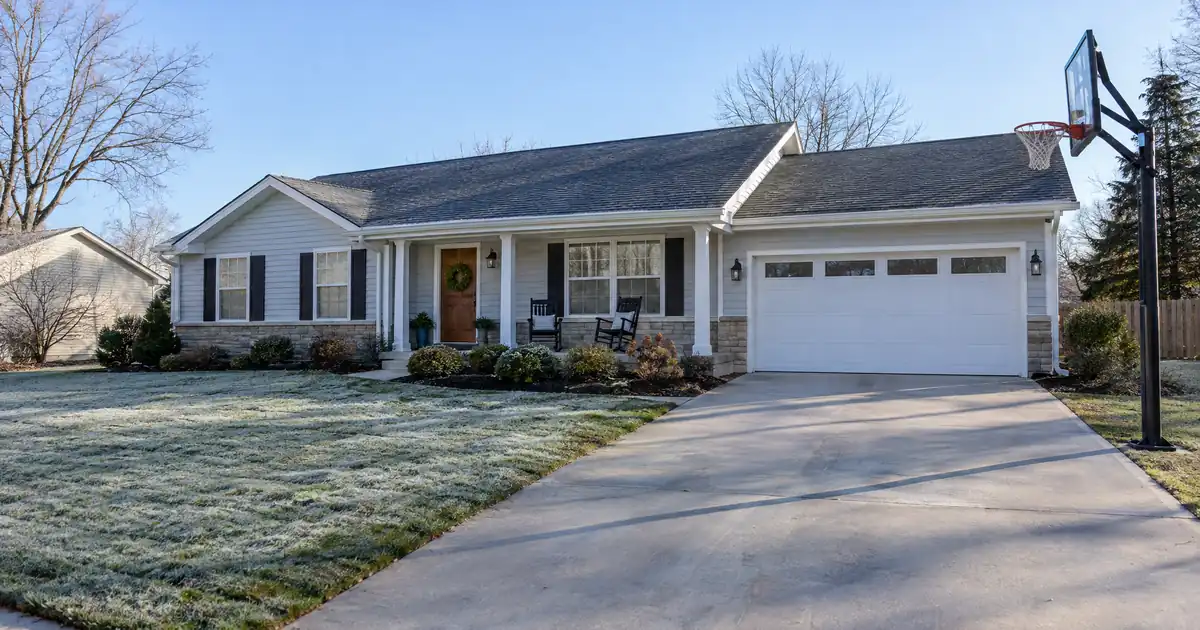
The Quick Read: You can buy a new home with a VA loan while still owning the first one. The benefit is reusable, and what decides the deal is the entitlement you have left, not whether the old house has sold. A lender will also count the old home’s payment against you unless documented rent offsets it. Residual income, the cash left after your monthly obligations, is the test that matters most.
Key Takeaways
- The VA home loan is a lifetime benefit, not a one-time use.
- Full entitlement means 100% financing, no mortgage insurance, and no VA loan limit.
- Remaining entitlement can mean a down payment on the gap.
- Your old payment stays in the math unless an allowed rent offset applies.
- The new home must be one you will actually live in.
- Plan for the case where the old home does not sell on schedule.
Can You Use a VA Loan While You Still Own the First Home?
Yes, in most cases. VA describes the home loan as a lifetime benefit, and VA News says that in many cases you can keep your current home and use remaining entitlement to buy another one to live in.
VA payment estimate
Starting assumptions reflect an example price with no down payment and a first-use funding fee. Replace them with your own figures.
Editable benchmark: 7.32% as of October 22, 2026 · Freddie Mac 30-year average via FRED®. A conventional market reference, not a VA loan quote.
Illustrative starting assumptions: a $350,000 price, no down payment with full entitlement, a first-use funding fee financed into the loan, a thirty-year term at the current Freddie Mac benchmark, and property taxes and insurance estimated at typical national rates. Every field is editable.
Illustrative estimate only — not a Loan Estimate, approval, quote, or commitment to lend. The rate field carries the weekly Freddie Mac thirty-year conventional benchmark, a market reference and not a VA loan quote; your rate is set by the lender at lock. The funding fee follows VA’s published table for the use and down payment entered; the residual-income figure is VA’s guideline for the region and family size, and the rough residual shown subtracts only the housing payment and the debts entered, while VA also deducts taxes, maintenance and utilities. Taxes, insurance and dues are editable estimates; closing costs are not included. Licensed in sixteen states for consumer mortgages. Lendmire is not affiliated with or acting on behalf of the Department of Veterans Affairs.
Entitlement is the amount of loan guaranty VA gives the lender on your behalf. The first VA loan ties up part of it for as long as that loan stays in your name. The part left over is your remaining entitlement. That leftover amount, not the sale of the old house, drives the new purchase.
Here is what a veteran with full entitlement gets across the wholesale programs behind Lendmire’s VA loan programs page: 100% financing with no down payment, as long as the price is not above the appraised value. There is no mortgage insurance of any kind, and no VA loan limit. With remaining entitlement, a down payment may be required. A loan officer can tell you how much for your file.
Think of the sale as one of several ways to free up entitlement, not a requirement. Many veterans who buy again are moving on a work change, a growing family, or a retirement move. Others plan to keep the first home. VA’s own rule of thumb is that the lender wants enough remaining entitlement to cover about one quarter of the new loan before approving it with zero down. Any shortfall is the gap a lender may ask you to cover with cash.
One more point on scope. A second VA loan is not a second home. The loan is for a home you will occupy, and occupancy decides the leverage. Lendmire’s piece VA Loans for Veterans Buying a Second Home: When It Works covers that distinction in more detail.
Which Situation Are You In?
Your situation with the old home sets your entitlement status at the new loan’s closing. Find your row below.
| Your situation | Entitlement at new closing | What the lender looks at |
|---|---|---|
| Old home listed, not sold | Partly tied up | Two payments, remaining entitlement |
| Old home under contract | Still tied up until it closes | Contract, both payments, risk it falls through |
| Keeping the old home as a rental | Partly tied up | Rent offset documentation, residual income |
| Old VA loan paid off, home kept | Restorable once | Restoration request, COE |
| Another veteran assumed the loan | Restored after substitution | Assumption paperwork |
| Old home sold, loan repaid | Full entitlement restored | COE, new purchase only |
The “paid off, home kept” row deserves care. Restoration while keeping the home is a one-time option, and it is a request to VA, not an automatic step. Assumption is a separate route. Another qualified veteran takes over the loan and substitutes their own entitlement.
That covers the three routes in VA’s Home Loan Guaranty Buyer’s Guide: sell and repay, have a qualified veteran assume, or repay the loan while keeping the home once. Which fits you depends on what you plan to do with the first house.
What Happens in the Overlap Period?
The overlap is the stretch when you own two homes, or when one sale and one purchase are both moving. The key question is simple. What is your entitlement status on the day the new loan closes?
Three branches cover most cases.
The sale closes first. The old loan is repaid, and your entitlement is restored once the paperwork reflects it. You are then buying with full entitlement. That is the cleanest path.
The sale closes after the purchase. At the new loan’s closing, the old guaranty is still tied up. The lender works from remaining entitlement and counts the old payment. Restoration follows later, once the sale closes and the loan is repaid.
The sale falls through. You are now carrying two homes, and the new loan was approved on the assumption that one would go. This is the branch people skip when planning. The fix is to build a fallback before you commit.
A pending sale may help a lender’s view of your file, but practice varies. Some files depend on a sale to qualify at all. In VA’s handbook, those are handled as prior approval loans, where the lender must first establish value by appraisal and underwrite under VA’s credit rules. Describe that to your loan officer up front. Do not assume a signed contract removes the old payment from the math.
How Does Remaining Entitlement Set Your Down Payment?
Remaining entitlement caps the loan you can get with nothing down. When it is short, the lender may ask for a down payment on the gap. How much depends on your loan amount and what is left.
Here is the logic in plain steps. Start with your certificate of eligibility (COE), the VA document that shows how much entitlement you have used and how much remains. Above the basic threshold, the available guaranty is a share of the county’s one-unit conforming limit, minus what is still charged to the loan you are keeping. The new loan’s target is a guaranty of about one quarter of the amount borrowed. If your available guaranty falls short of that, the difference is the cash gap.
Do not try to compute this from a county table. County figures change, and a loan officer can run your exact numbers from the COE. Loan limits matter only for partial entitlement. With full entitlement there is no VA loan limit, and the wholesale programs serve amounts up to $4,000,000.
If you want the full mechanics of how entitlement is charged and restored, see Lendmire’s guide VA Loan Entitlement Rules for Veterans Buying Again After Prior Use.
A short example without dollars. Say your first loan used a large share of your entitlement because the house was expensive. You are now shopping for a home at a similar price. The remaining entitlement covers only a slice of what a lender wants guaranteed. The gap is real, and it shows up as a down payment. A smaller purchase price shrinks that gap.
How Does a Lender Underwrite Two Housing Payments?
Lenders underwrite both payments at once. Without an offset, the old payment counts fully against your debt ratio and your residual income. This is the part most online guides skip.
Residual income is the controlling test in VA underwriting. It measures what is left each month after your housing costs, debts, taxes, and a regional living allowance. The 41% debt-to-income figure is a guideline, not a cap. A ratio above it is possible, but it needs residual income well above the standard table. A debt ratio is a quick screen. Residual income is the verdict.
On credit, VA sets no minimum score. The wholesale programs a broker places VA files with start at a 580 decision score, and some lenders set a higher floor of their own. That is a lender choice, not a VA rule.
Now the offset. VA’s Lenders Handbook, Chapter 4 on credit underwriting allows prospective rent from the home you occupied before the new loan to offset that home’s payment. The handbook also says reserves are not needed to offset the mortgage payment on the property you occupied before. Rent counts only against the old payment. It is not extra qualifying income, and rent above the old payment does not add to your income.
If the old home is already a rental, a different rule applies. The lender needs a documented rental history on your tax returns, plus cash reserves. A lender will want to see the lease, proof of rent, and the paper trail.
Lenders also verify debts that are not on your credit report. For those, the handbook calls for a payment history or written verification from the creditor. Expect to document everything you owe.
What the underwriter weighs, in order:
- Remaining entitlement against the new loan amount.
- Both housing payments against income and residual income.
- Whether a documented rent offset applies.
- Appraised value against the contract price.
- Your genuine intent to live in the new home.
What Does It Cost to Buy Again?
Buying again with little or nothing down brings the highest funding fee tier. The funding fee is a one-time charge on the VA loan amount, not the purchase price. It can be paid in cash or financed into the loan. It replaces monthly mortgage insurance, which VA loans do not have.
For subsequent use, the tiers across the wholesale programs are:
| Down payment | Subsequent-use funding fee |
|---|---|
| Less than 5% | 3.3% |
| 5% to under 10% | 1.5% |
| 10% or more | 1.25% |
First-time use is lower at the smallest down payment tier at 2.15%, but the 1.5% and 1.25% tiers are the same. Veterans receiving VA compensation for a service-connected disability do not pay the fee, along with the other exempt groups. VA’s funding fee page explains the exemption and confirms the fee applies to the loan amount. Confirm the current table there before you plan, since figures are subject to lender guidelines and your full file review.
Notice what a larger down payment does. If entitlement is short and you must put cash down to cover the gap, that cash may also move you into a lower fee tier. Two costs shrink at once.
Other costs stay. Appraisal, title, and prepaid items still apply with no down payment. Your Loan Estimate and Closing Disclosure show them. Compare the two documents line by line to see whether any fee changed.
Appraisal matters more when you are stretching. The contract should include VA’s required clause, which lets you walk away if the appraisal comes in below the price. If it does not appraise, you bring cash for the difference or renegotiate with the seller. A buyer already covering an entitlement gap can be caught twice by a low appraisal.
Tax treatment can depend on your situation; borrowers should speak with a qualified tax professional before relying on any deduction or credit.
Where the General Rule Breaks
The general rule is that buying again works if entitlement and residual income support it. These edge cases bend it.
Unpaid debt to VA. Entitlement cannot be restored while a debt to VA is unpaid. The handbook is direct on this. Clear the debt first.
One-time restoration is used once. If you repay the old loan and keep the home, you cannot repeat that trick on the next one.
Assumption needs a qualified buyer. The assuming veteran must qualify too, on occupancy, income, and credit. Do not count on a buyer assuming the loan until the file is approved.
Multi-unit purchases. If the new home has several units, rent from the units you will not occupy can count, but only with a reasonable likelihood of success as a landlord and reserves. The rules are stricter than for a single-family home. For a single-family home with a temporary boarder, reserves are not required and all of that income may be used. Your loan officer will confirm what applies.
Occupancy is real. You certify that you will live in the new home. A false certification carries serious consequences. Some lenders also set their own waiting periods or practices. Ask about them early.
Active-duty moves. If duty keeps you from moving in, ask the lender how occupancy can be met through a spouse or dependent child. Rules here have detail, so get it in writing.
Loan limits bite only on partial entitlement. They are tied to county conforming limits. With full entitlement they do not apply.
What If the First Home Does Not Sell?
Build the fallback before you sign. A VA purchase approved on the assumption of a sale can turn into two payments for months.
Three fallbacks to price out:
- Convert to a rental. Rent can offset the old payment under the handbook rule, but only with documentation. Talk to your lender before you list the home, so the file is built correctly.
- Cover a larger cash gap. If entitlement stays tied up, a down payment may be needed on the new loan. Know that number in advance.
- Repay the old loan and keep the home. That uses the one-time restoration, if you can pay off the balance. It frees entitlement without a sale.
Also ask a plain question. If the sale slips, can your monthly budget carry both homes on residual income alone? If the answer is no, a smaller new purchase is safer than a bridge you cannot cross. That is a judgment call, and it is yours.
Your Step-by-Step Plan
1. Pull your COE and read the entitlement used and remaining.
2. Decide what happens to the old home: sell, rent, or pay off and keep.
3. Talk to a loan officer before making offers. Ask how the old payment would be treated.
4. Get an estimate of any entitlement gap and the funding fee tier.
5. Write the VA clause into your contract so an appraisal shortfall does not trap you.
6. Gather documents (list below) and submit the file.
7. Compare your Loan Estimate to your Closing Disclosure before closing.
8. File for restoration once the old loan is repaid, if applicable.
- Certificate of eligibility
- Listing agreement or sale contract on the old home
- Lease and proof of rent, if renting it out
- Tax returns, if the old home is already a rental
- Statements for the old mortgage and other debts
- Occupancy certification for the new home
Key Terms Defined
Entitlement: The amount of loan guaranty VA gives a lender on your behalf, charged against your benefit when you use a VA loan.
Remaining entitlement: The portion still available after a prior VA loan has used part of it.
Certificate of eligibility (COE): The VA document that shows your eligibility, entitlement used, and funding fee exemption status.
Residual income: The money left each month after housing, debts, and taxes. It is the controlling VA underwriting test.
Restoration: The process of getting used entitlement back, usually after the old loan is repaid and the home sold.
Notice of Value (NOV): VA’s appraisal result, which sets the value the loan is measured against.
Frequently Asked Questions
Can I have two VA loans at once?
Yes, if you have enough remaining entitlement and meet the occupancy and income rules on the new loan. The first loan keeps part of your guaranty tied up. The lender will want to see that you can carry both payments, or that a documented offset applies.
Do I have to sell the first home before I buy again?
No. Selling is one route to getting full entitlement back, but it is not required. You can keep the home and use remaining entitlement. A down payment may be required if what remains is short.
Can I use a VA loan to buy a vacation home?
No. The loan is for a home you will live in, and occupancy decides the leverage. A second VA loan is for your next primary residence, not a second property.
Can I get my entitlement back without selling?
Once, yes. If you repay the old VA loan in full and keep the home, VA allows a one-time restoration. It is a request, not automatic, and it is blocked while a debt to VA is unpaid.
Does the funding fee apply when I buy again?
Yes, unless you are exempt. Subsequent use with less than 5% down carries 3.3%. Higher down payment tiers carry 1.5% and 1.25%. Veterans receiving compensation for a service-connected disability do not pay it, subject to lender guidelines and full file review.
Next Step
If you are buying a home and want to see whether a VA loan fits your file, Lendmire can help you compare the options and what each one asks of the file. Nothing here is a commitment to lend, and your entitlement, income, and appraisal decide the outcome. The loan officer’s job is to find out before you make an offer, not after.
For your own numbers, request a scenario review with Lendmire.
About Lendmire
Lendmire is a mortgage brokerage (NMLS# 2371349) licensed for consumer mortgage lending in 16 states, arranging FHA, VA, conventional and jumbo purchase and refinance loans through a wholesale lending network. Eligibility is determined by the lender on each file. Scotsman Guide named Lendmire a Top Mortgage Workplace in both 2025 and 2026.
Get Started
Ready to find the right loan for you?
In about two minutes you can review financing options available for your home or investment property. No commitment required.
Informational only. Not a Loan Estimate, approval, or commitment to lend. Program availability and eligibility are subject to lender guidelines, credit approval, property review, and underwriting.
References
1. VA News: Veterans can use their VA home loan benefit more than once
2. VA Home Loan Guaranty Buyer’s Guide
3. VA Lenders Handbook, Chapter 4: Credit Underwriting
4. VA funding fee and closing costs
This article is part of Lendmire’s VA loan program — full qualification details, guidelines, and scenarios live on the program page.
Related reading: Do VA Loans Require Homeowners Insurance? · VA Loan vs Conventional Loan for a Second Home Buyer · VA Loans for Veterans Shopping for a Condo Instead of a House
Brandon Miller
Founder & CEO, Mortgage Loan Originator, Lendmire LLC
- Mortgage Loan Originator · NMLS# 1129696 · Verify on NMLS Consumer Access
- North Carolina Real Estate Broker · License# 343312 · Verify on NCREC
- North Carolina Insurance Producer · License# 19053198 · Property, Casualty, Life, Health · Verify on NAIC SBS
- Lendmire LLC · Firm NMLS# 2371349 · Verify firm licensure
Legal disclosures. Lendmire (NMLS# 2371349) is a state-licensed mortgage brokerage that arranges financing through wholesale lender relationships. Lendmire is not a direct lender, depository institution, or registered financial advisor. The discussion above is general informational content about real estate financing — it is not financial, legal, or tax advice, and readers should consult licensed professionals for guidance on their individual circumstances. Loan inquiries are subject to lender underwriting; this article does not represent a commitment to lend. Loan terms, rates, and qualification standards vary by borrower, property, and state, and are subject to change at any time. Equal Housing Opportunity. NMLS Consumer Access: nmlsconsumeraccess.org.