
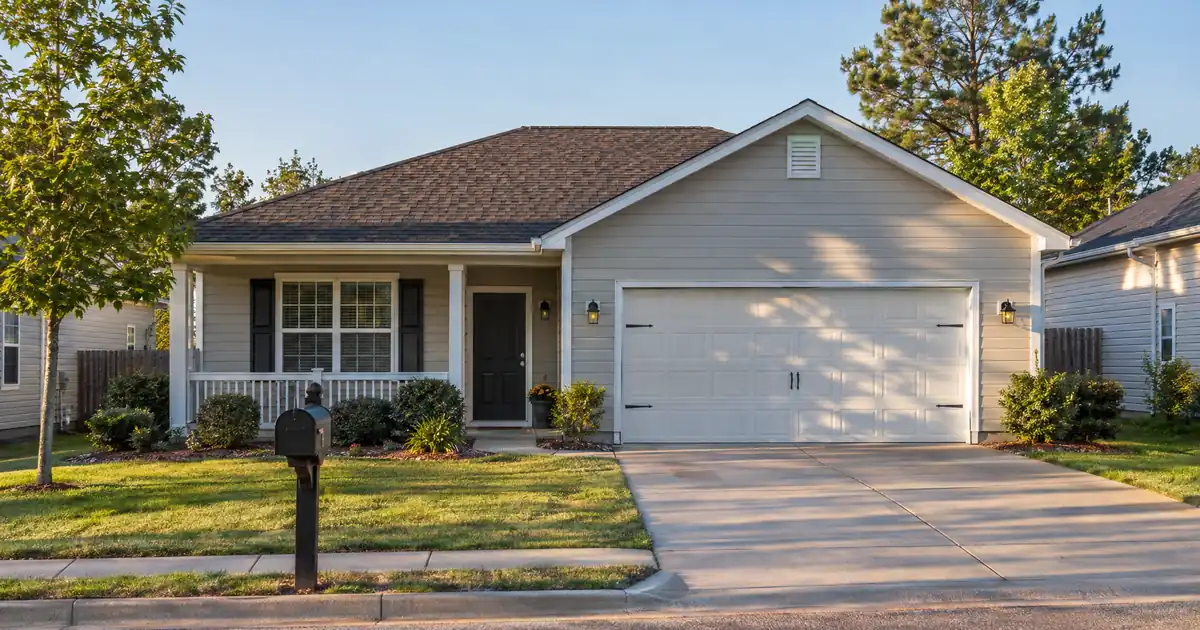
The Quick Read: An appraiser values your home by comparing it to similar homes that recently sold, adjusting for the differences, and settling on one opinion of market value. That value sets a ceiling on your new loan. On a cash-out refinance, the ceiling is a percentage of the value, so a lower number means less cash. Sometimes a data-based waiver replaces the appraisal, but a full appraisal is common on cash-out files.
What Does the Appraiser Actually Do?
The appraiser gives the lender a point-in-time opinion of what your home would sell for. The FDIC describes an appraisal in just those terms. The lender then compares that value to the loan you requested to decide whether the home gives enough protection if the loan goes bad.
Cash-out refinance estimate
The starting figures are an example value with a balance and a cash request in proportion. Replace them with yours.
Editable benchmark: 7.40% as of October 15, 2026 · Freddie Mac 30-year average via FRED®. A conventional market reference, not a cash-out refinance quote.
Illustrative starting assumptions: a $350,000 home value, a $193,000 current balance, the agency cap on a one-unit principal residence, a thirty-year term at the current Freddie Mac benchmark, and property taxes and insurance estimated at typical national rates. Every field is editable.
Illustrative estimate only — not a Loan Estimate, approval, quote, or commitment to lend. The rate field carries the weekly Freddie Mac thirty-year conventional benchmark, a market reference and not a cash-out refinance quote; a cash-out loan is priced by the lender at lock. The cash available is the loan the program cap allows less the balances paid off, before closing costs, which are not included. The HELOC line is the program’s combined loan-to-value ceiling applied to the same value and balance. Taxes and insurance are editable estimates. Licensed in sixteen states for consumer mortgages.
The appraiser is not on your side or the lender’s side. The job is a neutral, credible opinion. You will not get a number just because you need one to make the loan work.
Cash-out files lean on this harder than other refinances. A refinance mostly swaps one loan for another. A cash-out puts new money in your hand, so the lender wants firm proof of the equity behind it.
Key Terms Defined
Appraised value: The appraiser’s opinion of what your home would sell for on the date of the report.
Comparable sale (comp): A recently sold home similar to yours, used as evidence of value.
Adjustment: A dollar change the appraiser makes to a comp’s price to account for a difference from your home, such as size or condition.
Loan-to-value ratio (LTV): Your loan balance divided by the home’s value. A higher LTV means less equity cushion.
Combined LTV: Your LTV counting every loan against the home, including a second mortgage that stays in place.
Reconsideration of value: A request, made through your lender, asking the appraiser to review the report for errors or better comps.
How Does the Valuation Process Work, Step by Step?
Most appraisals follow the same sequence. The details change with the valuation type, which I cover below.
1. The lender chooses the valuation path. The automated underwriting system decides whether your loan needs a traditional appraisal, a hybrid, a desktop version, or can use a waiver. On cash-out files, a full appraisal is common.
2. The appraiser inspects the home. In a traditional appraisal, the appraiser walks the property. They measure, count rooms, and note condition, quality, and updates. In a hybrid appraisal, a trained third-party data collector gathers the property data and passes it to an appraiser. A desktop appraisal does not include a current inspection of the home by the appraiser.
3. The appraiser picks comparables. The Fannie Mae Selling Guide says comps should have similar physical and legal characteristics: site, room count, finished area, style, and condition. It points to sales from the last 12 months, but says the best comps may be older. If similar sales are scarce, the appraiser can widen the search. They must then explain why.
4. The appraiser makes adjustments. Say your comp has a finished basement and yours does not. The appraiser lowers that comp’s price to match your home. Under the Selling Guide’s adjustment rules, adjustments must reflect how the market reacts to each difference. A rule of thumb for square footage is not good enough when market evidence says otherwise. If adjustments get large, the underwriter has to decide whether the value is really supported.
5. The appraiser reports the sales history. The report covers three years of sales history on your home and twelve months on each comp. A recent quick flip or a big price jump draws questions.
6. The appraiser reconciles. This is the step most explainers skip. After adjusting, the comps rarely land on the same number. The appraiser weighs them, leaning on the ones most like your home and needing the fewest adjustments. The final value is a judgment from that range, not an average.
7. The underwriter reviews the report. The lender checks that the value is credible and that the property’s condition fits the loan program.
What Moves the Value (and What Doesn’t)?
Size, bedroom and bathroom count, lot, location, quality of construction, and condition all move the number. Real updates matter too, such as a kitchen, a roof, or added finished space. Comps carry the most weight, because they show what buyers actually paid.
Plenty of things don’t move it much. A fresh coat of paint in one room, staging, and a pile of small cosmetic touches rarely change the number. Deferred maintenance, though, can pull it down.
Online estimates and tax assessments are not appraisals either. They are model outputs. The appraiser’s own market-based adjustments are what count, and Fannie Mae’s guidance is clear that formula shortcuts are not appropriate.
Here is something many homeowners miss. An appraiser is not a home inspector. The appraiser reports condition as it affects value and marketability. They do not test the furnace or open the walls. A home can have problems that never show up in the appraisal. And a problem that does show up may become a repair condition rather than a lower number, depending on the loan program.
How Does Appraised Value Become Your Cash?
The program sets a maximum LTV for your occupancy and property type. Your loan amount is the lesser of what you asked for and that percentage of the appraised value. Then your payoff, closing costs, and any other liens come out of that room. What’s left is your cash.
Across the wholesale conventional programs I place files with, a one-unit principal residence cash-out goes to 80% LTV, and two- to four-unit principal residences, second homes, and investment property go to 75%. That matches Fannie Mae’s eligibility matrix. These limits are subject to lender guidelines and full file review.
Run it with percentages. Say you own a one-unit home you live in, and the appraisal supports the value you expected. At an 80% ceiling, you can borrow up to 80% of that value. Your existing mortgage and costs fill part of that room, and you get the rest. Now say the appraiser lands 5% lower. The ceiling drops with it, and the whole reduction comes out of your cash, because your payoff doesn’t shrink. A small gap in value can cut cash a lot, or wipe it out if your equity was already thin.
Other loans that stay on the home count too. A second mortgage you keep counts toward combined LTV. If it’s large, it eats room under the cap.
Mortgage insurance enters when LTV goes above 80%. It lets you request cancellation at 80% of the original value and ends automatically at 78%, under the Homeowners Protection Act. Most cash-out files sit at or below the 80% cap, so this matters more on rate-and-term files. One wholesale lane I use reaches 89.99% LTV with no mortgage insurance, at a 680 score and a 50% ratio, on a thirty-year fixed primary residence with a conforming balance. It carries its own seasoning, and it is not written on Texas homesteads, where the state constitution caps cash-out. Final terms depend on lender guidelines, property type, leverage, and the borrower’s complete credit picture.
Where the Standard Rule Breaks
Occupancy and unit count change the ceiling, as above. A few other edge cases change how the appraisal works at all.
Appraisal waivers. Fannie Mae’s value acceptance can accept the lender’s submitted value so no appraisal is ordered. Freddie Mac has a similar tool. On cash-out files, waivers are less common, and an offer can disappear if the loan’s characteristics change or an appraisal is obtained before closing. Property type, value, occupancy, and condition can all force a full appraisal. Your lender tells you which path applies.
Manufactured homes. Single-width manufactured homes are a hard case for cash-out. Fannie Mae’s manufactured housing rules limit cash-out on them more tightly than on other property types, so a borrower with one should not plan around a standard cash-out. Ask your lender early whether your home qualifies at all, since eligibility depends on lender guidelines and full file review.
Unusual properties. For mixed-use or odd homes, the appraiser has to show marketability using older sales, competing neighborhoods, and other market data. These appraisals take more judgment, and the results can be less predictable.
FHA cash-out. The old 85% FHA cap is gone. HUD’s Handbook 4000.1 transmittal records the maximum LTV and CLTV on cash-out refinances at 80 percent. Plenty of older articles still print the 85% figure.
FHA Streamline and VA IRRRL are not cash-out. On the FHA Streamline of an existing FHA loan, I see no appraisal and a limited credit review, with a net tangible benefit test. The VA IRRRL for an existing VA loan has no VA appraisal, a 0.5% funding fee unless you’re exempt, and seasoning of the later of 210 days and six payments. Neither one pays out your equity. A VA cash-out is a different loan and needs a VA appraisal. VA’s rules on that are best confirmed with VA directly.
Seasoning. Conventional cash-out generally wants the loan being paid off to be at least 12 months old, note date to note date, and a borrower on title for six months. Delayed financing, inheritance, and legal-award exceptions exist. Fannie Mae’s cash-out section covers them. A home listed for sale must come off the market on or before the new loan’s disbursement date. Where your DTI ratio runs above 45%, expect six months of reserves on automated files.
Paid-off homes. With no payoff, the whole cash-out is new money against the value. The appraisal works the same way. The only difference is more room under the cap.
What If the Number Comes in Low?
You have options, and the first is to read the report. Check the square footage, room count, and any features the appraiser missed. A factual error is the most winnable dispute.
Next, ask your lender about a reconsideration of value. Only your lender can send the request to the appraiser, so you go through them. HUD’s PAVE page on reconsideration of value says a request can identify inaccuracies, such as miscalculated square footage or room count. You can also point out comps you think were missed. Process and timing vary by lender and loan type. Lenders decide whether to forward the request, and the appraiser can stand by the original number.
If the value holds, you have three practical choices:
- Take a smaller cash-out that fits under the new ceiling.
- Wait and revisit when the market or your equity has changed.
- Skip the cash-out and keep your current loan.
You are also entitled to a free copy of the appraisal. Lenders must give it to you promptly after it’s completed, and the exact timing can vary by file and lender. The lender also has to tell you about this right early in the process. If the loan falls through, you still get the copy.
If the value comes in high, great, but a higher value doesn’t promise more cash. Credit, income, occupancy, payment history, and the program ceiling all still count.
How Do You Prepare?
Prepare the facts, not the staging. A short checklist:
- Fix visible deferred maintenance, such as a leaking roof or broken windows.
- Write down real improvements and their dates, such as a new roof or a finished basement.
- Make sure the appraiser can reach every area.
- Note any comps you know of that are truly similar, in case you need them for a reconsideration.
- Don’t count on small cosmetic changes to move the number.
Tax treatment can depend on your situation; borrowers should speak with a qualified tax professional before relying on any deduction or credit.
Frequently Asked Questions
Does a cash-out refinance always need an appraisal?
Not always, but often. Waivers and data-based alternatives exist, and streamlines skip the appraisal. Cash-out files are more likely to need a full one, since the lender has to confirm the equity. Your lender can tell you which path your file gets.
Does the appraiser work for me or the lender?
Neither. The lender orders the appraisal, but the appraiser is expected to give an unbiased opinion of market value. MyCreditUnion.gov notes that appraisers are legally bound to give an unbiased estimate.
Can I challenge a low appraisal?
Yes, through a reconsideration of value, which your lender submits. The best evidence is a factual error or stronger comparable sales. The outcome isn’t guaranteed.
Will my online estimate match the appraisal?
Often it won’t. Online estimates are model outputs. The appraiser inspects the home, picks comps, and makes market-based adjustments for the differences.
Does a high appraisal guarantee more cash?
No. The program ceiling is a maximum, not a promise. Your credit, income, occupancy, and payment history all enter the review.
Ready to See What Your Equity Reaches?
If you are weighing a cash-out refinance against keeping the loan you have, Lendmire can help you compare the programs and the equity each one reaches. You can start with the cash-out refinance programs page. Lendmire’s piece What Is The Best Bank To Cash Out Refinance My Home is a useful next read. Program figures are subject to lender guidelines and full file review, and nothing here is a commitment to lend.
For your own numbers, request a scenario review with Lendmire.
About Lendmire
Lendmire — NMLS# 2371349 — is a mortgage broker that arranges FHA, VA, conventional and jumbo home purchase and refinance financing in 16 states through wholesale lenders. Every option is subject to the lender’s guidelines and full underwriting. Scotsman Guide named Lendmire a Top Mortgage Workplace in both 2025 and 2026.
Get Started
Ready to find the right loan for you?
In about 30 seconds you can review financing options available for your home or investment property. No commitment required.
Informational only. Not a Loan Estimate, approval, or commitment to lend. Program availability and eligibility are subject to lender guidelines, credit approval, property review, and underwriting.
References
1. The FDIC
2. Fannie Mae hybrid appraisal fact sheet
3. Fannie Mae Selling Guide B4-1.2-02 (desktop)
4. Fannie Mae Selling Guide B4-1.3-08, comparable sales
5. Selling Guide’s adjustment rules
6. Fannie Mae Selling Guide B4-1.3-07
7. Fannie Mae eligibility matrix
8. Fannie Mae FAQs: Property Valuation
9. HUD Handbook 4000.1 transmittal
10. Fannie Mae Selling Guide B2-1.3-03, cash-out refinance transactions
This article is part of Lendmire’s cash-out refinance program — full qualification details, guidelines, and scenarios live on the program page.
Related reading: Can You Refinance and Take Cash Out on a Second Home? · Does a Cash-Out Refinance Require a New Home Appraisal? · Can a Cash-Out Refinance Go Up to Nearly Full Home Value?
Brandon Miller
Founder & CEO, Mortgage Loan Originator, Lendmire LLC
- Mortgage Loan Originator · NMLS# 1129696 · Verify on NMLS Consumer Access
- North Carolina Real Estate Broker · License# 343312 · Verify on NCREC
- North Carolina Insurance Producer · License# 19053198 · Property, Casualty, Life, Health · Verify on NAIC SBS
- Lendmire LLC · Firm NMLS# 2371349 · Verify firm licensure
Required disclosures. Lendmire (NMLS# 2371349) operates as a licensed mortgage broker, not a direct lender or depository. The discussion in this article is general in nature and should not be relied upon as financial, legal, or tax advice — every investment scenario is unique and should be reviewed by a qualified professional. Any loan inquiry is subject to lender underwriting, and this article is not a commitment to lend or a guarantee of approval. Mortgage rates, loan terms, and program guidelines vary by borrower, property, and state, and may change without notice. Equal Housing Opportunity. Verify licensure at NMLS Consumer Access.