
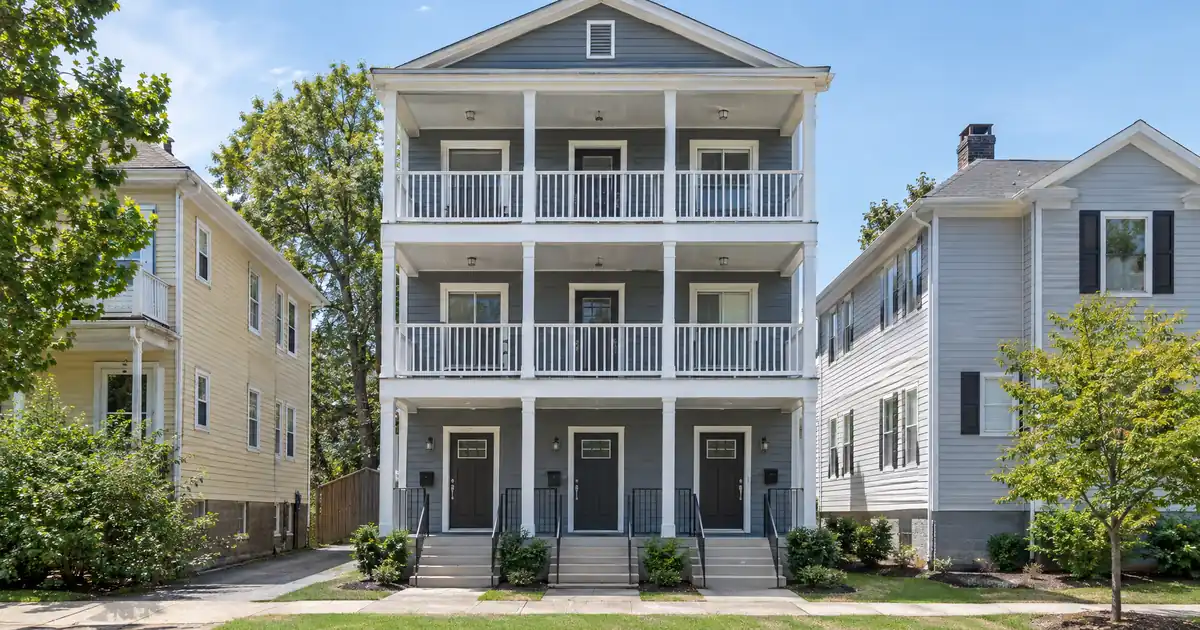
The Quick Read: Yes, if you live in one of the units. VA ties cash-out refinancing to occupancy, not to the number of units. A duplex, triplex, or fourplex where you live in one unit can work, subject to lender guidelines and full file review. A building you have moved out of cannot use the cash-out. It can only use the VA streamline, and that pays no cash.
What Does VA Actually Require?
VA requires three things for a cash-out: a Certificate of Eligibility, credit and income that meet VA and lender standards, and living in the home being refinanced. Per the VA.gov cash-out refinance page, all three must be true.
Notice what is missing. Nothing in that list says “single-family.” VA’s own description of the cash-out is a refinance of the first mortgage on the home you currently own and occupy. The rule is occupancy-based.
Here is the practical read on units. VA guarantees loans on one-to-four-unit residential buildings when the veteran occupies one of them. A fifth residential unit falls outside that. The exact unit-count wording lives in VA’s Lenders Handbook, and the lender confirms it against your specific building. A building with a storefront or other business space adds conditions, so say so up front if yours has one.
Lendmire arranges these loans through wholesale lenders, and the VA cash-out refinance program is built around that same owner-occupant test.
What Counts as “Living There” in a Multi-Unit?
You live in one unit, and the others can be rented to tenants. That is the whole picture. Picture a fourplex where you occupy unit A and three tenants rent the rest. That is a primary home with rental income attached, not an investment property.
The occupancy rule is a legal statement. You certify at the file level that the home is your residence. The lender documents it the way it documents any primary residence: your ID, your mailing address, your utility bills, and your credit file all pointing to the same place.
Active-duty members get one allowance. VA’s home loans page says occupancy can be satisfied by a spouse or dependent for service members. A deployment or a move under orders does not automatically sink the file.
Here is how common situations line up:
| Your situation | VA cash-out? |
|---|---|
| Live in one unit, rent the others | Yes, on the occupancy test |
| Active duty, spouse or dependent lives there | Possible, per VA’s occupancy language |
| Moved out, building now fully rented | No. IRRRL may still work |
| Never lived there | No |
| Building has five or more residential units | No |
Why a Fully Rented Building Is a Dead End
A fully rented 2-4 unit, a second home, or an investment property does not qualify for the cash-out. VA requires that you live in the home. No exceptions are built into that sentence.
Say you bought a triplex with a VA loan, lived upstairs for three years, then moved across the state for work. The cash-out is closed to you now. The tool that may still apply is the IRRRL, the VA streamline. It is “VA to VA” only, meaning it requires an existing VA-backed loan on the property. It lowers a rate or switches adjustable to fixed. It takes no cash out.
Across the wholesale programs placed through Lendmire, the IRRRL carries a net tangible benefit test and a seasoning wait: the later of 210 days from the first payment and the sixth payment. It involves no VA appraisal and carries a 0.5% funding fee unless you are exempt. Its occupancy test is looser, because past occupancy can be enough. That is why a veteran who left a multi-unit can still use the streamline. The cash-out is not an option.
How Does the Loan Work Step by Step?
The cash-out is a new first mortgage that replaces your existing loan. It is not a second lien. The new loan pays off the old one, and the difference comes to you as cash.
1. Certificate of Eligibility. The lender can pull it, or you can get it through VA.gov or by mail. VA’s COE decides eligibility, and VA’s rules govern the service requirements.
2. Full underwriting. Credit, income, and residual income are all reviewed. Residual income is the money left each month after major obligations. It is the controlling test.
3. Occupancy certification. You certify that you live in the home.
4. VA appraisal. The appraisal sets the reasonable value that caps the loan. It also checks the property against VA minimum property requirements. On a multi-unit, expect every unit to matter.
5. Net tangible benefit. The new loan has to improve your position in a way VA recognizes.
6. Closing. You are on title, and the new loan sits in first position.
TRID applies here, so you will see a Loan Estimate and a Closing Disclosure. Compare them line by line.
How Much Can You Borrow?
The VA cash-out reaches 100% of the appraised value, including the financed funding fee. No mortgage insurance applies. With full entitlement there is no VA loan limit, and the wholesale programs Lendmire places with start at a 580 decision score. VA sets no minimum credit score itself.
The regulation at 38 CFR 36.4306 sets the ceiling: the new loan cannot exceed 100% of the reasonable value VA determines. The funding fee can be financed. Any part that pushes the loan past 100% must be paid in cash at closing.
Entitlement matters when yours is partly used. VA’s formula for remaining entitlement is 25% of the county loan limit, reduced by entitlement used and not restored. If your remaining entitlement is not enough to cover the loan, a down payment may be required. Speak with a loan officer for how that applies to your county.
What Is the Funding Fee on a Cash-Out?
The funding fee is a one-time VA charge that can be rolled into the loan. On a cash-out refinance it is 2.15% for first use and 3.3% for later use. It is waived for veterans receiving compensation for a service-connected disability and for the other exempt groups. VA’s funding fee page lists the exemptions.
VA also warns that closing costs can add up to thousands of dollars. Budget for them, and read the Closing Disclosure for the real numbers.
What Is the Net Tangible Benefit Test?
The net tangible benefit test asks one question: does this new loan actually help you? The regulation lists the ways it can. The new loan meets at least one of these criteria:
- It eliminates monthly mortgage insurance.
- It has a shorter term.
- It has a lower rate.
- It has a lower payment.
- It raises monthly residual income.
- It refinances an interim construction loan.
- It stays at or below 90% of reasonable value.
- It converts an adjustable-rate mortgage to a fixed rate.
The lender must also give you a comparison of the old and new loan terms. The cash-out carries this test and the same seasoning as the streamline when you are refinancing a VA loan. Seasoning is the waiting period between your first payment and the refinance.
A simple picture: you hold an adjustable-rate loan on your duplex. A cash-out that moves you to a fixed rate meets the test by that criterion alone. A cash-out that raises your payment, lengthens your term, and leaves you above 90% of value has no box to check.
How Does Rent From the Other Units Count?
Rental income can help you qualify, but only under VA and lender underwriting rules. It does not count automatically. How much counts, and what proof is needed, is a lender and VA question.
Expect a lender to look at leases and the appraiser’s rent figures for the other units. Some lenders also ask for reserves when rent is used to qualify. Reserves are savings left over after closing. Cash-out proceeds typically cannot be counted as those reserves. Requirements differ by lender, so ask early.
Here is where the occupancy rule bites in practice. A lender will not treat the rent as the point of the loan. You are the borrower, the home is your residence, and the rent is one piece of the income picture.
What Happens at the Appraisal?
The VA appraiser sets the reasonable value that caps your loan. On a multi-unit, the property has to meet minimum property requirements across the building. Deferred maintenance in a rented unit can hold up the whole file. A vacant unit can raise questions about what you are asking the appraiser to value.
Walk the building before the appraiser does. Fix what is obvious.
Moving Out, Deployment, and Other Edge Cases
- Active duty and a move under orders. VA’s page allows a spouse or dependent to supply the occupancy.
- Non-VA loan today. A cash-out can refinance a conventional or FHA loan into a VA-backed loan. You do not need an existing VA loan.
- Construction-to-permanent. VA Circular 26-19-05 says the cash-out rules cover refinancing of construction loans.
- Recoupment. For VA-to-VA refinances, the regulation addresses a 36-month recoupment period for fees and charges.
- Cash-out types. The same circular defines Type I, which does not exceed the payoff of the old loan including the fee, and Type II, which does.
If you do not live in the property, the VA cash-out does not apply.
VA Cash-Out vs. Other Ways to Pull Equity
This one is a genuine tradeoff. Compare the options for an owner who lives in one unit of a 2-4 unit building.
| Option | Replaces your first loan? | Occupancy needed |
|---|---|---|
| VA cash-out | Yes | Yes, you live there |
| HELOC | No, adds a second lien | Depends on lender |
| Conventional cash-out | Yes | Depends on lender and unit count |
The VA cash-out can reach 100% of value with no mortgage insurance. That is its edge. The cost is a new first mortgage with new terms, plus a funding fee unless you are exempt. A HELOC leaves your current first loan alone. That matters if your current loan is one you want to keep.
Where Files Go Wrong
- Occupancy is not honest or not documented.
- Entitlement on the COE is not what the borrower assumed.
- Credit or residual income falls short.
- The appraised value comes in below the payoff plus fee.
- No net tangible benefit criterion is met.
- One unit fails minimum property requirements.
A document checklist for a multi-unit file: your COE, current mortgage statement, proof of occupancy, leases for rented units, proof of homeowner’s insurance, and recent pay records. Your lender will add to this list.
Key Terms Defined
Certificate of Eligibility (COE): VA’s document confirming you qualify for the home loan benefit and showing your entitlement.
Entitlement: The amount VA guarantees on your behalf, which affects how much you can borrow without a down payment.
Residual income: Monthly income left after taxes, debts, and living costs. VA treats it as the controlling test.
Net tangible benefit: A measurable improvement a refinance must give you.
IRRRL: The VA streamline refinance of an existing VA loan. It takes no cash out.
Funding fee: A one-time VA charge that can be financed into the loan and is waived for exempt veterans.
Frequently Asked Questions
Can I use a VA cash-out if I rent out the other units?
Yes, as long as you live in one unit. Rent from the others can help you qualify under underwriting rules. It does not count automatically, and some lenders ask for reserves when rent is used.
What if I deploy or get new orders?
VA allows a spouse or dependent to supply the occupancy for active-duty members. Talk with the lender before you apply so your situation is documented correctly.
Can I cash out on a fourplex I already moved out of?
No. The cash-out requires that you live in the home. The IRRRL may still work if the building carries a VA loan, but it pays no cash.
Does the current loan have to be a VA loan?
No. A VA cash-out can refinance a conventional or FHA loan into a VA-backed one. A VA loan is needed only for the IRRRL.
Do I need a VA appraisal on a cash-out?
Yes. The appraisal sets the reasonable value that caps the loan, and it checks the property against VA standards. The no-appraisal shortcut belongs to the IRRRL.
Tax treatment can depend on your situation; borrowers should speak with a qualified tax professional before relying on any deduction or credit.
If you are weighing a cash-out refinance against keeping the loan you have, Lendmire can help you compare the programs and the equity each one reaches. Every figure here is subject to lender guidelines and full file review, and nothing here is a commitment to lend.
For your own numbers, request a scenario review with Lendmire.
About Lendmire
Lendmire (NMLS# 2371349) is a mortgage brokerage serving homeowners and home buyers in 16 states. FHA, VA, conventional and jumbo purchase and refinance loans are arranged through wholesale lending channels; Lendmire brokers the financing and the lender underwrites each application. Scotsman Guide named Lendmire a Top Mortgage Workplace in both 2025 and 2026.
Get Started
Ready to find the right loan for you?
In about 30 seconds you can review financing options available for your home or investment property. No commitment required.
Informational only. Not a Loan Estimate, approval, or commitment to lend. Program availability and eligibility are subject to lender guidelines, credit approval, property review, and underwriting.
References
1. VA.gov: Cash-out refinance loan
2. VA Purchase & Cash-Out Refinance page
This article is part of Lendmire’s VA Loans series — every loan program’s qualification details, guidelines, and scenarios live on the loan options page.
Related reading: VA Cash-Out vs. a Second Lien for a Lock-in Veteran Homeowner · VA Cash-Out vs Conventional Cash-Out When the Home Is Worth Far More · How to Use a VA Cash-Out on an Existing VA Loan for the Next Home
Brandon Miller
Founder & CEO, Mortgage Loan Originator, Lendmire LLC
- Mortgage Loan Originator · NMLS# 1129696 · Verify on NMLS Consumer Access
- North Carolina Real Estate Broker · License# 343312 · Verify on NCREC
- North Carolina Insurance Producer · License# 19053198 · Property, Casualty, Life, Health · Verify on NAIC SBS
- Lendmire LLC · Firm NMLS# 2371349 · Verify firm licensure
Disclosure information. Lendmire is a state-licensed mortgage brokerage under NMLS# 2371349. Lendmire is not a depository institution, direct lender, or financial advisor — all loans referenced are placed through wholesale lender partners and are subject to each lender's underwriting standards. This article is provided for general informational purposes and is not a commitment to lend, nor does it constitute financial, legal, or tax advice. Loan programs, terms, rates, and qualification standards change without notice and depend on borrower profile, property type, and the state in which the subject property is located. Equal Housing Opportunity provider. NMLS Consumer Access: nmlsconsumeraccess.org.