
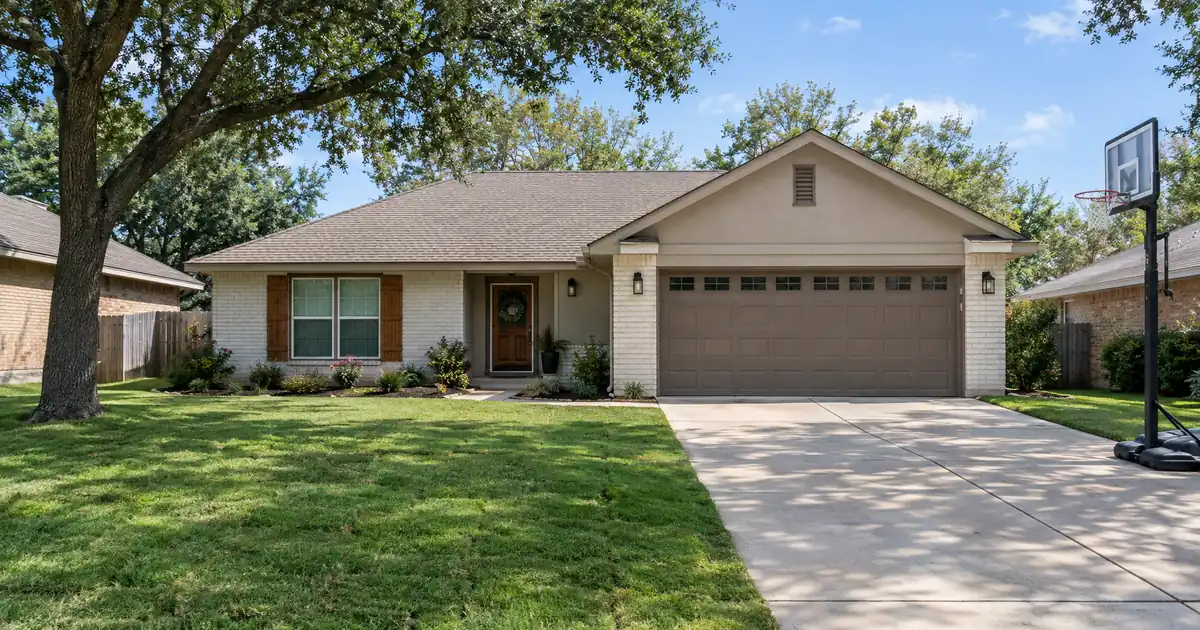
The Quick Read: Usually no. Texas homestead law blocks a VA cash-out refinance on the home you live in, so the program that works in other states generally isn’t available here. A veteran who wants cash from a Texas homestead typically uses a Texas-style equity loan or line instead, and a veteran who only wants a lower cost can often still refinance without taking cash.
How Does a VA Cash-Out Work Everywhere Else?
Outside Texas, a VA cash-out refinance replaces your current mortgage with a larger VA-backed loan and hands you the difference. The current loan can be any type: conventional, FHA, or VA. It doesn’t have to be a VA loan already.
Lendmire’s VA cash-out refinance program page covers the full mechanics. Here is the short version, based on the wholesale programs Lendmire places VA loans with:
- Leverage: The loan can reach 100% of the appraised value, including the financed funding fee.
- Mortgage insurance: None. VA loans don’t carry monthly mortgage insurance.
- Loan size: No VA loan limit applies with full entitlement.
- Credit: VA sets no minimum score. The wholesale programs Lendmire works with start at a 580 decision score.
- Funding fee: A one-time charge. On a cash-out refinance it is 2.15% for first use and 3.3% for later use. It is waived for veterans receiving compensation for a service-connected disability and for the other exempt groups.
- Underwriting: Residual income is the controlling test. That means the money left each month after your debts, taxes and living costs. The 41% debt-to-income figure is a guideline, not a cap.
- Benefit test: The refinance must show a net tangible benefit, a real, measurable gain for you. It also carries seasoning, a waiting period from your last loan’s start.
All of this is subject to lender guidelines and full file review. Nothing here is a commitment to lend.
So on paper, a VA cash-out looks great. Then you add a Texas address.
Why a Veteran’s Switch to VA Cash-Out Stops at the Texas Homestead
The block is a Texas rule, not a VA rule. Texas protects the home you live in from forced sale, with a short list of exceptions. A lien on that home is valid only if it secures a debt the state allows.
Cash taken out of a Texas homestead counts as a home equity loan. Texas puts strict conditions on those. One condition says the loan can’t be secured by anything except the homestead itself.
Here is where VA runs into trouble. A VA loan comes with a government guaranty. The Texas Attorney General’s Opinion KP-0183 treats that guaranty as additional collateral beyond the home. Under that reading, a VA cash-out on a Texas homestead is precluded. The opinion also describes a “Texas Cash Out” loan as a home equity loan under the state constitution’s homestead section.
Notice what decides the outcome. It isn’t your credit, your appraisal, or your entitlement. It is the structure of the loan. The underwriting never gets a vote because the transaction type isn’t allowed.
The Texas A&M Real Estate Research Center explains that this same section holds the state’s home equity rules. It covers three categories: cash-out refinances, home equity loans, and home equity lines of credit. It also notes that these loans can’t be taken on a second home or a rental property. They apply only to the homestead.
One more point. The Attorney General’s opinion is advisory. It is not a statute. But lenders underwrite to it, so for a borrower shopping around, the practical result is the same.
Which Transaction Do You Actually Mean?
“Switching to VA” can mean three different things. People mix them up, and the answers differ.
| Transaction | Texas homestead? | What to confirm |
|---|---|---|
| Cash-out into VA | Generally no | Guaranty treated as extra collateral |
| No-cash refinance into VA | Often yes | Lender review of the specific file |
| VA IRRRL (streamline) | Yes | Existing VA loan, benefit, seasoning |
The middle row deserves a note. VA’s own system labels a non-VA to VA refinance as a “cash-out” even when you take no cash. The label describes the loan type, not whether money lands in your pocket. Whether a given Texas file fits is a call for the licensed lender, so ask directly.
What Can a Texas Veteran Do Instead?
You have three realistic paths. Which one fits depends on what you want from the refinance.
1. Streamline an existing VA loan. The IRRRL (Interest Rate Reduction Refinance Loan) refinances a VA loan into a lower rate, or moves an adjustable loan to a fixed one. It takes no cash out, so the Texas restriction doesn’t touch it. Based on the wholesale programs Lendmire places VA loans with, it needs no VA appraisal and carries a 0.5% funding fee unless you’re exempt. It also needs a net tangible benefit and seasoning: the later of 210 days from your first payment and your 6th payment. For a deeper comparison, see Lendmire’s piece VA IRRRL vs VA Cash-Out for a Veteran on a Texas Homestead.
2. Refinance into VA without taking cash. If you hold a conventional or FHA loan, this can swap you into VA’s structure. The appeal is mostly about cost. VA loans don’t carry monthly mortgage insurance, so replacing an insured loan can drop that charge. Savings still have to pay back the refinance costs, and VA’s own cash-out page warns that refinance closing costs “can add up to thousands of dollars”.
3. Use a Texas equity loan or line. This is the path to cash from a Texas homestead. It runs on Texas’ own rulebook, including an 80% cap on combined liens against the home’s value. That cap means at least 20% equity stays behind the loan. A line of credit works differently from a refinance, and Lendmire’s article Can a Veteran Put a HELOC on a Texas Homestead Instead of VA Cash-Out? walks through that route.
Which Path Fits Your Starting Loan?
| You have | Realistic path | Ask the lender |
|---|---|---|
| VA loan, no cash needed | IRRRL | Net benefit and seasoning |
| VA loan, cash needed | Texas equity loan or line | Combined-lien cap |
| Conventional loan | No-cash refinance into VA | Does the file fit? |
| Existing Texas equity loan | Lender-specific | Rules for replacing it |
The VA-loan-with-cash row is the tricky one. If your first mortgage is VA and you want cash, you may be tempted to replace the whole thing with a conventional Texas cash-out. Slow down. Replacing a VA loan gives up its structure, including no monthly mortgage insurance. Keeping the VA first mortgage and adding a separate equity loan or line behind it can leave that structure intact, provided the combined liens stay inside the 80% cap.
Texas also limits how many equity-type loans a homestead can carry at once. Some lenders describe it as one at a time. That detail isn’t primary-sourced here, so ask your lender how it applies to your file.
Should You Switch? Run It Through These Scenarios
Skip the dollar figures for a moment and think in percentages and trade-offs.
Scenario one: the veteran with a conventional loan and mortgage insurance. Say you put down well under 20% years ago and still pay monthly mortgage insurance. You don’t need cash. You want the insurance gone. A no-cash refinance into VA is worth a look. You’d pay a one-time funding fee, waived if you’re exempt, and you’d likely lose the monthly insurance charge. The question is whether the savings outrun the closing costs before you sell or move.
Scenario two: the veteran with a VA loan who wants cash for repairs. An IRRRL can’t deliver cash. A VA cash-out is blocked on the homestead. Texas’ equity-loan route is the usual answer, and keeping the VA first mortgage in place preserves what you already have. The cost is a second loan with its own terms.
Scenario three: the veteran who just wants a better loan. No cash, an existing VA loan, and a real gain to show. That is the cleanest case. The IRRRL fits, and the Texas restriction never comes up.
In practice, Lendmire sees many Texas veterans arrive expecting a VA cash-out because it works for a friend in another state. The conversation usually turns on one question: do you want cash, or do you want a better loan? Those two goals now point to different programs.
A few things to weigh before any switch:
- Closing costs: Every refinance has them, and they have to be earned back.
- Time horizon: If you may sell soon, a refinance may not pay off.
- Monthly budget: A cash-out replaces your first mortgage with a larger loan, so the payment usually rises. That is your own math to run.
- What you give up: Dropping a VA loan means dropping its features, so weigh what those features are worth to you before switching.
Tax treatment can depend on your situation; borrowers should speak with a qualified tax professional before relying on any deduction or credit.
Why Do the Sources Disagree?
Search this question and you’ll see conflicting answers. Some pages say a flat no. Others say a VA cash-out is allowed in Texas “up to 80%.” A few say cash is limited to certain uses.
Here’s how to rank the evidence. At the top sits the state constitution’s homestead text. Next is the Attorney General’s opinion applying it to VA guaranties. Last is what individual lenders and web pages say. The “allowed up to 80%” claim doesn’t point to a VA or Texas primary authority. It reads like a common misconception: people know Texas has an 80% cap and assume it simply lowers VA’s leverage. The Attorney General’s reasoning is different. It says the guaranty precludes the loan, not that it merely trims it.
Another myth: that Texas bans VA refinancing entirely. It doesn’t. VA purchase loans and IRRRLs remain available. The restriction targets cash-out on a homestead.
And one more: that an IRRRL can pull cash. It can’t. It lowers the rate or converts an adjustable loan to fixed.
Because the opinion is advisory, a lender’s own policy can vary at the edges. Still, a lender who tells you a Texas homestead VA cash-out is available deserves a hard question about its authority.
What to Ask a Lender Before You Apply
Bring these questions to any lender, and expect straight answers.
1. Is this a cash-out, a no-cash refinance, or a streamline? Which label applies to my file?
2. What is the net tangible benefit on this loan, in plain terms?
3. Does my existing loan meet the seasoning requirement?
4. Will my combined liens stay inside the Texas cap if I add an equity loan?
5. Am I exempt from the VA funding fee because of a service-connected disability?
6. What does the Loan Estimate show for total closing costs, and how long until the savings cover them?
Have your Certificate of Eligibility (COE) ready. VA issues it, and it decides whether you’re eligible. The question for a Texas veteran is rarely “does my credit qualify?” It is “which structure fits?”
Key Terms Defined
Homestead: The home you live in, which Texas law protects from forced sale except for a short list of debts.
VA cash-out refinance: A VA-backed loan that replaces your current mortgage, which can be any loan type, and can pay you the difference.
IRRRL: VA’s streamline refinance of an existing VA loan, with no cash out.
Funding fee: A one-time VA charge that can be financed or paid at closing, and is waived for exempt veterans. It is not mortgage insurance.
Net tangible benefit: A measurable gain from refinancing, such as a lower payment or a move from adjustable to fixed.
Seasoning: The waiting period a loan must age before you can refinance it.
Residual income: The money left each month after debts, taxes and living costs, which is VA’s controlling test.
Where to Go From Here
If you are weighing a cash-out refinance against keeping the loan you have, Lendmire can help you compare the programs and the equity each one reaches.
Frequently Asked Questions
Can a Texas veteran get any cash out of a homestead with a VA loan?
Generally no. The state’s homestead rules treat the VA guaranty as extra collateral, which precludes a VA cash-out on the home you live in. Cash from a Texas homestead typically comes through a Texas equity loan or line instead.
Does Texas ban all VA refinancing?
No. The restriction targets cash-out on a homestead. VA purchase loans and IRRRL streamlines remain available, and a no-cash refinance into VA may fit depending on the lender’s review of your file.
Does the 80% limit make a VA cash-out possible in Texas?
No. That is a common misconception. The 80% figure is the cap on combined liens for a Texas equity loan. The Attorney General’s reasoning says the VA guaranty itself precludes the loan, regardless of leverage.
Does this apply to a second home or a rental?
The Texas equity rules apply only to the homestead, and VA loans require you to live in the home. Occupancy decides the loan type, so a second home or rental follows different rules and different programs.
Is the VA funding fee the same as mortgage insurance?
No. It is a one-time charge, financed or paid at closing, and waived for exempt veterans such as those receiving compensation for a service-connected disability. VA loans carry no monthly mortgage insurance.
For your own numbers, request a scenario review with Lendmire.
About Lendmire
As a mortgage broker (NMLS# 2371349), Lendmire helps homeowners and home buyers in 16 states with FHA, VA, conventional and jumbo purchase and refinance loans arranged through wholesale lenders. Lendmire is never the lender; program terms are set by the lender and the agency guidelines. Scotsman Guide named Lendmire a Top Mortgage Workplace in both 2025 and 2026.
Get Started
Ready to find the right loan for you?
In about 30 seconds you can review financing options available for your home or investment property. No commitment required.
Informational only. Not a Loan Estimate, approval, or commitment to lend. Program availability and eligibility are subject to lender guidelines, credit approval, property review, and underwriting.
References
1. Texas Attorney General Opinion KP-0183
2. Texas A&M Real Estate Research Center: What to Know About Home Equity Loans in Texas
3. VA: Cash-Out Refinance Loan
This article is part of Lendmire’s VA Loans series — every loan program’s qualification details, guidelines, and scenarios live on the loan options page.
Related reading: How Much a VA Cash-Out Lends on a Texas Homestead · How to Time a VA Cash-Out Seasoning Clock on a Texas Homestead · How to Pay Debts Through Closing on a Texas Homestead VA Cash-Out
Brandon Miller
Founder & CEO, Mortgage Loan Originator, Lendmire LLC
- Mortgage Loan Originator · NMLS# 1129696 · Verify on NMLS Consumer Access
- North Carolina Real Estate Broker · License# 343312 · Verify on NCREC
- North Carolina Insurance Producer · License# 19053198 · Property, Casualty, Life, Health · Verify on NAIC SBS
- Lendmire LLC · Firm NMLS# 2371349 · Verify firm licensure
Disclosure information. Lendmire is a state-licensed mortgage brokerage under NMLS# 2371349. Lendmire is not a depository institution, direct lender, or financial advisor — all loans referenced are placed through wholesale lender partners and are subject to each lender's underwriting standards. This article is provided for general informational purposes and is not a commitment to lend, nor does it constitute financial, legal, or tax advice. Loan programs, terms, rates, and qualification standards change without notice and depend on borrower profile, property type, and the state in which the subject property is located. Equal Housing Opportunity provider. NMLS Consumer Access: nmlsconsumeraccess.org.