
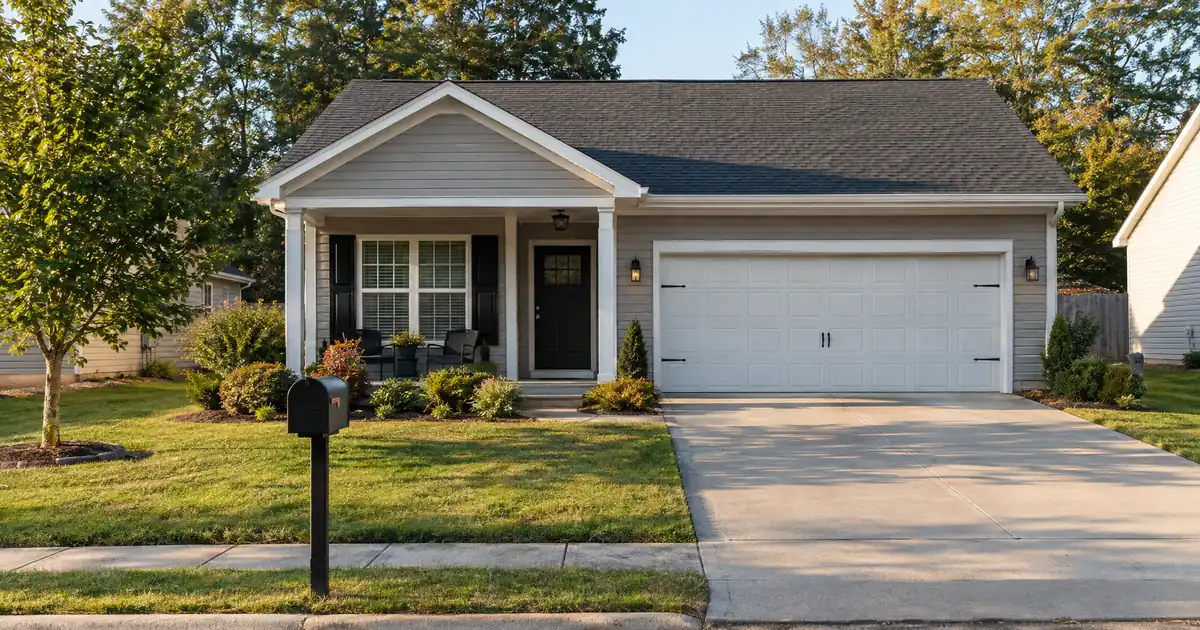
The Quick Read: A VA cash-out replaces your first mortgage with one new first lien, so you end up with one loan and one payment instead of two. That structure can reprice the whole balance, move a non-VA loan into the VA program, and reach up to 100% of the appraised value. The tradeoff is real: you give up your existing loan’s terms. A second lien leaves that first loan alone, so it often wins when the first loan is hard to replace.
Key Takeaways
- A cash-out refinance replaces the first lien. A home equity loan or HELOC adds a second lien behind it.
- The VA cash-out reaches 100% of the appraised value, including the financed funding fee, and can refinance any loan type into VA.
- A second lien keeps your current first loan untouched, which matters most when that loan is worth keeping.
- The choice turns on your existing first loan, how you plan to use the cash, and whether you can qualify for a second lien at all.
- Every figure here is subject to lender guidelines and full file review. Nothing here is a commitment to lend.
What Is a VA Cash-Out, and What Is a Second Lien?
A VA cash-out refinance is a new first mortgage that pays off the old one. Any remaining proceeds come to you as cash. VA describes the loan as a way to take cash from home equity for things like paying off debt, funding school or making home improvements. Lendmire arranges the VA cash-out refinance program through wholesale lenders in the 16 states where it does consumer lending.
A second lien works differently. The Consumer Financial Protection Bureau explains that a second mortgage or junior lien is a loan secured by your house while another loan already is. “Second” means it gets paid second if the home is sold to cover debts. Home equity loans and HELOCs are the common examples.
One point surprises many veterans. VA does not offer a second-lien product of its own. A VA-guaranteed loan generally has to sit in first position, outside of repairs and improvements. So any second lien you add comes from a private lender, with no VA guarantee behind it and no VA rules governing its terms.
Here is how the two paths compare:
| Factor | VA Cash-Out | Home Equity Loan / HELOC |
|---|---|---|
| Lien position | New first lien | Second lien behind the first |
| Payments | One | Two |
| Existing first loan | Paid off and replaced | Left in place |
| Funds | Lump sum at closing | Lump sum or draws over time |
| Underwriting | Full, plus VA appraisal | Set by that lender |
| VA funding fee | Yes, unless exempt | No |
How Is a VA Cash-Out Underwritten?
Underwriting is a full credit review, not a streamlined one. Across the wholesale programs Lendmire places VA files with, the steps run in a consistent order.
Eligibility comes first. You need a certificate of eligibility (COE) from VA, satisfactory credit and sufficient income. You must also certify that you will occupy the home as your residence. A spouse or dependent can meet that test for an active-duty member. VA sets no minimum credit score of its own. The wholesale programs Lendmire works with start at a 580 decision score, and some lenders set a higher floor.
Then comes the appraisal. VA’s Circular 26-19-05 says the loan-to-value ratio divides the total loan amount, including any funding fee, by the reasonable value the appraiser determines. That appraised value is the denominator. A lender’s own opinion of value does not substitute for it.
Next, income and residual income. Residual income is the controlling test: what is left each month after your major obligations and living costs. The 41% debt-to-income figure is a guideline, not a cap. A higher ratio can work, but it needs residual income well above the table.
Disclosures and the net tangible benefit. The rule at 38 CFR 36.4306 requires the loan to benefit you in a measurable way. Eliminating monthly mortgage insurance, moving to a shorter term, or lowering the rate are examples of qualifying benefits. Lenders must also give you comparisons of the old and new loan early in the process.
Seasoning. If you are refinancing an existing VA loan, the program carries a seasoning test: the later of 210 days from your first payment and your sixth payment. A net tangible benefit applies as well.
What Does the Funding Fee Do to the Math?
The funding fee is a VA charge that helps sustain the program. On a cash-out it is 2.15% for first use and 3.3% after first use, per VA News. Veterans receiving compensation for a service-connected disability, and certain other exempt groups, do not pay it.
Two mechanics matter. First, the fee can be financed, but the total still has to fit within 100% of the appraised value. Second, the reduced fee tiers tied to a down payment do not apply to refinances. Putting money into a cash-out does not shrink the percentage.
A second lien has no VA funding fee. It carries whatever costs that lender charges instead. That is one reason the second lien can look cheaper on paper. The comparison only holds up when you add what each path does to the loan you already have.
Why Some Veterans Still Choose the Cash-Out
The reasons are rarely about the cash alone. Several situations push veterans toward the first-lien replacement.
The first loan is not a VA loan
A VA cash-out can refinance an FHA, conventional or USDA loan into VA. That brings 100% financing potential and no mortgage insurance of any kind. A second lien cannot do that. It sits behind a first loan that stays exactly as it is, mortgage insurance included. This fits you if your current loan carries monthly mortgage insurance you would like gone.
The current loan has features you want out
An adjustable rate that is about to reset, a short term with a heavy payment, or a loan with terms you have outgrown are all things a second lien leaves in place. A cash-out resets the whole structure. This fits you if the first loan is the problem, not just the access to cash.
Several debts need to become one
A cash-out can pay off existing liens, current or delinquent, from any source. That includes an existing HELOC or home equity loan. Consolidating everything into one payment on one lien is simpler to manage, especially for households juggling a first mortgage plus a second.
The second lien is hard to get
A second lien is underwritten under that lender’s own guidelines, and VA does not set them. Lenders vary on how much combined borrowing against the home they allow. If you need a large amount, a second lien may not reach it. The VA cash-out reaches 100% of the appraised value, including the financed fee. Some veterans choose the cash-out simply because it is the loan that can be approved for the amount they need. Approval depends on credit, income, property and lender review.
The payment structure matters
CFPB’s guide on using home equity notes that a home equity loan on top of an existing mortgage means a second, separate monthly payment. It adds that these loans are usually repaid over a shorter period than a traditional 30-year mortgage or cash-out refinance, so the payments are probably larger than on a longer loan. A cash-out spreads the borrowing across the first mortgage’s longer term. For a household watching monthly cash flow, that difference can decide the question.
Draw-period surprises worry them
A HELOC lets you draw money multiple times up to a maximum, usually with a variable rate and a draw period followed by repayment. CFPB warns that if you fall behind or can’t repay on schedule, you could lose your home. A veteran who wants a single, predictable obligation may avoid that structure on purpose.
When Does a Second Lien Make More Sense?
Here is the honest version. If your current first loan is one you would be sorry to lose, a second lien often deserves the first look.
The cash-out resets the rate and the term on the whole balance, not only the new money. A second lien reprices only the amount you add. Think about two borrowers. One has a first loan that is already favorable and needs a modest amount of cash. The other has a first loan that is expensive or carries mortgage insurance and needs a large amount. The first borrower is paying to reprice a large balance to reach a small amount of cash. The second is not.
A second lien also tends to fit when:
- You need a smaller amount, or need it in stages, which is what a HELOC’s draws are built for.
- You want to preserve VA entitlement for later use. A VA cash-out affects your funding fee tier on future VA use.
- You want to avoid VA’s appraisal, funding fee and full refinance process.
A second lien fits poorly when the lender’s combined borrowing limit falls short of your need, or when you can’t qualify under that lender’s guidelines. It also fits poorly when a variable rate or a draw-period payment jump would strain your budget.
This is a case where the deciding variable is the first loan, not the cash. Run both paths against the loan you have, not against an abstract rate comparison.
Three Borrower Profiles, Described in Plain Words
These are illustrations, not program terms or dollar figures.
The borrower with a favorable VA first loan and a modest need. Their first loan would be repriced entirely just to reach a small amount of cash. A second lien usually fits better. The tradeoff is a second payment and a lender with its own rules.
The borrower with an expensive first loan and a large need. Repricing the whole balance may be the point, not a cost. A cash-out can lower the carrying cost of the first loan, pay off other debts into it, and deliver cash in a single transaction. This fits the VA cash-out best.
The borrower with a conventional or FHA first loan who wants out of mortgage insurance. Only the cash-out can move that loan into the VA program, where no mortgage insurance of any kind applies. A second lien leaves the insurance in place. The net tangible benefit test is also easier to meet when eliminating mortgage insurance is the stated benefit.
Where the General Rules Break Down
Several edge cases change the answer.
Type I and Type II. VA’s categories differ from what most people expect. Under Circular 26-19-05, a Type I loan does not exceed the payoff of the loan being refinanced. A Type II loan exceeds the payoff. A refinance that returns no cash can still be “cash-out” in VA’s vocabulary, such as moving a non-VA loan into VA. Type I loans carry a 36-month recoupment test, meaning the costs must be recovered within that window through savings.
Paid-off homes. A VA cash-out refinances an existing lien. A home with no mortgage generally cannot use one. A first-lien home equity loan is a different route for that owner.
An existing second lien you want to keep. If you refinance the first loan and leave a HELOC in place, the second lienholder must agree to stay in second position. That agreement is called subordination, and it adds a step. The alternative is to pay the second off inside the cash-out.
The IRRRL. The interest rate reduction refinance is a VA-to-VA loan only. It carries a 0.5% funding fee unless exempt, and it generally cannot put cash in your hands. It is the lighter tool for a veteran who only wants a lower rate or an adjustable-to-fixed switch. If you need cash, it is not the one.
Occupancy. The home must be your residence. If the property is a rental or second home, occupancy decides the leverage, and a VA loan is built for the home you live in.
A Simple Decision Checklist
Ask these in order.
1. Is your first loan a VA loan you would like to keep? If yes, price a second lien first.
2. Is your first loan FHA, conventional or USDA with monthly mortgage insurance? If yes, the cash-out’s path into VA deserves a serious look.
3. Do you need a large amount that a second lien may not reach? The cash-out reaches 100% of the appraised value, subject to lender review.
4. Do you want one payment, or can you manage two? One lien means one payment.
5. Are you exempt from the funding fee? If so, the cash-out’s cost side shrinks considerably.
6. Does the net tangible benefit test pass? If it does not, the cash-out is not available regardless of preference.
If your answers split, that is normal. The decision depends on the loan you already hold. Compare the whole balance, not only the new money.
Key Terms Defined
First lien: The mortgage with first claim on the home if it is sold to pay debts.
Second lien: A loan secured by the home behind an existing mortgage, such as a home equity loan or HELOC.
Net tangible benefit: A measurable advantage the new VA loan must give you, such as removing mortgage insurance or shortening the term.
Funding fee: A VA charge on most VA loans that can be financed into the balance and is waived for exempt veterans.
Seasoning: The waiting period before you can refinance an existing VA loan with a cash-out or IRRRL.
Residual income: The money left each month after major obligations and estimated living costs, which is the controlling test in VA underwriting.
Frequently Asked Questions
Does VA offer a home equity loan or HELOC?
No. VA guarantees first-lien purchase and refinance loans. A home equity loan or HELOC comes from a private lender and has no VA guarantee. Secondary borrowing is generally not prohibited by VA, but it needs to be handled so the first lien position is protected.
Can I add a second lien after a VA cash-out?
Often yes, subject to that lender’s guidelines and your credit, income and equity. VA does not prohibit it, but it does not set the terms either. Because the cash-out can reach 100% of the appraised value, there may be little equity left to borrow against, which can limit what a second lender will offer.
Can a VA cash-out convert a non-VA loan?
Yes. A VA cash-out can refinance FHA, conventional or USDA loans into a VA loan. An IRRRL cannot, because it only works on an existing VA loan. Converting can remove monthly mortgage insurance, which also helps meet the net tangible benefit test.
Does a VA cash-out use up my entitlement?
It can affect it. Using the benefit again changes your funding fee tier on later use, which is 3.3% after first use for a cash-out unless you are exempt. Remaining entitlement also matters when you are refinancing an existing VA loan, so a loan officer should review your COE before you decide.
Is the VA cash-out streamlined?
No. It requires full credit underwriting, a VA appraisal and a net tangible benefit, unlike the IRRRL. Expect to document income and assets, and expect the loan estimate and closing disclosure that apply to consumer mortgages.
Tax treatment can depend on your situation; borrowers should speak with a qualified tax professional before relying on any deduction or credit.
For a closer look at how a second lien compares when you already hold a low fixed first loan, see Lendmire’s piece Second-Lien HELOC vs Cash-Out Refinance for a Low Fixed Mortgage. If you are weighing a cash-out refinance against keeping the loan you have, Lendmire can help you compare the programs and the equity each one reaches.
For your own numbers, request a scenario review with Lendmire.
About Lendmire
Lendmire, NMLS# 2371349, is a mortgage brokerage with consumer lending licenses in 16 states. FHA, VA, conventional and jumbo purchase and refinance loans are arranged through wholesale lending partners, and each application is reviewed individually by the lender. Scotsman Guide named Lendmire a Top Mortgage Workplace in both 2025 and 2026.
For the program’s current guidelines, see VA loan programs.
Get Started
Ready to find the right loan for you?
In about 30 seconds you can review financing options available for your home or investment property. No commitment required.
Informational only. Not a Loan Estimate, approval, or commitment to lend. Program availability and eligibility are subject to lender guidelines, credit approval, property review, and underwriting.
References
1. VA Home Loans overview, Veterans Benefits Administration
2. CFPB: What is a second mortgage loan or junior lien?
4. eCFR 38 CFR Part 36 Subpart B (§36.4306)
5. VA News: funding fee, who pays, who is exempt
6. CFPB: Using home equity to meet financial needs
This article is part of Lendmire’s VA Loans series — every loan program’s qualification details, guidelines, and scenarios live on the loan options page.
Related reading: VA IRRRL Vs VA Cash-out: Choosing The Right VA Refinance · VA Cash-out Refinance To Pay Off A Non-va Loan: Type I Vs Type II Explained · VA Cash-out Refinance: How The 100 Percent Ceiling Really Works
Brandon Miller
Founder & CEO, Mortgage Loan Originator, Lendmire LLC
- Mortgage Loan Originator · NMLS# 1129696 · Verify on NMLS Consumer Access
- North Carolina Real Estate Broker · License# 343312 · Verify on NCREC
- North Carolina Insurance Producer · License# 19053198 · Property, Casualty, Life, Health · Verify on NAIC SBS
- Lendmire LLC · Firm NMLS# 2371349 · Verify firm licensure
Disclosure information. Lendmire is a state-licensed mortgage brokerage under NMLS# 2371349. Lendmire is not a depository institution, direct lender, or financial advisor — all loans referenced are placed through wholesale lender partners and are subject to each lender's underwriting standards. This article is provided for general informational purposes and is not a commitment to lend, nor does it constitute financial, legal, or tax advice. Loan programs, terms, rates, and qualification standards change without notice and depend on borrower profile, property type, and the state in which the subject property is located. Equal Housing Opportunity provider. NMLS Consumer Access: nmlsconsumeraccess.org.