
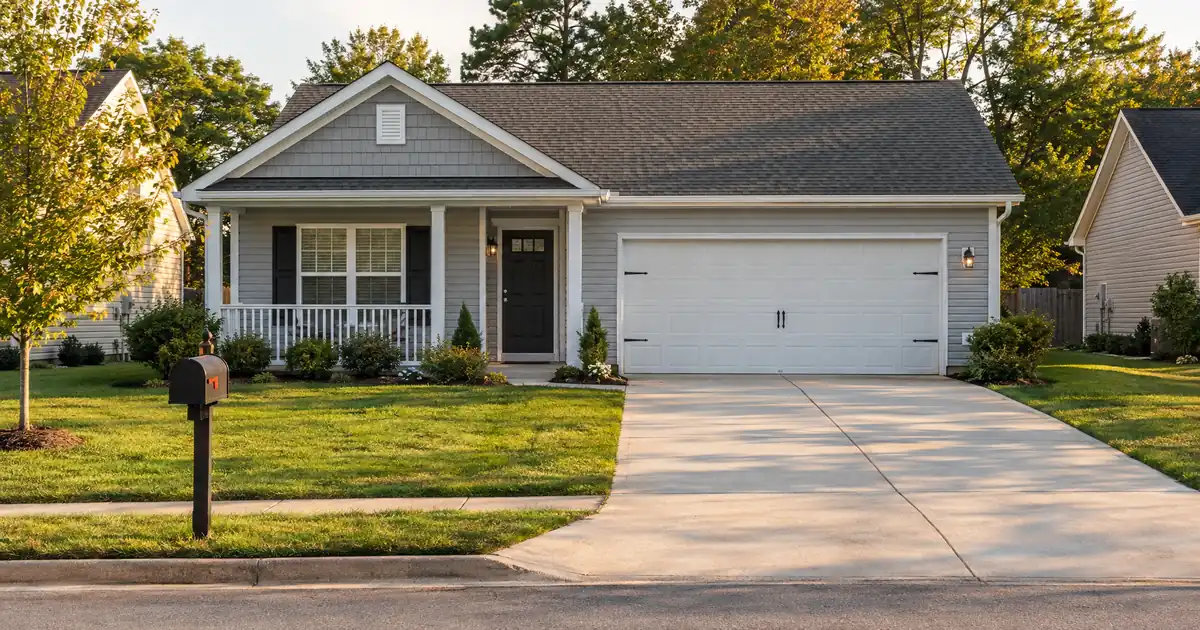
The Quick Read: A cash-out refinance replaces your current mortgage with a new, larger one, and you take the difference as cash. The new loan pays off the old one first. Whatever is left after payoff and closing costs comes to you. On a conventional loan for a one-unit primary home, the new loan generally tops out at 80% of the home’s appraised value, subject to lender guidelines and full file review.
In Short
- You are not adding a second loan. You are swapping your first mortgage for a bigger one.
- Your home’s value minus what you owe is your equity. Only part of it can be borrowed.
- The new loan sets new terms for the whole balance, not just the extra cash.
- The home secures the debt, so missing payments puts the home at risk.
What Is a Refinance, and What Does “Cash-Out” Add?
A refinance means a new mortgage pays off an old one. That is all. Most refinances are about changing the loan itself, such as the term or the type of loan.
A cash-out refinance adds one thing: the new loan is bigger than the payoff. The Consumer Financial Protection Bureau describes it as replacing your existing mortgage with a bigger one and taking the difference in cash. You often pay closing costs too.
Freddie Mac defines it more loosely: a mortgage with no specific restrictions on how the proceeds are used. That freedom is the point. The cash can go to repairs, debt payoff, or anything else, though some uses are wiser than others.
Equity in Plain Words
Equity is what your home is worth minus what you owe on it. If the home appraises at 100 and your mortgage balance is 50, your equity is 50. A lender will not let you borrow all of it.
Here is why. A conventional cash-out loan on a one-unit principal residence is capped at 80% of the appraised value. On a two- to four-unit principal residence, a second home, or an investment property, the cap is 75%. The new loan must fit under that cap, and it must cover your payoff and costs first. Only what is left is yours.
Run it as a percentage story. Say your home appraises at 100 and you owe 50. An 80% cap allows a new loan up to 80. Payoff takes 50, closing costs take a slice, and the remainder is your cash. Fewer dollars than the equity suggests, by design. The lender wants you to keep a cushion.
That cushion matters to you, too. A thicker one gives you room if values dip.
How the Loan Is Underwritten, Step by Step
Underwriting is the lender’s review of whether you can repay and whether the home supports the loan. Across the wholesale programs Lendmire works with, the sequence looks like this.
1. Pick the goal. Decide how much cash you need and what you will use it for. Borrow the need, not the maximum.
2. Apply and compare. You supply income, assets, and debts. You receive a Loan Estimate, a standard form showing the loan’s terms and costs. Getting more than one is smart.
3. Appraisal. A new appraisal sets the home’s value. Freddie Mac requires a new appraisal and inspection report on cash-out loans. Value drives the loan limit.
4. Review of you. Credit, income, monthly debts, and reserves are checked. Reserves are savings left after closing. Fannie Mae asks for six months of reserves when the automated review shows total debts above 45% of income, per its Selling Guide.
5. Payoff and conditions. The lender collects payoff statements for existing liens and clears any remaining conditions.
6. Closing. You sign. Existing loans are paid off first. Fees are settled. Any remaining cash is disbursed to you.
On credit, the wholesale conventional programs start at a 620 decision score, though the automated finding governs most files and some lenders set a higher floor. The total debt ratio ceiling on automated files is 50%.
What Happens on Closing Day
Money moves in a set order. The old mortgage is paid in full. Closing costs and prepaid items come next. You get what is left.
Your Closing Disclosure shows every line before you sign. Read the cash-to-borrower line against your own math. If the number surprises you, ask why before signing.
The Seasoning Clocks
Seasoning means how long you have held the loan or the title. Conventional cash-out has two clocks.
- The mortgage being paid off must be at least 12 months old, counted from its note date to the new note date.
- At least one borrower must have been on title for six months.
Exceptions exist. The 12-month test does not apply to existing junior liens being paid off, or to buying out a co-owner under a legal agreement. Inherited homes and legal awards, such as a divorce settlement, also have waiting-period exceptions.
Where the General Rule Breaks
The simple definition holds most of the time. These cases bend it.
Delayed financing. If you bought a home with all cash and want money back soon, the seasoning clocks can be waived. The catch: the new loan is limited to what you documented putting into the purchase, plus financed costs. Appreciation since purchase is not released this way.
A paid-off home. Owning free and clear does not make a new loan “just a loan.” Both Fannie Mae and Freddie Mac treat a mortgage on a home with no lien as cash-out.
Small cash back on a rate-and-term refinance. A rate-and-term refinance, called limited cash-out, pays off your first mortgage, closing costs, and any purchase-money second. Cash back is tiny. Fannie Mae caps it at the greater of 1% of the new loan or $2,000. Beyond that, the loan is cash-out and the stricter rules apply. Leverage on a rate-and-term loan can reach 95% on a one-unit primary home, which is why the distinction matters.
Title in an LLC or trust. Some time held in an entity can count toward the six months under conditions, but title generally must move into your name by the note date.
Co-owner buyout. Freddie Mac treats using proceeds to buy out a co-owner’s equity as a special-purpose cash-out.
Government loans. An FHA Streamline is not a cash-out. HUD says closing costs cannot be rolled into the new mortgage on a Streamline. A VA streamline refinance, the IRRRL, is also a rate-and-term tool for existing VA loans. VA cash-out loans exist separately, and VA separates refinances by whether the new loan exceeds the payoff.
Second homes and rentals. Occupancy decides leverage. The cap falls to 75% on those property types, and Freddie Mac requires all borrowers to occupy a primary residence on a cash-out.
Texas homesteads. Texas caps cash-out on a homestead by its state constitution. A wholesale no-mortgage-insurance lane described below is not written there.
A Wholesale Lane Worth Knowing
Higher leverage normally means mortgage insurance. Mortgage insurance is a monthly charge that protects the lender, required above 80% loan-to-value on most conventional loans. It can be cancelled at 80% of the original value on request with good payment history, and the servicer must end it automatically at 78%.
One wholesale lane reaches 89.99% loan-to-value on a cash-out with no mortgage insurance. It requires a 680 score, a 50% debt ratio ceiling, a thirty-year fixed rate, a primary residence, a conforming loan balance, and its own six months of seasoning. It is narrow. If your file fits, it can change the math. Subject to lender guidelines and full file review.
Brokers can compare this against the standard 80% lane. That is where cash-out refinance programs differ most between lenders.
Key Terms Defined
Equity: The home’s value minus what you owe on it.
LTV (loan-to-value): The loan balance divided by the home’s appraised value, shown as a percentage.
DTI (debt-to-income): Your monthly debt payments divided by your monthly income.
Lien: A legal claim on your home that secures a debt.
Appraisal: An independent opinion of what the home is worth.
Loan Estimate: A standard form that shows a loan’s terms and costs, so you can compare offers.
Seasoning: How long you have held the loan or the title before a new loan is allowed.
Cash-Out vs. Home Equity Loan vs. HELOC
The key difference is what happens to your first mortgage.
| Option | Your first mortgage | What you get | Fits best when |
|---|---|---|---|
| Cash-out refinance | Replaced | Lump sum | Your current loan terms are not worth keeping |
| Home equity loan | Stays | Lump sum, second loan | You like your current loan |
| HELOC | Stays | Revolving credit line | Costs come in stages |
| Rate-and-term refinance | Replaced | Little or no cash | You want new terms, not cash |
The CFPB notes that a cash-out may cost more or less than a HELOC depending on the terms, so compare totals, not headlines. A bigger replacement loan can also raise your payment and stretch the time it takes to pay off the home.
Who Should Think Twice
A cash-out is a tool, not a free pot of money. Pause if any of these apply.
- Your current loan is a keeper. Replacing it means new terms on the entire balance. If you hold a loan you like, a second loan against the home may serve you better.
- The spending is not essential. The CFPB’s research warns that turning other debts into mortgage debt secured by the home can put it at risk of foreclosure if payments become unsustainable. Missing a credit card payment does not threaten your home. Missing a mortgage payment does.
- You may move soon. Costs are spread over time. A short stay gives them less time to pay off. The CFPB suggests comparing total interest and fees over about five years.
- You want every dollar of equity. None of the options converts 100% of equity to cash.
The CFPB found that more than half of surveyed cash-out borrowers used the money to pay other bills or debts, and home repairs ranked second. Both can be sensible. The test is whether the plan still works if income dips.
On the fairness side, the same research found cash-out borrowers saw an initial credit score improvement followed by a gradual decline, though scores stayed above pre-refinance levels.
Tax treatment can depend on your situation; borrowers should speak with a qualified tax professional before relying on any deduction or credit.
What the Decision Looks Like in Practice
Picture a homeowner with a seasoned mortgage and a roof that needs replacing. A cash-out can fund it, but only if the new loan clears the 80% cap after payoff and costs. If it does not, a smaller cash amount or a different structure may fit.
Now picture a homeowner whose monthly budget is tight. A larger loan could raise the payment. That case calls for checking affordability before the cash amount.
Questions worth asking each lender:
- What is the maximum loan-to-value for my property type and occupancy?
- Do both seasoning clocks apply to me, or does an exception fit?
- Which costs sit in the origination charges, and which are services I can shop for?
- Will my payment rise, and by how much, on the Loan Estimate?
- What does the payoff schedule look like if I stay five years? Ten?
Services you can shop for may increase at closing, but generally by no more than 10% of the costs on your final Loan Estimate, so compare estimates side by side.
Frequently Asked Questions
Is a cash-out refinance the same as a second mortgage?
No. A second mortgage sits behind your first and leaves it in place. A cash-out refinance replaces the first mortgage with a new, bigger loan. Any lien that stays on the home still counts toward the combined loan-to-value limit.
Can I cash out on a home I own free and clear?
Yes, with rules. Both Fannie Mae and Freddie Mac treat a new mortgage on a lien-free home as cash-out, so the leverage cap, appraisal, and credit review apply. Recent all-cash buyers may qualify for delayed financing, which limits the loan to the documented purchase investment plus financed costs.
How soon after buying or refinancing can I take cash out?
Usually after the first mortgage is 12 months old and a borrower has held title for six months. Exceptions exist for delayed financing, inheritance, and legal awards. Government loans follow their own seasoning rules, and individual lenders may add their own.
Can an FHA Streamline or VA IRRRL give me cash?
No, not in any meaningful amount. These streamlines are built to lower costs on an existing government-backed loan and involve no real cash back. FHA and VA each have separate cash-out products with their own rules.
Does a lower rate always mean a lower payment?
No. The CFPB notes that a larger loan can raise your payment even when other terms improve. The new balance, the new term, and the closing costs all work together, so compare the Loan Estimate line by line.
If you are weighing a cash-out refinance against keeping the loan you have, Lendmire can help you compare the programs and the equity each one reaches. You can also read Lendmire’s look at how conventional cash-out terms compare before you decide.
For your own numbers, request a scenario review with Lendmire.
For current guidelines and terms, see Lendmire’s refinance programs page.
About Lendmire
Lendmire, NMLS# 2371349, is a mortgage brokerage with consumer lending licenses in 16 states. FHA, VA, conventional and jumbo purchase and refinance loans are arranged through wholesale lending partners, and each application is reviewed individually by the lender. Scotsman Guide named Lendmire a Top Mortgage Workplace in both 2025 and 2026.
Get Started
Ready to find the right loan for you?
In about 30 seconds you can review financing options available for your home or investment property. No commitment required.
Informational only. Not a Loan Estimate, approval, or commitment to lend. Program availability and eligibility are subject to lender guidelines, credit approval, property review, and underwriting.
References
1. CFPB: What other types of loans are similar to a HELOC?
3. Freddie Mac
4. Fannie Mae Selling Guide B2-1.3-03
This article is part of Lendmire’s Refinance series — every loan program’s qualification details, guidelines, and scenarios live on the loan options page.
Related reading: How to Close a Large Cash-Out Refinance Without Conditions · Cash-Out Refinance vs Selling the Home for a Divorcing Spouse · Should You Use a Cash-Out Refinance Before Your ARM Resets?
Brandon Miller
Founder & CEO, Mortgage Loan Originator, Lendmire LLC
- Mortgage Loan Originator · NMLS# 1129696 · Verify on NMLS Consumer Access
- North Carolina Real Estate Broker · License# 343312 · Verify on NCREC
- North Carolina Insurance Producer · License# 19053198 · Property, Casualty, Life, Health · Verify on NAIC SBS
- Lendmire LLC · Firm NMLS# 2371349 · Verify firm licensure
Legal disclosures. Lendmire (NMLS# 2371349) is a state-licensed mortgage brokerage that arranges financing through wholesale lender relationships. Lendmire is not a direct lender, depository institution, or registered financial advisor. The discussion above is general informational content about real estate financing — it is not financial, legal, or tax advice, and readers should consult licensed professionals for guidance on their individual circumstances. Loan inquiries are subject to lender underwriting; this article does not represent a commitment to lend. Loan terms, rates, and qualification standards vary by borrower, property, and state, and are subject to change at any time. Equal Housing Opportunity. NMLS Consumer Access: nmlsconsumeraccess.org.