
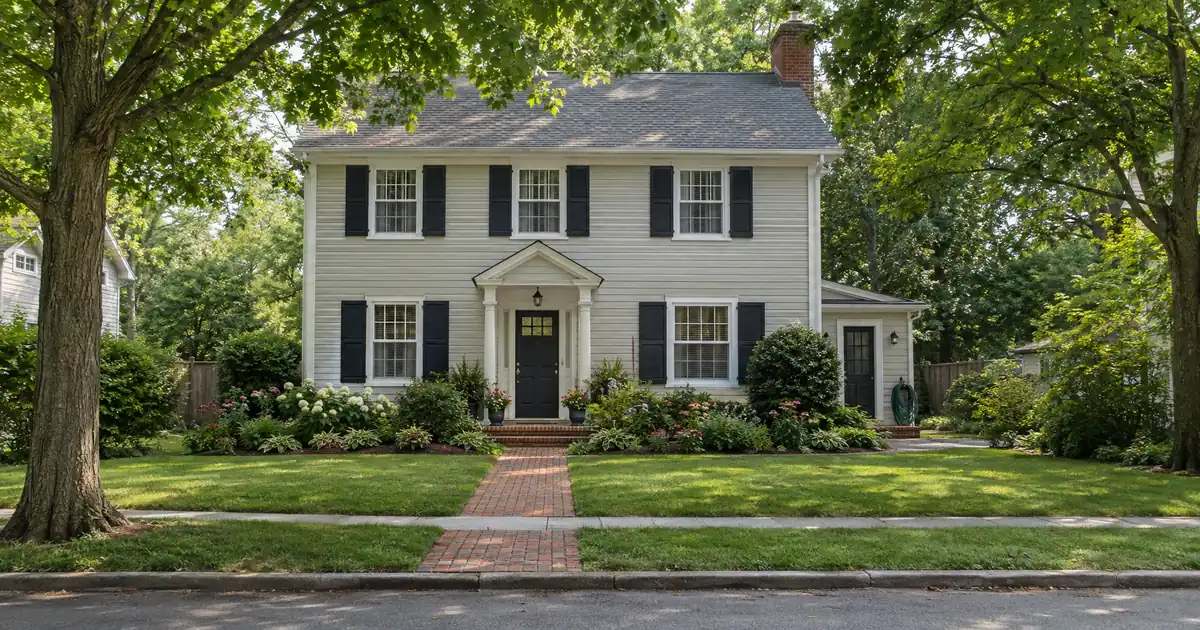
The Quick Read: Zero down is the better fit when you want to keep your cash liquid. A down payment is the better fit when you want a smaller loan balance and a lower funding fee, and you still have a healthy cushion left after closing. On a VA loan, no down payment is typically required, and there is no monthly mortgage insurance either way. So the choice is not PMI versus no PMI. It is a funding fee and a bigger balance against cash you keep in the bank.
Who is each option really for? Zero down suits the veteran who has cash but sees better uses for it: repairs, reserves, a business, a second purchase down the road. Putting money down suits the veteran who has more cash than they have plans for, wants the lowest balance, or has partial entitlement that makes a down payment necessary. Both are legitimate. Neither is the “smart” one in the abstract.
Key Takeaways
- A VA purchase loan can reach 100% financing with no mortgage insurance, as long as the price is not above the appraised value.
- A down payment of 5% or more lowers the funding fee. At 10% or more, the fee drops to its lowest tier.
- A down payment never replaces your reserves. Closing costs and surprises still need cash.
- The main case where a veteran with cash is required to put money down is partial entitlement.
- Veterans exempt from the funding fee lose the fee-tier benefit of a down payment, which changes the math. Every figure here varies by lender and program — guidelines, property type, leverage, and credit profile all apply.
VA payment estimate
Starting assumptions reflect an example price with no down payment and a first-use funding fee. Replace them with your own figures.
Editable benchmark: 7.32% as of October 22, 2026 · Freddie Mac 30-year average via FRED®. A conventional market reference, not a VA loan quote.
Illustrative starting assumptions: a $350,000 price, no down payment with full entitlement, a first-use funding fee financed into the loan, a thirty-year term at the current Freddie Mac benchmark, and property taxes and insurance estimated at typical national rates. Every field is editable.
Illustrative estimate only — not a Loan Estimate, approval, quote, or commitment to lend. The rate field carries the weekly Freddie Mac thirty-year conventional benchmark, a market reference and not a VA loan quote; your rate is set by the lender at lock. The funding fee follows VA’s published table for the use and down payment entered; the residual-income figure is VA’s guideline for the region and family size, and the rough residual shown subtracts only the housing payment and the debts entered, while VA also deducts taxes, maintenance and utilities. Taxes, insurance and dues are editable estimates; closing costs are not included. Licensed in sixteen states for consumer mortgages. Lendmire is not affiliated with or acting on behalf of the Department of Veterans Affairs.
Side-by-Side
| Factor | Zero Down | Down Payment |
|---|---|---|
| Leverage | Up to 100% of price | Below 100% by your choice |
| Mortgage insurance | None | None |
| Funding fee (first use) | 2.15% | 1.5% (5%+), 1.25% (10%+) |
| Funding fee (subsequent use) | 3.3% | 1.5% (5%+), 1.25% (10%+) |
| Credit floor | Wholesale programs start at a 580 decision score | Same |
| Occupancy | Primary residence | Primary residence |
| Documentation | Income, residual income, assets for closing costs | Same, plus sourced and seasoned down payment funds |
| Cash left after closing | Highest | Lower by the amount you put in |
The funding fee percentages come from the VA funding fee schedule. Figures are subject to lender guidelines and full file review.
Notice what does not change. The credit floor, the occupancy rule, and the residual income test are the same at both leverage levels. Across the wholesale programs Lendmire places VA files with, residual income is the controlling test. That is the money left over each month after your debts, taxes and living costs, measured against a VA table. A down payment can help the file at the margin, but it does not rewrite that test.
What “Zero Down” Actually Means
Zero down means the loan can cover the full purchase price. It does not mean zero cash out of pocket.
Here is why. VA does not lend the money. It guarantees a portion of a private lender’s loan, and that guaranty is what lets the lender skip the down payment. With full entitlement, there is no VA loan limit, and the program has no mortgage insurance of any kind. Programs Lendmire works with serve amounts up to $4,000,000 with full entitlement.
You still pay for things the loan does not cover:
- Earnest money when you make an offer.
- Closing costs and prepaid items, unless a seller concession or other allowed source covers them.
- Moving costs, repairs and the first months of ownership.
Only the funding fee can be financed on a purchase. VA’s own eligibility toolkit says savings set aside can help with closing costs and unforeseen expenses, even when no down payment is required. A veteran with cash is in the best spot to take that advice.
When Zero Down Is the Better Fit
Zero down is the better fit when your cash has a job to do after closing. Here are the situations where that tends to be true.
You want a deep reserve. A common rule of thumb among loan officers is to keep several months of housing and living expenses in the bank after closing. If putting 10% down would cut that cushion thin, zero down is the safer path. Skip the down payment and keep the reserve. Final terms depend on lender guidelines, property type, leverage, and the borrower’s complete credit picture.
The house needs work. A home that needs a roof, HVAC or flooring will pull cash fast, in the plain-English sense of “soon after you move in.” Cash in hand for repairs is worth more than a small fee reduction.
You have a better use for the money. Many veterans carry cash toward a business, paying off higher-cost debt, or the next purchase. If the cash can do more elsewhere than a fee savings and a smaller balance would, keep it.
You may not be fee-exempt, but you plan to refinance or pay down later. The VA funding fee is a one-time cost you can weigh against that plan, and you can still send extra principal later. Starting at zero down does not lock you out of paying the balance down when your plans settle.
You want to protect against a low appraisal. Keeping cash liquid gives you room if the appraisal falls short. More on that below.
Here is the honest tradeoff. Zero down means a bigger balance, and if you are not exempt, a higher funding fee tier. For a first-use buyer putting less than 5% down, that fee is 2.15% of the loan. For subsequent use, it is 3.3%. That fee gets financed, so it grows the balance. Not ideal, but it is a known cost, and you can weigh it against what the cash would do elsewhere. These specifics are subject to lender guidelines and a full review of property, leverage, and credit.
When a Down Payment Is the Better Fit
A down payment is the better fit when you have cash beyond your reserves and you want the smaller balance and lower fee.
You can hit a fee tier cleanly. The funding fee drops at 5% down and again at 10% down. For a first-use buyer, that is from 2.15% to 1.5%, then to 1.25%. For a subsequent-use buyer, the drop is steeper: from 3.3% to 1.5% at 5% down, then 1.25% at 10%. A subsequent-use veteran with cash gets the most fee relief from a down payment. That is a genuine point in favor of putting money in. Terms depend on the lender’s guidelines, the property type, the leverage, and a full review of the credit profile.
You want the lowest balance. A down payment shrinks the loan, so the funding fee lands on a smaller number and the monthly budget has more breathing room. That is a mechanical fact, and the dollar results depend on your price.
You have partial entitlement. This is the case where cash is not optional. If a prior VA loan still ties up part of your entitlement, the lender wants enough remaining entitlement to guaranty at least 25% of the new loan. VA News explains the formula: the lender may require a down payment depending on the loan amount and what entitlement remains. If a previous VA loan was paid off in full, VA may be able to restore the entitlement. Speak with a loan officer about your specific numbers, because the answer depends on your county and your history.
The price exceeds appraised value. VA requires the gap between price and reasonable value to come from your own cash. That is a gap payment, not a strategy. It is also different from a down payment chosen to reduce the fee tier. How a gap payment affects the fee tier is a question to put to your loan officer, not to assume.
You want a stronger offer. Some sellers and agents read a cash-backed offer as a sign of a well-prepared buyer. Sometimes. It is not a rule, and a VA loan with a clean file competes fine without it.
The Fee-Exempt Veteran: A Different Equation
If you receive compensation for a service-connected disability, the funding fee is waived. So are certain other exempt groups, such as Purple Heart recipients and some surviving spouses. Your certificate of eligibility (COE) shows whether you are exempt.
What remains is the balance and monthly budget argument against the reserve and opportunity cost argument. For many exempt veterans with cash, that may tilt toward zero down, since one of the main reasons to put money in is gone.
This is a genuine toss-up for some files. A veteran with a very large cash position and no better use for it might still choose a down payment for the smaller balance. A veteran with a thin reserve or a project waiting should lean the other way.
Worked Scenario: Same Buyer, Three Choices
Picture a first-use, non-exempt veteran buying a primary residence. The numbers below are percentages only, labeled as modeled assumptions.
Choice one: zero down. Financing is up to 100% of price. The funding fee is 2.15%, financed into the loan. Cash needed at closing is limited to closing costs and prepaids. Cash left in the bank is at its highest.
Choice two: 5% down. Financing is 95% of price. The fee drops to 1.5% on a smaller loan. Cash left is lower by 5% of the price. The exact numbers vary by lender and program and follow a full review of property, leverage, and credit.
Choice three: 10% down. Financing is 90% of price. The fee drops to 1.25%, the lowest purchase tier. Cash left is lower by 10% of the price. Final terms depend on the lender’s guidelines, the property type, and the borrower’s complete credit picture.
Now run the same buyer as a subsequent-use veteran. At zero down, the fee is 3.3%. At 5% down, it is 1.5%. That jump is why subsequent-use buyers with cash often look hardest at the first tier.
How do you decide? Compare two things. First, what the extra 5% or 10% saves you in fee and balance. Second, what that same cash would do if you kept it, whether as reserves, repairs or another goal. If your cash has no better job, the down payment earns its place. If it does, keep it.
The Appraisal Angle
A VA appraisal is mandatory on purchases. A VA-approved appraiser sets the reasonable value, and VA uses the resulting Notice of Value to decide how much of the loan to guarantee. It is not a home inspection, though it also checks Minimum Property Requirements.
Why does this matter for a veteran with cash? Because zero down only works when the price is not above appraised value. If the appraisal comes in low, you have three paths: renegotiate, pay the difference in cash, or walk. VA purchase contracts include an escape clause, and VA’s Buyer’s Guide says that without it, VA may not guaranty the loan. The clause protects your earnest money if the price exceeds reasonable value, though you may choose to proceed anyway.
So here is a planning angle most comparisons skip. Cash held in reserve gives you the option to cover a gap if you want the house. Cash already committed to a down payment does not. That is a point for zero down, as long as you keep the cash liquid and not spent elsewhere.
Common Mistakes to Avoid
- Treating zero down as zero cash. Closing costs, prepaids, earnest money and moving costs still need funding.
- Spending reserves to hit a fee tier. Saving a fraction of a percent on the fee is a poor trade if it leaves you short after closing.
- Assuming a down payment removes the funding fee. It only lowers it. Exemption is what waives it.
- Forgetting the paper trail. A down payment is a cash asset the lender must document. Expect to source it, and expect seasoning questions on large deposits. Details vary by lender, and the VA Lenders Handbook addresses cash assets for closing costs and the price-to-loan gap.
- Ordering things out of sequence. The Handbook says to order the COE before the VA appraisal. Get the COE early.
- Ignoring the future. Entitlement tied up in this loan affects your next VA purchase. A down payment now can help close a guaranty shortfall later, but it is not automatic.
A Simple Decision Framework
Ask these questions in order.
1. Do you have full entitlement? If not, speak with a loan officer, because a down payment may be required.
2. Are you exempt from the funding fee? If yes, the fee argument for a down payment is gone. If no, note whether you are first use or subsequent use.
3. After a down payment, would your reserves still feel comfortable? If not, stay at zero down.
4. Does your cash have a better job? Repairs, a business, other debts, or the next purchase can all outrank a smaller balance.
5. Do you want the lowest balance and fee for its own sake? If the answers above are all comfortable, a down payment is a reasonable choice.
Many veterans land in the middle, putting 5% down to reach the first fee tier while keeping most of their cash. That hybrid is common because the first tier delivers a visible fee cut without draining reserves. It is not a rule, and the right amount is whatever your numbers say. Each figure is subject to lender guidelines and a complete review of property type, leverage, and credit.
Frequently Asked Questions
Do I need savings for a VA loan if I am putting nothing down?
Yes, usually. Zero down covers the purchase price, not closing costs, prepaids, earnest money or moving. Lenders also look at your assets, and VA’s toolkit points to savings as a buffer for unforeseen expenses.
Does a bigger down payment eliminate the VA funding fee?
No. It lowers it. The fee drops at 5% down and again at 10% down. Only exemption, such as receiving compensation for a service-connected disability, waives the fee entirely. Your certificate of eligibility shows whether you are exempt. Leverage, reserves, and pricing vary by lender and program; the final terms follow the full file review.
Can I start at zero down and pay a lump sum later?
Yes, in the sense that you can send extra principal after closing. That differs from paying upfront, because the funding fee is set at closing based on your down payment tier. A later lump sum reduces the balance but does not retroactively lower the fee.
Does VA still make sense if I have plenty of cash?
Often, yes. The no-mortgage-insurance feature does not depend on how much you put down. Having cash simply gives you more choices: keep it liquid, buy down the fee tier, or split the difference. Compare the same file at different down payment levels before deciding.
When am I actually required to put money down on a VA loan?
The main cases are partial entitlement, where remaining guaranty is not enough for the loan amount, and a price above appraised value, where you cover the gap in cash. Lender requirements and full file review also matter. Speak with a loan officer about your situation.
Verdict
Zero down is the stronger default for a veteran with cash, because it keeps your options open at a known cost. A down payment wins when your reserves are already strong, your cash has no better job, and a fee tier or a smaller balance is worth more to you than flexibility. Subsequent-use veterans who are not exempt have the most to gain from reaching the 5% tier. Exempt veterans have the least.
If you are buying a home and want to see whether a VA loan fits your file, Lendmire can help you compare the options and what each one asks of the file. The details of VA loan programs are a good place to start. Program figures are subject to lender guidelines and full file review, and nothing here is a commitment to lend.
For your own numbers, request a scenario review with Lendmire.
About Lendmire
As a mortgage broker (NMLS# 2371349), Lendmire helps homeowners and home buyers in 16 states with FHA, VA, conventional and jumbo purchase and refinance loans arranged through wholesale lenders. Lendmire is never the lender; program terms are set by the lender and the agency guidelines. Scotsman Guide named Lendmire a Top Mortgage Workplace in both 2025 and 2026.
Get Started
Ready to find the right loan for you?
In about 30 seconds you can review financing options available for your home or investment property. No commitment required.
Informational only. Not a Loan Estimate, approval, or commitment to lend. Program availability and eligibility are subject to lender guidelines, credit approval, property review, and underwriting.
References
1. VA Loan Guaranty – Home Loan Overview (one-page)
2. VA funding fee and closing costs page
4. VA News – Use VA home loan benefit more than once
5. VA Home Loan Guaranty Buyer’s Guide
This article is part of Lendmire’s VA loan program — full qualification details, guidelines, and scenarios live on the program page.
Related reading: Can a Veteran Use a VA Loan With No Down Payment at Any Price? · Can You Use a VA Loan With Partial Entitlement and No Down Payment? · Can a VA Loan Above the Conforming Limit Have No Down Payment?
Brandon Miller
Founder & CEO, Mortgage Loan Originator, Lendmire LLC
- Mortgage Loan Originator · NMLS# 1129696 · Verify on NMLS Consumer Access
- North Carolina Real Estate Broker · License# 343312 · Verify on NCREC
- North Carolina Insurance Producer · License# 19053198 · Property, Casualty, Life, Health · Verify on NAIC SBS
- Lendmire LLC · Firm NMLS# 2371349 · Verify firm licensure
Important disclosures. Lendmire (NMLS# 2371349) is a licensed mortgage brokerage. Lendmire is not a direct lender, depository institution, or financial advisor. All loan inquiries are subject to lender underwriting; this article does not constitute a commitment to lend. Rates, terms, and program guidelines are subject to change without notice and vary by borrower profile, property type, and state. Information in this article is general in nature and is not financial, legal, or tax advice. Equal Housing Opportunity. NMLS Consumer Access: nmlsconsumeraccess.org.