
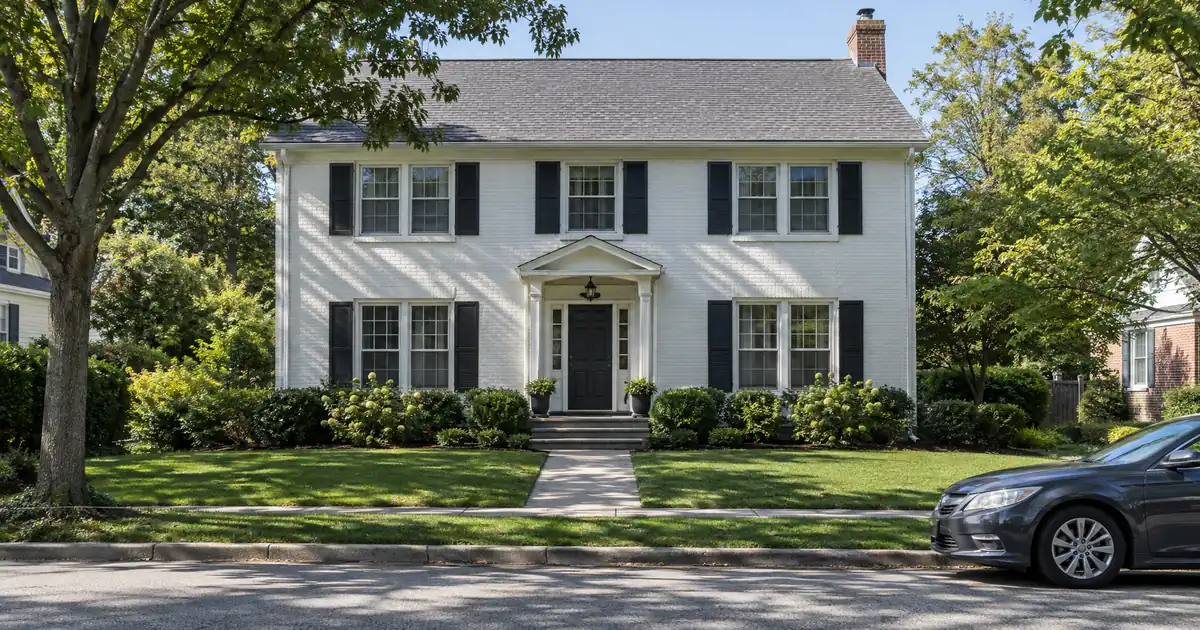
The Quick Read: No, the home’s price is not the limit; the loan amount, the cash-out LTV for your occupancy type, and the reserve and review rules are, so a $10 million property can work when the new loan fits the program’s size range and your deposits support it. The size of the house matters far less than the size of the loan you ask for.
- Across the select lenders in Lendmire’s wholesale network, bank statement loans run from roughly $125,000 to $3,500,000. The loan amount is the ceiling, not the home’s value.
- Owner-occupied cash-out (primary residence or second home) goes up to 80% LTV. Investment-property cash-out tops out around 75% LTV.
- Income comes from 12 months of bank statements, averaged and reduced by an expense factor.
- Reserves are commonly around 6 months of the housing payment. On the largest files, cash-out proceeds generally can’t be counted toward them.
- Occupancy decides which rulebook applies, so settle that before you shop.
Is a $10 Million Home Too Big for You, or for the Lender?
“Too big” means two different things. The owner’s test is about affordability, upkeep, and how much of your net worth sits in one asset. The lender’s test is about loan size, leverage, reserves, and whether the file fits the program.
A home can pass one test and fail the other. A $10 million house with a modest balance and a strong deposit history may fit a bank statement program well. A smaller house bought with thin reserves may not.
| Factor | Owner’s test | Lender’s test |
|---|---|---|
| Size measure | Price vs. net worth | Loan amount vs. program range |
| Cash question | Carrying and upkeep costs | Reserves outside the deal |
| Income question | Can I live with this? | Do deposits support the loan? |
| Use question | Is it a primary or a second home? | Occupancy sets LTV and disclosures |
Lenders do not look at the price tag first. They look at the new loan, the value behind it, and how the file documents income.
Key Terms Defined
Bank statement loan: A mortgage that is reviewed on documented income under the applicable program, subject to lender guidelines, using deposits in your statements instead of tax-return income.
Cash-out refinance: A new loan larger than your current balance, with the difference paid to you after payoff and costs.
Super jumbo: An informal label for loans above a lender’s standard ceiling. It has no regulatory definition.
LTV (loan-to-value): The new loan divided by the appraised value.
Expense factor: A percentage that lenders subtract from business-account deposits to estimate what you keep as income.
Reserves: Liquid funds, typically measured in months of housing payment, that you hold after the loan funds.
Seasoning: How long you have owned the property. It is a lender policy, not a law, and it affects whether sizing uses cost or appraised value.
How Does a Bank Statement Loan Treat Income at This Size?
Underwriting follows the same steps at every size. At $10 million of value, each step is simply scrutinized harder.
1. Documents. The borrower provides 12 consecutive months of personal or business statements.
2. Cleaning the deposits. The underwriter strips out transfers between your own accounts, loan proceeds, refunds, and other non-income items. Large one-time deposits need a paper trail.
3. Averaging. What remains is averaged across the period.
4. Expense factor. For business accounts, the average is reduced by an expense factor. Factors vary by lender and by type of business. A CPA or P&L letter can support a lower one, but it gets checked against the actual account activity.
5. Ownership share. If the deposits are in a business account, your ownership percentage in that business matters. A partial owner can only count the share they own.
6. The result. That qualifying income must support the new housing payment and your other obligations.
Declining or erratic deposits are the usual red flag. A file with falling monthly deposits invites questions regardless of the property.
The program is not a shortcut around income review. It is a different way to document income. Lenders still judge whether you can repay, and the file has to show it.
How Does Cash-Out Leverage Change by Occupancy?
Cash-out LTV is set by occupancy and loan purpose, and it is always tighter than purchase leverage on the same property. Always check which transaction a quoted LTV belongs to. A purchase figure and a cash-out figure are different programs.
| Transaction and occupancy | Typical maximum LTV |
|---|---|
| Primary residence, purchase or rate-term | Up to 90% |
| Primary or second home, cash-out | Up to 80% |
| Investment property, cash-out | Up to about 75% |
| Primary residence, asset-depletion option | Up to 80% |
These are typical ranges from select lenders in the network, not guarantees. Exact LTV depends on loan size, credit, and the lender’s overlays. The owner-occupied cash-out ceiling is up to 80% LTV with a fixed expense ratio, and 75% when an accountant prepares the ratio. Stronger files sit at the top of each range.
The investment-property row matters for rentals. Investment purchase leverage on bank statement documentation varies by lender, so treat it as a question for a specific file.
What Does a $10 Million Cash-Out File Actually Look Like?
Picture a borrower who owns a $10 million primary residence and wants to pull cash out for a business expansion. The path runs in order.
Value first. The appraisal sets value, not the borrower’s estimate. At this price, expect extra appraisal scrutiny, and expect the lender to decide how many valuations it wants.
Loan size second. The network’s bank statement range tops out at $3,500,000. At 80% LTV on an owner-occupied cash-out, the LTV math alone would allow far more than that. So the loan-size cap binds before the LTV does. The home’s price barely enters the sizing. Terms vary by lender guidelines, property type, leverage, credit profile, and full file review.
Payoff third. Cash-out is the new loan minus your payoff and costs. If your existing balance already sits close to the program ceiling, little cash is left to release. If the home is lightly mortgaged or paid off, the cash-out can be a real sum.
Reserves fourth. Plan on roughly 6 months of the housing payment in liquid funds. On the largest loans, many lenders will not count cash-out proceeds toward reserves, so those funds have to exist outside the deal.
Review last. The largest files often get a case-by-case look before submission. That means a lender may read the whole file for fit instead of running it through a standard checklist. Clean statements, a clear explanation of any large deposits, and organized business records make that review smoother.
The bigger lesson is that equity at the top end is not fully accessible. Because the loan-size cap binds well before the LTV ceiling does, the cash a borrower can release is a small fraction of the home’s value, and a smaller property would show a much higher share.
Occupancy Decides the Rulebook
Whether a bank statement loan is the right tool depends on how the house is used. Owner-occupied files, meaning a primary residence or second home, are consumer mortgages, and consumer disclosure rules (TRID) apply. A loan on a non-owner-occupied rental, including a short-term rental, is a business-purpose loan and is exempt from those disclosures.
The federal rule behind this, Regulation Z, exempts credit extended primarily for a business purpose. Credit to a non-natural person such as an LLC is also exempt. The CFPB’s commentary says the creditor decides case by case whether the primary purpose is exempt. Fewer units does not automatically make a loan consumer credit.
Two cautions follow. First, a rental is not automatically exempt. A compliance trade source notes that the answer depends on purpose, occupancy, and unit count. Second, the use of proceeds can matter. If you take cash-out from a rental and spend it personally, the loan’s purpose can look different from the collateral.
For most owners, the practical answer is simple. A primary residence or second home at $10 million can fit a bank statement cash-out if the loan size and documentation work. A stand-alone rental is a different lane, as the next section explains.
When the Rule Breaks: Named Edge Cases
A stand-alone $10 million rental. A bank statement loan is reviewed for the borrower on deposits. A DSCR loan is reviewed primarily on property-level rental income covering the payment, subject to lender guidelines. If the owner wants to avoid personal-income documentation, DSCR is the natural fit. But DSCR loans have their own loan-size limits, and cash-out at the very top end gets narrow. Ask early whether the balance you need sits inside the range.
Owner-occupied versus investment. Primary residences and second homes share the same cash-out ceiling, up to 80% LTV. Investment properties sit lower, at about 75% LTV on a cash-out. On a file this size, that gap changes the proceeds materially. Every figure here varies by lender and program — guidelines, property type, leverage, and credit profile all apply.
Eligibility overlays at the largest sizes. Some programs limit borrowers to U.S. citizens and permanent residents. Rural property and very large parcels can also be excluded. A beautiful estate on acreage may fail on property type, not on price.
Entity ownership. Bank statement programs are not limited to individuals, but program rules decide whether a particular borrower and title structure fit. A property held in an LLC is subject to lender program eligibility.
Two programs, not one ladder. Some lenders offer a portfolio non-QM program, and some banks run their own portfolio program built on 12-month statements. Their leverage ladders differ. A quoted LTV from one does not transfer to the other.
Terms. Alt-doc term length and structure follow each lender’s program sheet. Do not assume an extended or interest-only structure is available on a bank statement loan.
Four Misconceptions About Big Bank Statement Loans
A $10 million home means a $10 million loan. It doesn’t. The loan is capped by program size and LTV, and cash-out leverage steps down as the balance grows.
Super jumbo is a federal category. It isn’t. It is a lender-defined tier, and each lender draws the line in a different place.
Non-QM means income goes unchecked. For consumer loans, lenders still have to make a reasonable ability-to-repay decision and document it. Bank statement loans are a recognized non-QM category, and they rest on deposits being real income.
The expense factor is the same everywhere. It varies by lender and by business type. Any single percentage you see quoted is an example, not a rule.
Does the House Make Sense for You?
Run a quick self-test before you apply. The answer lands in one of three places: too big for you, too big for the program, or fine on both counts.
- Concentration. What share of your net worth sits in this one house? A large share leaves little cushion if values or income dip.
- Liquidity. Could you hold about 6 months of housing payment in cash that is not cash-out proceeds?
- Use. Do you live there, or is it a second home? Occupancy shapes the LTV you can reach.
- Deposits. Are your deposits steady or trending down? Steady, explainable deposits help.
- Purpose. What will the proceeds fund? A clear business or investment purpose reads better than a vague one.
If the first two are shaky, the house may be too big for you. If the loan you need exceeds the size range, it is too big for the program. If both pass, the price tag is not the problem.
What If the Answer Is Too Big?
You have several moves that don’t require selling.
Take a smaller cash-out. Pulling less keeps the new loan inside the size range and leaves more room on leverage.
Split the strategy. Use a bank statement cash-out on your own property, then use a separate DSCR loan on a rental you buy with the proceeds. Each loan matches the documentation that fits the asset. DSCR also removes deposit averaging and expense factors, which suits scaling across entities. Tax treatment can depend on how the funds are used and how the property is held; investors should keep clear records and speak with a qualified tax professional before relying on any deduction.
Change the documentation path. An asset-depletion option, which qualifies from liquid assets, reaches up to 80% LTV on a primary residence. It suits borrowers with large balances but uneven deposits. Exact terms depend on the lender’s guidelines, property type, leverage, and a full review of the borrower’s file.
Choose a different structure for the rental. If the property is a rental and the owner wants property-level qualification, the complete DSCR loans guide explains how coverage, leverage, and loan-size limits work.
Honest reality: if deposits are falling and the balance sits near the cap, the better answer may be a smaller loan or a different program, not a bigger push on this one.
Documents to Prepare
- 12 months of consecutive personal or business statements.
- A written explanation and paper trail for any large or unusual deposit.
- A CPA or P&L letter if you want to support a lower expense factor.
- Ownership documents for any business whose accounts you use.
- Proof of reserves held outside the cash-out.
- Your current mortgage statement and homeowner insurance.
Frequently Asked Questions
Is there a maximum loan size on a bank statement cash-out?
Yes. Across the select lenders in Lendmire’s wholesale network, bank statement loans run from roughly $125,000 to $3,500,000. The limit applies to the loan, not the home’s value, so a $10 million property can still qualify if the new loan fits the range. Program details vary by lender and file, and every file is underwritten individually.
Can I use bank statements on a second home?
Yes, in many programs. A second home is treated as owner-occupied, so cash-out typically runs up to 80% LTV, the same ceiling as a primary residence, with 75% when an accountant prepares the expense ratio. The exact LTV depends on loan size, credit, and lender overlays.
Does a bank statement loan require traditional personal-income documentation?
Generally no, because the program reviews the file on documented income under the applicable program, subject to lender guidelines. The lender reviews 12 months of statements instead, along with credit, reserves, and the property. Some lenders ask for a CPA or P&L letter if you want to support a lower expense factor.
Do cash-out proceeds count as reserves?
Generally not on the largest loans. Reserves, commonly around 6 months of the housing payment, usually have to come from funds you hold outside the transaction. Plan your liquidity separately from the cash you expect to release.
What does case-by-case review mean at the top end?
It means the lender reads the whole file for fit instead of running it through a standard checklist. Clean statements, clear explanations of large deposits, and organized business records help that review. It also means two similar files can receive different answers.
Next Step
Lendmire is a mortgage broker that arranges these loans through select lenders in its wholesale network, and its consumer mortgage licensing covers 16 states. You can reach the team at 828-256-2183.
About Lendmire
Lendmire is a non-QM mortgage brokerage (NMLS# 2371349) arranging DSCR investor loans in 41 markets, including Washington, D.C., through wholesale and investor-lending channels. DSCR loans are evaluated by the lender on rental income rather than personal income, subject to lender guidelines — a fit for LLC-owned portfolios, self-employed investors, and operators scaling beyond conventional loan caps. Recognized as a Scotsman Guide Top Mortgage Workplace in 2025 and 2026.
For the mechanics of pulling equity out of a rental property, see Lendmire’s guide to cash-out refinance on an investment property.
Get Started
Ready to find the right loan for you?
In about 30 seconds you can review financing options available for your home or investment property. No commitment required.
Informational only. Not a Loan Estimate, approval, or commitment to lend. Program availability and eligibility are subject to lender guidelines, credit approval, property review, and underwriting.
References
1. eCFR, 12 CFR 1026.3 (Regulation Z exemptions)
2. CFPB, Regulation Z 1026.3 and official commentary
3. Compliance Alliance, Regulation Z and investment properties
This article is part of Lendmire’s bank statement loan program — full qualification details, guidelines, and scenarios live on the program page.
Related reading: Should You Take DSCR Cash-Out on a Rental Over a Bank Statement HELOC? · Super Jumbo Bank Statement Cash-Out Refinance Documents for a Home · Bank Statement Cash-Out Refinance vs Portfolio Line of Credit
Brandon Miller
Founder & CEO, Mortgage Loan Originator, Lendmire LLC
- Mortgage Loan Originator · NMLS# 1129696 · Verify on NMLS Consumer Access
- North Carolina Real Estate Broker · License# 343312 · Verify on NCREC
- North Carolina Insurance Producer · License# 19053198 · Property, Casualty, Life, Health · Verify on NAIC SBS
- Lendmire LLC · Firm NMLS# 2371349 · Verify firm licensure
Legal disclosures. Lendmire (NMLS# 2371349) is a state-licensed mortgage brokerage that arranges financing through wholesale lender relationships. Lendmire is not a direct lender, depository institution, or registered financial advisor. The discussion above is general informational content about real estate financing — it is not financial, legal, or tax advice, and readers should consult licensed professionals for guidance on their individual circumstances. Loan inquiries are subject to lender underwriting; this article does not represent a commitment to lend. Loan terms, rates, and qualification standards vary by borrower, property, and state, and are subject to change at any time. Equal Housing Opportunity. NMLS Consumer Access: nmlsconsumeraccess.org.