
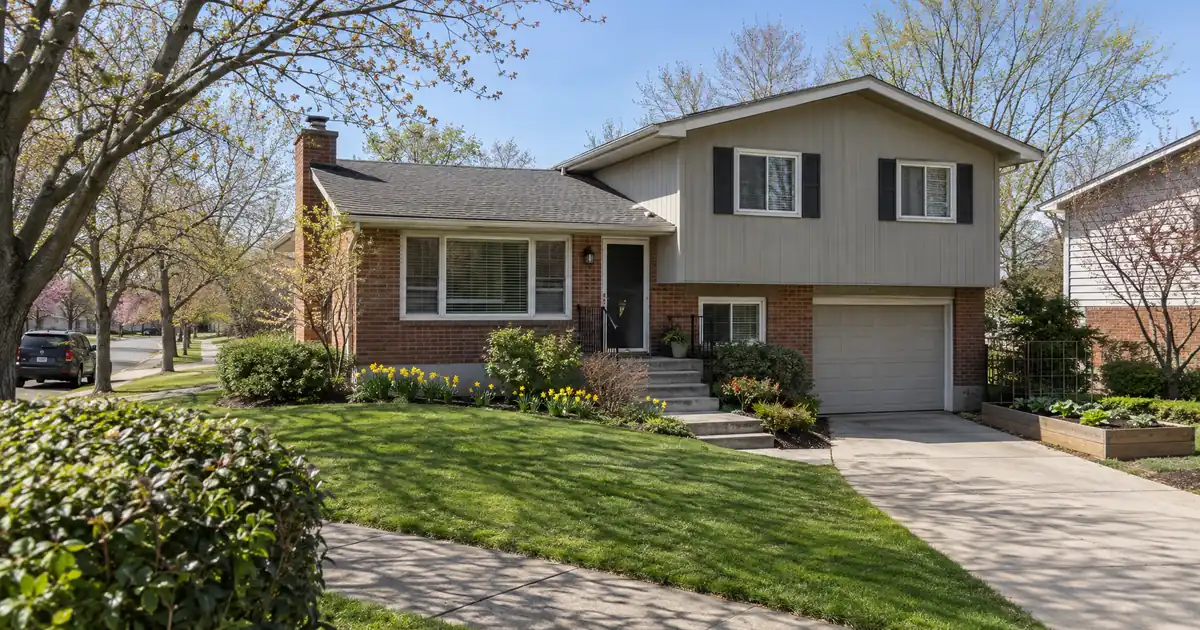
The Quick Read: It depends on the loan, and on a DSCR investor loan the answer is neither: the loan is reviewed on the property’s rent compared with its housing payment, not on the borrower’s 1099 earnings. A tax-return mortgage starts from net profit, while bank statement programs start from deposits reduced by an expense factor. Qualification on any path is subject to lender guidelines.
- A DSCR loan on a non-owner-occupied rental looks at rent, the housing payment, credit, reserves and entity documents. Schedule C and 1099s are not part of the file.
- A tax-return loan uses Schedule C net profit, so heavy write-offs shrink the number.
- A bank statement loan uses 12 months of deposits, then applies a lender expense factor.
- A 1099 gross total is not Schedule C income. The two forms measure different things.
- Occupancy decides the path. Owner-occupied files run as consumer mortgages, and rentals run as business-purpose loans.
The question comes up on contractor files all the time. The borrower grosses a healthy number, writes off a lot, and shows a small net on the return. Then the loan officer asks which figure counts. The honest answer is that it depends on which door the file goes through.
What your deposits qualify you for.
Alt-doc programs read 12 months of business or personal bank deposits instead of tax returns. Enter your average monthly deposits and see the income a lender would credit you.
The expense factor is set by the lender from your business type and profit-and-loss statement; it is not a number you choose. This widget quotes no rate and no payment.
Program parameters shown update from Lendmire’s centralized guideline source.
Estimate
Illustrative estimate only — not a quote, Loan Estimate, approval, or commitment to lend. Deposit average, expense factor, and housing ratio are editable assumptions; the expense factor a lender applies is set from your business type and documentation. No interest rate or monthly payment is quoted here. Purchase capacity is a simplified illustration and does not account for taxes, insurance, HOA dues, or other debts. Alt-doc income documentation is available on consumer mortgages in the states where Lendmire is licensed for consumer lending; actual terms vary by lender, borrower, and property.
What Is the Difference Between a 1099, Gross Revenue and Net Income?
A 1099-NEC reports what one payer paid you. That is gross. Net income is what is left after business expenses. TurboTax explains that 1099-NEC income is reported on Schedule C, and Schedule C is where net profit gets calculated.
So a contractor with several clients can hold several 1099s that add up to one gross figure. Schedule C subtracts deductible expenses from that figure. What remains is the net profit, and that is the number a tax-return underwriter starts from.
Two files with identical gross can look very different on paper. One contractor spends little and shows a high net. Another writes off a vehicle, equipment, a home office and software and shows a low net. The cash that actually moved through the accounts may be similar. The tax return tells a different story.
Key Terms Defined
Gross revenue: Total payments received before any business expenses are subtracted.
Net profit: Gross receipts minus deductible business expenses, as reported on Schedule C.
Expense factor: A percentage a lender removes from bank deposits to estimate business costs. It is set by the lender, not by a universal rule.
Add-back: A non-cash deduction, such as depreciation, that a lender may add back to net profit when calculating qualifying income.
DSCR: Debt service coverage ratio, meaning the property’s monthly rent divided by its monthly housing payment (principal, interest, taxes, insurance and any HOA dues).
Business-purpose loan: Credit taken for an investment or business reason rather than personal or household use.
Which Figure Does a DSCR Loan Use?
A DSCR loan uses neither. It qualifies primarily on property-level rental income covering the payment, subject to lender guidelines. A W-2 employee, a 1099 contractor and a retiree are treated the same way on this path, because only the property is being measured.
DSCR loans are designed for non-owner-occupied investment properties. Because they are business-purpose investor loans, they are reviewed differently from a standard owner-occupied mortgage. That is why personal earnings are not the center of the file. The property’s rent is.
The mechanics are plain:
1. The rent is documented through an appraiser’s rent schedule or an existing lease.
2. The ratio compares that rent with the full housing payment. Taxes, insurance and HOA dues count alongside principal and interest.
3. The borrower supplies the purchase contract, proof of funds, a credit authorization and entity documents where the property is held in an LLC, subject to program terms.
4. Credit and reserves are still reviewed. Qualification on the property’s income is not the same as no review.
Across Lendmire’s wholesale network, most programs treat 1.00 as a common benchmark where rent covers the payment, not a guarantee of anything. Select lenders will review sub-1.00 coverage, but leverage and terms adjust when they do. Eligibility turns on credit profile, reserves, the property and lender guidelines. For the full picture, see the complete DSCR loans guide.
Why Can DSCR Skip Personal Income?
Because the loan is made for a business purpose. Regulation Z § 1026.3 exempts credit extended primarily for a business purpose, and the Federal Register final rule on ability-to-repay states that business-purpose loans are outside the ability-to-repay provisions and that investment-purpose loans count as business-purpose loans.
Two cautions keep this honest. Business purpose does not mean exempt from every compliance obligation, as Lexology’s commentary points out. And the exemption depends on the facts of the deal, which the next section covers.
When Does the Gross-or-Net Question Actually Apply?
It applies when the contractor goes through an owner-occupied or income-based door. A few common cases:
- Full-doc mortgage on a primary residence. The underwriter starts from Schedule C net profit, adds back items like depreciation, and often averages two years. Write-offs reduce qualifying income.
- Bank statement loan. Lenders review 12 months of business or personal statements. Qualifying income comes from the deposit average, reduced by a lender expense factor. The factor varies by lender, so no single figure applies everywhere. Personal-account programs may treat deposits differently from business-account programs.
- 1099-only programs. These start from gross 1099 totals and apply an expense factor. The percentage is lender-specific.
- Asset-depletion. Qualifying from liquid assets instead of earnings is an alternative, with leverage up to about 80% LTV on a primary residence through select lenders.
Here is how the paths compare for the same contractor.
| Path | Starting figure | Adjustment |
|---|---|---|
| DSCR (rental) | Property rent | None to personal income |
| Tax-return loan | Schedule C net profit | Add-backs, multi-year average |
| Bank statement | Deposit average | Lender expense factor |
| 1099-only | Gross 1099 totals | Lender expense factor |
On owner-occupied bank statement files, select lenders in the network go up to 90% LTV on a primary-residence purchase or rate-term refinance. Owner-occupied cash-out runs up to 80% LTV with a fixed expense ratio, or 75% with an accountant-prepared ratio, by loan size and credit. Loan sizes run roughly $125,000 to $3,500,000, and reserves commonly sit around 6 months of the housing payment. These programs review the file on documented income under the applicable program, subject to lender guidelines.
Lendmire’s piece How to Qualify on Commission Income With a 1099-Only Loan goes deeper on the 1099-only path.
Where Does the “No Income” Logic Break?
Occupancy is where it breaks. A DSCR file only works as a business-purpose loan when the property fits that frame. Regulation Z § 1026.3 treats credit to acquire a rental the borrower will occupy within the coming year as business-purpose only if the property has more than two housing units. House-hacking a one- or two-unit property is generally not a DSCR scenario. That buyer is looking at an owner-occupied program, and the income documentation question returns.
One more edge case. Doss Law’s commentary notes that a cash-out refinance of a rental taken to pay personal expenses can be treated as consumer credit. Fund use matters. Keep the purpose of the proceeds clear on the file.
On disclosure, the split follows occupancy. An owner-occupied bank statement file is a consumer mortgage, and TRID applies. A bank statement or DSCR loan on a non-owner-occupied rental, including a short-term rental, is business-purpose and exempt from TRID. Investment-property cash-out on alt-doc tops out around 75% LTV. Investment purchase leverage on bank statement documentation varies by lender, so it is not something to count on from a general rule.
What Does This Mean for a Contractor Buying Rentals?
It means write-offs do not block the purchase. Heavy deductions lower Schedule C net, which can shrink conventional qualifying income. DSCR sidesteps that because the Schedule C is not what gets underwritten. A contractor whose return shows modest net income can still buy a rental that cash-flows.
Picture a self-employed electrician who grosses well, writes off most of it, and shows thin net income on the return. A tax-return lender sees a small number. A DSCR lender sees a duplex whose rent clears the payment with room to spare, say around 1.2x, and a borrower with solid credit and reserves. The files are reviewed on different evidence.
The trade-off is real. DSCR loans are non-QM investor loans, so pricing, down payment and prepayment terms reflect that. The loan is not free money, and the property has to carry itself.
A contractor who later wants a primary-residence mortgage will still be reviewed on income for that loan. Planning matters. A CPA conversation before changing how deductions are taken is smarter than a mid-file surprise.
What Are the Common Mistakes on Contractor Files?
These are the ones that cost files time:
- Assuming gross 1099 equals Schedule C income. It does not. SDO CPA explains that the 1099 shows gross and Schedule C shows profit after expenses.
- Assuming every deposit counts. Non-income deposits come out, and business deposits take an expense factor.
- Treating no personal income documentation as no documentation. Credit, appraised rent, leases, reserves and entity documents are all checked.
- Mixing form types. A 1099-NEC for services generally signals self-employment. A 1099-INT or 1099-DIV does not, according to 1800Accountant.
- Mismatched numbers. When 1099s, deposits and the return do not tie out, expect questions.
How Should a Contractor Pick a Path?
Match the path to the purchase, not the other way around.
- Buying a pure rental, not living in it: DSCR is the natural fit, as the property’s rent is what counts.
- Buying a home to live in, with low net on the return: a bank statement loan may fit better than a tax-return loan, depending on deposits and the lender’s expense factor.
- Buying a home to live in, with strong net on the return: a full-doc loan may work fine.
- Income is new or declining: underwriters weigh history and trend. Expect more questions, and expect lenders to differ.
The brokerage arranges financing through select lenders in its wholesale network, and DSCR investor loans are available across 41 markets, including Washington, D.C. An illustrative calculator on the site can help frame the numbers before a file goes in. Programs vary by lender, and every file is underwritten individually. This is not a commitment to lend.
This article is general information, not legal or tax advice. Tax treatment varies; consult a qualified professional, such as an attorney or CPA, about your own situation.
Frequently Asked Questions
Does a 1099 count as gross income?
Yes, a 1099-NEC reports gross payments from one payer. It is not the figure a tax-return lender uses, because Schedule C subtracts expenses to reach net profit. Only certain 1099-only programs start from gross totals, and they apply an expense factor.
Do tax write-offs hurt my ability to qualify?
On tax-return and income-based loans, yes, because write-offs lower net profit. On a DSCR loan for a non-owner-occupied rental, they do not enter the picture, since the Schedule C is not underwritten. The property’s rent against its payment is what gets reviewed.
Can I qualify without traditional personal-income documentation?
Often, depending on the program. A bank statement loan uses 12 months of statements, and a DSCR loan uses the property’s rent. Both still review credit and reserves, and lender guidelines control the details.
Is a DSCR loan available if I plan to live in the property?
Generally not on a one- or two-unit property. Owner-occupied purchases fall under consumer mortgage rules, so an owner-occupied program applies instead. A property that is purely a rental is the usual DSCR fit.
Does the expense factor on bank statement loans stay the same everywhere?
No. Lenders set their own factors, and they can differ by business type and account type. The factor a lender applies can also vary by loan size and credit, and some programs accept an accountant-prepared expense ratio in place of a fixed one.
About Lendmire
Lendmire (NMLS# 2371349), a non-QM mortgage broker serving investors in 41 markets including Washington, D.C., helps structure DSCR scenarios commonly evaluated around a property’s rental income rather than personal income paperwork, subject to lender guidelines. A Scotsman Guide Top Mortgage Workplace in 2025 and 2026, Lendmire places loans through wholesale investor lenders and is not a direct lender.
Get Started
Ready to find the right loan for you?
In about 30 seconds you can review financing options available for your home or investment property. No commitment required.
Informational only. Not a Loan Estimate, approval, or commitment to lend. Program availability and eligibility are subject to lender guidelines, credit approval, property review, and underwriting.
References
1. TurboTax: Form 1099-NEC and Schedule C
3. Federal Register: Ability-to-Repay and Qualified Mortgage Standards
5. Doss Law: Business Purpose Exemption
7. 1800Accountant: Is a 1099 Considered Self-Employed
This article is part of Lendmire’s self-employed mortgage guides — full qualification details, guidelines, and scenarios live on the program page.
Related reading: How to Qualify for a 12-Month Bank Statement Loan in an LLC · 1099 Mortgage Requirements on 12 Months vs. 24 Months of Income History · How to Qualify for a Bank Statement Loan in Virginia
Brandon Miller
Founder & CEO, Mortgage Loan Originator, Lendmire LLC
- Mortgage Loan Originator · NMLS# 1129696 · Verify on NMLS Consumer Access
- North Carolina Real Estate Broker · License# 343312 · Verify on NCREC
- North Carolina Insurance Producer · License# 19053198 · Property, Casualty, Life, Health · Verify on NAIC SBS
- Lendmire LLC · Firm NMLS# 2371349 · Verify firm licensure
Disclosure information. Lendmire is a state-licensed mortgage brokerage under NMLS# 2371349. Lendmire is not a depository institution, direct lender, or financial advisor — all loans referenced are placed through wholesale lender partners and are subject to each lender's underwriting standards. This article is provided for general informational purposes and is not a commitment to lend, nor does it constitute financial, legal, or tax advice. Loan programs, terms, rates, and qualification standards change without notice and depend on borrower profile, property type, and the state in which the subject property is located. Equal Housing Opportunity provider. NMLS Consumer Access: nmlsconsumeraccess.org.