
The Quick Read: The biggest hidden cost this fall is the monthly payment moving between contract and closing. Freddie Mac’s survey has the 30-year fixed average up four straight weeks, and the Fed raised its target range on September 16. As of September 28, 2026, the other side of the ledger is more room to negotiate. Inventory is up, supply is the deepest in over a decade, and builders are cutting prices and handing out incentives.
I’m writing this on September 28, 2026. Here is what changed, what it means, and what I’d do about it.
Key Takeaways
- Freddie Mac’s 30-year average rose for the fourth straight week, to 7.03% for the week of September 24.
- The Fed raised rates by a quarter point on September 16, its first hike since 2023.
- A rate that moves between contract and closing is the cost most buyers don’t price in. Locking is the tool.
- Existing-home supply hit 4.9 months in August, and 66% of builders used incentives in September. Ask for credits and concessions.
- The three big rate numbers (Freddie Mac, the MBA, Mortgage News Daily) measure different things. Don’t compare them.
What Changed: Four Weeks of Higher Rates
Mortgage rates rose every week in September, and the pace picked up in the middle. Freddie Mac’s survey put the 30-year fixed at 6.71% for the week of September 3. It moved to 6.76% on September 10, then 6.95% on September 17, then 7.03% for the week of September 24. That is four straight increases. The September 17 reading was the biggest jump of the run, at 19 basis points.
Freddie Mac’s survey has the 30-year fixed running well above where it stood a year earlier. The gap is 73 basis points. In the same survey, the 15-year average for the week of September 24 rose 16 basis points from the week before.
A note on method. Freddie Mac’s survey reflects borrowers putting 20% down with excellent credit. It covers the prior Thursday through Wednesday. It is a clean benchmark, not a quote. These specifics are subject to lender guidelines and a full review of property, leverage, and credit.
The Mortgage Bankers Association shows the same direction in its weekly survey, released September 23. Its 30-year contract rate rose to 7.12% for the week ending September 18, up from 6.97%. The MBA’s chief economist, Mike Fratantoni, called that the highest since May 2024. Adjustable-rate loans reached 9.8% of applications. Refinance activity ran at its slowest pace since February 2025, 62% below a year earlier. Purchase applications were 11% below a year earlier on an unadjusted basis.
Then there is the daily number. Mortgage News Daily’s index put the 30-year fixed at 7.50% on September 28, the first time at that level since April 30, 2024. It runs higher than Freddie Mac’s figure because it tracks daily lender pricing, not a weekly average of a best-case borrower.
Why the gap? Different timing and different borrowers. Freddie Mac looks back across a week. Mortgage News Daily looks at today. Read the three as a range, not a contradiction.
The Fed Moved, but Mortgage Rates Were Already Climbing
On September 16, the Federal Reserve’s FOMC statement announced a 12–0 vote to raise the target range a quarter point, to 3¾–4%. Kiplinger described it as the first hike since 2023. CNBC reported it as the first in more than three years.
Here is the misreading I hear most. The Fed does not set mortgage rates. It moves short-term rates. Mortgage rates track longer-term yields, and those had been rising since February. The MBA’s chart of the week put the 10-year Treasury yield close to 5.2%, against about 4% in February. The MBA said the 30-year rate had risen 30 basis points over the past month and sat a full percentage point above early 2026.
Where does it go from here? Nobody knows, and the Fed’s own officials don’t agree. According to CNBC’s read of the September 16 projections, eight officials see another hike in 2027, six see a hold and four see cuts. The MBA’s September forecast calls for rates near 6.8%. Spot rates are already above that.
The Hidden Cost Nobody Prices: Rate Drift Between Contract and Closing
The payment you sign up for in contract is not necessarily the payment you close on. A buyer who goes under contract and leaves the rate floating is making a bet. In a month like this one, it’s a bet against the trend.
Run a plain hypothetical. If a rate moves from 6.75% to 7%, that is a quarter point. Over a 30-year loan, a quarter point is real money, and it arrives after the earnest money is already at risk. Move it a full point, as the market did over the past nine months, and the budget you built in the spring doesn’t describe the house you can afford now.
Here is how I’d think about the mechanics. A rate lock is an agreement that holds a quoted rate for a set period while the loan is processed. If you like the loan and the house, lock it. Floating means leaving the rate unlocked and accepting whatever the market does. That can work in a falling market. In a rising one, floating is how a manageable payment becomes a stretched one.
Quotes need care too. A quote gathered on Tuesday and one gathered on Friday of the same week are not comparable when the market is moving 19 basis points in seven days. If you are comparing offers, get them on the same day, for the same scenario, with the same loan features.
And note which number you are comparing against. Freddie Mac’s 7.03% assumes 20% down and excellent credit. Your scenario may differ, and so may the price it produces. Get a quote on your own file instead of anchoring to a headline average. Terms vary by lender guidelines, property type, leverage, credit profile, and full file review.
Other Costs That Rising Rates Magnify
The standard hidden-cost list still applies: closing costs, inspections, moving, repairs, maintenance, escrow. Every one of those costs cash, and cash is what a higher payment competes with. A buyer stretched thin on the monthly number has less cushion for the roof, the water heater or the first escrow adjustment.
That is the real hidden cost of this rate environment. It’s not any single line item. It’s the thinning of the buffer around all of them. I’d rather a buyer take a slightly smaller payment and keep a real reserve than max out the approval and hope nothing breaks.
Why Are Buyers Getting More Negotiating Room?
Buyers have more leverage this fall than at any point in years, and the data says so. NAR’s report on August existing-home sales, released September 10, showed sales down 2.0% from July to a 3.98 million annual pace. Inventory reached 1.62 million units, up 5.9% from a year earlier, and the first reading above 1.6 million since November 2019. Supply stood at 4.9 months, up from 4.6 in July and the highest in over ten years. The median existing-home price was $429,100, up 1.6% from a year earlier.
NAR’s chief economist, Lawrence Yun, said the supply is “giving homebuyers better opportunities to negotiate.” I agree with that, and I’d add a caution. Prices are still rising year over year on the existing-home side. This is a negotiating market, not a crashing one.
The new-home side shows more movement. The Census Bureau’s new residential sales report, released September 24, put August sales at a 684,000 annual rate. The median new-home price was $393,700, down 5.8% from a year earlier. Both figures carry wide margins of error, and Census flags the changes as not statistically significant. Inventory was 483,000 homes, an 8.5-month supply.
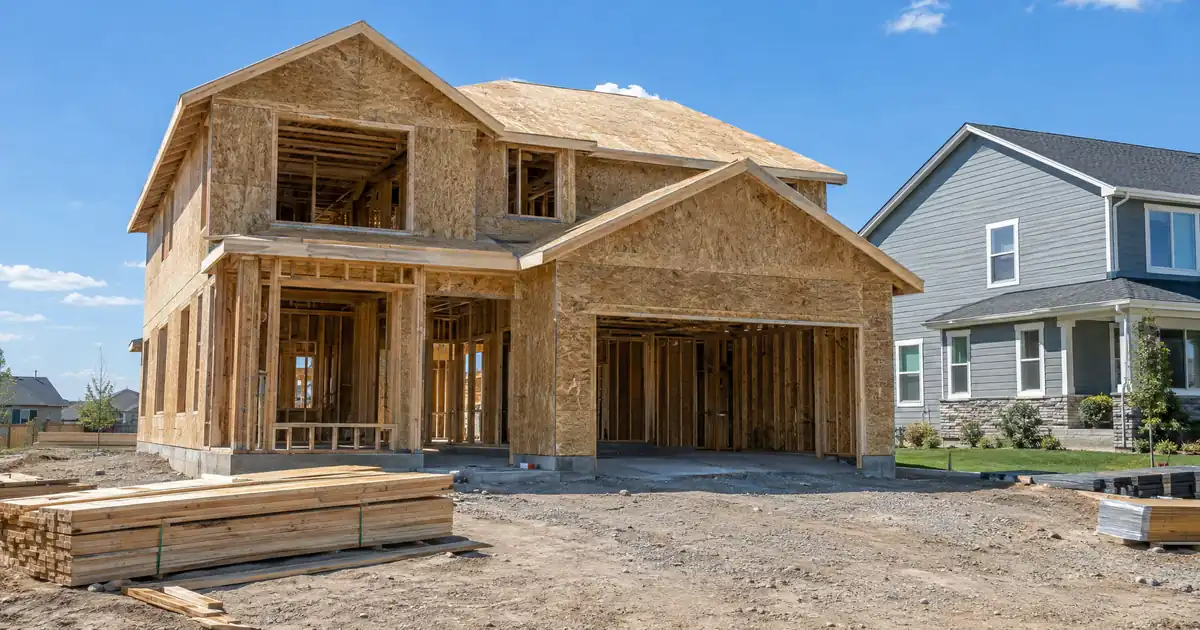
Builder behavior is clearer than the headline data. According to the NAHB and a large national bank survey as reported by Inman on September 25, 38% of builders cut prices in September, up from 35% in August. The average cut held at 6%. And 66% used incentives, the highest share since December. HousingWire has reported that builders spent 2026 cutting prices, buying down mortgage rates and shifting to lower price points.
One more data point on timing. Realtor.com’s Best Time to Buy report, released September 10, named the week of September 27 through October 3. It projected up to 31.9% more active listings than at the start of the year, list prices about 3.5% below the seasonal peak, and competition 30.1% below the annual peak.
A few misreadings to avoid:
- “Prices are crashing.” Not in the existing-home data. The weak medians are new-home figures, which are noisy and mix-driven.
- “Sales are collapsing.” Year-to-date existing sales are still up 1.6%. The trend is a mild softening, though purchase applications are weaker.
- “Builder incentives are free money.” They’re widespread, but the 6% average cut and the 66% incentive share are national survey figures. They vary by builder and by market.
- “Wait for rates to fall.” Nothing in the sourced data says they will.
My Take
Here is my read. The market this fall has handed buyers one problem and one opportunity, and they are linked.
The problem is the payment. Rates are up 73 basis points from a year ago per Freddie Mac, and the daily index is higher still. The opportunity is that sellers and builders know it. Supply is the deepest in over a decade, and builders are using price cuts and incentives at a rate we haven’t seen since last winter.
So I would stop asking “what’s the lowest price I can get?” and start asking “what’s the lowest cost of ownership I can structure?” Those are different questions. A seller credit toward closing costs or a rate buydown paid by the builder can be worth more to your monthly budget than a price cut of similar size. It’s worth running both and comparing.
I’ll say plainly that this is a toss-up on timing. If you wait, you may see better inventory in the fall and winter, since fall listing counts are projected to be high. You may also see rates that are higher, not lower. The MBA’s forecast and the Fed’s median projection don’t point to relief. Waiting for rates to fall is a forecast, not a plan.
What I would not do is stretch to the top of an approval because the market feels soft. Soft inventory is not the same as cheap money.
What I’d Do Now
Price the deal on the payment, not the price. Before you make an offer, decide the monthly number you can carry with a real reserve left over. Work backward from there.
Lock when you like the loan. If your contract is signed and the numbers work, a lock removes the largest variable you don’t control. Ask whoever is arranging your loan how long a lock lasts and what happens if your closing date moves. That is the question to settle before you sign, not after.
Ask for concessions in writing. Seller credits toward closing costs, builder rate buydowns and other incentives are on the table in this market. NAR says buyers hold more negotiating power, and builders are plainly using incentives, so it costs you nothing to ask. The worst answer is no.
Compare quotes on the same day. Same scenario, same loan features, same day. Quotes from different days are not comparable when the market is moving, and this month it moved every week.
Look at the full menu of loan structures. An adjustable-rate loan is not right for everyone, but 9.8% of applications are now adjustable, so buyers are looking. If your income is variable or you’re self-employed, there are programs that qualify a file differently than a standard paycheck-based loan does. Our loan options page carries the current guidelines, which are subject to lender guidelines and your file.
Keep the cash cushion. Closing costs, inspections, moving, first repairs and the first escrow adjustment all come out of the same pocket. In this rate environment, that pocket is the thing a higher payment competes with.
For buyers who own a vacation or second home and are weighing equity, Lendmire’s guide to refinancing a vacation home into a DSCR loan covers one structure. It is reviewed on the property’s rental income and is subject to lender program eligibility. It is not a fit for every owner.
If you’re weighing a purchase or a refinance this fall, Lendmire can walk you through how the current programs fit your file. You can reach us at 828-256-2183 or request a quote.
For the end-to-end picture of how these loans work — qualification, structures, and the full process — see Lendmire’s complete DSCR loans guide.
Frequently Asked Questions
Is 7.03% the rate I’ll get?
No. Freddie Mac’s 7.03% is a weekly average for borrowers putting 20% down with excellent credit, covering the week of September 24. Mortgage News Daily’s index, which tracks daily lender pricing, stood at 7.50% on September 28. Your own rate depends on your credit, down payment, property and the day you lock. Exact terms depend on the lender’s guidelines, property type, leverage, and a full review of the borrower’s file.
Did the Fed’s hike cause mortgage rates to rise?
Only partly. The Fed raised its target range on September 16, but mortgage rates follow longer-term yields, and those had been rising since February. The MBA put the 10-year Treasury close to 5.2%, against about 4% that month. The hike added to the pressure and didn’t start it.
Should I wait for rates to come down?
The MBA’s September forecast calls for rates near 6.8%, below spot levels but still elevated. At the Fed, eight officials see another hike in 2027, six see a hold and four see cuts. If the house and the payment work today, waiting is a bet, not a plan.
What can I negotiate for besides price?
Seller credits toward closing costs are the common one. With builders, rate buydowns and other incentives are widespread: the NAHB survey, reported September 25, found 66% of builders using incentives. Ask for them in writing. Whether any of it is available depends on the seller, the builder and the market.
Are home prices falling?
Not in the existing-home data. NAR put the August median at $429,100, up 1.6% from a year earlier. The Census Bureau’s new-home median was down 5.8%, but with a wide margin of error. The sharper shift is in negotiating room, not in the headline price.
About Lendmire
Lendmire — NMLS# 2371349 — is a mortgage brokerage whose founder writes this column. DSCR investor programs reach 41 markets, including Washington, D.C.; consumer programs such as bank statement, HELOC and down payment assistance loans are arranged in 16 states; every loan is placed with, and underwritten by, a wholesale lender under that lender’s guidelines. Scotsman Guide named Lendmire a Top Mortgage Workplace in both 2025 and 2026.
Get Started
Ready to find the right loan for you?
In about 30 seconds you can review financing options available for your home or investment property. No commitment required.
Informational only. Not a Loan Estimate, approval, or commitment to lend. Program availability and eligibility are subject to lender guidelines, credit approval, property review, and underwriting.
References
1. Freddie Mac Primary Mortgage Market Survey
2. Mortgage Bankers Association Weekly Applications Survey
3. Federal Reserve FOMC statement
4. NAR existing-home sales report for August
5. Inman, new-home sales and NAHB builder survey
This article is part of Lendmire’s Mortgage News series — every loan program’s qualification details, guidelines, and scenarios live on the loan options page.
Related reading: Popular Loans For Buying A Home In September 2026: DSCR Is Crowding In · FHA Loan For First-time Buyers As Rates Climb In September 2026 · Buying A Home After School Starts: Four Weeks Of Rising Rates, More Leverage
Brandon Miller
Founder & CEO, Mortgage Loan Originator, Lendmire LLC
- Mortgage Loan Originator · NMLS# 1129696 · Verify on NMLS Consumer Access
- North Carolina Real Estate Broker · License# 343312 · Verify on NCREC
- North Carolina Insurance Producer · License# 19053198 · Property, Casualty, Life, Health · Verify on NAIC SBS
- Lendmire LLC · Firm NMLS# 2371349 · Verify firm licensure
Legal disclosures. Lendmire (NMLS# 2371349) is a state-licensed mortgage brokerage that arranges financing through wholesale lender relationships. Lendmire is not a direct lender, depository institution, or registered financial advisor. The discussion above is general informational content about real estate financing — it is not financial, legal, or tax advice, and readers should consult licensed professionals for guidance on their individual circumstances. Loan inquiries are subject to lender underwriting; this article does not represent a commitment to lend. Loan terms, rates, and qualification standards vary by borrower, property, and state, and are subject to change at any time. Equal Housing Opportunity. NMLS Consumer Access: nmlsconsumeraccess.org.