
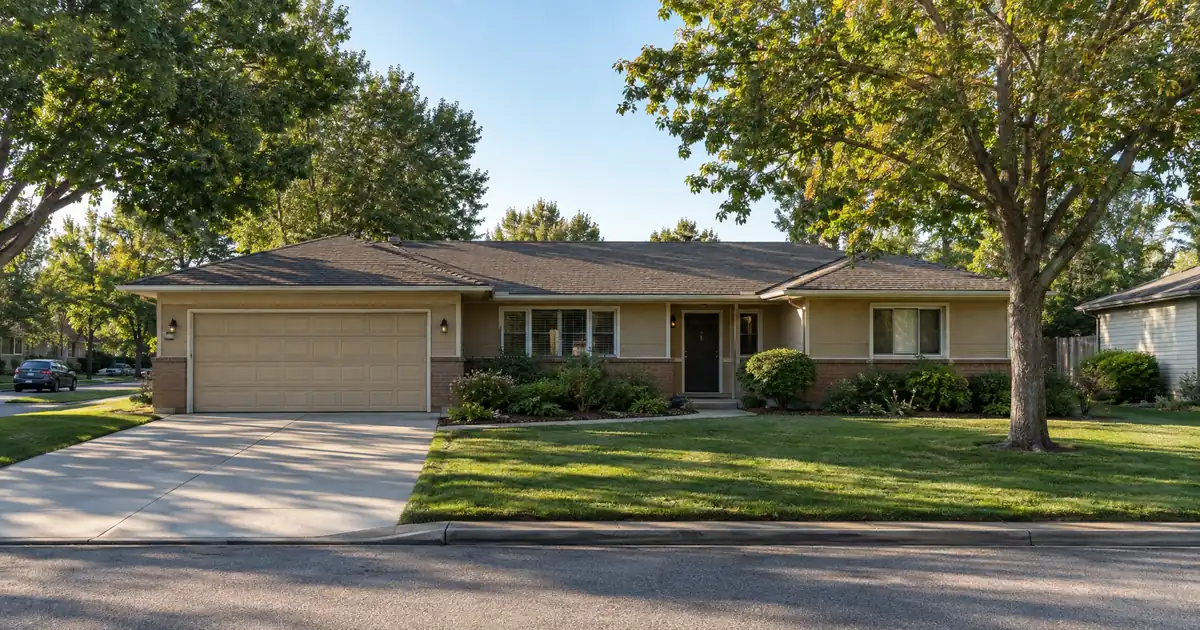
Best HELOC Lenders For Self Employed — The Quick Read: Self-employed borrowers can qualify for a HELOC, but the underwriting leans harder on credit score, debt-to-income ratio, and combined loan-to-value than it does for a W-2 employee. Home equity lines require the individual borrower (or a revocable living trust) to hold title — not an LLC — which is the single biggest mismatch for rental-property investors. When that mismatch shows up, most investors end up comparing a HELOC against a DSCR loan instead, since a DSCR loan is reviewed on the property’s rent rather than the owner’s traditional personal-income documentation.
Key Takeaways
- HELOC underwriting for self-employed borrowers runs on credit score, DTI, and CLTV — not a uniform agency rule like a purchase mortgage.
- Investment-property HELOC lines top out lower than primary-residence lines, and title must sit with an individual or revocable trust, never an LLC.
- Draw-period-to-repayment-period math matters more for self-employed income than for salaried income, because both the cash flow and the payment can shift at the same time.
- When a rental is titled in an LLC, or a portfolio outgrows a HELOC’s exposure limits, a DSCR loan is usually the more practical fallback.
Key Terms Defined
HELOC (home equity line of credit): a revolving credit line secured by a property’s equity, with a draw period followed by a repayment period.
How large a line the equity supports in your market.
An equity line is sized by combined loan-to-value, occupancy, and credit — not by rental coverage. Switch the occupancy or the credit band and the ceiling moves with it.
Investment-property lines require a 700 minimum credit score. Second-home tiers reach 640; primary-residence tiers reach 600.
A debt-to-income ratio above 45% requires 680+ credit. Profiles under 640 are limited to single-family homes. At least 75% of the approved line is drawn at closing. Ceilings, floors, and caps update from Lendmire’s centralized guideline source.
Line estimate
Illustrative estimate only — not a quote, Loan Estimate, approval, or commitment to lend. The rate is an editable assumption; equity-line pricing is variable through both the draw and repayment periods and never converts to fixed. Occupancy and credit drive the ceiling together: investment property runs to 70% combined LTV with a 700 credit floor and a $500,000 cap; a second home runs to 90% at a 640 floor with a $500,000 cap; a primary residence reaches up to 90% at a 600 floor, and its $750,000 maximum line applies only at 75% combined LTV or below with 720+ credit and a full appraisal. Lines above $500,000 require a full appraisal. Credit, debt-to-income, property type, and full underwriting review all affect the final line.
CLTV (combined loan-to-value): the total of all liens on a property, divided by its value — the ratio lenders use to set a HELOC’s maximum size.
DTI (debt-to-income ratio): monthly debt obligations divided by qualifying monthly income, used to size how much additional debt a borrower can carry.
Draw period: the phase of a HELOC when the borrower can pull funds, often with interest-only payments; it’s followed by a repayment period where the balance amortizes or comes due.
DSCR (debt-service coverage ratio): a ratio comparing a rental property’s income to its monthly housing payment, used to qualify investment-property loans on the property’s cash flow instead of the borrower’s personal income.
How Self-Employed Borrowers Actually Qualify for a HELOC
There’s no single agency rulebook here. A HELOC is a portfolio product, so each lender sets its own documentation and qualification standards rather than following one uniform format.
That flexibility cuts both ways for a self-employed borrower. On one hand, a lender isn’t locked into a rigid two-year tax-return chain the way a conforming mortgage is. Debt-to-income ratio is the lever that matters most for a self-employed applicant, and it’s calculated on the interest-only payment tied to the maximum draw amount — not a partial draw. Across Lendmire’s home equity line network, that ratio typically maxes out around 50%, though a credit profile between 600 and 679 gets capped closer to 45%, and pushing past 45% generally requires at least a 680 score. Self-employed income that swings year to year makes that ceiling worth watching closely before applying.
There’s a structural detail that’s easy to overlook: the shift from the draw period to the repayment period. Federal regulators describe this two-phase design plainly. During the draw period, the borrower has revolving access to funds, often with interest-only payments. Once the repayment period begins, the balance either comes due or amortizes over the remaining term. Regulators call this shift “payment shock” (Federal Reserve). For a salaried borrower, this is mainly a future-planning issue. But for a self-employed borrower — whose income already moves around — two variables shift at once. That’s worth stress-testing before signing.
This matters more than it used to. Self-employment isn’t a fringe borrower profile anymore. Unincorporated self-employed workers made up 5.7% of the nonagricultural workforce — about 9.1 million people — as of the fourth quarter of 2023, according to the Bureau of Labor Statistics. Lenders who ignore that population are ignoring a meaningful slice of qualified borrowers.
What a Home Equity Line Looks Like by Occupancy Type
Occupancy changes almost everything about a HELOC — the ceiling, the credit floor, and the maximum line size. Skipping this step and quoting a single blanket number is the fastest way to misjudge what’s actually available.
| Occupancy | Min. Credit Score | Max CLTV | Max Line Size |
|---|---|---|---|
| Primary residence | 600 | Up to 90% (720+ score, capped at $500K) | $750,000 |
| Second home | 640 | Up to 90% (720+ score) | $500,000 |
| Investment property | 700 | 70% flat | $500,000 |
Primary residences get the most room to move. A 700+ score opens 75% CLTV up to $750,000, and a 720+ score can reach 90% CLTV on values up to $500,000. Lower credit tiers still qualify — the 600 floor caps around 60% CLTV up to $400,000 — but the ceiling drops as the score does.
Second homes follow a similar shape at a smaller scale: a 640 floor opens roughly 75% CLTV, climbing toward 90% at 720+, always capped at a $500,000 line.
Investment property is the flat one. Regardless of credit tier above the 700 minimum, the ceiling holds at 70% CLTV and the line caps at $500,000 — there’s no higher tier to climb into on a rental. That’s a hard structural ceiling on this network, not a starting point.
Two draw structures exist on primary and second-home lines: a 3-year interest-only draw with 17-year amortizing repayment, or a 5-year draw with 25-year repayment (Tennessee shortens both to 3-year/12-year and 5-year/10-year). Investment lines run the 5-year draw and 25-year repayment structure only. At least 75% of the line gets drawn at closing on both structures, and pricing floats through the entire draw and repayment period on both — it never converts to a fixed rate.
Valuation follows a similar split based on size. Lines at or below $500,000 typically run on an automated valuation, with no traditional appraisal needed. However, files with higher CLTV may need a secondary check. Anything above $500,000 requires a full appraisal. A borrower can also request one regardless of the line size.
Where the HELOC Path Breaks for Self-Employed Investors
The rule that trips up more self-employed rental owners than any other: title has to sit with an individual borrower or a revocable living trust. LLCs, corporations, partnerships, and irrevocable trusts cannot hold title on this program — full stop.
This is the sharpest structural difference between a HELOC and a DSCR loan. A DSCR loan is commonly closed in an entity’s name, subject to program eligibility. Say a self-employed investor already deeded a rental property into an LLC for liability protection. To use a HELOC, they’d need to move the title back to an individual or a trust. Or they could skip the HELOC and look at a DSCR cash-out instead.
A few other edges worth knowing before applying:
- Portfolio exposure caps out fast. A borrower is limited to three home equity lines total, with combined exposure capped at $2,000,000 on the higher-leverage program and $750,000 on the longer-runway program. Own more than 15 financed properties and the whole network becomes off the table.
- Sub-640 credit gets boxed in. Because second homes floor at 640 and investment property floors at 700, a credit score under 640 only works on a primary-residence single-family home with a clean 12-month housing history.
- Derogatory history splits by program. Bankruptcy seasons in four years from discharge on both programs. Foreclosure, deed-in-lieu, pre-foreclosure, and short-sale history is messier — one program seasons a foreclosure in seven years and the softer events in four, while the other declines that history outright regardless of age. Investment properties follow the seven-and-four-year path.
- Property type has hard exclusions. Manufactured homes, co-ops, condotels, log homes, commercial and mixed-use property, and agriculturally zoned land aren’t eligible on either program. Modular factory-built homes are eligible only on the longer-runway structure.
- State overlays are real. Texas ties its 12-day waiting period, one-lien-at-a-time rule, and 12-month seasoning to primary homesteads only — Texas second homes and investment properties are treated as non-homestead transactions and remain eligible, capped at 10 acres. New Mexico and Ohio adjust their CLTV cap by credit tier, and a property listed for sale (or listed within the past 60 days) is ineligible in Indiana, North Carolina, Pennsylvania, Tennessee, Texas, and Washington.
Now, on availability: Lendmire’s home equity line network covers 16 full-service states. These are Alabama, California, Colorado, Florida, Georgia, Indiana, Michigan, Montana, New Mexico, North Carolina, Ohio, Pennsylvania, Tennessee, Texas, Virginia, and Washington. That’s noticeably narrower than Lendmire’s DSCR investor-loan reach. If you’re an investor outside those 16 states, a DSCR loan is your default option — not just your preference.
Why Rental Investors Often Pivot to DSCR Instead
Here’s where the calculation actually changes shape. A HELOC underwrites the borrower — credit, DTI, personal cash flow. A DSCR loan underwrites the property — whether the rent covers the payment. For a self-employed investor whose Schedule C or K-1 income is legitimately suppressed by depreciation and write-offs, that’s not a small distinction. It’s the whole ballgame.
DSCR loans are designed for non-owner-occupied investment properties. Because they’re business-purpose investor loans, they’re reviewed differently from a standard owner-occupied mortgage.
Self-employed rental owners make up a large share of that population, and for good reason.
On leverage, most DSCR files in Lendmire’s network land at 75%-80% LTV on a purchase, with select high-leverage programs reaching 85% LTV for borrowers with a 700+ credit score. Cash-out refinances on standard long-term rentals top out around 75% LTV, generally after about six months of seasoning. Coverage of 1.00 — where rent covers the full payment — is where select programs start, not a universal floor; some lenders in the network will consider sub-1.00 coverage with adjusted leverage and terms, and a smaller group offers no-ratio qualification, generally reserved for borrowers who already own a primary residence. Credit floors run as low as 620 in parts of the network, though most programs want at least 660, and a 700+ score unlocks the strongest leverage tiers. Loan sizes typically run up to $3,000,000 on standard programs, with smaller balances available through select lenders, and anything above $2,500,000 is generally structured as a 30-year fixed.
Reserve requirements vary by lender, leverage, and loan size — conservative rate-term refinances under $1,500,000 at modest leverage sometimes waive reserves entirely, while larger or higher-leverage files commonly ask for six to nine months of PITIA.
The comparison, side by side:
| Factor | HELOC (Lendmire network) | DSCR Loan |
|---|---|---|
| Title/vesting | Individual or revocable trust only | Entity title commonly allowed, subject to program eligibility |
| Income basis | Borrower’s DTI and credit | Property’s rent, subject to lender guidelines |
| Investment ceiling | 70% CLTV flat | Up to 75%-80%, select programs to 85% |
| Portfolio limit | 3 lines / 15 financed properties max | No fixed GSE-style loan-count limit |
That last row is worth sitting with for a second. HELOC exposure caps hit an investor’s ceiling well before most portfolios plateau. A DSCR loan carries no equivalent cap — an investor can hold as many DSCR loans as a given lender’s own guidelines permit, which is a structural advantage for anyone scaling past a handful of properties.
DSCR lender review focuses mainly on whether the property’s rental income covers the payment, subject to lender guidelines. This doesn’t replace or skip underwriting — it just changes what’s being underwritten. For a self-employed investor whose personal tax returns don’t reflect their real buying power, this shift is often the difference between getting turned down and getting approved.
Are you trying to decide whether a HELOC or a DSCR loan fits your next move? Lendmire’s complete DSCR loans guide walks through the qualification details in more depth. Lendmire’s team can also help you compare options. They look at the property’s income, your credit profile, available leverage, and what you’re trying to accomplish. See more on best HELOC options for self-employed borrowers here. Or find out how DSCR loans work specifically for self-employed real estate investors.
Frequently Asked Questions
Can a self-employed borrower get a HELOC without two years of traditional personal-income documentation? Possibly, depending on the lender. Some non-QM and portfolio lenders in the broader market will accept bank statements or 1099s instead of a full two-year tax-return chain, but whether a specific wholesale partner can do that on a given file depends on that lender’s own policy and the file’s full review. It’s a case-by-case answer, not a network-wide guarantee.
Can an LLC hold title on a HELOC? No. Title has to sit with an individual borrower or a revocable living trust on this program — LLCs, corporations, partnerships, and irrevocable trusts are all excluded. An investor whose rental is already deeded to an LLC either changes vesting or looks at a DSCR loan, which commonly allows entity title, subject to program eligibility.
What’s the maximum home equity line on an investment property? $500,000, capped at 70% CLTV, with a 700 minimum credit score. That ceiling doesn’t move with a stronger credit profile the way primary-residence and second-home ceilings do — 70% CLTV is the flat top of the range on a rental.
How does the draw period affect a self-employed borrower’s future payment? The draw period often carries interest-only payments, but once the repayment period starts, the balance either comes due or begins amortizing — a jump federal regulators call payment shock. Since self-employed income already fluctuates, it’s worth modeling that eventual payment increase before drawing the full line.
When does a DSCR loan make more sense than a HELOC? When the rental is titled in an LLC, when a portfolio has outgrown the HELOC network’s three-line or 15-property exposure limit, or when personal DTI doesn’t leave room for more debt even though the property cash flows well on its own. In any of those situations, a DSCR loan — which qualifies primarily on the property’s rent — is usually the more workable path.
About Lendmire
Lendmire (NMLS# 2371349), a non-QM mortgage broker serving investors in 40 markets including Washington, D.C., helps structure DSCR scenarios commonly evaluated around a property’s rental income rather than personal income paperwork, subject to lender guidelines. A Scotsman Guide Top Mortgage Workplace in 2025 and 2026, Lendmire places loans through wholesale investor lenders and is not a direct lender.
Lendmire’s Top Mortgage Workplace recognition is documented by Scotsman Guide 2025 Top Mortgage Workplace and Scotsman Guide 2026 Top Mortgage Workplace.
Get Started
Ready to find the right loan for you?
In about 30 seconds you can review financing options available for your home or investment property. No commitment required.
Informational only. Not a Loan Estimate, approval, or commitment to lend. Program availability and eligibility are subject to lender guidelines, credit approval, property review, and underwriting.
References
1. Federal Reserve — Interagency Guidance on HELOCs Nearing End of Draw Periods
2. Bureau of Labor Statistics — Nonagricultural Self-Employment Rate
Brandon Miller
Founder & CEO, Mortgage Loan Originator, Lendmire LLC
- Mortgage Loan Originator · NMLS# 1129696 · Verify on NMLS Consumer Access
- North Carolina Real Estate Broker · License# 343312 · Verify on NCREC
- North Carolina Insurance Producer · License# 19053198 · Property, Casualty, Life, Health · Verify on NAIC SBS
- Lendmire LLC · Firm NMLS# 2371349 · Verify firm licensure
Legal disclosures. Lendmire (NMLS# 2371349) is a state-licensed mortgage brokerage that arranges financing through wholesale lender relationships. Lendmire is not a direct lender, depository institution, or registered financial advisor. The discussion above is general informational content about real estate financing — it is not financial, legal, or tax advice, and readers should consult licensed professionals for guidance on their individual circumstances. Loan inquiries are subject to lender underwriting; this article does not represent a commitment to lend. Loan terms, rates, and qualification standards vary by borrower, property, and state, and are subject to change at any time. Equal Housing Opportunity. NMLS Consumer Access: nmlsconsumeraccess.org.


