
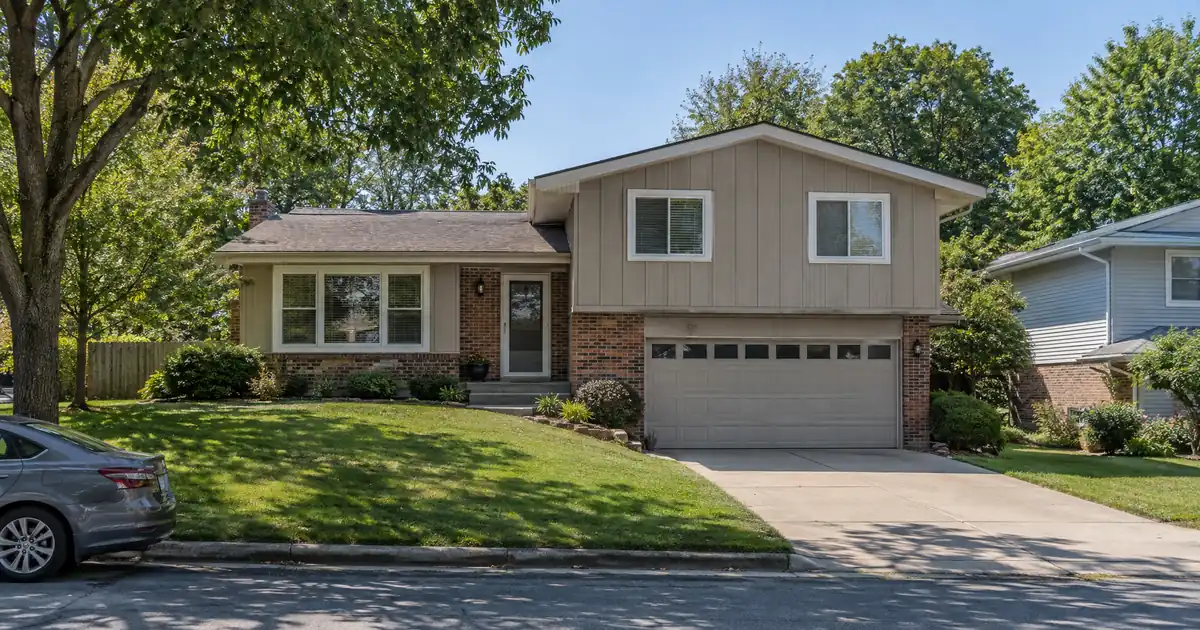
Home Equity For Self Employed — The Quick Read: Self-employed borrowers can absolutely tap home equity through a HELOC, a home equity loan, or a cash-out refinance. The real hurdle isn’t eligibility — it’s proof of income. Lenders want two years of traditional personal-income documentation, or on alternative-doc programs, months of bank statements instead of pay stubs. Once that income is verified, actual leverage still depends on occupancy type, credit profile, and how the property is titled.
Key Takeaways
- Self-employment is a documentation problem, not a disqualifier. Tax-return deductions often make real cash flow look smaller than it actually is.
- Home equity line leverage is tiered by occupancy: investment property lines cap flat at 70% CLTV, while a primary residence can reach up to 90% CLTV at a 720+ credit profile on smaller lines.
- Title matters more than income here. Standard home equity lines require the property to sit in an individual name or a revocable living trust — not an LLC.
- Investors holding rental property in an LLC, or who want higher leverage than a home equity line allows, typically move to a DSCR loan instead.
Key Terms Defined
Schedule C — the IRS form a sole proprietor uses to report business profit or loss on a personal tax return; it’s also where most of the deductions that shrink a self-employed borrower’s paper income get reported.
How large a line the equity supports in your market.
An equity line is sized by combined loan-to-value, occupancy, and credit — not by rental coverage. Switch the occupancy or the credit band and the ceiling moves with it.
Investment-property lines require a 700 minimum credit score. Second-home tiers reach 640; primary-residence tiers reach 600.
A debt-to-income ratio above 45% requires 680+ credit. Profiles under 640 are limited to single-family homes. At least 75% of the approved line is drawn at closing. Ceilings, floors, and caps update from Lendmire’s centralized guideline source.
Line estimate
Illustrative estimate only — not a quote, Loan Estimate, approval, or commitment to lend. The rate is an editable assumption; equity-line pricing is variable through both the draw and repayment periods and never converts to fixed. Occupancy and credit drive the ceiling together: investment property runs to 70% combined LTV with a 700 credit floor and a $500,000 cap; a second home runs to 90% at a 640 floor with a $500,000 cap; a primary residence reaches up to 90% at a 600 floor, and its $750,000 maximum line applies only at 75% combined LTV or below with 720+ credit and a full appraisal. Lines above $500,000 require a full appraisal. Credit, debt-to-income, property type, and full underwriting review all affect the final line.
CLTV (Combined Loan-to-Value) — the total of all liens against a property, divided by its value; lenders use this number to set how much home equity line a borrower can access.
Form 4506-C — the IRS transcript-request form a lender uses, with the borrower’s signed consent, to pull actual tax return data straight from the IRS and confirm it matches what was submitted.
Bank statement loan — a non-QM mortgage program that qualifies income from 12 to 24 months of bank deposits instead of traditional personal-income documentation.
DSCR (Debt Service Coverage Ratio) — a ratio comparing a property’s monthly rental income to its full monthly payment, including principal, interest, taxes, insurance, and HOA dues; many investment loans qualify on this number instead of the borrower’s personal income.
Why Self-Employment Complicates Home Equity Underwriting
There’s no rule anywhere that blocks a self-employed person from getting a home equity line. The friction comes from how self-employment income actually looks on paper.
The Bureau of Labor Statistics defines self-employed workers as people who work for profit or fees in their own business, trade, or profession. This includes years with no profit or an outright loss (Bureau of Labor Statistics). That same data source classifies incorporated self-employed people, like S-corp owners who pay themselves a salary, as wage earners for statistical purposes. That’s because, technically, they’re employees of their own company. This split matters to a lender too: an S-corp owner’s file looks different from a sole proprietor’s file, even when both run the same kind of business.
A sole proprietor’s Schedule C reports gross income minus every ordinary and necessary business expense. That’s good tax strategy. It’s also the reason a business owner pulling in solid revenue can show a thin net-income line that doesn’t reflect what actually lands in the bank account each month. A W-2 employee’s pay stub tells the whole story in one line. A self-employed borrower’s file takes more digging to get to the same answer.
The Two Ways Self-Employed Borrowers Prove Income
There are two real paths, and which one a borrower takes changes the whole documentation list.
Full-doc, tax-return path. Most lenders on this path want two years of personal and business income documentation, plus all schedules — a sole proprietor’s Schedule C, an S-corp owner’s K-1 and 1120-S, a partner’s K-1 and 1065. The lender typically averages net income across both years. A borrower with less than two years of self-employment history isn’t automatically shut out; a full year of income from the current business, paired with prior work history in a similar field, can sometimes still support the file.
Alternative-doc path. Bank statement programs skip traditional personal-income documentation entirely and qualify income from 12 to 24 months of personal or business bank deposits, with an expense-ratio deduction applied to those deposits instead of relying on the tax return’s bottom line.
Whichever path is used, the numbers get checked against the IRS system of record. Form 4506-C is the IVES Request for Transcript of Tax Return — the consent form that lets a lender pull actual IRS transcripts and compare them against what was submitted (IRS). A self-employed borrower using traditional income documentation typically needs one 4506-C for the personal return and a separate one for the business return. That’s a step W-2 files usually skip.
What Self-Employed Investors Actually Qualify For on a Home Equity Line
Leverage on a home equity line isn’t one number — it’s tiered by occupancy, and the gap between tiers is significant.
On a primary residence, a borrower needing $500,000 or less can reach as high as 90% CLTV, but only at a 720+ credit profile. Lower tiers step down from there — 85% CLTV around a 660-700 score, down to 60% CLTV at a 600 score capped near $400,000. Anyone needing a line above $500,000, up to the program’s $750,000 ceiling, drops to a 75% CLTV cap, needs at least a 700-720 credit profile depending on the draw structure, and always requires a full appraisal.
Second homes follow a similar tiered scale — up to 90% CLTV at a 720+ score, stepping down to a 75% CLTV floor at a 640 credit minimum, capped at $500,000.
Investment property lines are flatter and stricter: 70% CLTV is both the floor and the ceiling, a 700 credit profile is required, and $500,000 is the maximum line size no matter how high the credit score climbs.
Structurally, these are standalone lines, not cash-out refinances of the first mortgage. Two draw options exist on primary and second homes — a 3-year interest-only draw followed by 17 years of full repayment, or a 5-year draw followed by 25 years of repayment. Investment lines use only the 5-year draw and 25-year repayment structure. At least 75% of the approved line has to be drawn at closing, and the rate on these lines floats through both the draw and repayment periods — it never converts to fixed.
The bigger structural issue for real estate investors is title. These lines require the property to be held by an individual or a revocable living trust. LLCs, corporations, partnerships, and irrevocable trusts can’t hold title at all. That single rule knocks a lot of self-employed landlords out of the running before income documentation even comes into play, since many hold rental property in an LLC for liability reasons. Investors weighing options built specifically for self-employed borrowers can look at Lendmire’s breakdown of a home equity loan for self-employed borrowers. They can also compare structures side by side in Lendmire’s roundup of best home equity loans for self-employed borrowers.
One more note on the numbers: qualification runs off the interest-only payment calculated at the maximum draw amount, and debt-to-income tops out at 50%, dropping to 45% for credit profiles between 600 and 679 (a ratio above 45% needs at least a 680). Lines at or under $500,000 usually clear with an automated valuation and no traditional appraisal, though anything above $500,000 always requires a full appraisal.
Tax treatment can depend on how the funds get used and how the property is held; investors should keep clean records and talk to a qualified tax professional before counting on any deduction.
Why Rental Property Investors Often Move to a DSCR Loan Instead
Two things push self-employed rental investors away from home equity lines and toward a DSCR loan: the LLC title restriction, and the flat 70% CLTV ceiling on investment property.
DSCR loans are made for non-owner-occupied investment properties. They’re business-purpose investor loans, so lenders review them differently than a standard owner-occupied mortgage. That difference is exactly what a self-employed investor with a business-titled property needs. DSCR files close in an entity name, subject to lender program eligibility. They qualify mainly on whether the property’s rental income covers the payment, subject to lender guidelines — not on conventional personal-income paperwork or bank statement averaging.
Purchase leverage across most of the network lands at 75-80% LTV. Select high-leverage programs stretch to 85% LTV, generally requiring a credit profile around 700 or better. Cash-out refinances top out near 70% LTV on short-term-rental collateral, compared with roughly 75% LTV on a standard long-term rental, with about six months of seasoning expected on the file.
Coverage on select programs starts at a 1.00 ratio. This is a floor for specific programs, not a universal standard. Stronger ratios open up better pricing and leverage tiers. Coverage below 1.00 is available through select lenders in the network, with leverage and terms adjusted accordingly. No-ratio qualification is also available, but only through select lenders. It’s generally for borrowers who already own a primary residence.
Credit floors vary by program: a 620 floor shows up in parts of the network, most programs prefer around 660, and a 700+ profile unlocks the strongest leverage. Loan sizes generally run up to $3,000,000 on standard programs, with smaller balances available through select lenders, and anything above $2,500,000 typically sticks to a 30-year fixed structure. Reserve requirements shift by lender, leverage, and loan size — commonly around six months of PITIA, sometimes waived on conservative rate-term files under $1,500,000 at modest leverage, and stepping up toward nine months on loans above that threshold.
On short-term-rental collateral, purchase leverage tops out around 75% LTV and needs roughly a 700+ credit profile, about 12 months of hosting history, and a 1.00 coverage floor. Refinances on short-term rentals carry their own separate 1.00 coverage floor and a leverage ceiling near 70% LTV. Final terms depend on lender guidelines, property type, leverage, and the borrower’s complete credit picture.
Lendmire brokers these DSCR files through select lenders in a wholesale network that reaches 39 states plus Washington, D.C. — a wider footprint than the 16 full-service states where its home equity line program operates. Investors can see the full mechanics in Lendmire’s complete DSCR loans guide.
Worth flagging: clearing a 1.00 ratio means rent covers the payment on paper. It does not mean the property is cash-flow positive. Repairs, vacancy, management fees, utilities, and capital expenses all sit outside that calculation.
Edge Cases That Slow Down a Self-Employed File
A few things break the general rule and catch self-employed borrowers off guard.
During past federal government shutdowns, IRS transcript turnaround has stretched from a typical few business days to a month or longer. Self-employed borrowers get hit hardest. That’s because there’s no automated-underwriting workaround for property-income or wage-earner files that applies to their situation.
The transcript request itself runs on a hard clock. The IRS must receive a signed Form 4506-C before it expires, and only one tax form family can be requested per submission (IRS). Miss that window and the verification step starts over, which can add unpredictable time to an already file-dependent process.
Entity type changes the whole document set, not just one form. A sole proprietor’s Schedule C, an S-corp owner’s K-1 and 1120-S, and a partner’s K-1 and 1065 each require a separate transcript request and a separate line of underwriting review — even when they belong to the same borrower’s overall financial picture.
The manufactured-home, log-home, and barndominium restriction cuts both ways here. These property types aren’t offered on the home equity line programs described above, or through DSCR programs in Lendmire’s network. This is true no matter how strong the borrower’s income documentation looks.
Frequently Asked Questions
Can a self-employed borrower really get a HELOC? Yes. The eligibility question isn’t self-employment status — it’s whether income can be documented and verified, either through two years of standard personal-income documentation or through a bank statement alternative. Leverage available on that line then depends on occupancy, credit score, and property type.
How many years of conventional income documentation does a lender typically want? Most full-doc programs want two years of personal and business returns, and average net income across both years. A borrower with under two years of self-employment history can sometimes still qualify if the most recent return shows a full year of income from the current business and a related prior work history.
What happens if my rental property is titled in an LLC? A standard home equity line won’t work — title has to sit with an individual or a revocable living trust, and LLCs are excluded outright. Either transfer the property’s vesting or look at a DSCR cash-out refinance, which is built to close in an entity name subject to lender program eligibility.
Is a bank statement loan the same thing as a HELOC? No. A bank statement loan is a documentation method — it swaps traditional income documentation for 12 to 24 months of bank deposits. A HELOC is a loan structure — a revolving line secured by home equity. The two solve different problems, though a self-employed borrower could use bank statement documentation on certain equity products.
When should a self-employed investor use DSCR instead of a home equity line? Once the property sits in an LLC, or once the investor needs more leverage than the 70% CLTV ceiling on an investment-property home equity line allows. DSCR loans qualify primarily on the property’s rental income, subject to lender guidelines, and are built specifically for non-owner-occupied investment property.
If you’re buying or refinancing a rental property and want to see how the numbers actually work, Lendmire can help compare DSCR loan options based on the property’s income, your credit profile, target leverage, and overall investor goals. Reach Lendmire at 828-256-2183 to talk through a specific file.
For current guidelines and terms, see Lendmire’s investment-property HELOC programs page.
About Lendmire
Lendmire (NMLS# 2371349) is a DSCR-focused mortgage broker that helps arrange investor financing across 40 markets, including Washington, D.C., through wholesale and investor-lending channels. DSCR eligibility is generally reviewed by the lender around the property’s rental income rather than personal income documentation, subject to lender guidelines — which works for self-employed investors, LLC operators, and portfolios above four financed properties. Scotsman Guide named Lendmire a Top Mortgage Workplace in both 2025 and 2026.
Get Started
Ready to find the right loan for you?
In about 30 seconds you can review financing options available for your home or investment property. No commitment required.
Informational only. Not a Loan Estimate, approval, or commitment to lend. Program availability and eligibility are subject to lender guidelines, credit approval, property review, and underwriting.
References
1. Bureau of Labor Statistics — Current Population Survey Definitions
2. IRS — Form 4506-C, IVES Request for Transcript of Tax Return
Brandon Miller
Founder & CEO, Mortgage Loan Originator, Lendmire LLC
- Mortgage Loan Originator · NMLS# 1129696 · Verify on NMLS Consumer Access
- North Carolina Real Estate Broker · License# 343312 · Verify on NCREC
- North Carolina Insurance Producer · License# 19053198 · Property, Casualty, Life, Health · Verify on NAIC SBS
- Lendmire LLC · Firm NMLS# 2371349 · Verify firm licensure
Required disclosures. Lendmire (NMLS# 2371349) operates as a licensed mortgage broker, not a direct lender or depository. The discussion in this article is general in nature and should not be relied upon as financial, legal, or tax advice — every investment scenario is unique and should be reviewed by a qualified professional. Any loan inquiry is subject to lender underwriting, and this article is not a commitment to lend or a guarantee of approval. Mortgage rates, loan terms, and program guidelines vary by borrower, property, and state, and may change without notice. Equal Housing Opportunity. Verify licensure at NMLS Consumer Access.


