
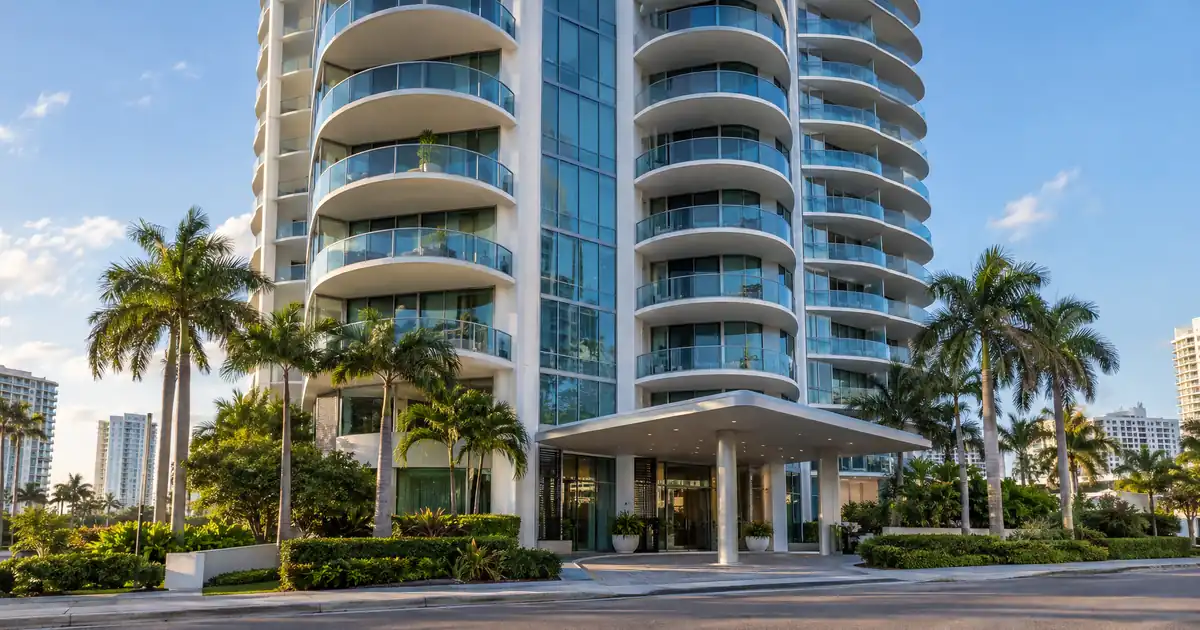
Super Jumbo Bank Statement Loan Finance A Condotel — The Quick Read: Yes, a condotel can be financed with a super jumbo bank statement loan through select lenders in a wholesale non-QM network, but it can never be financed as a conforming or standard bank mortgage. Condotels get treated as a distinct property type with lower leverage than a regular condo, and once the loan amount crosses roughly $3.5 million to $4 million, every file gets a case-by-case underwriting review before it moves forward. The path exists — it just runs through a narrower set of lenders and a lower ceiling on how much of the price you can finance.
That’s the short answer. The rest of this piece walks through why banks won’t touch condotels, how the numbers actually work at super jumbo size, and where the qualification math gets stricter than it does for a normal high-end condo purchase.
Why Big Banks Won’t Touch Condotels
A condotel is a condo unit that operates like a hotel room — it’s individually owned, but the building runs a front desk, housekeeping, and often a mandatory rental pool that shares income across all the units. That hybrid setup is exactly what disqualifies it from agency financing.
Fannie Mae’s Selling Guide lists hotel-type services and mandatory rental pooling as project characteristics that make a condo building ineligible for agency purchase. A condotel isn’t a hard-to-approve condo — it’s a property type that’s off the table entirely for a conforming loan. There’s no special condotel approval tier at Fannie Mae. It simply doesn’t happen.
That’s why insurance and building health matter so much here. Fannie Mae’s Condo Status Finder shows roughly 3.6% of reviewed condo projects carry an ineligible status, and the top reasons are thin master insurance and unresolved repair issues — with condotel characteristics and short-term rental activity also flagged as common disqualifiers. Even outside the agency world, those same red flags shape how a non-QM lender prices and sizes a condotel loan.
Because agency financing was never an option, the real question isn’t “can I avoid the condotel label.” It’s “which lenders in the non-QM space will actually underwrite this building and this borrower.” That’s where bank statement and DSCR financing come in.
Key Terms Defined
Condotel — a condo unit inside a building that operates with hotel-style services (front desk, daily cleaning, or a shared rental pool), which puts it outside standard mortgage rules.
Bank statement loan — a mortgage that calculates a self-employed borrower’s income from deposit history on 12 or 24 months of bank statements, instead of traditional personal-income documentation.
DSCR — short for debt service coverage ratio, this measures whether a property’s rental income covers its own monthly housing payment, rather than looking at the borrower’s personal income.
LTV — loan-to-value, the percentage of the purchase price or appraised value the loan covers. A 75% LTV on a $2 million unit means a 25% down payment. Exact terms depend on the lender’s guidelines, property type, leverage, and a full review of the borrower’s file.
Non-warrantable condo — a condo building that fails one or more of the standard project-eligibility checks (like too many rentals or an HOA lawsuit), which pushes it into specialized, non-agency financing.
Expense ratio — the percentage of gross deposits a bank statement lender subtracts to estimate real business income, since not every dollar deposited is take-home profit.
So Can Super Jumbo Bank Statement Financing Work?
It can, and it’s actually a natural fit for the kind of borrower who buys a high-end condotel unit in the first place. Most condotel buyers at this price point are self-employed, own multiple properties, or run a business where traditional personal-income documentation understate real cash flow because of depreciation and write-offs. That’s precisely the borrower profile a bank statement loan was built to serve.
Across the wholesale network Lendmire places files through, condotel purchases typically get underwritten at 75% LTV on a purchase and up to 65% on a cash-out refinance through the portfolio program — dropping to 50% cash-out on the bank program. Those numbers sit meaningfully below what the same lenders would offer on a plain warrantable condo, where 85% purchase leverage is common. The gap reflects thinner appraisal comparables and the added risk of hotel-style building management.
Bank statement documentation runs off 12 or 24 consecutive months of personal or business deposits. Lenders apply an expense ratio to estimate real income. A service business with no employees gets a lower ratio. A business with a small staff gets a moderate ratio. Larger or product-based businesses get a higher ratio. Or the borrower’s accountant can supply a custom ratio. Transfers the borrower moves from their own business account into a personal account count in full. This method rarely appears in mainstream condotel coverage. But it’s the mechanic that actually decides how much income a condotel buyer can show a lender.
How the Loan Size Ladder Changes the Math
Leverage doesn’t stay flat as the loan amount grows — it steps down, and it steps down harder on a condotel than on a standard property. This is the piece most condotel financing guides skip entirely, and it’s the part that matters most once you’re past the $1 million mark.
Two separate wholesale programs handle super jumbo bank statement lending. A portfolio non-QM program carries files to $6 million. A bank portfolio program picks up 12-month-statement files from roughly $4 million and carries them all the way to $30 million on its own ladder: 65% at the top of the scale to $5 million, 60% to $10 million, and 55% up to $30 million, with interest-only capped at 60% or the band’s ceiling, whichever is lower.
For a condotel specifically, the property-type cap of 75% purchase and 65% cash-out (portfolio program) acts as a hard ceiling regardless of loan size. But as the loan crosses into the higher bands of the bank program’s own ladder, that ladder’s ceiling can end up lower than the condotel cap — meaning size, not property type, becomes the binding constraint at the very top of the market. Every figure here varies by lender and program — guidelines, property type, leverage, and credit profile all apply.
Every file above roughly $4 million gets a case-by-case underwriting review before it’s even submitted. That’s true for any super jumbo file, condotel or not. But a condotel’s thinner comparable-sales pool makes that manual review more involved. Above $3.5 million on a primary residence, or $3 million on a second home or investment property, extra overlays kick in. These include a 700 credit floor, a clean 24-month payment history, 48-month seasoning on any past credit event, and no non-occupant co-borrowers. Condotels are almost always purchased as second homes or investment properties, not primary residences. So that $3 million overlay threshold is the one that matters most for buyers in this category.
What Underwriters Look For at the Building Level
Documentation type matters less than building type, at least at first. Before anyone talks about bank statements or DSCR, the lender classifies the project itself. It’s a warrantable condo, a non-warrantable condo, or a condotel. Lenders usually figure this out through an HOA questionnaire. That questionnaire discloses rental restrictions, insurance coverage, and whether the building runs hotel-style services.
Specific features push a building into condotel territory. These include a front desk or registration counter, daily housekeeping, a central key system, room service, or a legal requirement that owners join a rental pool. Some buildings allow short-term rentals but lack those features — no front desk, no mandatory pooling, and a full kitchen in each unit. Lenders sometimes treat these buildings more like a standard condo than a true condotel, depending on the specific program’s guidelines. That distinction is real, but it’s set lender by lender, not by any industry-wide rule.
Appraisals present their own wrinkle. A regular condo purchase leans on a standard unit appraisal form, and a small multifamily property uses the operating-income statement form built for 2-4 unit rentals. Neither form fits a condotel cleanly, since it’s a single unit with nightly, hotel-style income rather than a monthly lease. Appraisers typically fall back on an income approach, using hotel-comparable rental data to estimate value when the unit has enough operating history to show it.
One pattern shows up again and again in wholesale files: verbal approval on a condotel means very little. It only becomes real once the HOA questionnaire and title documents are in hand. A loan officer can say a condotel “should work” long before anyone confirms the building’s rental-pool structure or insurance adequacy. That gap between verbal comfort and documented eligibility is where condotel files most often stall.
DSCR as the Alternative Qualification Path
DSCR financing qualifies primarily on property-level rental income covering the payment, subject to lender guidelines — rather than pulling personal income documents at all. For a condotel with a strong operating history, that can be the cleaner path. The property’s own nightly income stream does the talking, instead of a borrower’s tax return or deposit history. Lendmire’s complete DSCR loans guide walks through how that qualification method works in more detail.
Whether a condotel’s income counts fully depends on who’s managing it. A self-managed unit with a documented operating history is usually easier to verify than one run through a hotel brand’s centralized reservation system, where income gets reported through the brand’s own revenue statements instead of a standard lease. That distinction changes which numbers actually feed the DSCR calculation, and it’s worth confirming before assuming a given unit’s income will qualify at face value. For a side-by-side look at how bank statement and DSCR paths differ on documentation and pricing tradeoffs, this comparison covers the mechanics in depth.
Short-term rental rules can vary by city, county, HOA, and property type, so investors should confirm local rules before relying on projected rental income from a condotel unit.
Reserve requirements track loan size across both documentation paths: typically three months of payments to $500,000, six months to $1.5 million, and nine months above that, plus two additional months for every other financed property an investor already holds, up to a twelve-month maximum. First-time investors are usually held to twelve months regardless of size. Credit floors sit at 660 on the portfolio program, 680 on the bank program, and step up to 700 once a file crosses the super jumbo overlay threshold — all subject to full underwriting and program guidelines.
Common Misconceptions Worth Clearing Up
A bigger down payment doesn’t fix condotel eligibility on its own — that’s a size argument, not a property-type argument.
Choosing bank statement or DSCR financing for a condotel isn’t a signal of weak credit, either. Non-QM production overall has been closing with metrics that look a lot like conforming loans — average credit scores and loan-to-value ratios that would surprise anyone assuming non-QM means riskier borrowers. It’s a documentation and property-type accommodation, not a consolation prize.
That self-employed, high-net-worth profile is also a lot bigger than most people assume. Federal labor data has tracked self-employment running above 5% of the non-farm workforce in recent years, per the Bureau of Labor Statistics. That’s millions of people whose traditional personal-income documents don’t reflect their real cash flow. These are exactly the buyers condotel financing programs were built to serve.
DSCR loans are designed for non-owner-occupied investment properties. Because they are business-purpose investor loans, they are reviewed differently from a standard owner-occupied mortgage. Tax treatment can depend on how the funds are used and how the property is held; investors should keep clear records and speak with a qualified tax professional before relying on any deduction.
Investors weighing a condotel purchase at this size should treat the building review as the first gate, not an afterthought. The documentation path matters far less than whether the project itself clears underwriting. Are you comparing bank statement financing against DSCR for a condotel or another non-warrantable property? Lendmire can help you sort through which wholesale programs actually fit your income profile, the building type, and the size of the loan you’re carrying.
Frequently Asked Questions
Can I get 90% financing on a condotel? No. Condotel leverage typically tops out around 75% on a purchase through select portfolio programs, well below the 90% ceiling available on a straightforward primary-residence purchase under $1 million. The gap reflects the building’s thinner comparable sales and the added underwriting complexity condotels carry.
Does the $4 million case-by-case threshold apply only to condotels? No, it applies to any super jumbo file regardless of property type. What changes with a condotel is how involved that manual review gets, since appraisers and underwriters have fewer comparable sales to lean on.
Can I use asset-based qualification instead of bank statements for a condotel? Asset-based paths exist within the wholesale network, but they’re generally limited to primary and second homes, not investment properties, and they cap around 80% LTV — well above what a condotel’s property-type ceiling would allow anyway. The condotel cap becomes the binding limit either way.
Why does a self-managed condotel sometimes qualify more easily than a branded one? Because income documentation is simpler. A self-managed unit with a year or more of operating history can usually show its own bank deposits or booking records directly, while a hotel-branded unit often routes income through the brand’s centralized revenue reporting, which some lenders weigh differently.
Does cash-out work the same way on a condotel as a purchase? No, cash-out leverage runs lower. The portfolio program typically caps condotel cash-out around 65% LTV, and the bank program caps it around 50% — both well below the 75% purchase ceiling for the same property type.
For current guidelines and terms, see Lendmire’s super jumbo bank statement loan programs page.
Self-employed borrowers can compare both super jumbo programs on Lendmire’s self-employed mortgages page.
About Lendmire
Lendmire — NMLS# 2371349 — is a DSCR and non-QM mortgage brokerage with investor loan programs in 40 markets, including Washington, D.C. DSCR eligibility is commonly reviewed by the lender around property-level rent rather than personal income documentation, subject to lender guidelines, and the brokerage helps arrange financing for LLC-owned portfolios beyond conventional financed-property limits. Recognized by Scotsman Guide as a Top Mortgage Workplace in 2025 and 2026.
Lendmire’s Top Mortgage Workplace recognition is documented by Scotsman Guide 2025 Top Mortgage Workplace and Scotsman Guide 2026 Top Mortgage Workplace.
Get Started
Ready to find the right loan for you?
In about 30 seconds you can review financing options available for your home or investment property. No commitment required.
Informational only. Not a Loan Estimate, approval, or commitment to lend. Program availability and eligibility are subject to lender guidelines, credit approval, property review, and underwriting.
References
1. Fannie Mae Selling Guide – Ineligible Projects, B4-2.1-03
2. Fannie Mae Condo Status Finder
Brandon Miller
Founder & CEO, Mortgage Loan Originator, Lendmire LLC
- Mortgage Loan Originator · NMLS# 1129696 · Verify on NMLS Consumer Access
- North Carolina Real Estate Broker · License# 343312 · Verify on NCREC
- North Carolina Insurance Producer · License# 19053198 · Property, Casualty, Life, Health · Verify on NAIC SBS
- Lendmire LLC · Firm NMLS# 2371349 · Verify firm licensure
Disclosures. The information presented in this article is general market commentary, not financial, legal, or tax advice. Lendmire is a mortgage brokerage (NMLS# 2371349) — not a direct lender or depository institution — and loan placement is subject to lender underwriting. Nothing in this content represents a commitment to lend. Loan terms, pricing, and program availability vary based on borrower qualifications, property characteristics, and state of subject property, and are subject to change at any time. Lendmire complies with Equal Housing Opportunity requirements. Consumer access: nmlsconsumeraccess.org.


