
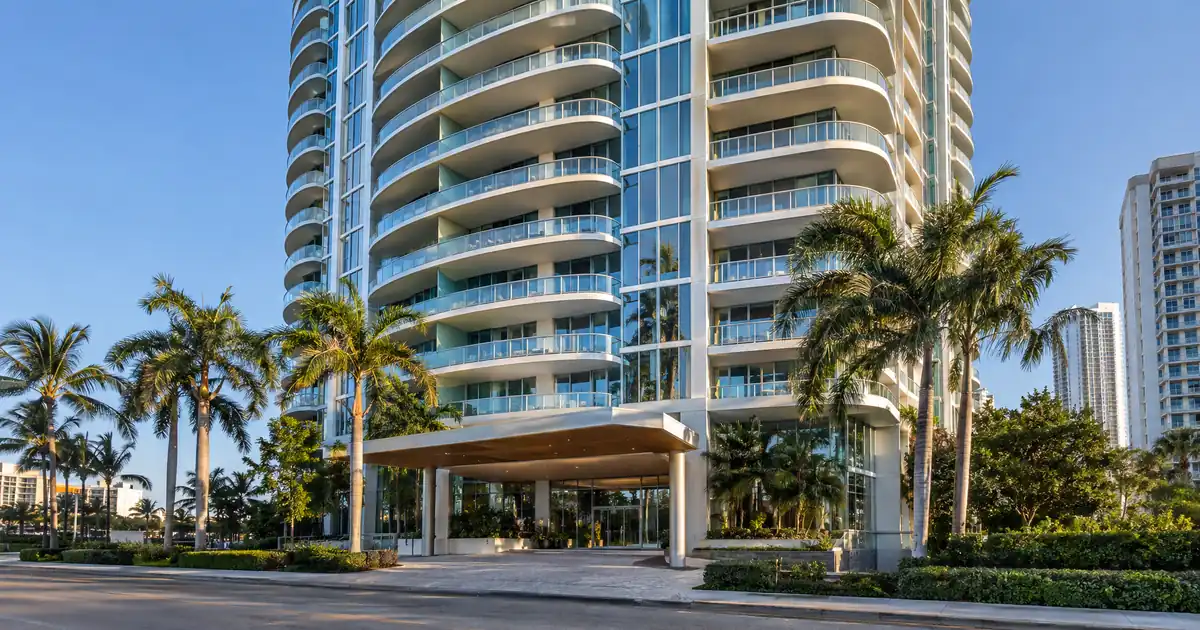
Finance A Condotel On A Super Jumbo — The Quick Read: A condotel sits outside Fannie Mae and Freddie Mac eligibility by design, so the file has to be built as a non-agency deal from the first document. The two paths that actually work are a bank-statement program, which qualifies the borrower on deposit history instead of traditional personal-income documentation, and a DSCR loan, which qualifies the property on its own rental income. At super-jumbo size — loans running into the millions — leverage steps down, credit floors rise, and every file above roughly $4,000,000 gets reviewed case by case before it’s even submitted. None of this is a commitment to lend; it’s a description of how these files typically get structured through select lenders in a wholesale network.
Key Terms Defined
Condotel — a condo unit inside a building that operates, or is marketed, like a hotel or resort, often with a rental desk, key system, or mandatory rental pool.
Non-warrantable condo — a condo project that doesn’t meet the eligibility rules Fannie Mae and Freddie Mac use for their own purchase programs, which pushes financing into the non-agency market.
Bank statement loan — a mortgage that qualifies income from 12 or 24 months of deposit history rather than traditional personal-income documentation, subject to lender and program guidelines.
DSCR loan — a loan sized to the property’s own rental income rather than the borrower’s personal income; the acronym stands for debt-service-coverage ratio, essentially rent divided by the full monthly housing obligation.
Super jumbo — a loan size well above standard jumbo territory, where leverage tightens and underwriting adds extra layers of review, often starting somewhere in the low millions and stretching to $30,000,000 through the largest wholesale programs.
Why a Condotel Can’t Go the Normal Route
A condotel is disqualified at the building level, not the borrower level. Fannie Mae’s Selling Guide states plainly that a project may not be eligible if it’s operated or managed like a hotel, motel, or resort. A rental desk, hospitality licensing, or a mandatory rental pool are all red flags. Fannie’s own project eligibility FAQ goes further: buildings governed by a master association that markets itself as a resort are, in most cases, simply ineligible.
That single distinction is why condotels never route through a conventional or agency-backed loan, no matter how strong the borrower’s income looks. The financing conversation moves entirely into the non-agency world — bank statement programs and DSCR loans — because those products aren’t built to sell to Fannie or Freddie in the first place.
DSCR loans are designed for non-owner-occupied investment properties. Because they are business-purpose investor loans, they are reviewed differently from a standard owner-occupied mortgage.
Bank Statement or DSCR — Which Path Fits a Condotel Buyer?
The choice comes down to this: does the borrower’s personal deposit history or the unit’s rental income tell the stronger story? A self-employed buyer with healthy business deposits and thin traditional personal-income documentation usually leans bank statement. An investor buying purely for rental income, with a management contract or booking history to show, usually leans DSCR.
These are two separate documentation paths solving two separate problems — they are not interchangeable labels for the same product, and Lendmire’s comparison of DSCR loans versus bank statement loans breaks down that distinction in more depth.
On a bank statement file, qualifying income comes from 12 or 24 consecutive months of personal or business deposits, run through an expense ratio before it counts. A service business with no employees typically gets a 20% expense ratio applied against gross deposits; a business with one to five employees runs closer to 40%; six or more employees, or any product-based business, lands around 50%. An accountant-provided ratio or a profit-and-loss method — capped at 80% — are also options on many files. Transfers the borrower moves from their own business account into a personal account count in full, at 100%, which matters a lot for owner-operators who pay themselves irregularly.
Business bank statements generally require at least 25% ownership in the entity supplying the deposits. Statements have to be consecutive months — a transaction history printout from the bank never substitutes for the actual statements.
Where the Rent Number Comes From — and Why the Standard Form Doesn’t Work
Condotel rental income almost never fits the standard appraisal tools lenders normally lean on. Fannie Mae’s Form 1007 — the single-family comparable rent schedule — was built to estimate a monthly lease rate by comparing similar long-term rentals. A condotel earns money by the night, with occupancy swinging by season, which is a different animal entirely. Using a monthly-lease form to represent nightly-rate income tends to produce a misleading number.
Because of that mismatch, condotel files in a DSCR structure typically lean on different documents. That can include booking-platform history, a management-company revenue statement, or a trailing income summary, instead of a standard rent schedule. The underwriting question becomes: does that documented income, run through the DSCR math, clear the coverage threshold the lender needs? Local rules on this type of rental income can vary by city, county, HOA, and property type. So investors should confirm those specifics before relying on projected income.
Explore the full mechanics of how rental income drives loan sizing in Lendmire’s complete DSCR loans guide, which walks through the coverage-ratio math independent of any specific city or property type.
The Insurance Layer Nobody Skips
Condo master policies split coverage responsibility differently, depending on the building. So a lender reviewing a condotel file needs to know which structure applies before closing. One legal explainer frames it this way: studs-out coverage handles the building shell, while all-in coverage extends into the unit itself. This means an owner’s individual HO-6 policy has to fill whatever gap the master policy leaves. On a resort-style building, that gap can be larger than on a standard condo. So closing the file typically waits on confirming the HOA’s coverage type and the unit owner’s supplemental policy.
Leverage: How Loan Size Changes the Math
Leverage on a condotel steps down from where a standard rental purchase would sit, and it steps down again as the loan size climbs. Condotels generally cap out at 75% loan-to-value on a purchase and 65% on a cash-out through the portfolio program, or 50% on cash-out through the bank program — well under the 85% ceiling a warrantable condo can reach. These figures are typical ranges through select lenders in a wholesale network, subject to full underwriting.
Above that property-type ceiling, size takes over. On a standard investment-property purchase (not condotel-specific), leverage on most files runs 85% up to $1,000,000, stepping to 80% between $1,000,000 and $2,500,000, and down to roughly 75% between $2,500,000 and $3,000,000 before the super-jumbo overlays kick in. Once a loan crosses into super-jumbo territory — above $3,000,000 on an investment property or second home, $3,500,000 on a primary residence — the file typically needs a 700 credit floor, a clean 24-month housing-payment history, and 48-month seasoning on any past credit event. Cash-out proceeds can’t be used to satisfy reserve requirements at this size either.
Above $4,000,000, every file gets reviewed case by case before it’s even submitted — never a flat “up to” number at that size, because the lender wants to see the full picture first.
Two Wholesale Programs Carry the Size Ladder
A portfolio non-QM bank-statement program typically carries files to $6,000,000. A separate bank portfolio program, built around 12-month statements, runs its own ladder out to $30,000,000: roughly 65% loan-to-value to $5,000,000, 60% to $10,000,000, and 55% up to $30,000,000, with interest-only capped at 60% or the band’s ceiling, whichever is lower. That bank-program ladder generally begins above $4,000,000 and overlaps the portfolio program up to $6,000,000 — above $6,000,000, it stands on its own.
Reserves scale with size, too: typically 3 months of reserves to $500,000, 6 months to $1,500,000, and 9 months above that, plus 2 additional months for each other financed property the borrower owns, capped at 12 months. A first-time real estate investor is usually held to a 12-month reserve requirement regardless of loan size.
Lendmire’s network sees a wave of super-jumbo condotel files. Many share the same pattern. The borrower has strong business deposits or rental income. But the building hasn’t been fully checked for hotel-style operations before the offer goes in. Here’s the key: the building gets classified before the borrower does. So it helps to pull the HOA questionnaire and project documents early, before you even order the appraisal. This tends to save the file from a late-stage surprise about commercial-space ratios or rental-desk operations.
A Worked Example, in Ratios Not Dollars
Picture a self-employed investor buying a condotel unit for $2,200,000, structured as an investment purchase. At that size, standard investment-property leverage on most files runs around 80% loan-to-value before the condotel-specific ceiling applies. But because the property is a condotel, the file gets capped closer to 75% purchase leverage, regardless of the size-based ladder, subject to underwriting. The lender looks at the borrower’s 24 months of business bank deposits. It runs them through a 40% expense ratio for a small staff. This produces a qualifying income figure, which the lender uses instead of traditional income documentation. Suppose the unit’s booking history carries the file instead, on a DSCR basis. Then the lender checks whether the documented rental income clears a coverage ratio of around 1.0x to 1.2x. It’s not a specific rent dollar amount. Every file varies with credit, reserves, and the property review.
Who This Fits — and Who It Doesn’t
This structure tends to work for buyers whose conventional personal-income paperwork understates their real income. That includes business owners, physicians, attorneys, entertainers, and investors with heavy write-offs. It also fits an investor who wants the unit’s rental income, not personal income, to carry the file.
It tends not to fit a first-time buyer without reserves, someone whose target building has pending HOA litigation or heavy commercial space, or a borrower expecting agency-style leverage. A condotel simply won’t get the 85% a warrantable condo can reach, and a buyer who needs that much leverage should look at a standard condo purchase instead.
Tax treatment can depend on how the funds are used and how the property is held; investors should keep clear records and speak with a qualified tax professional before relying on any deduction.
This article is for general information only and isn’t legal or tax advice. Anyone financing a condotel should talk with a qualified attorney or CPA about how the structure applies to their own situation.
Frequently Asked Questions
Can a condotel ever qualify for a conventional loan? Rarely, if ever. If the building shows hotel-style operations — a rental desk, mandatory pooling, hospitality licensing — Fannie Mae’s own guide treats the project as ineligible, which pushes the loan into non-agency programs regardless of the borrower’s income strength.
Does a clean HOA guarantee the unit avoids the condotel label? No. A building can pass every internal operational test and still get flagged simply because the unit is listed on short-term rental platforms. Marketing history matters as much as HOA governance.
Is a bank statement loan the same thing as a DSCR loan? No. A bank statement loan replaces the borrower’s standard personal-income documentation with deposit history; a DSCR loan looks past the borrower’s income entirely and qualifies the property on its own rental cash flow. Some condotel buyers use one, some use the other, based on which documentation tells the stronger story.
What happens once a condotel loan crosses $4,000,000? It moves into case-by-case review before submission. Leverage, reserves, and credit are all reviewed together rather than pulled from a flat published ceiling at that size.
Can cash-out proceeds cover the reserve requirement on a large condotel loan? Not above the super-jumbo threshold. Cash-out proceeds can’t be used to satisfy reserves once a loan crosses into super-jumbo overlay territory, so reserves have to come from separate, seasoned liquid funds. Every figure here varies by lender and program — guidelines, property type, leverage, and credit profile all apply.
Are you thinking about financing a condotel purchase or refinance? Do you want to compare property income, leverage, and documentation options? Lendmire can help. It compares bank statement and DSCR options across select wholesale lenders. The comparison is based on the specific building, borrower profile, and loan size.
For current guidelines and terms, see Lendmire’s super jumbo bank statement loan programs page.
Self-employed borrowers can compare both super jumbo programs on Lendmire’s self-employed mortgages page.
About Lendmire
Lendmire is a non-QM mortgage brokerage (NMLS# 2371349) arranging DSCR investor loans in 40 markets, including Washington, D.C. DSCR eligibility is generally reviewed around property-level rental income rather than personal income, subject to lender and program guidelines, a fit for self-employed investors and LLC-owned portfolios. Lendmire was recognized as a Scotsman Guide Top Mortgage Workplace in 2025 and 2026.
Lendmire’s Top Mortgage Workplace recognition is documented by Scotsman Guide 2025 Top Mortgage Workplace and Scotsman Guide 2026 Top Mortgage Workplace.
Get Started
Ready to find the right loan for you?
In about 30 seconds you can review financing options available for your home or investment property. No commitment required.
Informational only. Not a Loan Estimate, approval, or commitment to lend. Program availability and eligibility are subject to lender guidelines, credit approval, property review, and underwriting.
References
1. Fannie Mae Selling Guide — Ineligible Projects
2. Fannie Mae — Project Eligibility FAQ PDF
3. Justia — HOA and Condominium Insurance
Brandon Miller
Founder & CEO, Mortgage Loan Originator, Lendmire LLC
- Mortgage Loan Originator · NMLS# 1129696 · Verify on NMLS Consumer Access
- North Carolina Real Estate Broker · License# 343312 · Verify on NCREC
- North Carolina Insurance Producer · License# 19053198 · Property, Casualty, Life, Health · Verify on NAIC SBS
- Lendmire LLC · Firm NMLS# 2371349 · Verify firm licensure
Required disclosures. Lendmire (NMLS# 2371349) operates as a licensed mortgage broker, not a direct lender or depository. The discussion in this article is general in nature and should not be relied upon as financial, legal, or tax advice — every investment scenario is unique and should be reviewed by a qualified professional. Any loan inquiry is subject to lender underwriting, and this article is not a commitment to lend or a guarantee of approval. Mortgage rates, loan terms, and program guidelines vary by borrower, property, and state, and may change without notice. Equal Housing Opportunity. Verify licensure at NMLS Consumer Access.


