
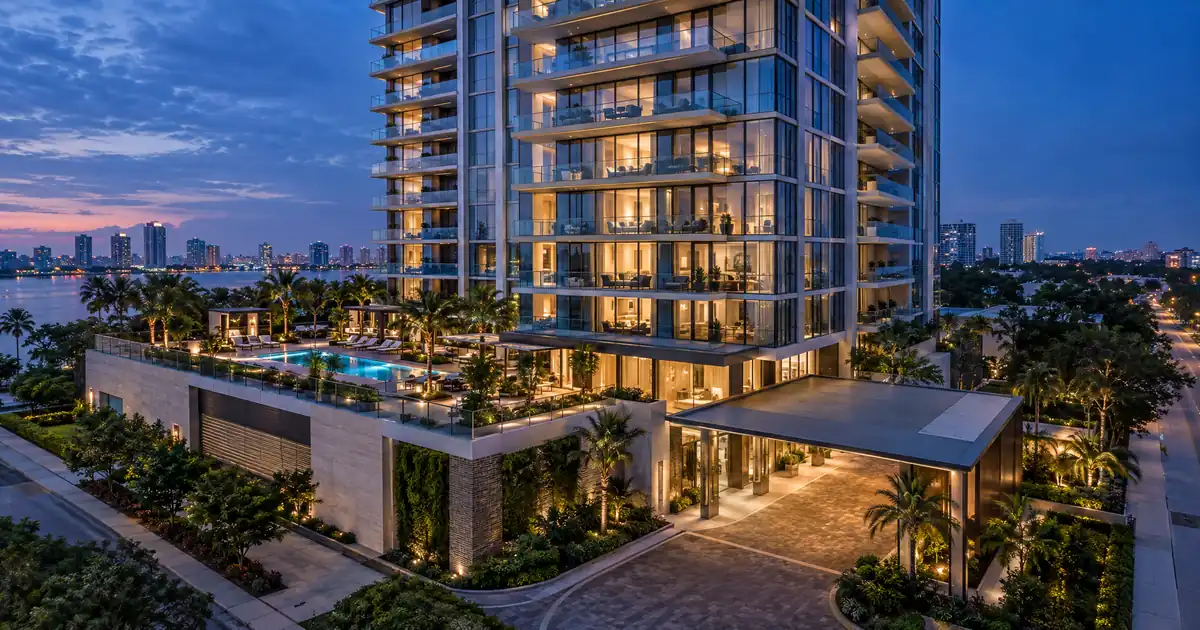
Finance A Condo Or Condotel On Marketplace Bank Statements — The Quick Read: A self-employed buyer whose income lands as marketplace payouts, e-commerce deposits, or gig-platform transfers can qualify for a condo or condotel using 12 or 24 months of bank statements instead of traditional personal-income documentation. The bank statement side proves the borrower can carry the payment. The condo or condotel side is a separate underwriting track that decides whether the building itself is even eligible. Both tracks have to clear before a file closes, and through select wholesale programs, loan amounts on this documentation type run from $300,000 to $30,000,000.
Two obstacles, two timelines. That’s the whole game here.
Why Two Separate Problems Collide on This File
A borrower whose income runs through Etsy, Amazon, Shopify, Uber, or a similar platform often shows thin taxable income after platform fees, cost of goods, and business write-offs get netted out on a tax return. Bank statement underwriting exists to fix that mismatch — it looks at what actually landed in the account, not what survived the deductions.
The property side has nothing to do with the borrower’s income documentation. A condotel is disqualified from agency financing because of how the building operates, not because of who’s buying a unit in it. Fannie Mae’s condo status data shows the same pattern from the other direction: as of its most recent published snapshot, only 3.6% of reviewed projects carry an ineligible status, and the top two reasons are insufficient master insurance and unresolved critical repairs — not hotel operation, not litigation, not bad management (Fannie Mae – Condo Status Finder).
That’s the reframe worth sitting with: most “hard to finance” buildings aren’t dangerous or mismanaged. They’re underinsured or mid-repair. Fixable conditions, not permanent flags — except for true condotels, where the hotel-style operation itself is the disqualifier no amount of paperwork clears.
Key takeaways:
- Bank statement documentation solves the borrower’s income problem; it does nothing for a disqualified building.
- Condotels and non-warrantable condos almost always route to non-QM or portfolio execution, regardless of how strong the borrower’s deposits look.
- Marketplace and platform income counts as self-employment income for this documentation type, as long as it traces back to the borrower’s own business activity.
- Loan sizing and leverage both step down as the balance climbs — a $900,000 condo purchase and a $4,500,000 condotel purchase are underwritten on completely different ladders.
The Setup: What Counts as “Marketplace” Income Here
Bank statement underwriting treats deposits tied to a borrower’s own business — including marketplace payouts, platform settlements, and merchant processor deposits — as eligible income, provided the borrower holds at least 25% ownership in the business generating them. Personal transfers the borrower moves from their own business account into a personal account count in full, at 100%, since that money already cleared the business.
Deposits into a business account, though, aren’t treated as take-home income. A marketplace seller’s gross Shopify or Amazon deposits still have to cover inventory, shipping, ad spend, and platform fees before any of it is really income. Underwriting applies an expense ratio to net that out, with the exact percentage generally scaling up based on staff size and whether the business is service-based or product-based. A borrower who believes their real costs run lower than the fixed ratio can bring a CPA-prepared profit-and-loss statement to document a different figure, or use a P&L-based method capped at 80% of gross deposits — but the lender needs to confirm upfront whether that format is accepted before the borrower spends time assembling it.
Lookback period matters too. Twelve months versus 24 months isn’t a formality — if a marketplace business grew meaningfully in the last year, the shorter lookback usually produces a higher qualifying income figure, since it isn’t diluted by an older, smaller-revenue stretch.
Here’s an important note: a simple rental-income deposit stream from an unrelated investment property doesn’t qualify under this documentation type by itself, especially without an underlying business behind it. This scenario requires a different path — one that looks at the property’s own cash flow, not the borrower’s bank statements. DSCR loans are designed for non-owner-occupied investment properties. Since these are business-purpose loans, lenders review them differently than standard owner-occupied mortgages. For more information, check out Lendmire’s complete DSCR loans guide.
The Mechanics: Property Classification Runs on Its Own Track
Before any loan terms get set, the file has to answer one question first: is this a warrantable condo, a non-warrantable condo, or a condotel? Every leverage number that follows depends on the answer.
Through select wholesale programs in Lendmire’s network, property-type ceilings typically run:
| Property Type | Typical Max LTV (Purchase) | Notes |
|---|---|---|
| Warrantable condo | 85% | Standard project review applies |
| Non-warrantable condo | 80% | Broader review; comps often scarcer |
| Condotel (portfolio program) | 75% purchase / 65% cash-out | Interest-only paths available on qualifying files |
| Condotel (bank portfolio program) | 50% | Applies on the higher-balance ladder |
| 2-4 unit property | 85% | Rental income treatment varies by program |
These are ceilings, not guarantees, and every figure sits subject to full underwriting and lender guidelines.
Appraisers use a standard form for any condo unit, called Form 1073, no matter what building it’s in. This form covers owner-occupancy percentage, HOA financial condition, insurance coverage, single-entity concentration, and pending lawsuits. Lenders use it even on a non-QM file, where normal agency rules don’t apply (Barnes Walker legal glossary). For a condotel, finding comparable sales is harder. Appraisers often must use other condotel or hotel-condo sales instead of regular condo sales from the same building or area.
Insurance is where a lot of files get stuck. A condo’s coverage splits between the HOA’s master policy and the owner’s individual policy, and the owner has to work out which one applies before filing any claim (Washington State Office of the Insurance Commissioner). For a rental unit specifically, the master policy usually isn’t enough protection on its own — the owner typically needs a rental-endorsed HO-6 policy or a separate dwelling fire policy depending on the carrier and the condo’s governing documents (Risman Insurance). Lenders confirm that coverage stack is in place and adequate before clearing the file to close. Tax and insurance costs vary by property, county, and carrier, so budgeting them accurately is a due-diligence step for the buyer, not a loan-program detail.
For a condotel specifically, underwriting adds one more layer beyond the standard condo project review: whether rental participation in the building’s program is mandatory or optional, who manages the bookings, and how the income and expenses actually flow to the owner. That review runs on top of, not instead of, everything above.
Sizing the File: From $300K to $30M
Loan amounts on this bank statement documentation type run from $300,000 to $30,000,000 through two separate wholesale programs. A portfolio non-QM program carries files up to $6,000,000. A separate bank portfolio program carries 12-month-statement files up to $30,000,000 on its own size ladder — 65% at or below $5,000,000, 60% up to $10,000,000, and 55% up to $30,000,000, with interest-only capped at 60% or the band’s own ceiling, whichever is lower. The bank program’s ladder begins above $4,000,000 and overlaps the portfolio program up to $6,000,000; past $6,000,000 it stands alone.
Leverage on a primary residence steps down as the loan size climbs: 90% up to $1,000,000, 85% up to $2,000,000, 80% up to $3,000,000, 75% at the top credit tier up to $4,000,000, then case-by-case review up to $6,000,000, then onto the bank program’s own ladder above that. Second homes and investment properties generally run about five points lower than the primary-residence figures at every size band. On a condotel or non-warrantable purchase, whichever cap is lower — the property-type ceiling or the size-based ceiling — is the one that governs the file.
Every loan above $4,000,000 gets reviewed case by case before submission, and above that line credit expectations tighten to a 700 floor along with added seasoning and occupancy overlays. Nothing above $4,000,000 should be treated as a flat “up to” number.
Documentation, Credit, and Reserves at a Glance
Income documentation runs on 12 or 24 consecutive months of bank statements — personal, business, or a blend, depending on the program. Statements have to be consecutive; a transaction-history printout doesn’t substitute. Credit typically needs to clear a 660 floor on the portfolio program (680 on the bank program, 700 above the super-jumbo threshold), and debt-to-income can run as high as 50% on qualifying files.
Reserve requirements scale with loan size: three months of payments at or below $500,000, six months up to $1,500,000, and nine months above that, plus two additional months for every other financed property the borrower carries, up to a 12-month ceiling. A first-time real estate investor typically needs the full 12 months regardless of loan size.
Cash-out is available without a stated proceeds cap at or below 60% LTV on the portfolio program, though proceeds above that threshold are capped at $1,500,000 in cash to the borrower. On a condotel specifically, cash-out sits at 65% on the portfolio program and 50% on the bank program — well below the purchase ceilings, reflecting how much more conservative lenders get once a hotel-style operating structure is involved. Above 60% LTV, interest-only structures top out at 85% LTV with a 700 credit floor on the portfolio program, generally structured as a 40-year term with a 10-year interest-only period; on the bank program, interest-only tops out at 60% LTV using 5- or 7-year fixed-period adjustable structures.
Across files like these, one pattern shows up repeatedly: borrowers with strong marketplace deposit history often clear the income side of underwriting faster than they clear the property side. A clean 24-month deposit trail on a straightforward Amazon or Shopify business is usually the easy part of the file. The HOA questionnaire, the master insurance certificate, and the condotel rental-program terms are what actually set the pace — those documents come from the association and the property manager, not the borrower, and they’re the pieces most likely to get requested a second time.
Who This Path Fits — and Who It Doesn’t
This method works well for self-employed marketplace sellers, gig-platform operators, or small e-commerce business owners. These borrowers often have strong, traceable deposit histories, but their tax returns may show lower income due to write-offs. It’s also a good fit for buyers looking at a condotel or a non-warrantable building, where agency financing wasn’t an option to begin with — regardless of the type of documentation used.
This loan type doesn’t work as well for borrowers with inconsistent deposits, seasonal income without a clear pattern, or income that isn’t tied to a documented business. These borrowers usually need a different income approach. For example, they might use an asset-based path, where liquid assets are divided over 36, 60, or 84 months. Or they might use an assets-only structure, where liquidity alone covers the loan and closing costs. This method also doesn’t apply to rental income from someone else’s property. That situation calls for a different approach — one based on the property’s own cash flow, not the borrower’s bank statements.
Lendmire currently offers consumer mortgage lending in 16 states: Alabama, California, Colorado, Florida, Georgia, Indiana, Michigan, Montana, New Mexico, North Carolina, Ohio, Pennsylvania, Tennessee, Texas, Virginia, and Washington. So, availability depends on where the borrower lives, not where the property is located. You can find full details on how income and property factors work together in Lendmire’s guide on financing a condo or condotel with a bank statement loan and its companion piece on financing a condo or condotel.
Key Terms Defined
Warrantable condo: A condo project that meets standard eligibility criteria — owner-occupancy percentage, HOA reserves, insurance adequacy — making it eligible for the broadest range of financing.
Non-warrantable condo: A condo project that fails one or more of those standard criteria, which routes financing to non-QM or portfolio programs instead of agency-eligible loans.
Condotel: A condo unit inside a building that operates like a hotel — front-desk check-in, managed rental program, or mandatory rental pooling — which disqualifies it from agency financing regardless of the borrower’s documentation type.
Expense ratio: A percentage applied to gross business bank deposits to estimate real, usable income after business costs are covered.
HO-6 policy: An individual condo owner’s insurance policy covering interior unit contents and improvements, separate from the HOA’s master policy.
Reserves: Liquid funds a borrower must show on hand, beyond closing costs and down payment, sized as a multiple of the monthly housing payment.
This article gives general information only. It is not legal or tax advice. Loan terms, eligibility, and underwriting results can vary based on the borrower, property, and lender. Readers should talk to a qualified attorney or CPA about their specific situation before making any financing decisions.
Frequently Asked Questions
Can marketplace or gig-platform income alone qualify a borrower for a condotel purchase? Yes, if the deposits trace back to the borrower’s own business and the borrower holds at least 25% ownership in it. The income side and the property side are still reviewed separately — strong deposits don’t override a disqualified building, and a warrantable building doesn’t override thin or inconsistent income.
Why does a condotel purchase cap out at a lower LTV than a standard condo? Because the building itself carries more risk in a lender’s eyes — hotel-style operation, harder-to-find comps, and rental-program dependency. Through select wholesale programs, condotel purchases typically top out around 75% on the portfolio program and considerably lower on cash-out, well under the 85% ceiling available on a warrantable condo.
Does a 12-month or 24-month statement lookback change the outcome? It can shift the numbers meaningfully. A shorter 12-month window often produces a higher qualifying income figure for a growing marketplace business, since it isn’t averaged against an older, smaller-revenue period. A 24-month window can help a borrower with a temporary dip show a more stable longer-term trend instead.
Is a condotel automatically a bad investment because it’s harder to finance? Not necessarily. Financing difficulty reflects the building’s operating structure and agency eligibility rules, not the quality of the community or its management. Many buildings labeled non-warrantable are well-run; they simply don’t fit the risk profile agencies require for conventional eligibility.
What happens if the HOA’s master insurance policy turns out to be inadequate? That’s one of the most common reasons a condo project shows an ineligible status in the first place, and it’s typically a fixable condition rather than a permanent one. The lender will require evidence the coverage gap is resolved, or adequate individual coverage in place, before clearing the file to close.
Sometimes a borrower’s income comes from marketplace deposits, and the property they want is a condo, a non-warrantable building, or a condotel. In these cases, Lendmire can help. They review how the bank statement documents and the property’s eligibility fit together across their wholesale network. This review depends on the borrower’s credit profile, reserves, and the property itself.
For current guidelines and terms, see Lendmire’s super jumbo bank statement loan programs page.
Self-employed borrowers can compare both super jumbo programs on Lendmire’s self-employed mortgages page.
About Lendmire
Lendmire is a DSCR-focused mortgage brokerage, NMLS# 2371349, placing investor loans across 40 markets, including Washington, D.C. DSCR eligibility is generally reviewed by the lender around a property’s rental income rather than personal income documentation, which fits LLC-held rentals, self-employed investors, and portfolios scaling past conventional financed-property limits. Scotsman Guide named Lendmire a Top Mortgage Workplace in both 2025 and 2026.
Get Started
Ready to find the right loan for you?
In about 30 seconds you can review financing options available for your home or investment property. No commitment required.
Informational only. Not a Loan Estimate, approval, or commitment to lend. Program availability and eligibility are subject to lender guidelines, credit approval, property review, and underwriting.
References
1. Fannie Mae – Condo Status Finder
2. Barnes Walker – Form 1073 Legal Glossary
3. Risman Insurance – Renting Out Your Condo
Brandon Miller
Founder & CEO, Mortgage Loan Originator, Lendmire LLC
- Mortgage Loan Originator · NMLS# 1129696 · Verify on NMLS Consumer Access
- North Carolina Real Estate Broker · License# 343312 · Verify on NCREC
- North Carolina Insurance Producer · License# 19053198 · Property, Casualty, Life, Health · Verify on NAIC SBS
- Lendmire LLC · Firm NMLS# 2371349 · Verify firm licensure
Required disclosures. Lendmire (NMLS# 2371349) operates as a licensed mortgage broker, not a direct lender or depository. The discussion in this article is general in nature and should not be relied upon as financial, legal, or tax advice — every investment scenario is unique and should be reviewed by a qualified professional. Any loan inquiry is subject to lender underwriting, and this article is not a commitment to lend or a guarantee of approval. Mortgage rates, loan terms, and program guidelines vary by borrower, property, and state, and may change without notice. Equal Housing Opportunity. Verify licensure at NMLS Consumer Access.


