
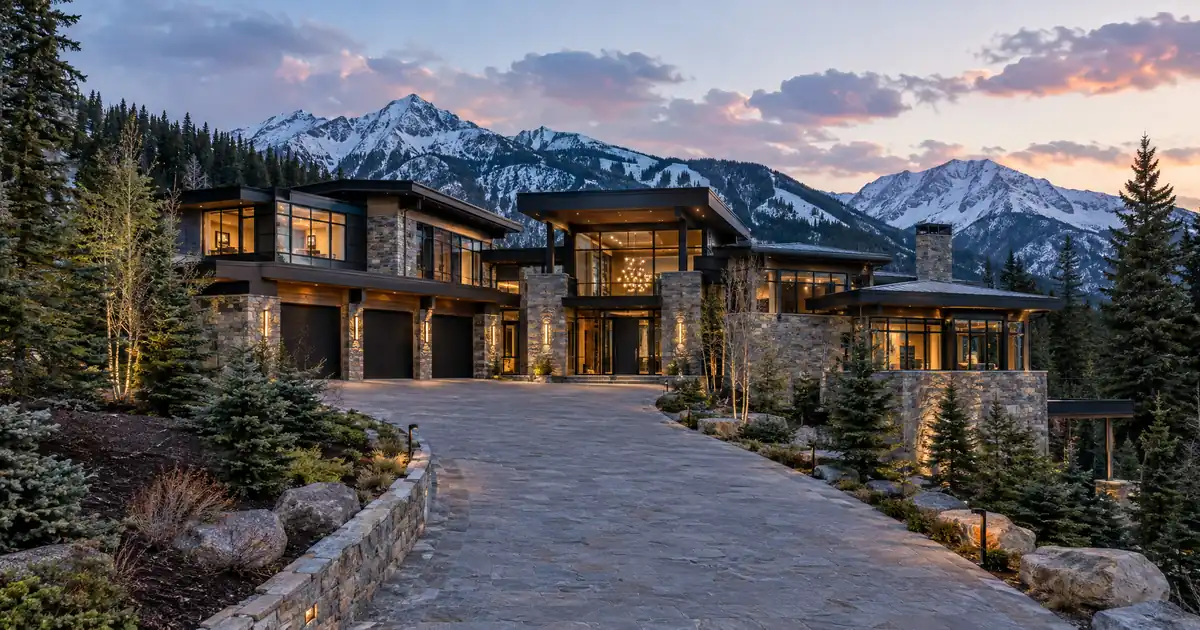
Does Loan Size Change LTV On A Second Home — The Quick Read: Yes. On bank statement mortgages, loan amount is one of the main levers a lender pulls when setting the maximum loan-to-value ratio. A $500,000 second home purchase and a $3,500,000 second home purchase are not judged on the same leverage scale, even with identical credit and income documentation. As the requested loan amount climbs, the ceiling comes down.
Bank statement lending is built for borrowers whose traditional personal-income documentation understate real cash flow — business owners, physicians, attorneys, and other self-employed professionals who write off expenses aggressively. Instead of W-2s and tax transcripts, the lender looks at deposit history. But documentation method and leverage limits are two separate questions, and loan size drives the second one on its own.
The Direct Answer, In Plain Terms
Loan size changes the maximum LTV a lender will approve on a bank statement second home, and it does so through a stepped table, not a flat percentage. The bigger the loan, the smaller the leverage ceiling, credit score and occupancy held constant.
Across the wholesale bank statement programs Lendmire places files with, leverage on a second home typically starts near 85% purchase LTV at the entry size band and steps down in stages as the loan amount rises, landing near 50% once a file reaches the upper eight-figure range. That is not a rounding error. It is a structural feature of how non-QM investors price risk on jumbo and super-jumbo balances.
Key Terms Defined
LTV (loan-to-value): the loan amount expressed as a percentage of the property’s purchase price or appraised value, whichever is lower on a purchase.
Second home: a property the borrower occupies part of the year but does not rent out as a primary income source, distinct from an investment property purchased for rental cash flow.
Bank statement loan: a non-QM mortgage that qualifies income using 12 or 24 months of personal or business bank deposits instead of traditional personal-income documentation.
Seasoning: the minimum number of months that must pass after a prior transaction (like a cash-out refinance or a credit event) before a lender will consider a new loan.
Reserves: liquid funds a borrower must have on hand after closing, expressed in months of housing payment coverage.
Why Loan Size Moves the LTV Ceiling
Larger loans carry more dollar exposure per file, and non-QM investors who buy these loans in bulk compress leverage as balances rise to manage that exposure. It is the same logic seen elsewhere in mortgage regulation, just applied differently. Under the Consumer Financial Protection Bureau’s points-and-fees rule, a Qualified Mortgage can charge up to 3% of the loan amount in points and fees on loans of $100,000 or more, but the cap shifts to a flat $3,000 on loans between $60,000 and $100,000, and to 5% on loans between $20,000 and $60,000. That rule has nothing to do with LTV and does not apply to non-QM loans directly. It simply shows that federal mortgage policy already treats loan size as a variable that moves a threshold. Non-QM leverage tables apply the same principle to LTV instead of fees.
There is also a documentation reason. Larger balances tend to sit with borrowers who have more complex income and asset pictures, so lenders often widen credit and reserve requirements alongside the leverage cut. On the wholesale bank statement side, that shows up as heavier seasoning after a credit event, longer statement histories, and — past a certain size — manual underwriting review rather than approval that may otherwise be determined largely off a rate sheet.
The Second Home Leverage Ladder, By Loan Size
Here is how leverage typically steps down on a second home bank statement purchase across the wholesale programs in Lendmire’s network. These are ceilings, not guarantees, and every file is still reviewed against credit, reserves, and property type.
| Loan Amount Band | Typical Purchase LTV | Typical Credit Floor |
|---|---|---|
| $300,000 – $1,000,000 | Up to 85% | 700+ |
| $1,000,000 – $1,500,000 | Up to 80% | 680+ |
| $1,500,000 – $2,000,000 | Up to 80% | 700+ |
| $2,000,000 – $2,500,000 | Up to 80% | 720+ |
| $2,500,000 – $3,000,000 | Up to 75% | 720+ |
| $3,000,000 – $4,000,000 | Up to 65% | 760+ |
| $4,000,000 and above | Reviewed case by case | 700+ minimum |
Notice the pattern. Leverage does not fall in a smooth line. It steps down in chunks, and each step also raises the credit floor a lender wants to see. A borrower sitting at 700 credit might clear 85% at the entry band and still only qualify for 65% once the loan crosses $3,000,000, simply because the size band changed the rules.
Above $4,000,000, every file in the network moves to case-by-case review before it even gets submitted. That size range also triggers super-jumbo overlays on second homes above $3,000,000: a 700 credit floor, a clean 24-month housing history, 48-month seasoning after any credit event, and no non-occupant co-borrowers. Rural properties and homes on more than ten acres fall outside the program at that size entirely.
For a side-by-side look at how this same size logic interacts with occupancy — primary residence versus second home versus investment property — see Lendmire’s breakdown of second home bank statement loan LTV by occupancy.
Second Home Versus Primary Residence: The Gap Widens With Size
Occupancy and size compound rather than replace each other. On a primary residence, entry-level leverage through Lendmire’s wholesale network typically reaches 90% at the smallest loan bands before stepping down. A second home at the same loan amount usually runs about five percentage points lower, and that gap does not close as the loan grows — if anything, it becomes more noticeable, because both ladders are falling at the same time from different starting points.
A borrower comparing a $1,200,000 primary home purchase against a $1,200,000 second home purchase, identical credit and income profile, should expect meaningfully different maximum leverage on paper — not because the lender doubts the borrower, but because occupancy and size are both separate risk inputs stacking on the same file.
Cash-Out and Refinance: A Second Penalty, Not a Swap
Cash-out refinances face a lower ceiling than purchases at every size tier on a second home, and the loan-size step-down applies on top of that, not instead of it. A $2,200,000 second home cash-out refinance tops out lower than a $2,200,000 purchase in the same band, and both numbers fall further once the loan crosses into the next size tier up.
Reserve requirements grow at the same points where leverage compresses. Through most of Lendmire’s wholesale network, reserves run roughly three months of housing payment coverage at smaller loan amounts, six months once the loan passes $500,000, and nine months above $1,500,000, plus two additional months for each other financed property the borrower carries, up to a twelve-month ceiling. First-time real estate investors are often held to the full twelve months regardless of loan size. That means a borrower pulling equity out of a large second home should plan for both a lower cash-out ceiling and a bigger post-closing liquidity requirement, not just one or the other. Lendmire’s piece on how reserves scale by loan size on a second home walks through that relationship in more detail.
Cash-out itself has its own size-linked structure. Proceeds run without a hard dollar cap when the resulting LTV sits at or below 60%. Above that threshold, some wholesale programs cap cash-in-hand near $1,500,000 regardless of how much equity the borrower actually has. A large second home with substantial equity does not automatically translate into unlimited cash-out access — the size and LTV interaction sets the boundary.
Documentation Doesn’t Exempt a Borrower From the Size Penalty
Some borrowers assume that switching from a personal bank statement path to a business bank statement path, or moving from 12 months of statements to 24, will offset the size-based leverage cut. It generally does not. Qualifying income comes from eligible deposits divided by the statement period after an expense ratio — typically lower for a service business with no employees, higher for one with a small staff, and higher still for larger or product-based businesses, or a ratio an accountant provides. Business owners transferring their own funds into a personal account get full credit for those transfers. None of that changes the loan-size leverage table. Documentation method decides how income gets calculated. Loan size decides how much leverage that income can support.
Asset-based paths exist too, for borrowers who would rather qualify off liquid reserves than deposits. An asset allowance divides liquid assets by 36, 60, or 84 months depending on the file, and an assets-only path skips income and debt-to-income analysis entirely if the borrower holds liquidity equal to the loan amount plus closing costs. Even these paths max out at 80% LTV on primary and second homes, and they still sit inside the same size-tiered ladder above. Exact terms depend on the lender’s guidelines, property type, leverage, and a full review of the borrower’s file.
One thing worth flagging from a practitioner’s seat: the borrowers most surprised by this are usually the ones buying their second property in the $3,000,000 to $4,000,000 range. They assume the leverage they got on their $900,000 first home purchase will roughly hold. It rarely does. The jump from the $2,500,000-$3,000,000 band into the $3,000,000-$4,000,000 band on a second home is one of the steeper drops in the ladder, with maximum leverage pulling back noticeably and a credit floor that climbs to 760. Sizing the down payment plan around the old ladder, not the new one, is the most common planning mistake in this loan range.
Property Type Still Sets a Floor Underneath Size
Loan size is not the only variable in play. Warrantable condos can reach 85% through most of the network. Non-warrantable condos cap around 80%. Condotels sit lower still, near 75% on a purchase and less on cash-out. Second homes are limited to single-unit properties — the 2-4 unit allowance that exists on some primary residence and investment property files does not extend to second homes. Rural properties are capped at 80% on ten acres or less and are excluded entirely above $3,000,000 in loan amount.
Appraisal paperwork follows property type, not loan size, either. Fannie Mae’s appraisal form directory lists Form 1004 as the standard single-family appraisal, Form 1007 as the single-family comparable rent schedule, and Form 1025 for 2-4 unit income properties. A $300,000 loan and a $3,000,000 loan on the same single-unit property type use the same form. It is a separate mechanical rail from the LTV ladder, and conflating the two is a common source of confusion.
Texas adds its own wrinkle. A Texas Section 50(a)(6) home-equity transaction takes a flat five-point LTV reduction, and that reduction stacks with the size-based reduction rather than replacing it — a large Texas home-equity loan can face two separate downward pulls on leverage at once.
Non-QM lending overall has grown into a mainstream category for exactly the kind of borrower who runs into these size tables. Scotsman Guide reports that roughly 15 million Americans, about 10% of the workforce, now identify as self-employed, and traditional lending built for wage earners has not kept pace with that shift. That growth has kept program options expanding even as the underlying size-to-leverage math stays disciplined.
Tax treatment of a second home purchase or refinance can depend on how the property is used and financed, so borrowers should keep clear records and talk with a qualified tax professional before assuming any deduction applies.
Investors weighing whether a rental-focused strategy might fit better than a personal second home can review how DSCR loans qualify off property cash flow instead of borrower income in Lendmire’s complete DSCR loans guide.
Frequently Asked Questions
Does a bigger down payment offset the size-based LTV reduction?
A larger down payment lowers the requested LTV, which can put the loan back inside a friendlier band on the ladder, but it does not change the ladder itself. The lender still evaluates the file against the size-tiered maximum for that loan amount; a bigger down payment just moves the borrower further under the ceiling rather than raising it.
Why does the credit score requirement rise along with loan size?
Larger loans carry more dollar risk per file, so lenders typically raise the credit floor at the same points where leverage steps down. A 680 score might clear the entry band comfortably but fall short of the 760 floor commonly attached to second home loans above $3,000,000.
Is there a hard ceiling on second home loan amounts through bank statement programs?
Through the wholesale programs in Lendmire’s network, second home bank statement loans can run from roughly $300,000 up through the eight-figure range, with everything above $4,000,000 typically routed to case-by-case underwriting review before submission rather than being cleared automatically.
Does refinancing a second home face the same size-based LTV table as buying one?
Yes, and typically at a lower ceiling. Rate-and-term refinances generally track close to purchase LTV limits at each size band, while cash-out refinances sit lower still and add their own reserve requirements that scale with loan amount.
Can interest-only payments help offset a lower LTV on a large second home loan?
Some wholesale bank statement programs offer interest-only structures up to 85% LTV with a 700 credit floor on certain products, but interest-only availability depends on the specific program and loan size band, and it does not raise the maximum LTV ceiling on its own. Every figure here varies by lender and program — guidelines, property type, leverage, and credit profile all apply.
If a borrower is trying to figure out where their loan amount lands on the ladder and what leverage a specific credit and reserve profile can realistically support, Lendmire can help compare bank statement loan options across its wholesale network based on loan size, occupancy, credit, and reserves.
For current guidelines and terms, see Lendmire’s super jumbo bank statement loan programs page.
Self-employed borrowers can compare both super jumbo programs on Lendmire’s self-employed mortgages page.
About Lendmire
As a non-QM mortgage broker (NMLS# 2371349), Lendmire facilitates DSCR investor loans across 40 markets, including Washington, D.C. DSCR eligibility is generally reviewed around property-level rental income instead of personal income documentation, subject to lender guidelines, serving LLC-structured portfolios and self-employed borrowers who don’t fit conventional boxes. A two-time Scotsman Guide Top Mortgage Workplace (2025, 2026).
Lendmire’s Top Mortgage Workplace recognition is documented by Scotsman Guide 2025 Top Mortgage Workplace and Scotsman Guide 2026 Top Mortgage Workplace.
Get Started
Ready to find the right loan for you?
In about 30 seconds you can review financing options available for your home or investment property. No commitment required.
Informational only. Not a Loan Estimate, approval, or commitment to lend. Program availability and eligibility are subject to lender guidelines, credit approval, property review, and underwriting.
References
1. Consumer Financial Protection Bureau – Points and Fees FAQ
2. Fannie Mae – Appraisers & Property Underwriting
3. Scotsman Guide – Which groups are driving non-QM lending?
Brandon Miller
Founder & CEO, Mortgage Loan Originator, Lendmire LLC
- Mortgage Loan Originator · NMLS# 1129696 · Verify on NMLS Consumer Access
- North Carolina Real Estate Broker · License# 343312 · Verify on NCREC
- North Carolina Insurance Producer · License# 19053198 · Property, Casualty, Life, Health · Verify on NAIC SBS
- Lendmire LLC · Firm NMLS# 2371349 · Verify firm licensure
Disclosures. The information presented in this article is general market commentary, not financial, legal, or tax advice. Lendmire is a mortgage brokerage (NMLS# 2371349) — not a direct lender or depository institution — and loan placement is subject to lender underwriting. Nothing in this content represents a commitment to lend. Loan terms, pricing, and program availability vary based on borrower qualifications, property characteristics, and state of subject property, and are subject to change at any time. Lendmire complies with Equal Housing Opportunity requirements. Consumer access: nmlsconsumeraccess.org.


