
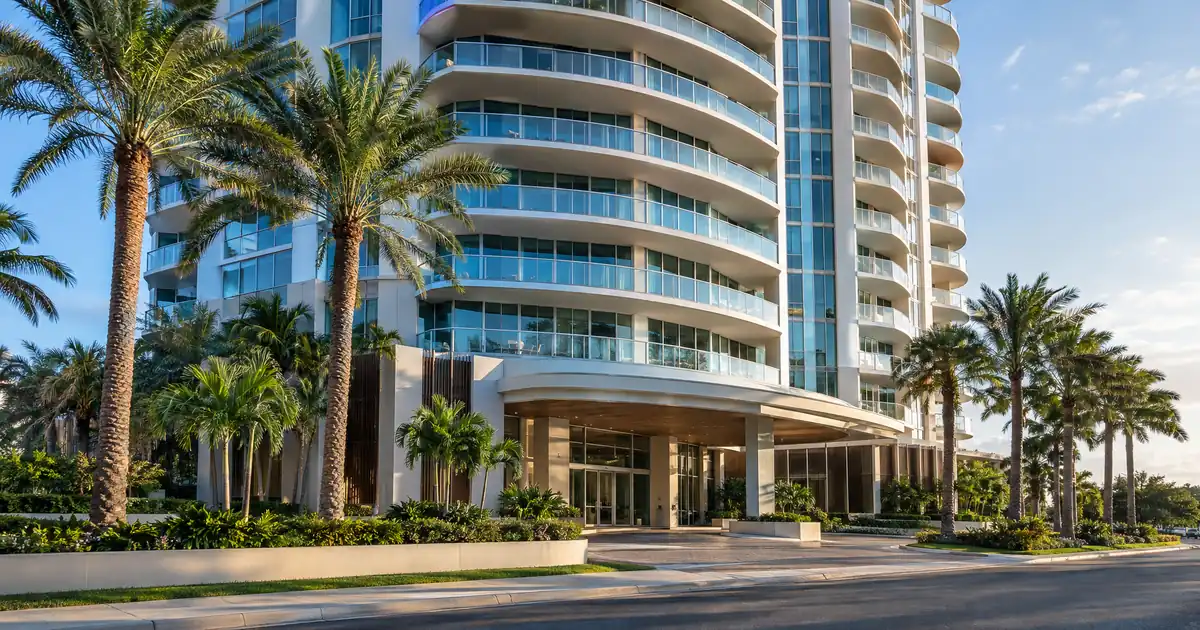
Condotel Qualify For A CPA P&L Loan — The Quick Read: Yes, a condotel can be financed with a CPA P&L loan, but the property and the income get reviewed on two separate tracks. The building has to clear a condotel-specific project screen first. The borrower’s P&L statement, signed by a qualified preparer, clears a second, unrelated income screen. Both have to pass. Neither one substitutes for the other.
A 1099 earner buying a condotel is really running two applications at once: one for the building, one for the income file. The condotel classification limits leverage no matter how clean the borrower’s paperwork looks. The P&L statement, meanwhile, only fixes the income side — it never touches the building’s eligibility. Understanding that split is the whole answer to this question.
What Actually Blocks a Condotel From Conventional Financing?
Condotels don’t qualify for agency loans, period — no CPA statement, no income document, and no borrower profile changes that. Fannie Mae’s own guide excludes any project that operates like a hotel or motel, and that exclusion is about the building, not the buyer.
The Fannie Mae Selling Guide B4-2.1-03, Ineligible Projects spells out the test in plain terms. A project fails if its homeowners association is licensed as a hotel or hospitality entity. It also fails if the project’s legal documents limit an owner’s ability to occupy the unit during parts of the year. Either one is enough on its own. It doesn’t matter if the buyer is a W-2 employee, a 1099 contractor, or a business owner with twenty years of traditional personal-income documentation. The building gets disqualified from agency purchase and securitization before anyone even looks at income.
That’s why condotel purchases land almost exclusively in non-QM and portfolio lending. DSCR loans, bank statement loans, and P&L loans are all designed for exactly this kind of property because agency guidelines have no path for it.
What Is a CPA P&L Loan, Exactly?
A P&L loan is reviewed using a profit-and-loss statement instead of traditional personal-income documentation. That statement has to be prepared by a credentialed third party, not the borrower. Most programs we place files with will accept a CPA, an IRS Enrolled Agent, or a registered tax preparer. A self-prepared P&L gets rejected on nearly every non-QM guideline sheet in our network.
This product exists because traditional personal-income documentation can misstate profitability, in a legal and deliberate way. A self-employed borrower writes off vehicle costs, home office expenses, equipment depreciation, and travel. These write-offs shrink taxable income on paper, but they don’t touch actual cash flow. The P&L path lets a lender look at what the business really generated, instead of what the Schedule C shows after deductions.
It’s a different animal from a straight 1099 loan. A 1099 loan is reviewed using gross income reported on the borrower’s 1099 forms, run through a standardized or verified expense ratio. No preparer signature is required. A P&L loan generally can’t skip that signature. Marketing pages blur the two together under “alternative documentation,” but at the underwriting desk they’re separate files with separate rules.
Can a 1099 Earner Actually Use One on a Condotel?
Yes — the 1099 classification doesn’t create a new obstacle here. What matters is which screen the borrower is trying to clear, and condotel status has nothing to do with how the borrower’s income gets documented.
Across our wholesale network, condotels sit at a set leverage ceiling no matter which documentation type you use. Purchase money typically runs to 75% loan-to-value. Cash-out is capped near 65% on the portfolio program and near 50% on the bank statement program, which carries files up to $30 million (through select wholesale programs, subject to underwriting). Compare that to warrantable condos, which typically clear to 85%, or non-warrantable condos, which typically clear to 80%. That gap comes from the condotel classification itself. It applies whether the borrower brings a CPA P&L, a bank statement file, or a DSCR application built purely on the property’s rental income.
DSCR loans are designed for non-owner-occupied investment properties. Because they are business-purpose investor loans, they are reviewed differently from a standard owner-occupied mortgage.
That distinction matters for a condotel buyer for another reason: the rental-income evidence looks different too. The standard rent-schedule appraisal used on conventional investment purchases wasn’t built for this property type. Fannie Mae’s own guidance on the Form 1007 rent schedule confirms the form exists to establish monthly market rent on one-unit investment properties. It’s a tool built for a twelve-month lease, not a nightly hotel-style booking calendar. Lenders reviewing condotel files typically lean on operator revenue statements and booking history instead, whether the borrower’s personal income is documented through a P&L or a bank statement.
The Two Screens, Side by Side
| Screen | What it evaluates | What clears it |
|---|---|---|
| Property screen | Is the building a condotel? | HOA docs, rental-pool terms, hotel licensing, appraisal review |
| Income screen | Does the borrower’s income support the payment? | CPA/EA/preparer-signed P&L, sufficient after expense-ratio adjustment |
A borrower can pass the income screen cleanly and still get stopped by a weak HOA file or an aggressive rental-pool agreement. A well-run building doesn’t excuse a thin income picture either. Both have to clear before a file moves forward.
P&L vs. 1099 vs. DSCR: Which Path Fits a Condotel?
The right documentation path depends on whether the strongest number on file is the borrower’s income or the property’s rent roll.
| Path | Reviewed on | Preparer required? | Best fit for a condotel buyer |
|---|---|---|---|
| CPA P&L | Borrower’s business income | Yes — CPA, EA, or registered preparer | Strong personal cash flow, weak taxable income after write-offs |
| 1099-only | Borrower’s gross 1099 income | No | Flat, verifiable 1099 income with solid year-to-date proof |
| DSCR | Property’s rental income | No — no personal income doc at all | Property with strong booking history, borrower prefers not to submit personal financials |
An investor buying a condotel purely as a rental often finds DSCR the simpler route. That’s because it qualifies mainly on property-level rental income covering the payment, subject to lender guidelines, rather than on the borrower’s tax posture at all. Lendmire’s complete DSCR loans guide walks through how that property-income math works for investors weighing DSCR against a personal-income path like P&L.
For a self-employed condotel buyer specifically, the 1099 earner P&L guidance covers who can actually sign the statement — the accepted list runs wider than “CPA only” on most programs in our network.
Key Terms Defined
Condotel: A condominium unit inside a project that operates like a hotel — front-desk services, mandatory rental pooling, or occupancy restrictions that keep owners from using the unit year-round.
CPA P&L loan: A non-QM mortgage that qualifies a borrower’s income using a profit-and-loss statement prepared and signed by a CPA, Enrolled Agent, or registered tax preparer, instead of traditional income documentation.
Non-warrantable condo: A condo project that fails one or more agency eligibility tests — heavy investor ownership, active litigation, or high commercial space — without necessarily being a hotel-style property.
Expense ratio: The percentage of gross deposits or gross income a lender subtracts before counting the remainder as qualifying income, used across bank statement and 1099 documentation paths.
Business-purpose loan: A loan made for an investment property rather than a primary residence, reviewed under different rules than a standard owner-occupied consumer mortgage.
Where 1099 Earners Trip Up on Condotel Files
The most common mistake is assuming a strong P&L statement buys back leverage the building can’t offer. It doesn’t. A condotel caps out around 75% purchase leverage in our network no matter how clean the borrower’s income file looks — that ceiling belongs to the property, not the person.
The second mistake is submitting a self-prepared P&L and expecting it to pass. Almost every program in our network requires a preparer’s signature. A self-prepared statement gets kicked back before the file even reaches underwriting. Check out Lendmire’s coverage of what happens after a declining year on a CPA P&L. It’s worth reading if gross receipts dropped year over year, since some programs require a fresh P&L covering the most recent period rather than accepting prior-year 1099s alone.
A third pattern: 1099 income paid to an LLC instead of the individual. Some programs treat that as disqualifying outright; others will work with it if a CPA letter confirms full ownership. This is exactly the kind of detail that varies by lender guideline, and it’s worth confirming before an offer goes in, not after.
In our network, reserve requirements on these files typically run 3 months of payments to $500,000 in loan amount, 6 months to $1,500,000, and 9 months above that — plus 2 months for each additional financed property, up to a 12-month cap. First-time investors often need a full 12 months regardless of size. Credit typically needs to clear 660 on the portfolio program, or 680 on the bank statement program that carries files past $6 million toward the $30 million ceiling. Debt-to-income can run as high as 50% on most files. Anything above $4,000,000 goes through case-by-case review before it’s even submitted — that’s true on both the portfolio and bank programs, and it applies regardless of documentation type.
This isn’t a small pool of borrowers. Roughly 10.3 percent of the U.S. workforce was self-employed as of recent estimates, according to Carry — a meaningful share of the buyers looking at condotels as rental investments are running exactly this documentation question.
Tax treatment can depend on how the funds are used and how the property is held; investors should keep clear records and speak with a qualified tax professional before relying on any deduction.
This article is for general information only and isn’t legal or tax advice. Anyone weighing a condotel purchase with alternative income documentation should talk to a qualified attorney or CPA about their specific situation before making a decision.
Frequently Asked Questions
Does a condotel classification override a strong CPA P&L file?
Yes, on leverage. A condotel’s property-type ceiling — typically around 75% purchase, 65% cash-out on standard rental collateral (50% on the bank statement program) — applies regardless of how strong the borrower’s income documentation looks. The P&L fixes the income screen only; it never raises the property-type ceiling.
Can an Enrolled Agent sign my P&L instead of a CPA?
Usually yes. Most non-QM guidelines in our network accept a statement signed by a CPA, an IRS Enrolled Agent, or a CTEC-registered tax preparer — the requirement is broader than “CPA only,” though a self-prepared statement is rejected on nearly every program.
Is a 1099 loan the same thing as a P&L loan?
No. A 1099 loan is reviewed gross income from the 1099 forms themselves with no preparer signature required. A P&L loan requires a credentialed preparer to sign off on the statement. They get marketed together but underwrite as separate products.
Will the lender use my condotel’s nightly booking history to verify rental income?
Typically, yes. Standard rent-schedule appraisals are built for monthly leases, not nightly rates, so condotel files usually lean on operator revenue reports and actual booking history instead — whether the borrower’s own income is documented through a P&L, bank statements, or a DSCR application built on the property’s rent.
What if my 1099 income is paid to my LLC instead of me personally?
It depends on the program. Some guidelines in our network disqualify 1099s payable to a business entity outright; others allow it if a CPA letter confirms full ownership and an expense adjustment is applied. This is a detail worth clearing with a broker before submitting an offer.
Investors who want the broader program framework can review how DSCR loans work.
For current guidelines and terms, see Lendmire’s super jumbo bank statement loan programs page.
Self-employed borrowers can compare both super jumbo programs on Lendmire’s self-employed mortgages page.
About Lendmire
A non-QM mortgage broker (NMLS# 2371349), Lendmire arranges DSCR financing for real estate investors in 40 markets — 39 states plus Washington, D.C. Because deals are underwritten primarily on property cash flow rather than personal income documentation, the structure suits self-employed buyers and entity-owned portfolios. Lendmire places loans through wholesale investor lenders; it is not a direct lender. Scotsman Guide named Lendmire a Top Mortgage Workplace in both 2025 and 2026.
Get Started
Ready to find the right loan for you?
In about 30 seconds you can review financing options available for your home or investment property. No commitment required.
Informational only. Not a Loan Estimate, approval, or commitment to lend. Program availability and eligibility are subject to lender guidelines, credit approval, property review, and underwriting.
References
1. Fannie Mae Selling Guide B4-2.1-03, Ineligible Projects
2. Fannie Mae Appraiser Update, Form 1007
3. Carry — How Many Americans Are Self-Employed
Brandon Miller
Founder & CEO, Mortgage Loan Originator, Lendmire LLC
- Mortgage Loan Originator · NMLS# 1129696 · Verify on NMLS Consumer Access
- North Carolina Real Estate Broker · License# 343312 · Verify on NCREC
- North Carolina Insurance Producer · License# 19053198 · Property, Casualty, Life, Health · Verify on NAIC SBS
- Lendmire LLC · Firm NMLS# 2371349 · Verify firm licensure
Disclosure information. Lendmire is a state-licensed mortgage brokerage under NMLS# 2371349. Lendmire is not a depository institution, direct lender, or financial advisor — all loans referenced are placed through wholesale lender partners and are subject to each lender's underwriting standards. This article is provided for general informational purposes and is not a commitment to lend, nor does it constitute financial, legal, or tax advice. Loan programs, terms, rates, and qualification standards change without notice and depend on borrower profile, property type, and the state in which the subject property is located. Equal Housing Opportunity provider. NMLS Consumer Access: nmlsconsumeraccess.org.


