
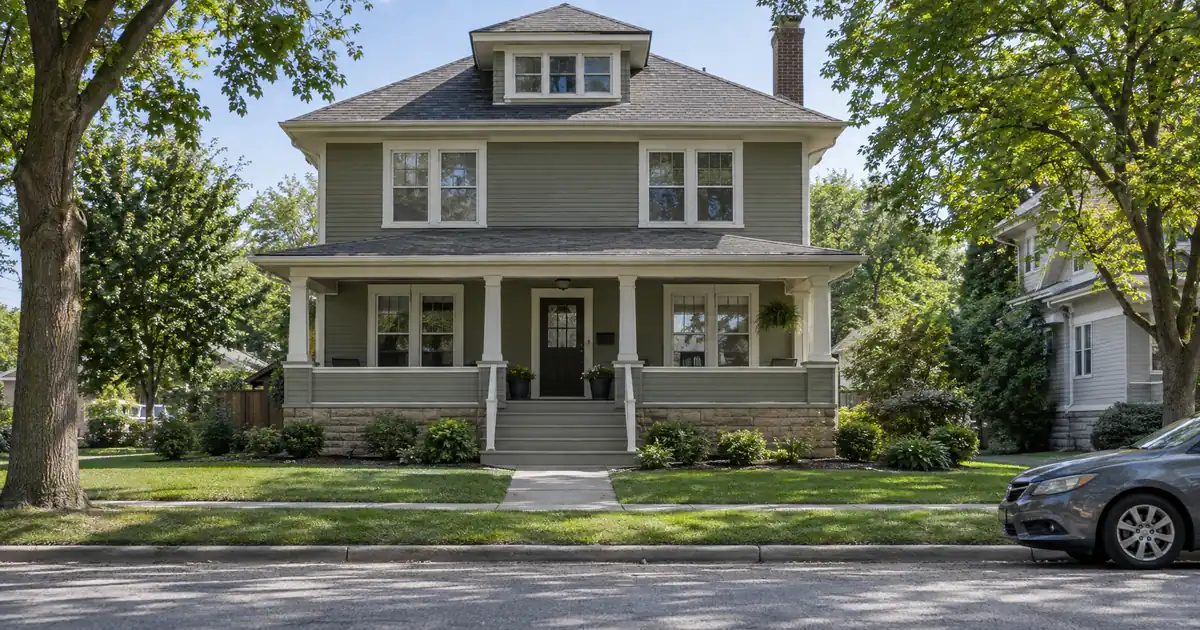
The Quick Read: A rate-and-term refinance swaps your current rental loan for a new one with a different rate, term, structure, or lender. You take no meaningful cash out. The new loan is reviewed primarily on property-level rental income covering the payment, subject to lender guidelines. Because no equity leaves the property, it usually gets more leverage than a cash-out and lighter seasoning.
Key Takeaways
- A rate-and-term loan is sized to your payoff and closing costs. Extra cash back flips it into a cash-out.
- The lender recalculates coverage on the new payment, so a changed structure can move your ratio up or down.
- Cash-out on standard rentals tops out around 75% LTV across most of the network. Rate-and-term files can often sit above that, subject to lender guidelines.
- Clearing 1.00 coverage is not the same as positive cash flow.
- Your existing prepayment penalty can decide whether the refinance makes sense at all.
What Is a Rate-and-Term Refinance on a Rental?
It is a refinance that changes the loan, not your equity. You might want a different rate, a different term, a new structure, or a new lender. The new balance covers the payoff, closing costs, and any required escrows or reserves. Nothing meaningful comes back to you.
DSCR Calculator
Run the numbers in your market
Rate source: Freddie Mac 30-yr average via FRED® — Federal Reserve Bank of St. Louis · effective Oct 1, 2026
Prefilled with starting assumptions — enter your own rent or nightly figures, taxes, insurance, and HOA for a more accurate picture.
Program parameters update from Lendmire’s centralized guideline source. Taxes and insurance are editable estimates.
As of Oct 1, 2026 · General Freddie Mac market benchmark, not a Lendmire loan offer. Rent, nightly rate, occupancy, taxes, and insurance are editable estimates. Short-term rental figures are estimates only and vary significantly by season, property type, management approach, and local short-term-rental rules — confirm local regulations before relying on them. Qualifying income for short-term rentals varies by program — some use appraisal market rent, others use documented STR history or projections — and is confirmed in underwriting. Not a Loan Estimate, approval, or commitment to lend. Program availability and eligibility are subject to lender guidelines, credit approval, property review, and underwriting.
DSCR is a program, not a transaction type. DSCR stands for debt service coverage ratio, which compares a property’s rent to its monthly housing payment. The same DSCR program can fund a purchase, a rate-and-term refinance, or a cash-out refinance. When you say “DSCR rate-and-term,” you mean the program applied to a no-cash-out refinance.
These loans are not agency products. Fannie Mae and Freddie Mac do not buy them. No single rulebook governs them. Each lender in a non-QM network (non-QM means outside standard agency mortgage rules) sets its own leverage, seasoning, and reserve rules. That is why a broker who sees many lenders’ guidelines can compare options you would not find on one lender’s page. The complete DSCR loans guide covers the program from the ground up.
How Does Underwriting Treat It, Step by Step?
Underwriting follows a fixed sequence. The first step matters most, because it sets the leverage ceiling for everything after it.
1. Classify the file. Every refinance gets sorted as rate-and-term or cash-out at intake. That single choice sets the maximum LTV (loan-to-value, the loan balance divided by the property’s value).
2. Order the appraisal. The lender orders a new appraisal for current value plus a market rent estimate. Appraisers use a rent schedule form (the 1007) and, on small multifamily, an income property form (the 1025). Both feed the coverage math.
3. Compute coverage. Monthly gross rent is divided by monthly PITIA. PITIA is principal, interest, taxes, insurance, and association dues where they apply. A ratio of 1.00 means rent exactly covers that payment.
4. Check LTV. The appraised value is tested against the program cap.
5. Review credit and reserves. Personal credit is still pulled. The income paperwork changes, but the credit review stays.
6. Underwrite the whole file. Coverage, LTV, credit, and reserve documents get reviewed together against guidelines.
7. Pay off and record. The new loan pays off the old one. On a rate-and-term, nothing is paid out to you.
Here is the catch most borrowers miss. The payment is recalculated on the new loan. A shorter term or a less favorable structure can push the payment up and the ratio down. A refinance that lowers your payment lifts coverage. One that does the opposite can sink the file.
Which rent counts?
The rent used may be market rent from the appraisal, or the lower of market rent and an existing lease. Programs differ. If your tenant pays well under market, the lease can drag your ratio down on programs that use the lower figure. Ask which method applies before you order anything.
What documents show up?
Expect a credit report, an appraisal with rent schedule, the lease if there is one, insurance and title, reserve statements, and the payoff statement. LLC borrowers add an entity package, subject to lender program eligibility. You also sign a business-purpose disclosure. No traditional personal-income documentation, W-2s, or employment verification are needed.
What Are the Structures and Variations?
The spine of the network is the 30-year fixed. Select lenders add extended terms such as a 40-year schedule, plus interest-only periods. ARM structures (adjustable-rate mortgages) exist for investors who want them. Above $2,500,000, the network generally holds to 30-year fixed structures.
Leverage is where the transaction type bites. On purchases, most files land at 75%-80% LTV. Cash-out refinances top out around 75%. Rate-and-term sits in between in spirit: it is the lower-risk transaction for the lender, so it typically earns more leverage than cash-out. Market surveys report rate-and-term LTVs commonly in the 75-80% range, per CrowdfundedWealth. Your exact cap depends on credit, coverage, loan size, and the lender.
Credit follows a ladder. A 620 floor exists in parts of the network. Most programs want around 660. A 700+ score opens the strongest leverage tiers. Loan sizes run up to $3,000,000 on standard programs.
| Factor | Rate-and-Term | Cash-Out |
|---|---|---|
| Cash to borrower | None beyond costs | Yes |
| Typical leverage | Higher | Around 75% LTV ceiling |
| Seasoning | Generally light | Often around 6 months |
| Main goal | Better structure | Pull equity |
Reserves vary by lender, leverage, loan size, and transaction type. About 6 months of PITIA is common. Conservative rate-and-term files at modest leverage under $1,500,000 can see reserves waived. Above that size, expect about 9 months. Treat all of this as typical, not guaranteed.
Where Does the General Rule Break?
These are the edge cases that trip up otherwise clean files.
Seasoning. Seasoning is the waiting period between buying a property and refinancing it. Rate-and-term generally carries little or none, because no equity comes out. Seasoning also decides which value gets used: the purchase price or the appraised value. Early-window loans may be sized off the purchase price. Practitioners note that rules vary sharply between lenders, per Munoz Ghezlan. Cash-out is the one that carries the longer clock, often around 6 months across the network.
Bridge or hard-money takeout. This is the classic use. You buy, rehab, and then move from a short-term loan into long-term DSCR financing. Seasoning is often waived for these payoffs, though that varies by lender. Start the process well before your bridge matures, because you need an appraisal and a stable rent picture.
The “rate-and-term” that puts cash in your hand. Any cash beyond payoff and closing costs flips the file to cash-out. Cash-out has the lower leverage ceiling. A borrower who expected a small check can find the whole file re-sized. Decide up front which loan you want.
Delayed-financing cash purchases. You paid cash, then refinance to recover it. Technically that is a cash-out transaction with a narrow exception, not a rate-and-term. The cash back cannot exceed documented purchase price plus costs, and it still has to fit LTV caps.
Coverage below 1.00. Sub-1.00 coverage is available through select lenders in the network, with leverage and terms adjusted. Expect tighter credit and LTV. No-ratio structures are available only through select lenders, generally for borrowers who already own a primary residence.
Prepayment penalty on the current loan. A prepayment penalty is a fee for paying off a loan early. Multi-year penalties are common on DSCR loans. Get the payoff figure in writing before you order the appraisal. A penalty can erase months or years of savings.
Short-term rentals. Qualifying income varies. Some programs use appraisal market rent. Others use documented hosting history or projections. On STR files, purchases run to 75% LTV, refinances around 70%, and cash-out 70%. Expect a 640+ score and about 12 months of hosting history. Coverage on both purchases and refinances starts at 1.00 for these programs. Short-term rental rules can vary by city, county, HOA, and property type, so investors should confirm local rules before relying on projected rental income. Exact terms depend on the lender’s guidelines, property type, leverage, and a full review of the borrower’s file.
Portfolio concentration. Near a large aggregate position with one lender, an investor can do a rate-and-term on the big balance and a targeted cash-out on a smaller subset. Reserves typically apply to each loan separately.
Ineligible property types. Manufactured homes (single- and double-wide), log homes, and barndominiums are not offered in these programs.
Owner occupancy. DSCR loans are designed for non-owner-occupied investment properties. Because they are business-purpose investor loans, they are reviewed differently from a standard owner-occupied mortgage. If you plan to live in the property, the analysis changes, especially on one- to two-unit buildings. Doss Law notes the owner-occupancy line sits at more than 14 days of personal use in the coming year. Misclassification carries real risk for lenders, as Hunton Andrews Kurth explains. That is a lender problem to manage, but it is why you answer the occupancy questions honestly.
What Does the Decision Look Like in Practice?
Three checks decide most outcomes:
- Does rent still cover the new payment?
- Is the prepayment penalty on the current loan worth paying?
- Have you owned the property long enough to meet the seasoning window?
Then run the break-even. Add your closing costs and any prepayment penalty. Divide by your monthly payment savings. The result is how long you must hold before the refinance pays for itself. If your plan is to sell sooner, skip it. Penalty cost beyond the savings inside your hold period means no refinance.
Picture an investor holding a stabilized duplex on a short-term bridge loan. The rehab is done, rent is set, and the bridge is about to mature. Rate-and-term into a 30-year fixed makes sense. The appraisal supports value, coverage clears the program floor with room, and no cash comes out. Now picture the same investor wanting a check for the next purchase. That is a cash-out, tested at the lower ceiling and, usually, a longer seasoning clock. Our rate-and-term vs. cash-out comparison walks through that choice.
DSCR vs. conventional financing
There are two common ways to finance an investment property in this market, and they qualify you differently — here’s how investors weigh them.
Why investors choose it
- Qualifies on the property’s rental income — no personal tax returns, W-2s, or pay stubs needed to document income.
- No personal debt-to-income ceiling to clear, so existing mortgages and obligations don’t cap your borrowing the same way.
- Can be closed in an LLC, keeping the property inside a business entity.
- Built for scaling — not held to the limit on number of financed properties that conventional financing applies.
- Underwriting centers on the deal: generally qualifies when the rent covers the payment, a 1.00x coverage ratio being a common baseline (confirmed in underwriting).
- Designed specifically for investment property, including long-term and, where the program allows, short-term rentals.
Where it’s strong
- Often the lowest ongoing financing cost for a buyer who fully qualifies on personal income — a fit for a first property or a cost-first purchase.
Trade-offs for investors
- Requires full personal income documentation and must fit within a debt-to-income limit — salary, existing debts, and other mortgages all count.
- Typically held in your personal name rather than a business entity.
- Caps how many financed properties you can carry, which can become a ceiling as a portfolio grows.
- Evaluates you as a borrower as much as the property, which usually means more paperwork.
How investors usually choose: a first or single property often optimizes for the lowest financing cost; portfolio builders often optimize for leverage, vesting in an LLC, and scaling past conventional caps. The right answer depends on your goals, the property, and current guidelines — both paths run through select lenders in Lendmire’s wholesale network, with eligibility and terms confirmed in underwriting.
Across the network, one pattern repeats. Files that stumble on rate-and-term rarely fail on credit. They fail because the payoff statement hid a penalty, the lease rent sat below market, or the new structure lowered coverage. Pull those three items before you apply.
One more point. A larger equity cushion lowers the payment and can lift coverage. It never erases leverage caps, credit floors, reserve rules, or property eligibility. The strongest files clear both tests: enough equity and enough rental coverage.
Does Clearing 1.00 Mean Positive Cash Flow?
No. Coverage compares rent to PITIA only. Repairs, vacancy, management, utilities, and capital expenses sit outside the calculation. A property can clear the ratio and still lose money in a rough year. Treat the ratio as the lender’s test, and run your own operating budget separately. Tax treatment can depend on how the funds are used and how the property is held; investors should keep clear records and speak with a qualified tax professional before relying on any deduction.
Common Misconceptions
“DSCR means no credit review.” Credit is still reviewed, and both the property and the borrower are documented.
“A DSCR refi works like a conventional refi.” Multi-year prepayment penalties are common, and a recalculated ratio can sink a deal.
“One DSCR formula fits every program.” Rent and payment treatment vary by product.
“A bank’s refi offer means cash-out is available.” Cash-out and rate-and-term are separate leverage tests.
“Business-purpose means no rules apply.” It removes consumer-mortgage disclosures, not state law or the need for accurate occupancy answers. DSCR loans are business-purpose and exempt from TRID, the consumer disclosure regime, as the CFPB’s Reg Z business-purpose exemption reflects.
Key Terms Defined
DSCR: Debt service coverage ratio. Monthly rent divided by monthly PITIA.
PITIA: Principal, interest, taxes, insurance, and association dues where applicable.
LTV: Loan-to-value. The loan balance divided by the property’s value.
Seasoning: The waiting period a lender wants between two events, such as buying and refinancing.
Prepayment penalty: A fee charged for paying off a loan before a set date.
Non-QM: Lending outside agency mortgage rules, underwritten to each lender’s own guidelines.
Business-purpose loan: Credit taken for investment or commercial use, not personal or household use.
Frequently Asked Questions
Can I do a rate-and-term now and a cash-out later?
Yes. Many investors do exactly that, first fixing the structure and later pulling equity once the property has aged into the cash-out seasoning window. Check how your first loan’s prepayment penalty interacts with the second refinance. Each step is tested on its own leverage cap.
What happens if the appraisal comes in low?
The LTV is recalculated on the lower value. A rate-and-term that fit at one value can miss the cap at another, and you may need to bring cash to closing or reduce the balance.
Does it matter if the property is in an LLC?
Often yes, in paperwork. Credit is still reviewed on the guarantor, so personal credit still counts even when the LLC holds title.
Can I refinance if my coverage is under 1.00?
It can be possible in some cases. Sub-1.00 files are available through select lenders in the network, with leverage and terms adjusted. Expect tighter credit and a lower LTV. A rate-and-term that improves your payment may lift the ratio enough to change the picture.
Is a DSCR rate-and-term worth it versus keeping my current loan?
Run the break-even. If payment savings repay your closing costs and any penalty within your planned hold period, it can be worth it. If you may sell soon, or the new structure lowers coverage, stay put.
If you are buying or refinancing a rental property and want to see how the numbers work, Lendmire, a mortgage broker arranging DSCR financing through select lenders in its wholesale network across 41 markets including Washington, D.C., can help you compare DSCR loan options based on the property income, credit profile, leverage, and investor goals. Reach the team at 828-256-2183 or request a quote. Programs change, every file is underwritten individually, and nothing here is a commitment to lend.
For current guidelines and terms, see Lendmire’s DSCR loan programs page.
About Lendmire
Lendmire (NMLS# 2371349), a non-QM mortgage broker serving investors in 41 markets including Washington, D.C., helps structure DSCR scenarios commonly evaluated around a property’s rental income rather than personal income paperwork, subject to lender guidelines. A Scotsman Guide Top Mortgage Workplace in 2025 and 2026, Lendmire places loans through wholesale investor lenders and is not a direct lender.
Scotsman Guide’s Top Mortgage Workplace lists for 2025 and 2026 document Lendmire’s recognition.
Get Started
Ready to find the right loan for you?
In about 30 seconds you can review financing options available for your investment property. No commitment required.
Informational only. Not a Loan Estimate, approval, or commitment to lend. Program availability and eligibility are subject to lender guidelines, credit approval, property review, and underwriting.
References
3. Doss Law, Business Purpose Exemption
4. Hunton Andrews Kurth, “Beware of Business Purpose”
This article is part of Lendmire’s DSCR loan program — full qualification details, guidelines, and scenarios live on the program page.
Related reading: Luxury Rental DSCR Loans In New Jersey · Jersey Shore Vacation Rental Loans: DSCR Financing In Ocean City, Cape May And Long Beach Island · DSCR Cash-out Refinance In New Jersey: Pulling Equity From A Rental
Brandon Miller
Founder & CEO, Mortgage Loan Originator, Lendmire LLC
- Mortgage Loan Originator · NMLS# 1129696 · Verify on NMLS Consumer Access
- North Carolina Real Estate Broker · License# 343312 · Verify on NCREC
- North Carolina Insurance Producer · License# 19053198 · Property, Casualty, Life, Health · Verify on NAIC SBS
- Lendmire LLC · Firm NMLS# 2371349 · Verify firm licensure
Required disclosures. Lendmire (NMLS# 2371349) operates as a licensed mortgage broker, not a direct lender or depository. The discussion in this article is general in nature and should not be relied upon as financial, legal, or tax advice — every investment scenario is unique and should be reviewed by a qualified professional. Any loan inquiry is subject to lender underwriting, and this article is not a commitment to lend or a guarantee of approval. Mortgage rates, loan terms, and program guidelines vary by borrower, property, and state, and may change without notice. Equal Housing Opportunity. Verify licensure at NMLS Consumer Access.