
Introduction
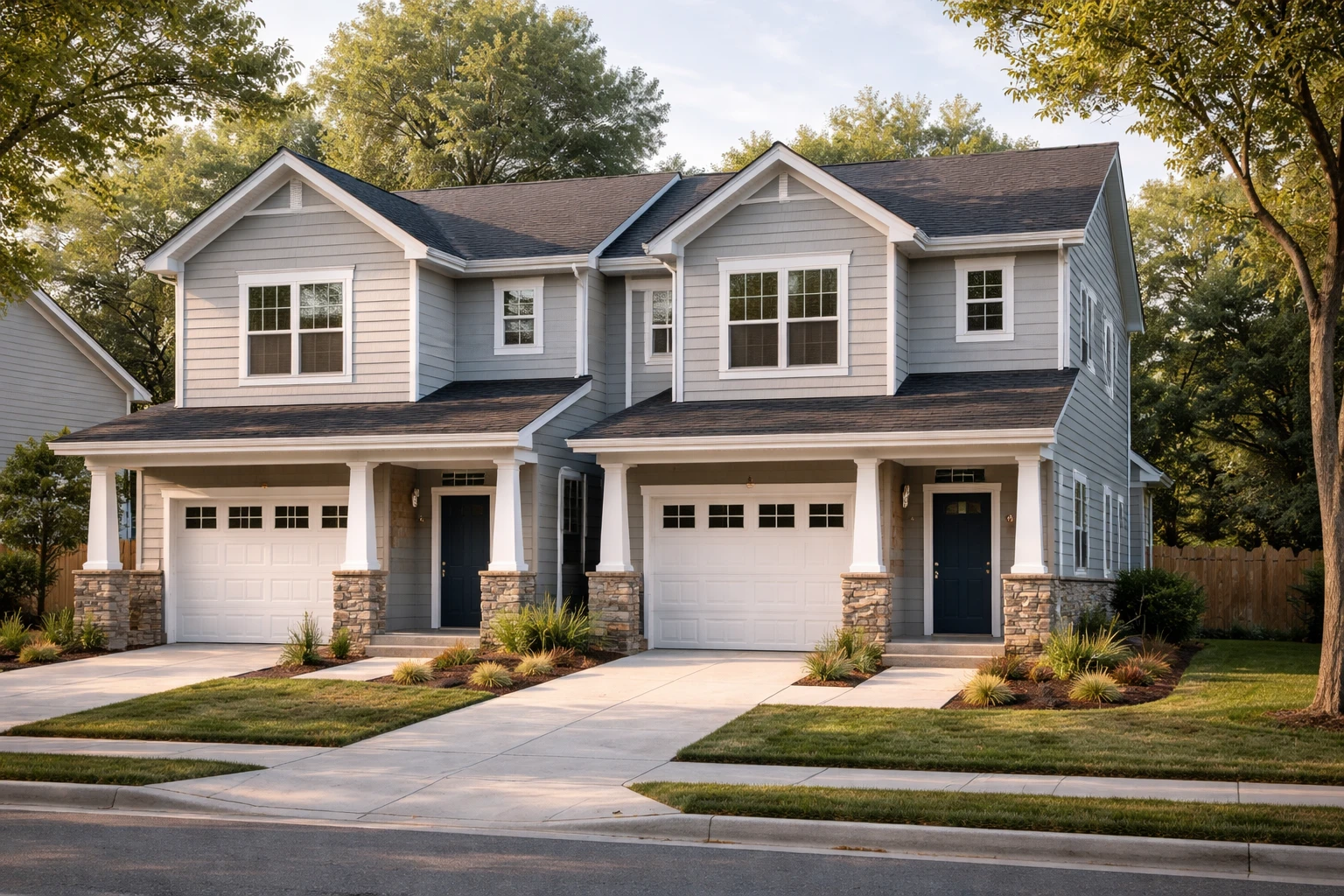
A cash-out refinance on a North Carolina investment property lets you replace your existing loan with a larger one and pocket the difference. That capital can fund your next acquisition, cover renovations, pay down hard-money debt on another rental, or simply sit in reserves while you scout the next deal. Lendmire is a mortgage broker specializing in DSCR and non-QM investment loans, and we work with North Carolina investors every day to unlock equity and accelerate portfolio growth.
What Is a DSCR Loan
The DSCR formula is straightforward: Monthly Gross Rents divided by PITIA (Principal, Interest, Taxes, Insurance, and Association dues). A DSCR of 1.00 means the property’s income exactly covers its debt obligations. Ratios above 1.00 indicate positive cash flow, while sub-1.00 options are available with restrictions. For investors with multiple properties, complex income structures, or self-employment, DSCR removes the documentation barriers that conventional underwriting imposes.
DSCR Cash-Out Calculator
Run the cash-out numbers in North Carolina
Rate source: Freddie Mac 30-yr average via FRED® — Federal Reserve Bank of St. Louis · effective Jul 30, 2026
Prefilled with starting assumptions — enter your property’s value, balance, taxes, and insurance for a more accurate picture.
Program parameters update from Lendmire’s centralized guideline source. Taxes and insurance are editable estimates.
As of Jul 30, 2026 · General Freddie Mac market benchmark, not a Lendmire loan offer. Property value, balance, taxes, and insurance are editable estimates. Maximum loan-to-value varies by lender, program, property type, and seasoning. Not a Loan Estimate, approval, or commitment to lend. Program availability and eligibility are subject to lender guidelines, credit approval, property review, and underwriting.
DSCR Formula: Monthly Gross Rent ÷ PITIA = DSCR Ratio Example: $2,200 rent ÷ $1,800 PITIA = 1.22 DSCR
Why North Carolina Matters for Real Estate Investors
North Carolina’s economy has diversified rapidly over the past decade, transforming from a manufacturing base into a technology, finance, and life sciences hub. The Research Triangle region — encompassing Raleigh, Durham, and Chapel Hill — is home to major employers including Apple, Google, Wolfspeed, Bioventus, and the continued expansion of Research Triangle Park, one of the country’s largest research and technology campuses. This concentration of high-wage jobs has driven sustained demand for rental housing across all price points.
Charlotte, meanwhile, has solidified its position as the second-largest banking center in the United States after New York, anchored by Bank of America’s headquarters and Wells Fargo’s East Coast operations. The Queen City’s population growth has consistently ranked among the fastest in the nation, creating an enormous rental demand that investors have capitalized on for years. The Asheville metro and the coastal communities from Wilmington to the Outer Banks add vacation rental dynamics that produce some of the most compelling DSCR ratios in the Southeast.
For investors already holding North Carolina properties, rising home values have created significant equity positions. The median home price across the state’s major metros has appreciated substantially over the past several years, meaning many investors sitting on properties purchased before 2021 have equity they have not yet put to work. A cash-out refinance at DSCR terms is the most direct path to deploying that equity into additional acquisitions.
Key Benefits of a Cash-Out Refinance on a North Carolina Investment Property
- No income verification — qualification is based on the property’s rental income, not W-2s or tax returns
- LLC-friendly closings — investors can hold title in an LLC or other entity structure, subject to lender program eligibility
- Short-term rental flexibility — properties with Airbnb or VRBO income can qualify using adjusted STR rent schedules
- Portfolio scaling — pull equity from existing North Carolina properties to fund down payments on additional rentals without liquidating assets
- Cash-out and refinance options — access funds for renovations, hard-money payoffs, reserves, or new acquisitions
- No cap on financed properties — unlike conventional programs that cap at 10 financed properties, DSCR programs allow continued portfolio growth
Thinking about investment properties in North Carolina? Lendmire’s specialists work with investors in 41 markets — no W-2s, no tax returns, just the property’s numbers. Call us at 828-256-2183 or apply online to see what you qualify for.
DSCR Loan Requirements
Credit Score Thresholds
- 620 FICO minimum — DSCR at or above 1.00, purchase loans up to $3,000,000 (purchase only at 620–659)
- 620 FICO minimum — most refinance and cash-out transactions
- 700 FICO minimum — first-time investors
- 680 FICO minimum — interest-only loans on 1–4 unit properties
- Sub-1.00 DSCR: 640 FICO minimum; options narrow significantly below 680
LTV and Cash-Out Limits
- DSCR ≥ 1.00: up to 80% LTV on purchases (620+ FICO, loans up to $3,000,000)
- DSCR < 1.00: up to 75% LTV on purchases (640+ FICO, loans up to $2,000,000)
- Cash-out refinance: up to 75% LTV (620+ FICO, DSCR ≥ 1.00, loans up to $3,000,000)
- Condotel: maximum 75% LTV purchase / 65% LTV refinance
DSCR Ratio Requirements
- Standard minimum: DSCR ≥ 1.00
- Sub-1.00 DSCR available with restrictions (640+ FICO, reduced LTV)
- Short-term rental properties: gross rents reduced 20% before DSCR calculation
Loan Amounts and Property Types
- 1–4 unit residential: $100,000 minimum / $3,000,000 maximum
- 2–4 unit mixed-use: $400,000 minimum / $2,000,000 maximum
- Eligible property types: SFR (attached/detached), PUDs, 2–4 unit residential, warrantable and non-warrantable condos, condotels, modular/pre-fab
- Mixed-use: commercial space must not exceed 49.99% of building area; maximum 2-acre lot
Loan Terms and Reserves
- Terms available: 30-year fixed, 40-year fixed, 5/6 ARM, 7/6 ARM, 10/6 ARM (30-day SOFR index)
- Interest-only available with a 10-year I/O period; combinable with 40-year term
- Reserves: none at or below $1,500,000 and 70% LTV; 6 months PITIA above 70% LTV; 9 months above $1,500,000; 6 months on a cash-out (cash-out proceeds may satisfy)
- Cash-out proceeds may satisfy reserve requirements for 1–4 unit properties (not mixed-use)
DSCR vs. Conventional Investment Loans
- Conventional requires full income documentation and DTI analysis — DSCR does not require W-2s, tax returns, or personal DTI calculation
- Conventional loans prohibit LLC ownership — DSCR fully supports closing in an LLC or entity, subject to lender program eligibility
- Conventional cash-out seasoning: 12 months ownership required — DSCR seasoning: 6 months minimum
- Conventional caps financed properties at 10 — DSCR has no portfolio cap (program dependent)
- Both programs cap cash-out at 75% LTV for a 1-unit property — this point is equal
- Conventional requires 6 months PITIA reserves on ALL financed properties — DSCR reserves follow leverage and loan size (none at or below $1,500,000 and 70% LTV; 6 months above 70% LTV; 9 months above $1,500,000)
For North Carolina investors with multiple properties or complex income, these differences are substantial. The reserve difference alone can tie up tens of thousands of dollars unnecessarily under a conventional structure. Add the inability to close in an LLC and the 12-month seasoning requirement, and DSCR becomes the clear choice for active portfolio builders.
North Carolina Investment Markets: A Closer Look
Raleigh and the Research Triangle
Raleigh consistently ranks among the fastest-growing cities in the United States, and the surrounding Research Triangle region has attracted a wave of corporate relocations and expansions from Apple, Amazon, and numerous biotech and life sciences firms. Neighborhoods like Brier Creek, North Hills, and the Five Points area see strong single-family rental demand from tech workers and university staff. The presence of NC State University also drives steady rental absorption near the Hillsborough Street corridor and Avent Ferry Road.
Investors who acquired properties in the Raleigh market between 2017 and 2021 have typically seen significant equity appreciation. A cash-out refinance at 75% LTV on a property that has increased in value allows that equity to fund a down payment on a second or third acquisition — a core portfolio-building strategy that DSCR underwriting facilitates without income documentation hurdles.
Charlotte and the Queen City Metro
Charlotte’s status as a major banking and financial services hub creates a reliable, high-income renter base that commands strong rents across the urban core and adjacent suburbs. Neighborhoods including South End, NoDa, Plaza Midwood, and Dilworth attract young professionals willing to pay premium rents for walkable proximity to uptown employment centers. Suburban markets like Steele Creek, Ballantyne, and Indian Land just across the South Carolina border have also seen explosive rental demand from families priced out of the urban core.
For investors holding Charlotte multifamily or single-family rentals, the DSCR cash-out refinance offers a way to access built-up equity without refinancing into a conventional loan that requires DTI documentation. A 2-unit property in South End generating $3,800 per month in combined rents can demonstrate a strong DSCR ratio even after refinancing at 75% LTV, freeing capital for the next acquisition while keeping monthly obligations manageable.
Wilmington and the Cape Fear Coast
Wilmington sits at the intersection of long-term residential demand and short-term vacation rental opportunity. The city’s historic downtown, proximity to Wrightsville Beach and Carolina Beach, and a growing film and TV production industry (driven by EUE Screen Gems Studios) have created a diverse investor base. Long-term renters include healthcare workers at Novant Health and New Hanover Regional Medical Center, UNCW students, and military families from Camp Lejeune and nearby bases.
Investors in the Wilmington area often hold both long-term residential rentals and coastal vacation properties, sometimes within the same portfolio. DSCR underwriting accommodates both structures, applying the 20% haircut to short-term rental income for DSCR calculation purposes, which still often yields ratios above 1.00 during peak season. A cash-out refinance on an appreciated Wilmington property can fund the purchase of a second coastal rental or finance renovations that increase STR nightly rates.
Asheville and the Western Mountains
Asheville’s reputation as a destination city for arts, craft beer, outdoor recreation, and Blue Ridge Parkway tourism has made it one of North Carolina’s strongest short-term rental markets. Properties in Asheville’s River Arts District, West Asheville, and the surrounding Buncombe County mountain communities consistently generate high nightly rates. Investor demand for Asheville vacation rentals has remained strong despite rising prices, driven by the city’s national profile and limited housing inventory.
For mountain property investors, the DSCR structure is particularly valuable because income is generated primarily through short-term platforms rather than traditional leases. Lenders applying DSCR financing to STR properties will reduce gross rents by 20% before calculating the ratio, so investors should factor that into their projections. A cash-out refinance on an Asheville vacation rental that has appreciated significantly allows investors to pull equity while keeping the property in STR operation — no need to convert to long-term rental just to qualify for financing.
The Outer Banks and Coastal Vacation Markets
The Outer Banks — spanning Kill Devil Hills, Nags Head, Duck, Corolla, and Hatteras — is one of the most recognizable vacation rental corridors on the East Coast. Properties here generate concentrated income during peak summer weeks, with occupancy rates during June, July, and August routinely exceeding 90%. Investors who own Outer Banks properties have in many cases seen values rise dramatically over the past several years as demand for beach vacation homes surged.
The financing challenge on the Outer Banks has always been documentation complexity — owners of vacation rentals often show uneven or seasonally concentrated income that doesn’t translate well to conventional underwriting. DSCR loans solve this by focusing entirely on the property’s rental income potential rather than the owner’s W-2 or Schedule C. Investors can access cash-out refinancing on their Outer Banks properties at up to 75% LTV, funding renovations, property management upgrades, or entirely new acquisitions in the same coastal market.
Greensboro, Winston-Salem, and the Piedmont Triad
The Piedmont Triad is often overlooked in favor of Charlotte and Raleigh, but investors who have focused on Greensboro, Winston-Salem, and High Point have benefited from lower entry prices, higher gross rent yields, and steady demand from healthcare, manufacturing, and logistics workers. FedEx’s hub at Piedmont Triad International Airport, Cone Health’s regional footprint, and Wake Forest Baptist Medical Center in Winston-Salem create a stable employment base that supports consistent rental occupancy rates.
For Triad investors, the cash-out refinance strategy plays well because lower property prices paired with consistent rents often produce excellent DSCR ratios — sometimes 1.30 or higher — making cash-out transactions at 75% LTV straightforward to qualify. Investors who purchased duplexes or small multifamily properties in Greensboro or Winston-Salem in the 2018–2020 window and have seen modest but steady appreciation can now use that equity to expand into higher-yield markets or acquire additional Triad units while the pricing advantage still exists.
Short-Term Rental and Airbnb Applications in North Carolina
- Outer Banks and coastal properties (Wrightsville Beach, Topsail Island) generate peak summer income that, even after the 20% STR haircut, often supports DSCR ratios above 1.10
- Asheville and Blue Ridge Parkway mountain cabins benefit from year-round demand driven by tourism, fall foliage season, and outdoor recreation proximity
- LLC ownership is particularly valuable for STR investors managing liability across multiple vacation rental properties, subject to lender program eligibility
- Cash-out proceeds can fund STR renovations — kitchens, hot tubs, outdoor amenities — that drive higher nightly rates and improve the DSCR ratio on the next refinance cycle
Example DSCR Scenario: Durham, North Carolina
Property type: Single-family rental near Duke University Medical Center
Purchase price: $385,000
Existing loan balance: $270,000
Estimated current value: $450,000
Cash-out refinance loan amount (75% LTV): $337,500
Cash-out proceeds after payoff: approximately $67,500
Monthly rent: $2,600
Estimated PITIA at new loan amount: $2,050
DSCR calculation: $2,600 monthly rent ÷ $2,050 PITIA = 1.27 DSCR
This investor qualifies without income documentation or tax returns. LLC ownership is welcome, subject to lender program eligibility. The $67,500 in cash-out proceeds could serve as the down payment on a second Durham rental near Ninth Street or East Campus, or fund a full kitchen renovation on an Outer Banks STR to boost nightly rates. This is exactly how many investors scale using DSCR loans across North Carolina.
Ready to run the numbers on your next North Carolina investment property? Lendmire closes DSCR loans on a timeline that varies by lender and file — no income docs, no W-2s, and LLC ownership is welcome (subject to lender program eligibility). Reach out today at 828-256-2183 and let’s get started.
DSCR Refinance Options for North Carolina Investors
The DSCR cash-out refinance requires a minimum 6-month ownership period — compared to 12 months under conventional guidelines — which means investors who move quickly can access equity much sooner than a traditional lender would allow. For investors who purchased with all cash, a delayed financing exception may allow earlier access to equity without the standard seasoning period.
Rate-and-term refinances are also available under DSCR programs when a lower monthly payment or different loan structure is the goal, rather than cash extraction. Investors with adjustable-rate mortgages from prior years, or those holding hard-money loans on recently renovated North Carolina properties, often use the rate-and-term DSCR refinance to transition into a longer-term fixed-rate structure before rates shift further.
For North Carolina investors specifically, the market appreciation in Charlotte, Raleigh, and coastal markets has created equity cushions that make the 75% LTV cash-out threshold very achievable. A property in Raleigh purchased at $300,000 in 2020 that has appreciated to $430,000 now has sufficient equity to support a full cash-out refinance at 75% LTV ($322,500), potentially yielding $50,000 or more in usable capital after paying off the existing loan balance — all without a single pay stub reviewed.
Why Investors Choose Lendmire for North Carolina DSCR Loans
- Closings on a timeline that varies by lender and file — essential for North Carolina markets where deals move fast
- No W-2s, no tax returns, no personal income documentation — DSCR qualification only
- LLC and entity ownership supported — subject to lender program eligibility
- Access to multiple DSCR lenders and programs, not limited to a single bank’s guidelines
- Experienced loan officers who understand North Carolina’s diverse markets, from Research Triangle multifamily to Outer Banks STRs
Lendmire is a great option for DSCR loans, offering flexible solutions for real estate investors in 41 markets.
Frequently Asked Questions
What is the minimum credit score for a DSCR loan?
The minimum credit score is 620 FICO for purchase transactions with a DSCR at or above 1.00. Most cash-out refinance transactions require 620 FICO minimum. First-time investors require 700 FICO. Interest-only loan options require 680 FICO on 1–4 unit properties.
Do DSCR loans require tax returns or W-2s?
No. DSCR loans qualify entirely on the rental income of the subject property. No W-2s, pay stubs, tax returns, or personal income documentation are required. This is the defining advantage of DSCR underwriting for investors with complex income or multiple business entities.
Can I use an LLC to get a DSCR loan in North Carolina?
Yes. DSCR programs support LLC and entity ownership, subject to lender program eligibility. This is a significant advantage over conventional loans, which require the borrower to hold title individually. Investors using LLC structures for liability protection should confirm entity requirements with their loan officer at the time of application.
Is North Carolina a good market for a DSCR cash-out refinance?
North Carolina is one of the Southeast’s strongest markets for DSCR cash-out refinancing. Appreciation in Charlotte, Raleigh, and coastal markets has built substantial equity positions for investors who purchased in the 2018–2022 window. Strong rental demand across long-term residential and short-term vacation rental segments supports the DSCR ratios needed for cash-out qualification.
What types of investment properties qualify for DSCR in North Carolina?
Eligible property types include single-family rentals, attached and detached PUDs, 2–4 unit residential properties, warrantable and non-warrantable condos, condotels, modular and pre-fab homes, and mixed-use properties where commercial space does not exceed 49.99% of building area. STR properties including Airbnb and VRBO rentals also qualify with income adjusted by a 20% reduction before DSCR calculation.
What is the minimum DSCR ratio required for a cash-out refinance in North Carolina?
The standard minimum DSCR ratio for a cash-out refinance is 1.00 — meaning monthly gross rents must equal or exceed the full PITIA payment. Sub-1.00 DSCR cash-out options may be available with restrictions, including 640 FICO minimum and reduced LTV.
Disclaimer
For current guidelines and terms, see Lendmire’s DSCR loan programs page.
About Lendmire
Lendmire, NMLS# 2371349, is a non-QM mortgage broker serving real estate investors in 41 markets, including Washington, D.C., through DSCR investor loan programs. Qualification is generally reviewed around the subject property’s rental income, not the borrower’s W-2 history — a practical fit for LLC-titled portfolios and self-employed investors. All scenarios remain subject to lender review and program guidelines. Scotsman Guide named Lendmire a Top Mortgage Workplace in both 2025 and 2026.
Get Started
Ready to find the right loan for you?
In about 30 seconds you can review financing options available for your investment property. No commitment required.
Informational only. Not a Loan Estimate, approval, or commitment to lend. Program availability and eligibility are subject to lender guidelines, credit approval, property review, and underwriting.
This article is part of Lendmire’s investment property cash-out refinance program — full qualification details, guidelines, and scenarios live on the program page.
Related reading: Cash Out Refinance Investment Property Durham North Carolina · DSCR Cash Out Refinance Durham North Carolina: Access Equity Without Income Docs · What Is A Debt Service Coverage Ratio Loan Or DSCR Loan?
Guides: Investment Property Cash-Out Refinance in North Carolina
References
1. Freddie Mac 30-yr average via FRED® — Federal Reserve Bank of St. Louis
Brandon Miller
Founder & CEO, Mortgage Loan Originator, Lendmire LLC
- Mortgage Loan Originator · NMLS# 1129696 · Verify on NMLS Consumer Access
- North Carolina Real Estate Broker · License# 343312 · Verify on NCREC
- North Carolina Insurance Producer · License# 19053198 · Property, Casualty, Life, Health · Verify on NAIC SBS
- Lendmire LLC · Firm NMLS# 2371349 · Verify firm licensure
Disclosures. The information presented in this article is general market commentary, not financial, legal, or tax advice. Lendmire is a mortgage brokerage (NMLS# 2371349) — not a direct lender or depository institution — and loan placement is subject to lender underwriting. Nothing in this content represents a commitment to lend. Loan terms, pricing, and program availability vary based on borrower qualifications, property characteristics, and state of subject property, and are subject to change at any time. Lendmire complies with Equal Housing Opportunity requirements. Consumer access: nmlsconsumeraccess.org.