
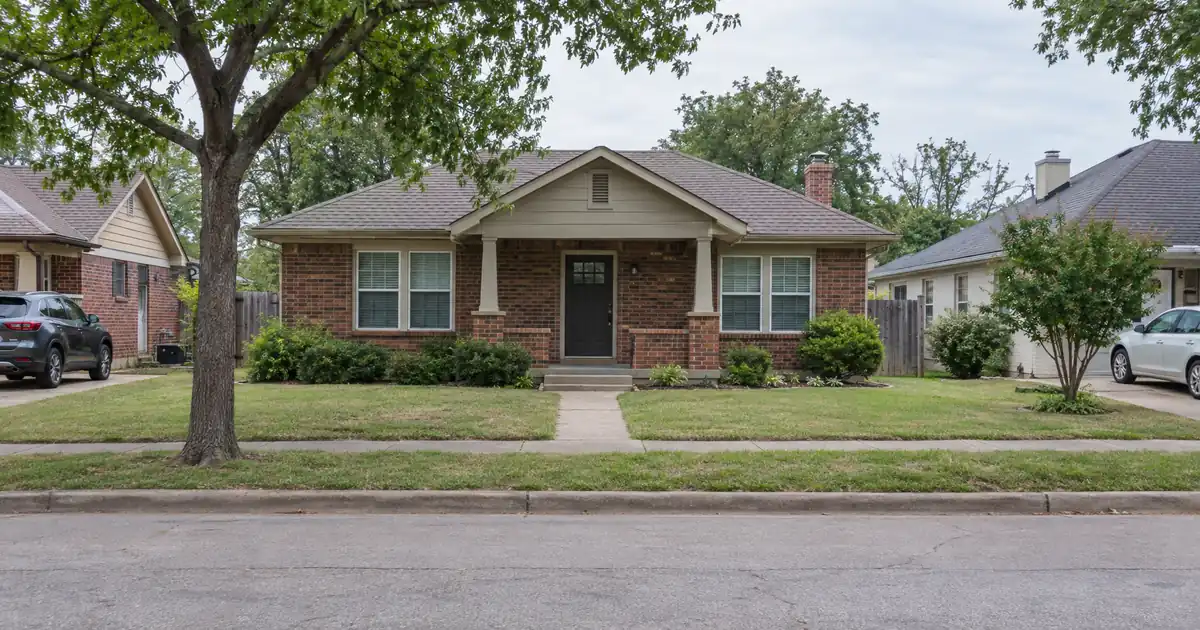
An out-of-state investor scrolling Midwest City listings usually notices the price first. A typical home sits well under the Oklahoma City figure, and a house rents for roughly $1,300. What they tend to miss is how few small multifamily buildings exist here. Redfin’s investment-property page showed just 4 multi-family units for sale in the prior month, against 43 homes sold across all types. That scarcity shapes the refinance conversation more than the price does. If you already own a stabilized rental here, the question isn’t whether the city has demand. It’s whether your property’s rent, condition and paper trail can carry a cash-out file at the 75 percent ceiling, and what you’d do with the money.
TL;DR: A DSCR cash-out refinance in Midwest City, Oklahoma is underwritten primarily on the property’s rental income measured against its full monthly obligation, so the deal works from seasoning check to appraisal rent schedule to reserves review, with borrower income documents playing a secondary role.
DSCR Cash-Out Calculator
Run the cash-out numbers in Midwest City, OK
Rate source: Freddie Mac 30-yr average via FRED® — Federal Reserve Bank of St. Louis · effective Sep 24, 2026
Prefilled with starting assumptions — enter your property’s value, balance, taxes, and insurance for a more accurate picture.
Program parameters update from Lendmire’s centralized guideline source. Taxes and insurance are editable estimates.
As of Sep 24, 2026 · General Freddie Mac market benchmark, not a Lendmire loan offer. Property value, balance, taxes, and insurance are editable estimates. Maximum loan-to-value varies by lender, program, property type, and seasoning. Not a Loan Estimate, approval, or commitment to lend. Program availability and eligibility are subject to lender guidelines, credit approval, property review, and underwriting.
- Multi-family supply is thin: 4 listings from $325,000 to $533,333 at last check.
- Cash-out tops out at 75 percent LTV, with about 6 months of seasoning from title recording.
- Zumper puts median house rent at $1,298, a workable base for single-family coverage.
- Tinker Air Force Base anchors tenant demand, but that anchor is federally dependent.
Midwest City Market Snapshot
A quick read on the Midwest City investor landscape — figures come from the cited sources below. Confirm current property-level numbers before underwriting.
| Metric | Detail |
|---|---|
| Home prices | Median value $119,900 (United States Zip Codes (73110)) |
| University enrollment | Mid-del 14,500 students (City of Midwest City) |
| Population | 57,000+ residents (City of Midwest City) |
| Employment | 26,000+ tinker employees (City of Midwest City) |
What Actually Sets the Proceeds Here
Cash-out proceeds in Midwest City are set by four things: rent used for lender review, the full monthly obligation, reserves, and the 75 percent LTV ceiling. Equity is never a guaranteed figure. Because values here are low relative to the metro, the LTV cap usually binds before the coverage ratio does.
Start with the value side. Redfin shows a median sale price of $184,878, down 2.7 percent year over year, while Zillow’s typical home value is $158,812, up 3.9 percent. The two sources measure different things (sold medians versus a modeled typical value), so treat the gap as a range, not a conflict. Homes.com shows a much higher median, which doesn’t reconcile with either, so it’s left out here. For reference, Redfin’s Oklahoma City page shows a median near $270K. Midwest City sits well below it.
What does that mean for a refinance? Two things. Appreciation-driven equity is modest and uneven: a flat-to-slightly-down sale median and a slightly up typical value don’t add up to a strong appreciation story. Equity here mostly comes from the purchase basis and from any forced value, meaning renovation or rent stabilization. And a lower basis means smaller loan balances, which may route through select lenders in the network instead of standard programs. The standard-program loan guide runs up to $3,000,000, but small balances are a different lane. Ask about that early.
The DSCR mechanics themselves are covered in the DSCR qualification mechanics. In short, a 1.00 benchmark is common because rent covers the full monthly obligation (principal, interest, taxes, insurance and any HOA dues) at that level. Some lenders review lower ratios with compensating factors, and eligibility always depends on lender guidelines, credit profile, reserves and property review.
Six Months of Seasoning, and What Lenders Actually Count
Seasoning is measured from title recording, at about 6 months of ownership for cash-out on these programs. It isn’t measured from when you signed a contract or finished a rehab. An investor who closed on a purchase and started renovating immediately will find the clock running from the recorded deed, not from when the unit turned rent-ready.
The practical friction points cluster around paperwork, not underwriting theory:
- Recording date. Confirm the deed’s recorded date before anyone orders an appraisal. A file that’s a few weeks short of seasoning wastes an appraisal fee.
- Lease documentation. A signed lease and proof of deposit support the rent figure. An appraiser’s market rent schedule usually becomes the coverage figure, though, so a lease well above market doesn’t lift the file.
- Entity paperwork. For LLC-titled properties, expect operating agreements and good-standing documents, subject to lender program eligibility.
- Reserves. About 6 months of full PITIA in verifiable funds is the typical benchmark, stepping up to about 9 months on balances above $1,500,000. Cash-out proceeds generally don’t count toward the reserve requirement on the same loan, though lender treatment varies.
- Credit tiers. The floor sits at 620, with pricing and leverage improving at the 660, 680 and 700 tiers.
Where the Rent-to-Value Math Works (Two ZIP Codes, Two Personalities)
The city’s two ZIP codes behave differently. ZIP 73110, the older stock near Rose State, carries a median home value of $119,900 with median household income of $50,436. ZIP 73130 shows a median value of $195,100 and household income of $69,617. Both figures come from a Census-derived aggregator and are coarser than current listings.
The 73110 side is the cash-flow-led side. The same house rent sits on a much lower basis, so coverage runs comfortably. The tradeoff is proceeds: a low basis means a small loan, and older homes (built mostly in the 1940s or 1960s) raise the chance of condition items that surface at appraisal. The area is also majority renter, which means deep rental culture but heavier wear on the property.
The 73130 side skews toward owner-occupants, with homes built mostly in the 1960s and 1970s. That likely means steadier comparable sales, which helps an appraisal on a cash-out. Coverage is thinner on the higher basis, but proceeds are larger. Both readings are inferences from age and tenure data, not published absorption figures.
Neither side is universally better. If your priority is clean coverage and you can live with modest proceeds, lean toward the 73110-type stock. If you want a larger draw and value appraisal stability, the 73130-type stock is the more forgiving refinance candidate, provided the rent still clears the benchmark.
Run the Numbers on a House
Say you own a three-bedroom house in Midwest City that Zumper’s data would place at about the median house rent of $1,298. Assume a value of roughly $185,000, in line with the Redfin median, and a 75 percent cash-out LTV. These are modeled inputs, not a quote. Rent divided by full PITIA, including estimated taxes and insurance at Oklahoma averages, lands around 1.1x, rounded down. That clears a 1.00 benchmark, but not with much cushion. A modest jump in the insurance line or a rent schedule a few percent lower could pull it toward the floor.
Zumper’s bedroom breakdown gives context: 3-bedrooms at $1,325 and 4-plus bedrooms at $1,512. Current asking rents on 4-bedroom houses run around $1,495 to $1,500 on Apartments.com. Those are asking rents from listings, not achieved rents, so don’t underwrite to them without a lease behind them. Larger houses do carry a rent premium over apartment-style units, which can help a single-family file clear coverage without needing multiple units.
That 1.1x figure is a reason to get an insurance quote in hand before the file is submitted. Coverage that pencils on an old quote can slip on a fresh one.
The Fourplex Problem (and Why It’s Also the Opportunity)
Multi-unit stacking is where Midwest City’s refinance story gets interesting, precisely because supply is thin. Homes.com listed 4 multi-family homes between $325,000 and $533,333, averaging 43 days on market. Redfin’s Oklahoma City page, by comparison, shows 103 multi-family listings at a $344K median. Buyers hunting for duplexes and fourplexes here compete for a small pool, which is why a stabilized one is a strong refinance candidate. If you already hold one, you own something scarce.
Apartment-style rents are the constraint. Sources disagree because they measure different listings: Zumper shows 1-bedrooms at $789 and 2-bedrooms at $980, RentCafe reports average rent up 3.3 percent, from $887 to $917, and Rentable puts 73110 two-bedrooms near $909 and one-bedrooms near $757. Underwrite a fourplex at roughly $750 to $950 per unit, not at new-build asking rents. That works out to roughly $3,000 to $3,800 a month in combined rent (this is a range calculated from those inputs, not a published figure), and it’s materially more than one house.
Run it on a modeled fourplex valued near the low end of current listings, about $325,000, at a 75 percent cash-out LTV. Full PITIA coverage, rounded down, comes out above 1.4x across that rent range. The cushion is real. What changes the outcome isn’t coverage but the appraiser’s rent schedule and any deferred maintenance. If one unit is vacant or under renovation at appraisal, the rent schedule may use market rent for it, but the property condition can still delay or reshape the file.
A word on five-plus units: none of the research covers them. Those often sit in commercial or hybrid programs with different rules, so ask early instead of assuming a residential DSCR product applies.
Broker-level pattern, for context: DSCR files in markets like this one typically look like a stable base of workforce rentals where the coverage number is comfortable but the loan balance is small, so the real friction is minimum loan size, appraisal condition items on older stock, and reserve verification, not the ratio itself. The files that move most smoothly tend to arrive with a recorded deed date confirmed, a current insurance quote, lease copies and entity documents already assembled. The ones that stall usually stall on paperwork gaps found late.
Tinker Is the Anchor (Read the Fine Print on Anchors)
Demand in Midwest City runs through Tinker Air Force Base. The city calls itself the premier service community to Tinker AFB, and the name itself traces to the base’s original designation as the Midwest Air Depot. The Oklahoman reports Tinker is the largest single-site employer in Oklahoma, with more than 27,000 military and civilian employees, while the city’s own profile cites over 26,000, so the count varies by source. Hoodline reports an economic impact of about $7.53 billion supporting roughly 56,417 jobs statewide, plus a projected construction pipeline near $11 billion tied to future depot work.
That’s the bull case, and it’s a real one for long-term tenant demand. But an appraiser and a lender see one employer concentration, and the same Oklahoman coverage noted potential layoffs at the base. Concentration cuts both ways. For a refinance you plan to hold for years, the depot build-out supports the thesis. For an investor pulling maximum equity at the 75 percent cap and redeploying it elsewhere, thin reserves against a federally dependent anchor is a risk worth sizing.
Other demand supports sit around it. The city profile counts over 57,000 residents, and RentCafe shows 10,569 renter-occupied households, about 43 percent. Mid-Del Public Schools serves about 14,500 students and is among the city’s larger employers, alongside Alliance Health Midwest. Rose State College enrolled roughly 7,000 students in the most recent term Wikipedia reports (7,313), though sources conflict, and it offers on-campus housing. The corridor logic matters too: the city sits about 8 miles from Oklahoma City on I-40, and properties near the I-40 and Tinker gate corridors likely hold demand better than interior pockets. That’s a locational inference, not a sourced statistic. Town Center Plaza and the SE 15th Street retail areas benefit from the same payroll.
Watch the New-Build Rents (A Short Note on Supply)
Newer product prices well above older-stock averages. One newer two-story community lists 1-bedrooms at $1,125 to $1,195, against average apartment rents in the $800s. That likely competes for higher-income renters before it competes with older duplexes, but no vacancy or absorption figures were found, so treat it as a watch item. If you’re refinancing an older fourplex, don’t let a new-build asking rent inflate your expectation for the appraiser’s schedule.
Where the Proceeds Go
The refinance only makes sense if the capital has a job. Three uses come up most in a market like this.
1. Acquiring another workforce rental in the same submarket. Coverage on single-family stock here clears the benchmark with modest cushion, so recycling equity into a second house keeps the math familiar. Just remember the 1.1x-type cushion doesn’t stretch much.
2. Consolidating into a fourplex. Given the scarcity, this is a hard purchase to time. Proceeds from one refinance can fund the next opportunity, but only if a listing appears. With about 43 days on market on average, decent buildings don’t sit long.
3. Reserves and property improvements. Setting aside cash for condition items on older stock is unglamorous, and often the best use. It also protects the next appraisal.
If you’re weighing this against a rate-and-term refinance, the investor refinance breakdown covers the tradeoff, and the equity-extraction mechanics walk through cash-out specifics. For a conventional comparison, the guide “Where DSCR and Conventional Diverge” is worth a read: an entity-owned or self-employed investor typically benefits from DSCR, while a W-2 borrower with one rental and clean traditional personal-income documentation might find conventional cheaper. Statewide context lives on the page for DSCR loans in Oklahoma. Program details, including eligibility and terms, are subject to lender overlays and change, so confirm them before committing to a plan. Investors should also verify current local rental rules, taxes and insurance with qualified local professionals. When you’re ready to test a specific property, you can get a rental-income loan quote or reach Lendmire at 828-256-2183.
The Real Choice
Midwest City hands a refinancing investor a genuine fork. One path: pull equity from a single-family rental with clean, modest coverage and a small loan, keeping the file simple and the proceeds small. The other: hold out for, or already own, a scarce fourplex where stacked rents create real cushion and larger proceeds, at the cost of concentrated exposure to a thin listing pool and one federal anchor. Neither is wrong, and the deciding variable is how much depot-driven payroll you’re willing to bet on. Tinker’s build-out pipeline is the reason to stay in this market, and the same dependence is the reason not to size the draw too aggressively.
DSCR vs. conventional financing
Two common ways to finance an investment property in Midwest City, OK. They qualify you differently — here’s how investors weigh them.
Why investors choose it
- Qualifies on the property’s rental income — no personal tax returns, W-2s, or pay stubs needed to document income.
- No personal debt-to-income ceiling to clear, so existing mortgages and obligations don’t cap your borrowing the same way.
- Can be closed in an LLC, keeping the property inside a business entity.
- Built for scaling — not held to the limit on number of financed properties that conventional financing applies.
- Underwriting centers on the deal: generally qualifies when the rent covers the payment, a 1.00x coverage ratio being a common baseline (confirmed in underwriting).
- Designed specifically for investment property, including long-term and, where the program allows, short-term rentals.
Where it’s strong
- Often the lowest ongoing financing cost for a buyer who fully qualifies on personal income — a fit for a first property or a cost-first purchase.
Trade-offs for investors
- Requires full personal income documentation and must fit within a debt-to-income limit — salary, existing debts, and other mortgages all count.
- Typically held in your personal name rather than a business entity.
- Caps how many financed properties you can carry, which can become a ceiling as a portfolio grows.
- Evaluates you as a borrower as much as the property, which usually means more paperwork.
How investors usually choose: a first or single property often optimizes for the lowest financing cost; portfolio builders often optimize for leverage, vesting in an LLC, and scaling past conventional caps. The right answer depends on your goals, the property, and current guidelines — both paths run through select lenders in Lendmire’s wholesale network, with eligibility and terms confirmed in underwriting.
Frequently Asked Questions
How do you qualify for a DSCR loan in Midwest City?
Qualification centers on the property’s rent versus its full monthly obligation, with 1.00 as a common benchmark. Typical guidelines call for a credit score of at least 620, about 6 months of PITIA in reserves and, for a cash-out, about 6 months of ownership from title recording. Final eligibility depends on lender guidelines, credit profile and property review.
What are the requirements for an investment property loan in Midwest City, Oklahoma?
Expect a recorded deed, lease or market rent evidence, an appraisal with a rent schedule, entity documents for LLC-held properties (subject to lender program eligibility), and verified reserves. Cash-out is generally capped at 75 percent LTV. Manufactured homes, log homes and barndominiums fall outside these programs, which matters on older or rural-edge stock.
Does 1.00 coverage work on a Midwest City house?
Often, but with limited cushion. On a modeled house near the $1,298 median rent and a value in the Redfin-median range, coverage including taxes and insurance lands around 1.1x, rounded down. That clears the benchmark, but a weaker rent schedule or higher insurance costs can erode it, so run the file with a current insurance quote.
Why do fourplexes matter more here than in Oklahoma City?
Supply is the reason. Midwest City showed only 4 multi-family listings, while Oklahoma City showed 103. A stabilized duplex or fourplex is scarce, and stacked apartment-level rents can support a larger loan than one house, which lifts refinance proceeds.
What can slow down a Midwest City DSCR cash-out refinance?
For current guidelines and terms, see Lendmire’s DSCR loan programs page.
About Lendmire
A non-QM mortgage broker (NMLS# 2371349), Lendmire arranges DSCR financing for real estate investors in 41 markets: 40 states plus Washington, D.C. Because deals are underwritten primarily on property cash flow rather than personal income documentation, the structure suits self-employed buyers and entity-owned portfolios. Lendmire places loans through wholesale investor lenders and is not a direct lender. The brokerage was recognized by Scotsman Guide as a 2026 Top Workplace and recognized by Scotsman Guide in 2025.
Get Started
Ready to find the right loan for you?
In about 30 seconds you can review financing options available for your investment property. No commitment required.
Informational only. Not a Loan Estimate, approval, or commitment to lend. Program availability and eligibility are subject to lender guidelines, credit approval, property review, and underwriting.
References
1. Redfin — Amenity Investment Property
2. Homes.com, Midwest City Multi-Family
3. Zumper, Midwest City Rent Research
6. City of Midwest City Community Profile
8. Zillow Home Values, Midwest City
9. Redfin — Oklahoma City Housing Market
11. $1,495 to $1,500 on Apartments.com
12. Redfin — Oklahoma City Multi Family Homes for Sale
13. RentCafe — Average Rent Market Trends Midwest City
14. Rentable — Midwest City OK Zip Codes
15. Yahoo Finance — Potential Layoffs Coming Tinker Here’s
16. Hoodline, Tinker State of the Base
17. Greater Oklahoma City, Midwest City
19. Homes.com — Oklahoma City OK Homes for Rent
20. recognized by Scotsman Guide as a 2026 Top Workplace
21. recognized by Scotsman Guide in 2025
This article is part of Lendmire’s investment property cash-out refinance program — full qualification details, guidelines, and scenarios live on the program page.
Related reading: DSCR Cash Out Refinance in Oklahoma City, Oklahoma: Aerospace and Health Campus Rental Equity · Cash Out Refinance Investment Property in Midwest City OK · DSCR Cash Out Refinance in Enid, Oklahoma: The 2026 DSCR Financing Guide to Garriott Road Rentals
Guides: Investment Property Cash-Out Refinance in Midwest City, OK · Investment Property Cash-Out Refinance in Oklahoma
Brandon Miller
Founder & CEO, Mortgage Loan Originator, Lendmire LLC
- Mortgage Loan Originator · NMLS# 1129696 · Verify on NMLS Consumer Access
- North Carolina Real Estate Broker · License# 343312 · Verify on NCREC
- North Carolina Insurance Producer · License# 19053198 · Property, Casualty, Life, Health · Verify on NAIC SBS
- Lendmire LLC · Firm NMLS# 2371349 · Verify firm licensure
Important disclosures. Lendmire (NMLS# 2371349) is a licensed mortgage brokerage. Lendmire is not a direct lender, depository institution, or financial advisor. All loan inquiries are subject to lender underwriting; this article does not constitute a commitment to lend. Rates, terms, and program guidelines are subject to change without notice and vary by borrower profile, property type, and state. Information in this article is general in nature and is not financial, legal, or tax advice. Equal Housing Opportunity. NMLS Consumer Access: nmlsconsumeraccess.org.