
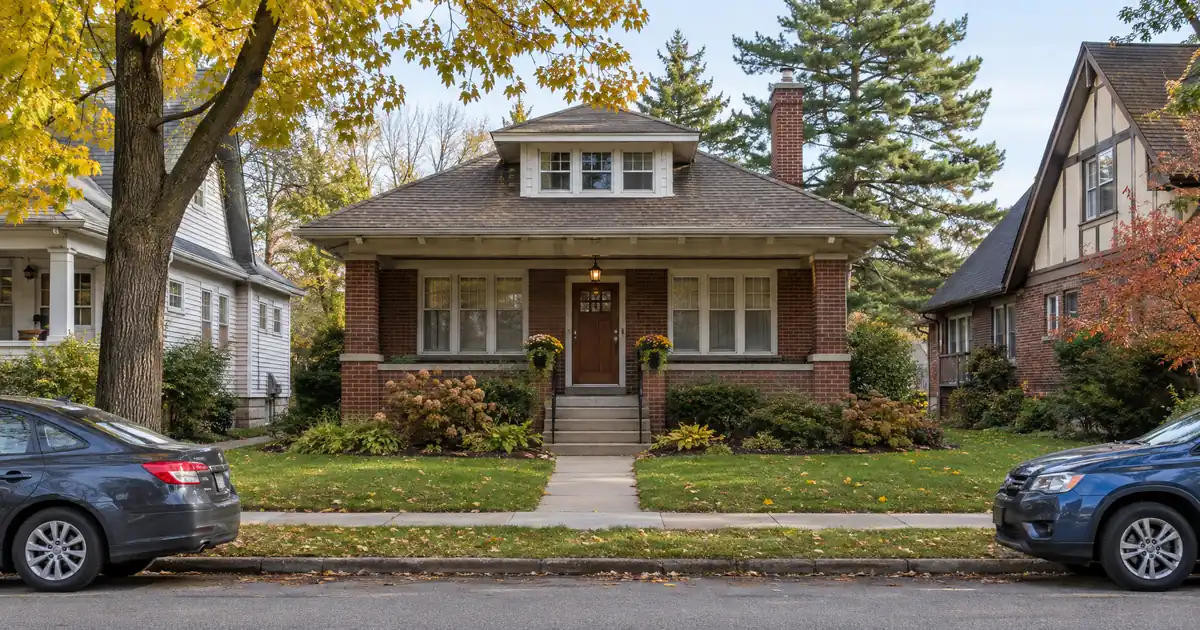
The blocks around the UWSP campus are where most Stevens Point cash-out math gets decided. Older Craftsman-style houses and converted duplexes sit beside updated rentals, and Apartments.com describes the area in just those terms. For an investor who already owns one of these buildings, the equity question is simple. Does the rent schedule hold up against the full obligation of a new loan at the lender’s leverage cap? Here’s how that tends to pencil.
DSCR Cash-Out Calculator
Run the cash-out numbers in Stevens Point, WI
Rate source: Freddie Mac 30-yr average via FRED® — Federal Reserve Bank of St. Louis · effective Oct 1, 2026
Prefilled with starting assumptions — enter your property’s value, balance, taxes, and insurance for a more accurate picture.
Program parameters update from Lendmire’s centralized guideline source. Taxes and insurance are editable estimates.
As of Oct 1, 2026 · General Freddie Mac market benchmark, not a Lendmire loan offer. Property value, balance, taxes, and insurance are editable estimates. Maximum loan-to-value varies by lender, program, property type, and seasoning. Not a Loan Estimate, approval, or commitment to lend. Program availability and eligibility are subject to lender guidelines, credit approval, property review, and underwriting.
The Quick Read:
A DSCR cash-out refinance in Stevens Point, Wisconsin fits the investor who already owns a small multifamily or campus-edge rental and wants equity for the next acquisition. The loan is underwritten primarily on the property’s rental income measured against its full monthly obligation, with leverage held below a lender-set ceiling.
- Duplexes and small buildings near UWSP carry more rent per dollar of value than single-family homes here.
- Cash-out leverage tops out at 75 percent of value, with about six months of ownership typical.
- Single-family rentals at typical local rents can land below 1.00x once taxes and insurance count.
- Student-calendar leases need a 12-month market rent schedule to support the appraisal.
Stevens Point Market Snapshot
A quick read on the Stevens Point investor landscape — figures come from the cited sources below. Confirm current property-level numbers before underwriting.
| Metric | Detail |
|---|---|
| Home prices | 16 sales (Redfin housing market) |
| University enrollment | Total enrollment +3.5% (UWSP fall 2025 enrollment news) |
| Vacancy | 4.8% rental (Wikipedia (Census-derived)) |
Why Small Buildings Are the Cash-Out Collateral Here
Stevens Point’s rental stock favors the small-building owner. NeighborhoodScout puts duplexes, converted homes, and small apartment buildings at 17.47 percent of units, against 50.05 percent single-family detached and 26.18 percent large complexes. RentCafe reports that 49 percent of residents rent and that 77 percent of rentals sit in complexes under 50 units. That reads as a small-landlord market, which is exactly the borrower profile a cash-out DSCR loan serves.
The tension is rent versus value. A single-family house and a duplex can appraise similarly, but the duplex stacks two rent streams against one tax bill and one roof. Rents in Stevens Point also depend heavily on whose data you trust. ApartmentFinder lists 1-bedrooms at $910, 2-bedrooms at $1,052, and 3-bedrooms at $1,395, while the Apartments.com/CoStar series runs lower, near $989 for a 2-bedroom. Zumper’s $1,700 for houses looks like an outlier. Underwrite to actual lease comps, not the marketing average.
Run the Numbers on a Duplex (and a Single-Family Contrast)
Take a modeled duplex valued at $300,000, with two 2-bedroom units at the ApartmentFinder figure of $1,052 each. Those are assumptions, not a market median. Refinanced at the 75 percent ceiling, with principal, interest, taxes, and insurance all counted, the coverage lands right around 1.0x to the low 1.0s. Round down and call it 1.0x.
Now run a single-family contrast. A 3-bedroom renting at $1,400 against Zillow’s typical home value of $241,506 comes out around 0.85x on the same full-payment basis. That sits under the 1.00x benchmark most standard programs are built around.
Sub-1.00 doesn’t end the conversation, but it changes it. A lender might review a sub-1.00 program, a lower-leverage request, or an interest-only structure. All of that depends on credit, reserves, property review, and lender guidelines. The better question is whether the building should carry a cash-out loan at all. If the only way a deal pencils is a structural workaround, that points to the property, not the loan type.
DSCR files in markets like this one typically look like a small multifamily with a mixed rent roll, a modest appraisal, and coverage hovering near the 1.00x line. The cleanest file from a documentation standpoint has complete leases, entity docs, title, and property details ready for lender review. Files with a market-rent appraisal that matches the leases move through review with fewer questions. Files that lean on room-by-room student pricing tend to stall, because the appraiser has to reconcile the lease structure with a standard 12-month rent schedule.
Equity Math: What Appreciation Does and Doesn’t Give You
The appreciation story here is modest, and the sources disagree. Zillow shows a typical value of $241,506, up 4.2 percent over the past year. Redfin logged just 16 sales in November, with a median of $283,950. Its 49.4 percent year-over-year jump on that tiny sample is noise, not a trend. Sales volume is thin, so appraisal comps are thin too.
Size the refinance on flat-to-low-single-digit appreciation and let anything above that be a bonus. The program ceiling is 75 percent of value on a cash-out, and the dollar figure that produces depends on the appraisal, the rent used for lender review, the full monthly obligation, and reserves. Expect about six months of reserves on the new loan, with seasoning of about six months measured from title recording. Credit tiers typically start at a 620 floor and improve from there. None of it is a guaranteed cash figure. Pulling equity with a DSCR cash-out works when the appraisal cooperates, and in a thin-sales market that’s the variable to stress-test first.
One more wrinkle on balances. Loans on standard programs run up to $3,000,000, but the smaller balances typical of Stevens Point duplexes may route through select lenders in the network. That’s normal, and it doesn’t change the underwriting logic.
The Seasoning Clock Starts at Recording
Six months. That’s the rough seasoning window before a cash-out, and it runs from the date the deed records, not from closing paperwork or rehab completion. An investor who buys a tired duplex near campus, renovates, and wants to refinance and recycle the equity should plan the timeline around the recording date. A value-add refinance leans on a conservative after-repair value. An engineering and consulting study of the city’s housing market flagged an aging stock and owners who aren’t improving it, per MSA Professional Services. The same aging stock that supports rental demand creates condition-driven appraisal risk.
Demand Anchors Behind the Rent Roll
Three employers hold the demand picture together. Sentry Insurance cites about 2,500 associates in the area, and its headquarters renovation is slated to run roughly 40 months, which reads as a long-term commitment. UWSP brought in its largest first-year class in 40 years, 2,021 students across three campuses, with total enrollment up 3.5 percent. Total enrollment sits somewhere around 8,000 to 8,500 depending on the source. Aspirus runs the local hospital within a system of about 14,000 team members.
For underwriting, the useful number is vacancy. The last decennial census put rental vacancy near 4.8 percent, and a secondary aggregator lists 5 percent. A 5 to 10 percent vacancy haircut on projected rent is a reasonable cushion.
Where the Submarkets Split
Campus-adjacent. This is the highest-demand pocket and the trickiest underwrite. U.S. News reports that 54 percent of UWSP students live off campus. Multi-bedroom houses and duplexes rent by the room here, on leases that follow the academic calendar. That can complicate a 12-month DSCR rent schedule. A fully leased building with one-year leases is cleaner collateral than one that turns over every May.
Downtown and riverfront. New-build apartments cap what older small multifamily can ask. North Side Yard, with 159 units from studios to 2-bedrooms near the river trail, is the benchmark. Check the supply pipeline before setting a refinance rent. Oaks on Maria, a new affordable apartment community, is also scheduled to open. The downtown pocket is a real toss-up. Older buildings can still cash-flow, but only if their rents aren’t competing directly with new product.
North side and Plover. Both are workforce plays. Qualitative sources say the north side is where the more affordable homes sit, and neither has a verified per-neighborhood price set. Plover, an adjacent village, draws on food-processing employers such as Monogram Foods and Basic American Foods. The stronger play for cash flow might be a 3-bedroom workforce rental in either place, though the single-family math above is a reminder of how tight that gets.
Skip anything priced for owner-occupants, such as the historic homes east of downtown. Those buy for lifestyle, not yield.
Who This Fits (and Who Should Look Elsewhere)
For an LLC-held portfolio of small buildings, DSCR is typically the working lane, subject to lender program eligibility. For a W-2 borrower with one rental and a strong personal debt-to-income profile, the guide “Where DSCR and Conventional Diverge” is worth reading first, because conventional cash-out may price better. The flip point comes when the property’s own income is the cleaner story, the borrower is self-employed, or the portfolio runs past what conventional lanes allow.
Ready to size a specific building? Call 828-256-2183 or run the numbers with Lendmire.
The Closing Math
Stevens Point rewards the owner of small, fully leased buildings and punishes the one counting on appreciation. Wausau and Wisconsin Rapids lack a comparable four-year anchor, but that’s a framing, not a sourced comparison. Right now the math favors Stevens Point’s duplexes over its single-family rentals, and it favors Stevens Point over a thinner-demand neighbor, because UWSP’s growing class and Sentry’s long renovation give a rent roll something steady to lean on.
Frequently Asked Questions
How do you qualify for a DSCR loan in Stevens Point?
Qualification centers on the property’s rent compared with its full monthly obligation, including principal, interest, taxes, insurance, and any HOA dues. Most standard programs are built around a 1.00x benchmark. Credit tiers typically start at a 620 floor, and about six months of reserves is common. Lenders review the borrower, property, and file, so eligibility isn’t automatic.
DSCR vs. conventional financing
There are two common ways to finance an investment property in Stevens Point, WI, and they qualify you differently — here’s how investors weigh them.
Why investors choose it
- Qualifies on the property’s rental income — no personal tax returns, W-2s, or pay stubs needed to document income.
- No personal debt-to-income ceiling to clear, so existing mortgages and obligations don’t cap your borrowing the same way.
- Can be closed in an LLC, keeping the property inside a business entity.
- Built for scaling — not held to the limit on number of financed properties that conventional financing applies.
- Underwriting centers on the deal: generally qualifies when the rent covers the payment, a 1.00x coverage ratio being a common baseline (confirmed in underwriting).
- Designed specifically for investment property, including long-term and, where the program allows, short-term rentals.
Where it’s strong
- Often the lowest ongoing financing cost for a buyer who fully qualifies on personal income — a fit for a first property or a cost-first purchase.
Trade-offs for investors
- Requires full personal income documentation and must fit within a debt-to-income limit — salary, existing debts, and other mortgages all count.
- Typically held in your personal name rather than a business entity.
- Caps how many financed properties you can carry, which can become a ceiling as a portfolio grows.
- Evaluates you as a borrower as much as the property, which usually means more paperwork.
How investors usually choose: a first or single property often optimizes for the lowest financing cost; portfolio builders often optimize for leverage, vesting in an LLC, and scaling past conventional caps. The right answer depends on your goals, the property, and current guidelines — both paths run through select lenders in Lendmire’s wholesale network, with eligibility and terms confirmed in underwriting.
What are the requirements for an investment property loan in Stevens Point, Wisconsin?
Expect a lender to ask for a signed lease or an appraisal rent schedule, proof of ownership and title, entity documents if an LLC holds the property, and reserves. On a cash-out, seasoning of about six months from title recording and a 75 percent leverage ceiling usually apply. Manufactured homes, log homes, and barndominiums fall outside these programs.
Can student-oriented room rentals near UWSP qualify for a cash-out refinance?
They can complicate it. Per-room leases tied to the academic calendar don’t map cleanly onto the standard 12-month rent schedule an appraiser uses. A building rented on conventional one-year leases is typically the cleaner file, and a lender may still want a market-rent appraisal to support whichever structure the owner uses.
Can an LLC-owned Stevens Point rental be reviewed for DSCR financing?
Yes, subject to lender program eligibility. Lendmire arranges DSCR investor loans, and the review centers on the property’s rental income rather than the owner’s personal income documents.
How much equity can I pull from a duplex near campus?
There’s no single figure. Proceeds depend on the appraised value, the rent used for lender review, the full monthly obligation, and reserves, all under a 75 percent leverage ceiling. Thin local sales volume makes appraisal comps the variable to stress-test first.
For current guidelines and terms, see Lendmire’s DSCR loan programs page.
About Lendmire
Lendmire is a non-QM mortgage brokerage (NMLS# 2371349) arranging DSCR investor loans in 41 markets, including Washington, D.C. DSCR eligibility is generally reviewed around property-level rental income rather than personal income, subject to lender and program guidelines, which suits self-employed investors and LLC-owned portfolios. Lendmire was recognized as a 2025 Scotsman Guide Top Workplace and as a top-ranked workplace in 2026.
For broader investor-financing rules and property-type coverage across the state, see Wisconsin DSCR loans.
Get Started
Ready to find the right loan for you?
In about 30 seconds you can review financing options available for your investment property. No commitment required.
Informational only. Not a Loan Estimate, approval, or commitment to lend. Program availability and eligibility are subject to lender guidelines, credit approval, property review, and underwriting.
References
1. Apartments.com, Stevens Point
2. Redfin, Stevens Point housing market
5. NeighborhoodScout, Stevens Point
7. Zillow Home Values, Stevens Point
8. MSA Professional Services, Stevens Point housing study
9. Sentry Insurance, Stevens Point
10. Aspirus locations, Stevens Point
11. a 2025 Scotsman Guide Top Workplace
12. Scotsman Guide — Top Workplaces 2026
This article is part of Lendmire’s investment property cash-out refinance program — full qualification details, guidelines, and scenarios live on the program page.
Related reading: Cash Out Refinance Investment Property in Stevens Point, Wisconsin: How the Rent Math Clears at 75% LTV · Cash Out Refinance Investment Property in Greenfield, Wisconsin: Pulling Equity From Older Duplex Blocks · Cash Out Refinance Investment Property in West Bend, Wisconsin: How Much Equity Can My Rent Unlock?
Guides: Investment Property Cash-Out Refinance in Wisconsin
Brandon Miller
Founder & CEO, Mortgage Loan Originator, Lendmire LLC
- Mortgage Loan Originator · NMLS# 1129696 · Verify on NMLS Consumer Access
- North Carolina Real Estate Broker · License# 343312 · Verify on NCREC
- North Carolina Insurance Producer · License# 19053198 · Property, Casualty, Life, Health · Verify on NAIC SBS
- Lendmire LLC · Firm NMLS# 2371349 · Verify firm licensure
Required disclosures. Lendmire (NMLS# 2371349) operates as a licensed mortgage broker, not a direct lender or depository. The discussion in this article is general in nature and should not be relied upon as financial, legal, or tax advice — every investment scenario is unique and should be reviewed by a qualified professional. Any loan inquiry is subject to lender underwriting, and this article is not a commitment to lend or a guarantee of approval. Mortgage rates, loan terms, and program guidelines vary by borrower, property, and state, and may change without notice. Equal Housing Opportunity. Verify licensure at NMLS Consumer Access.