
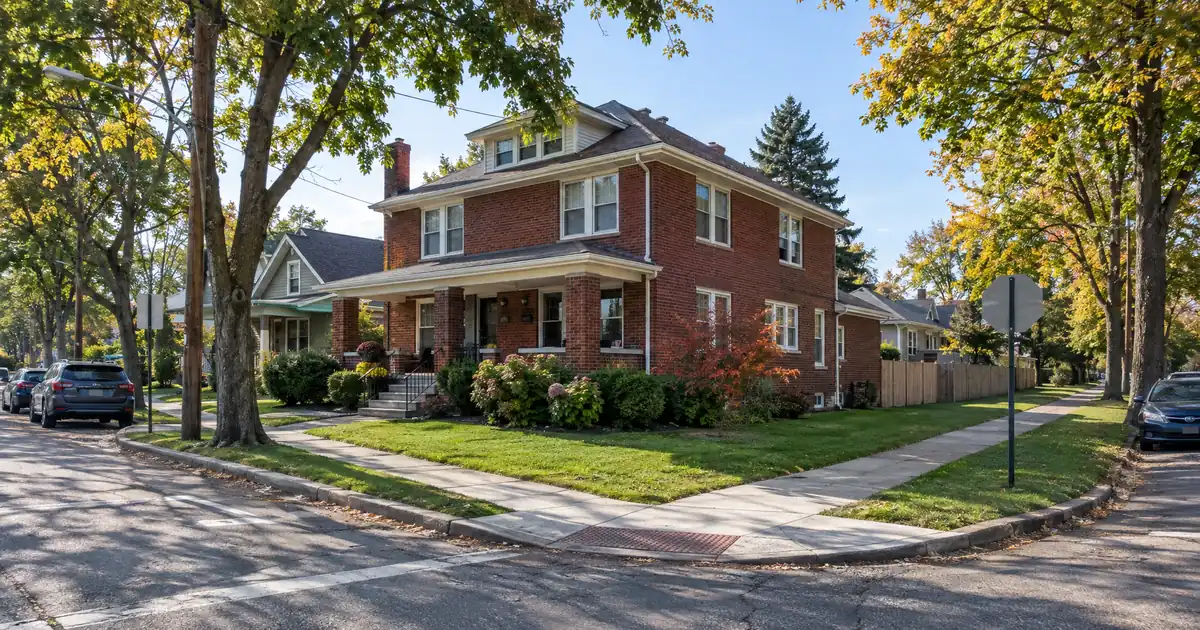
Can a North Olmsted rental still support a cash-out refinance when the median sale price is $284K? Yes, but the answer depends on the property type and the leverage. Redfin’s most recent snapshot in the research shows that the median sale price is up 6.3 percent year over year. That is real equity creation for anyone who bought at a lower basis. Whether a DSCR loan lets you reach it comes down to how the rent covers a full payment that includes taxes and insurance.
The Quick Read: A DSCR cash-out refinance in North Olmsted, Ohio fits the investor who already owns a rental with real equity and can accept lower leverage, because the loan is underwritten primarily on the property’s rental income measured against its full monthly obligation, and the 75 percent ceiling, not appreciation, sets how much of that equity is reachable.
DSCR Cash-Out Calculator
Run the cash-out numbers in North Olmsted, OH
Rate source: Freddie Mac 30-yr average via FRED® — Federal Reserve Bank of St. Louis · effective Sep 24, 2026
Prefilled with starting assumptions — enter your property’s value, balance, taxes, and insurance for a more accurate picture.
Program parameters update from Lendmire’s centralized guideline source. Taxes and insurance are editable estimates.
As of Sep 24, 2026 · General Freddie Mac market benchmark, not a Lendmire loan offer. Property value, balance, taxes, and insurance are editable estimates. Maximum loan-to-value varies by lender, program, property type, and seasoning. Not a Loan Estimate, approval, or commitment to lend. Program availability and eligibility are subject to lender guidelines, credit approval, property review, and underwriting.
- Median sale price sits near $284K, up 6.3 percent year over year, per Redfin.
- Single-family rent near $1,950 (Homes.com) models to roughly 1.0 coverage including taxes and insurance.
- Two-bedrooms are 56 percent of rentals, so small-building underwriting should assume 2BR rents.
- Great Northern Mall redevelopment is the watch item that could reprice the surrounding blocks.
North Olmsted Market Snapshot
A quick read on the North Olmsted investor landscape — figures come from the cited sources below. Confirm current property-level numbers before underwriting.
| Metric | Detail |
|---|---|
| Home prices | 38 sales (Redfin) |
| Typical rents | $1,118 average (Apartments.com North Olmsted) |
| Recent appreciation | +6.3% yoy (Redfin) |
The Mall Corridor Comes First
The Great Northern Mall and Country Club Boulevard corridor is the submarket where North Olmsted’s next round of equity is most likely to form. The Cuyahoga County Planning Commission describes the city’s Mall Area Mixed Use Overlay District as an effort to turn the area into a dense, walkable hub for jobs, entertainment, and residential living. News 5 Cleveland reports plans to demolish the former Sears and build a grocery supercenter of more than 100,000 square feet. Cleveland19 adds that the city changed zoning on the property to allow housing as well as retail.
Treat all of that as a watch item, not a guarantee. Plans get delayed, and a grocery anchor doesn’t automatically lift rents on a duplex three blocks away. But an owner who already holds a rental near the corridor is sitting on optionality that a purchase buyer would have to pay for today.
The corridor also shows where rents run in this city. Newer product along Great Northern Boulevard is asking about $1,639 for a two-bedroom and $2,147 for a three-bedroom, per Redfin’s rental listings. Older complexes elsewhere in the city list closer to $1,150 to $1,209 for two-bedrooms. That spread reflects property quality more than it reflects any single neighborhood. Underwrite a renovated unit at the upper band only if the appraiser’s rent schedule supports it. Otherwise, use the lower band.
The other pockets are quieter. Central North Olmsted around Dover Center Road and City Hall is the residential core. Butternut Ridge Road and Bretton Woods sit on the south side. The research found no reliable sub-city price or rent figures for these areas, so any neighborhood-level rent assumption should come from the appraisal, not from a listing site.
What the Equity Looks Like
The equity story here is steady, not spectacular. Redfin’s snapshot shows a median sale price of $284K, a median price per square foot of $177 (up 18.3 percent), and homes selling after 19 days on market versus 11 a year earlier. NeighborhoodScout puts the median house value at $284,746 across 13,550 housing units, and Movoto shows a median list price of $299K. Sale price and list price sit within about five percent of each other. That gap is normal, and it says buyers here aren’t paying wild premiums.
Here is what that means for a cash-out. On a DSCR refinance, the loan is capped at 75 percent of appraised value, and the property typically needs roughly six months of ownership measured from title recording. Say you hold a colonial with an existing balance at 50 percent of the appraised value. The 75 percent ceiling leaves a 25-point band of equity before costs. Reserves of about six months of full monthly obligation then come out of what you actually receive. The headline equity number and the usable number are different figures, and the gap is where investors get surprised.
A few points on the appreciation math:
- Slowing days-on-market is a soft signal. Nineteen days versus eleven suggests buyers have more negotiating room than a year earlier, which can flatten appraisal comps.
- The Redfin data is roughly a year old. Treat the 6.3 percent as a comparison point, not a forecast. The research found no multi-year appreciation series from an official source.
- Small sample sizes. Only 38 homes sold in the snapshot month, so one or two unusual sales can move the median.
Appraisal risk is the honest tension in this market. An owner counting on a full 6.3 percent step-up may find the appraiser working from a thin comp set. A conservative underwriting assumption is to hold value flat and see whether the cash-out still works.
Three Property Types, Modeled
Coverage in North Olmsted is thin on single-family and better on small multifamily. The table below models rent divided by full monthly obligation, including taxes and insurance at Ohio-average assumptions, at the 75 percent cash-out ceiling. The rents are sourced. The coverage bands are modeled, rounded down, and not a lender quote. The duplex value is a modeled assumption near $340,000, since the research found no sourced duplex price.
| Property | Modeled rent | Modeled coverage |
|---|---|---|
| SFR at $284K median | $1,950 | About 1.0 |
| SFR at $284K, 3BR apartment average | $1,720 | Around 0.9 |
| Duplex, two 2BRs at average | $1,330 each | About 1.15 |
| Duplex, older-band asking rents | $1,150 to $1,209 each | About 1.0 |
Where those rents come from matters. The $1,950 single-family figure is Homes.com’s median for houses, but the sample is only 24 homes, so lean on it cautiously. The $1,720 three-bedroom average and $1,330 two-bedroom average come from RentCafe and Yardi Matrix. That data covers buildings with 50 or more units, so it can understate rents on small properties. Rent sources disagree across the market, with averages running from about $1,038 to $1,375 depending on the definition. The table uses the ranges that best match each property type.
The standard benchmark for these programs is a 1.00 coverage ratio. Some lenders review lower ratios with compensating factors, but those files usually mean lower leverage, different pricing, or more cash in reserve. If the single-family number lands under 1.00, there are structural options a lender might review: a sub-1.00 program, an interest-only structure, or a lower cash-out amount. Qualification is subject to lender guidelines, credit approval, and property review. If you are reaching for a sub-1.00 structure because no property you own clears the standard number, that is a signal to reconsider what you are holding, not to find a cleverer loan. The guide “What Is a DSCR Loan” is worth reading before you run your own numbers.
DSCR files in markets like this one typically look a certain way: modest rents, older properties, and coverage that sits right around the benchmark. The deals that move forward tend to arrive with a lease or rent schedule that supports the number, a recent insurance quote, and a clear plan for what the proceeds will do. The files that stall usually rely on a rent assumption the appraiser can’t confirm.
Skip the Three-Bedroom Thesis
Two-bedrooms are the demand-proven unit here. RentCafe reports that 56 percent of North Olmsted rentals are two-bedrooms and 38 percent are one-bedrooms, and that 33 percent of apartments sit in buildings of 50 or more units. Another 47 percent are in smaller complexes, and 19 percent are single-family rentals. Nearly half the rental stock is small-scale, which means a duplex or small building has real comps and an established tenant pool.
That points to a specific underwriting habit. A duplex refinance should assume two-bedroom rents on each side, not three-bedroom single-family rents. It also explains why small buildings show better coverage than houses in the table above. Two 2BR units at the sourced average generate more income against one purchase basis than a single house can.
Age is the tradeoff. RentCafe says the apartment buildings average about 53 years old, and none have been built since 2000. No new-construction supply is competing with small landlords, which supports rent stability. But the research found no vacancy or absorption figure, so it doesn’t prove low vacancy. Older buildings also need capital reserves, and appraisers may weigh condition in the value.
This is a genuine toss-up for an owner choosing which property to refinance first. The duplex has better coverage and a more forgiving rent profile. The single-family house is easier to sell and has a broader buyer pool if you ever exit. Investors focused on cash flow may favor the duplex. Investors who care about resale liquidity may argue for the house.
Who Rents Here, and Why They Stay
North Olmsted is a suburb with a thin but stable rental pool. RentCafe shows roughly one in five households renting, with the rest owner-occupied. The Census Bureau QuickFacts profile shows a median household income of $84,363 against $64,468 for Cuyahoga County, and a median age of 44.5. That is a stable, mature profile. It is not a growth story.
Demand rests on employment access. Cleveland Clinic’s Fairview Hospital is a 488-bed, Level II trauma center founded in 1892, with a North Olmsted physician office. Healthgrades lists Southwest General and UH Parma Medical Center among the nearby systems. The research found no sourced employee counts, so treat healthcare as a qualitative anchor. Nurses and allied-health workers often want two-bedroom rentals near I-480, which fits the unit mix above.
Highway access widens the pool. North Olmsted sits on I-480 and I-71, connecting commuters to downtown Cleveland, and Cleveland Hopkins airport is about eight miles away, per Apartments.com. Long-term tenant retention is what lenders like to see in a DSCR file. But student demand is minimal, with only about 3.2 percent of adults attending college, so don’t underwrite a campus thesis.
Lake-effect winters affect the market at the margins. Snow and ice hit transit reliability, which makes highway-adjacent, well-maintained properties easier to keep leased. Verify current local rental rules, taxes, and insurance with qualified local professionals before you finalize any property’s numbers.
Where the Proceeds Go
The cash-out thesis stands or falls on what the money does next. If you pull equity to buy another small building in this same submarket, where coverage clears at reasonable leverage, the strategy compounds. If you pull equity to fund an out-of-state purchase that doesn’t cover its own payment, you have swapped a stable asset for a stretched one. Stress-test that before committing.
A few flip points are worth naming:
- One or two rentals, traditional employment income, strong debt-to-income. A conventional refinance may cost less and cash-flow cleanly without non-QM friction. See the guide “Where DSCR and Conventional Diverge” for the structural differences between the two.
- Entity-held or self-employed. DSCR tends to be the more practical route, since the property’s income is the cleaner underwriting basis (LLC-titled loans are subject to lender program eligibility).
- Coverage under 1.00 on the target property. Reduce the cash-out request or refinance a stronger property instead.
Credit tiers for these programs typically start at a 620 floor and step up through 660, 680, and 700, with better tiers generally carrying better terms. The standard cash-out program supports balances up to $3,000,000, though every file is subject to lender guidelines. North Olmsted’s median-priced homes sit far below that ceiling, so smaller balances may route through select lenders in the network. Pulling equity out works best when the plan for the proceeds is written down before the application, and the refinance side covers the rate-and-term alternative when no cash is needed. Statewide context is on the Ohio DSCR financing page.
Frequently Asked Questions
How do you qualify for a DSCR cash-out refinance in North Olmsted?
Qualification centers on the property’s rent compared with its full monthly obligation, typically measured against a 1.00 benchmark. Lenders also review credit (a 620 floor is common), about six months of reserves, and roughly six months of ownership from title recording. Cash-out is capped at 75 percent of value. All of it is subject to lender guidelines and property review.
DSCR vs. conventional financing
Two common ways to finance an investment property in North Olmsted, OH. They qualify you differently — here’s how investors weigh them.
Why investors choose it
- Qualifies on the property’s rental income — no personal tax returns, W-2s, or pay stubs needed to document income.
- No personal debt-to-income ceiling to clear, so existing mortgages and obligations don’t cap your borrowing the same way.
- Can be closed in an LLC, keeping the property inside a business entity.
- Built for scaling — not held to the limit on number of financed properties that conventional financing applies.
- Underwriting centers on the deal: generally qualifies when the rent covers the payment, a 1.00x coverage ratio being a common baseline (confirmed in underwriting).
- Designed specifically for investment property, including long-term and, where the program allows, short-term rentals.
Where it’s strong
- Often the lowest ongoing financing cost for a buyer who fully qualifies on personal income — a fit for a first property or a cost-first purchase.
Trade-offs for investors
- Requires full personal income documentation and must fit within a debt-to-income limit — salary, existing debts, and other mortgages all count.
- Typically held in your personal name rather than a business entity.
- Caps how many financed properties you can carry, which can become a ceiling as a portfolio grows.
- Evaluates you as a borrower as much as the property, which usually means more paperwork.
How investors usually choose: a first or single property often optimizes for the lowest financing cost; portfolio builders often optimize for leverage, vesting in an LLC, and scaling past conventional caps. The right answer depends on your goals, the property, and current guidelines — both paths run through select lenders in Lendmire’s wholesale network, with eligibility and terms confirmed in underwriting.
What are the requirements for an investment property loan in North Olmsted, Ohio?
Most files need a property that produces rental income, a credit score at or above the program floor, and reserves on hand. Eligible property types include single-family homes, condos, and small multifamily. Manufactured homes, log homes, and barndominiums fall outside these programs. Exact requirements vary by borrower, property, and loan scenario.
Does the Great Northern Mall redevelopment change the cash-out math today?
Not directly. Appraisers value what exists and what comps support, and the grocery anchor and housing plans are still projects, not completed buildings. The redevelopment matters as a possible future tailwind for nearby rents and values. An owner who wants to capture equity now shouldn’t count on it in the appraisal.
Should a North Olmsted investor refinance a duplex or a single-family house first?
The duplex usually offers better coverage, because two 2BR rents spread across one basis carry a full monthly obligation more comfortably than a single house does. The house is easier to sell, though. If the goal is cash-flow-driven cash-out, start with the duplex. If exit liquidity matters more, the house may be the safer hold.
What documents matter most for a North Olmsted DSCR cash-out review?
For current guidelines and terms, see Lendmire’s DSCR loan programs page.
What to Watch This Quarter
Three indicators will tell you more about North Olmsted’s cash-out window than any single listing:
- Sears demolition and the grocery permitting timeline. A start on the site would confirm the mall redevelopment is moving from plan to construction.
- Days on market against the 19-day snapshot. If it stretches well past that, expect thinner appraisal comps and more conservative valuations.
- New housing announcements under the mall overlay. Any residential unit count tied to the site would show whether future rental supply will compete with the older, small-building stock that sets rents today.
About Lendmire
Lendmire is a non-QM mortgage brokerage (NMLS# 2371349) arranging DSCR investor loans in 41 markets, including Washington, D.C. Eligibility is generally reviewed around a property’s rental income rather than personal income, subject to lender and program guidelines, which suits self-employed investors and LLC-owned portfolios. Lendmire earned recognition as a 2025 Scotsman Guide Top Workplace and a 2026 Scotsman Guide Top Workplace.
Get Started
Ready to find the right loan for you?
In about 30 seconds you can review financing options available for your investment property. No commitment required.
Informational only. Not a Loan Estimate, approval, or commitment to lend. Program availability and eligibility are subject to lender guidelines, credit approval, property review, and underwriting.
References
1. Redfin — North Olmsted Housing Market
2. Homes.com
4. Cuyahoga County Planning Commission
6. Cleveland19
9. Movoto
11. RentCafe
13. Cleveland Clinic’s Fairview Hospital
14. Healthgrades
15. a 2025 Scotsman Guide Top Workplace
16. a 2026 Scotsman Guide Top Workplace
This article is part of Lendmire’s investment property cash-out refinance program — full qualification details, guidelines, and scenarios live on the program page.
Related reading: Cash Out Refinance Investment Property in North Olmsted · Cash Out Refinance on Investment Property in Cleveland · Cash Out Refinance Investment Property Cleveland Ohio
Guides: Investment Property Cash-Out Refinance in Ohio
Brandon Miller
Founder & CEO, Mortgage Loan Originator, Lendmire LLC
- Mortgage Loan Originator · NMLS# 1129696 · Verify on NMLS Consumer Access
- North Carolina Real Estate Broker · License# 343312 · Verify on NCREC
- North Carolina Insurance Producer · License# 19053198 · Property, Casualty, Life, Health · Verify on NAIC SBS
- Lendmire LLC · Firm NMLS# 2371349 · Verify firm licensure
Compliance and disclosures. Lendmire (NMLS# 2371349) is a licensed mortgage broker and is not a direct lender, depository institution, financial advisor, or tax professional. Content in this article is general market analysis and educational information — not financial, legal, or tax advice for any specific situation. Lendmire does not guarantee loan approval; every transaction is subject to underwriting by the funding lender. Mortgage pricing and loan program guidelines are subject to change at any time without notice and vary by borrower characteristics, property type, and state regulations. Lendmire complies with Equal Housing Opportunity. Licensure verification: NMLS Consumer Access.